
Alberobello
My journey to Italy began not with a grand flight, but with an incredibly affordable 15-euro ferry ticket from Zadar, Croatia, to Bari, Italy. It was a spontaneous decision that led me to the sun-drenched shores of Puglia, a region I had long dreamed of exploring. The gentle rocking of the ferry across the Adriatic Sea felt like a prelude to the magic that awaited me.

Upon arriving in Bari, the vibrant capital of Puglia, I knew I wanted to delve deeper into the region’s unique charm. One particular town had captured my imagination through countless photographs: Alberobello. Its distinctive trulli houses promised a step into a fairytale, and I was eager to experience it firsthand.

The Seamless Journey to a UNESCO Gem
To make the most of my limited time, I decided to book a day tour through the Get Your Guide app.
This proved to be an excellent decision, as it provided a hassle-free way to reach Alberobello. The tour included comfortable bus transportation directly from Bari, allowing me to relax and enjoy the scenic Puglian countryside.
As the bus wound its way through olive groves and vineyards, the anticipation grew. I remember peering out the window, wondering what this unique town would truly be like. The convenience of having everything organized, from transport to a general itinerary, meant I could simply immerse myself in the experience without worrying about logistics.
Alberobello: A Glimpse into History and Architecture
Alberobello is unlike any other town I’ve ever visited. It’s a place where history isn’t just preserved; it’s lived in. The town is most famous for its trulli, traditional dry-stone huts with conical roofs, which have earned it a spot on the UNESCO World Heritage list since 1996.

The history of Alberobello is quite fascinating. The area was initially settled around 1000 AD, but the town as we know it today began to take shape in the late 14th century. The Counts of Conversano, who owned the land, encouraged peasants to build these dry-stone structures without mortar, making them easy to dismantle. This was a clever, albeit cunning, way to avoid paying taxes on new settlements to the Kingdom of Naples. If royal inspectors came calling, the trulli could be quickly disassembled, making it appear as though no permanent settlement existed. This practice continued until the late 18th century when Alberobello finally gained its status as a royal town, freeing its inhabitants from feudal rule.

Today, Alberobello has a population of approximately 10,700 inhabitants, a number that fluctuates slightly with seasonal tourism. It remains a living museum, with many trulli still serving as homes, shops, and restaurants. The sheer number of these unique buildings, clustered together, creates an almost surreal landscape that feels plucked from a storybook.
What to See and Do in a Day?
My day in Alberobello was a whirlwind of discovery, starting bright and early. I found that the best way to experience the town’s charm is to simply wander through its narrow, winding streets. Here’s how I spent my unforgettable day:
Morning Exploration: Rione Monti and Trullo Sovrano
I started my morning in Rione Monti, the largest and most iconic district of trulli. This area is a labyrinth of over a thousand trulli, each with its own unique character. I spent a good hour just getting lost, admiring the whitewashed walls and the grey conical roofs, often adorned with mysterious symbols painted in white. These symbols, I learned, are often religious or pagan, meant to protect the inhabitants or bring good fortune.

One of the first things I did was visit the Trullo Sovrano, the only two-story trullo in Alberobello. It’s now a museum, offering a glimpse into what life inside a trullo was like centuries ago. The entrance fee was a modest few euros, and it was well worth it to see the traditional furnishings and understand the ingenious construction. It opens around 10:00 AM, making it a perfect morning stop before the crowds fully descend.
A Taste of Puglia: Lunch and Local Delights
By lunchtime, I was ready for some authentic Puglian cuisine. I found a charming little restaurant nestled among the trulli, offering outdoor seating. I highly recommend trying orecchiette con le cime di rapa, a local pasta dish with turnip greens, and a glass of local Primitivo wine. The flavors were incredible, a true reflection of the region’s rich culinary heritage. The cost for a delicious meal, including wine, was surprisingly reasonable, usually around 15-25 euros.
After lunch, I indulged in some local sweets. Many trulli have been converted into small shops selling local produce, olive oil, and artisanal goods. I picked up some taralli (savory crackers) and almond pastries, which made for perfect snacks as I continued my exploration. There are also numerous cafes where you can enjoy a traditional Italian espresso, a must-do for any visitor.

Afternoon Adventures: Aia Piccola and Panoramic Views
In the afternoon, I ventured into Rione Aia Piccola, a quieter and more residential trulli district. This area felt more authentic, with fewer tourist shops and more local life. It was here that I truly felt like I was stepping back in time, observing the daily routines of the residents.
For the best panoramic views of Alberobello, I made my way to the Belvedere Santa Lucia. From this viewpoint, the sea of conical roofs stretches out before you, creating an absolutely breathtaking sight.
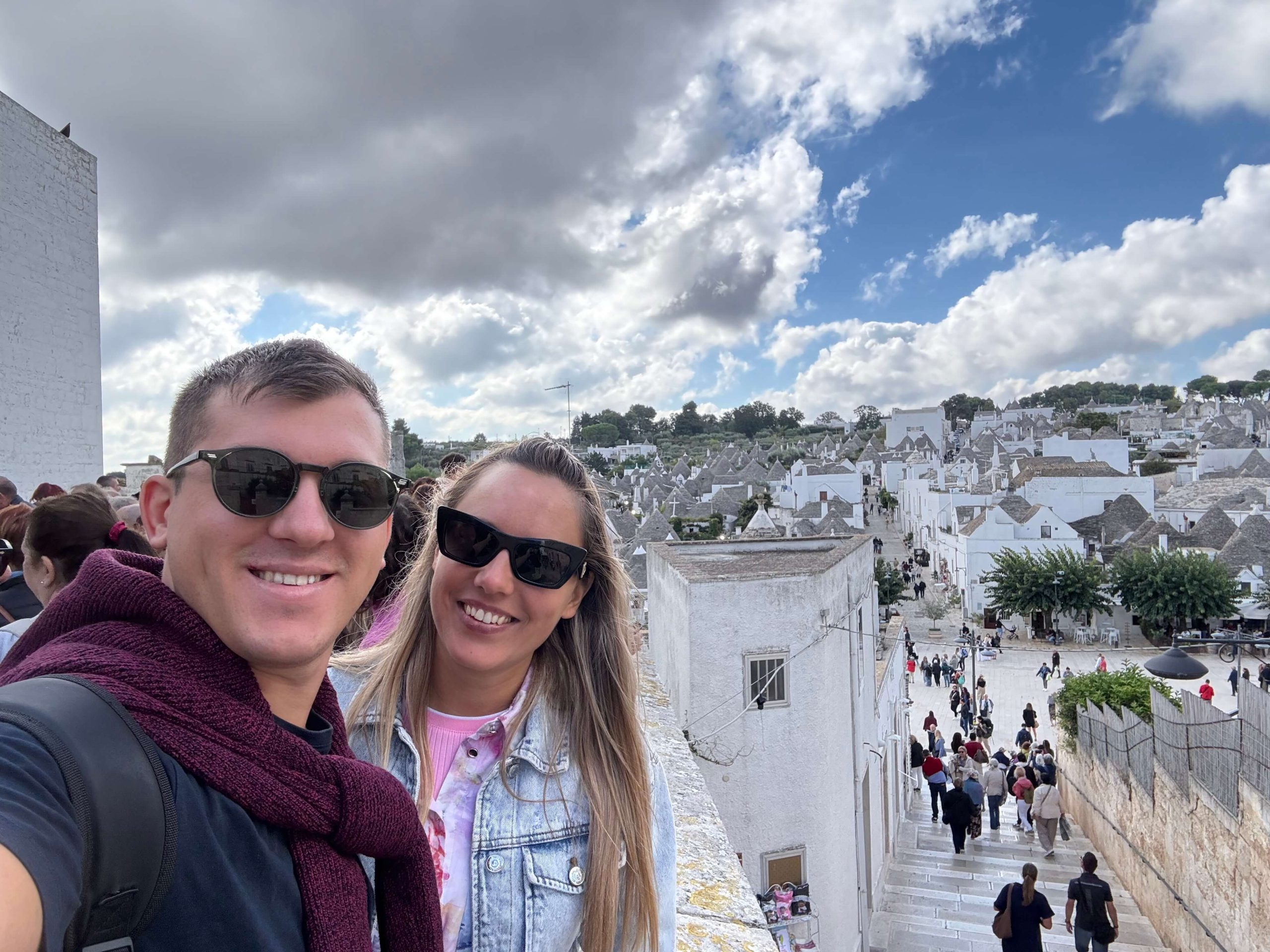
It’s an ideal spot for photography, especially as the afternoon sun begins to cast long shadows over the trulli. I spent a good half hour here, just soaking in the view and reflecting on the unique beauty of this town.
Evening Charm: Souvenirs and a Farewell Dinner
As evening approached, the trulli began to glow under the soft streetlights, creating an even more magical atmosphere. This was the perfect time to browse for souvenirs. Many trulli shops offer handcrafted items, ceramics, and local food products. I found a beautiful hand-painted ceramic trullo, a perfect memento of my visit.
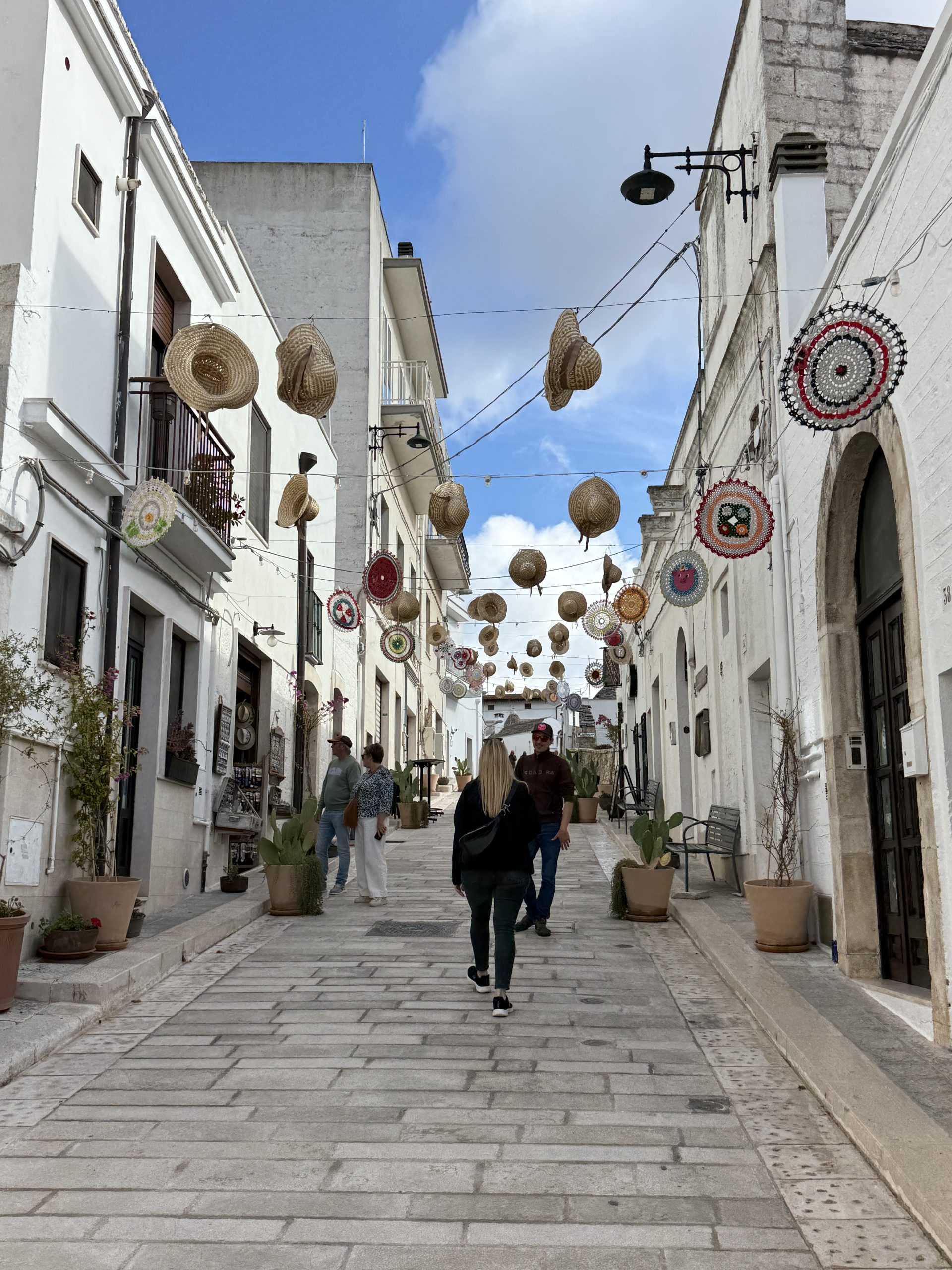
For dinner, I chose a restaurant in the newer part of Alberobello, just outside the main trulli districts, to experience a different side of the town. I enjoyed a delicious focaccia barese and some fresh seafood, accompanied by more local wine. The evening was relaxed and provided a wonderful contrast to the bustling daytime exploration of the trulli.
Is Alberobello Worth Visiting?
Absolutely! Alberobello is definitely worth visiting. However, you must know that it can be extremely touristy during peak hours and high season. With a bit of effort to wake up early or stay overnight, you can avoid the crowds that flock to this small town.

Trulli houses are typical of the Puglia region and you won’t find them elsewhere in Italy. However, Alberobello is the only town where these cone-shaped structures are tightly clustered together, forming an entire village. You can spend a night in a trullo, which is a one-of-a-kind experience in Puglia.
Keep in mind that Alberobello has faced mass tourism and has become more like an open-air museum than an authentic lived-in town. Tourism is the main source of income for locals here. Therefore, don’t expect the same authenticity you might find in other lesser-known towns in Puglia. Just keep your expectations realistic, and you’ll be able to appreciate Alberobello for what it is today. It’s still an impressive place and a must-see when visiting Italy’s heel.
Is One Day in Alberobello Enough?
Alberobello is a very small town. Even if you have just half a day in Alberobello, it will be enough to explore its trulli-lined streets at a leisurely pace. You can walk from one end to the other in around 10-15 minutes. I visited it in half a day, started early in the morning, and was done by noon without any rush.
A Brief Story Behind the Trulli of Alberobello
While those quirky little trulli houses look like they belong in a fairy tale, in the past these iconic buildings had a more practical purpose than entertaining curious tourists. So, what is the story behind the trulli in Puglia?
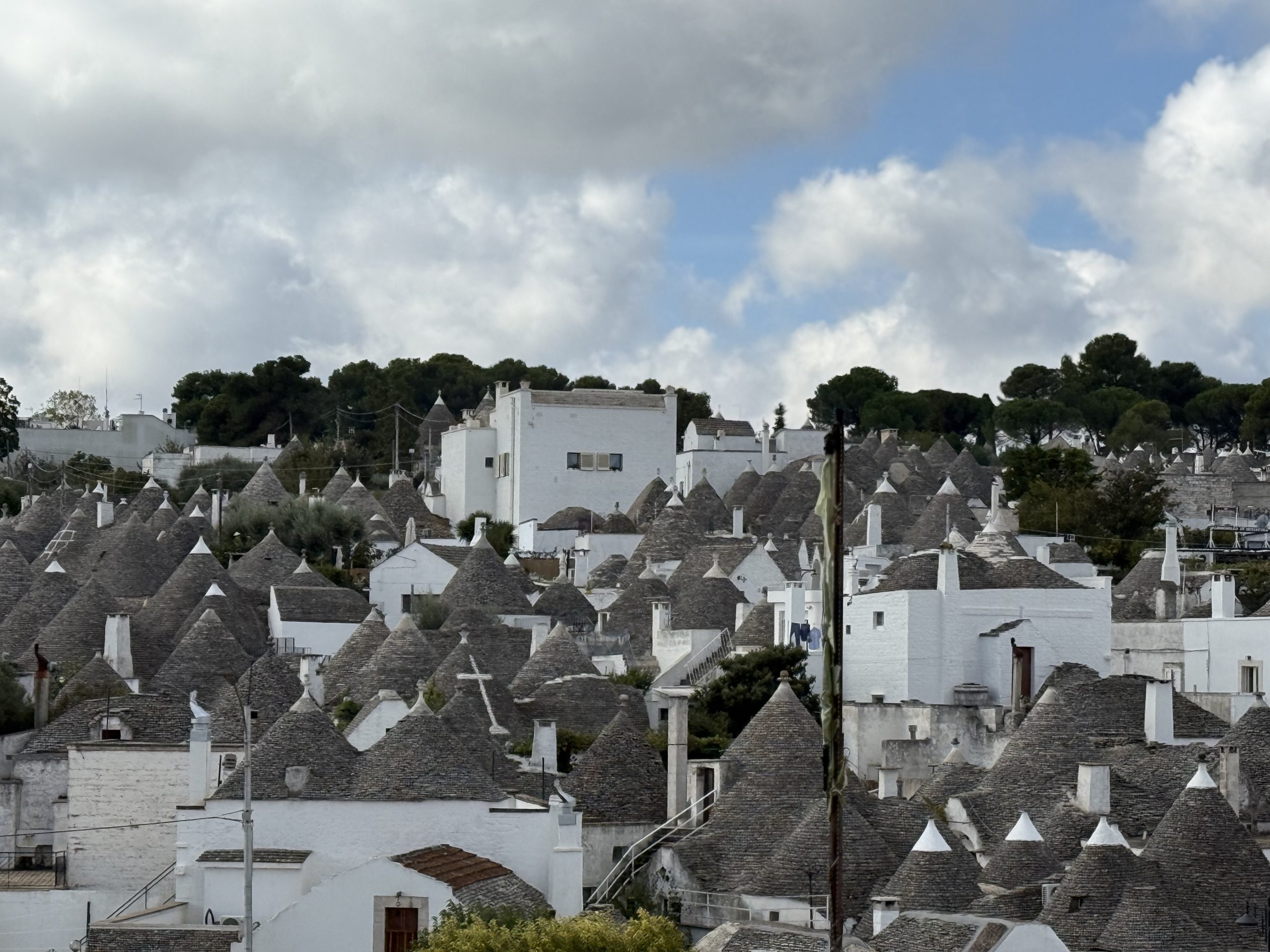
As you may know, taxes in Italy have always been one of the heaviest burdens on residents. Therefore, people get very creative when trying to lighten this “duty” to the government.
However, back in the day, it was only a local ruling family that benefited from not paying taxes. In the 1500s, the Acquaviva family, who ruled the area, found a clever way to dodge property taxes imposed by the King. They ordered the local peasants to build their homes without mortar, so the houses could be quickly dismantled if a royal inspector came around. Using limestone boulders from nearby fields, the locals crafted these unique buildings with their distinctive conical roofs made from carefully stacked limestone slabs.

These buildings are a remarkable example of drywall construction, a technique that has been around since prehistoric times and is still used in this part of Italy today.
However, life wasn’t easy for the peasants, who had to keep watch for inspectors and be ready to tear down their homes at any moment. After a couple of centuries of this, the locals had had enough. By the 1700s, they petitioned the King to free them from the Acquaviva family’s grip. Their wish was granted, and Alberobello was declared a ‘royal’ town, meaning the days of dismantling trulli to avoid taxes were over.
Do People Still Live in Trulli?
While most residents don’t live in trulli anymore, the town’s 1,500+ well-preserved and restored trulli have found a new lease on life as souvenir shops, museums, cozy restaurants, and unique accommodations for visitors. If the ancestors could see the future, they would probably find it hard to believe that a tiny trullo that could host a family of 12 would become a profitable source of income as a tourist attraction.
In 1996, Alberobello was declared a UNESCO World Heritage Site.
One-Day Alberobello Itinerary: The Best Things to Do
When planning your Alberobello itinerary, it’s good to know that it is divided into two districts – Rione Aia Piccola and Rione Monti, separated by the main streets of Largo Martellotta and Via Indipendenza. The whole trulli area is fairly small, making it easy to walk around.
Start Your Day in Rione Aia Piccola
Start your walk around Alberobello by visiting Rione Aia Piccola. It is home to around 500 cone-shaped houses. This area has a mix of old and restored trulli, some of which are now holiday rentals. However, it is still a slightly less touristy part of the village and you won’t find souvenir shops spoiling the view. This allows you to feel as if you are walking in an ancient town where you can spot locals strolling the streets. While it’s hard to believe, some of those miniature houses are still used as actual homes.
I found Rione Aia Piccola extremely photogenic. It also has some nice lookout points over the clusters of cone rooftops.
Peek Inside One or Two Trulli
Some of the trulli homes in Rione Aia Piccola are converted into small museums. They are looked after by the locals. The entrance is free, however, donations are highly appreciated.
It is worth taking a peek as you can see exactly how trulli homes looked in the past with original furniture and household utensils on display.
The locals who look after the trulli do not speak English, but if you know at least basic Italian, they will gladly explain a few interesting things about the ancient homes.
One such photogenic trullo number 14 is located on Via Duca degli Abruzzi. It is run by an elderly local gentleman who welcomes visitors and shows them his former home, which is now converted into a mini museum. We were told that a family of 12 would fit into his small house! Today this trullo is somewhat famous after it received a few celebrity visitors, whose photos are proudly displayed on a board inside.
Places of Interest in Rione Aia Piccola
There are a few museums, monuments, and churches that you can visit on the Rione Aia Piccola side:
Casa D’Amore, the first city hall, is linked to the official recognition of the city. It was the first house to be built using mortar, symbolizing the end of the Acquaviva family’s tax-evading tactics. Constructed in 1797, shortly after Alberobello was declared a ‘royal’ town, Casa D’Amore is a testament to the newfound freedom of its citizens, marking a turning point when the town could finally build permanent, enduring structures without fear of royal repercussions.
Casa Pezzolla is a historic complex in Alberobello, made up of 15 interconnected trulli. Now serving as a museum, Casa Pezzolla displays artifacts, furniture, and exhibits that tell the story of Alberobello’s unique heritage.
The Trullo Sovrano is the largest trullo in Alberobello. It is the only two-story trullo in Alberobello and dates back to the 18th century. Originally used as a residence by the wealthy Perta family, Trullo Sovrano now serves as a museum, showcasing the interior and information about the history and construction of trulli. Opening hours are daily from 10:00 AM to 6:30 PM, though these may vary slightly depending on the season. The entrance fee is typically around €2.
Basilica of Saints Cosmas and Damian. As you stroll along Corso Vittorio Emanuele street, you will surely come across the Basilica of Saints Cosmas and Damian. This church stands out in the heart of Alberobello with its Neoclassical style, which contrasts beautifully with the surrounding trulli. Constructed in the late 19th century, the basilica features a grand facade with twin bell towers that you can see from many vantage points around the village.
Insider tip: Before continuing your explorations around the trulli town, stop for a breakfast or lunch break at APPERÓ – a small bar run by a local. Located inside a traditional trullo, it is a hidden gem in this touristy town and seems to be one of the best spots to have nice food and great Aperol Spritz.
Continue to Rione Monti District
Located on the southern side of the village, Rione Monti, with about a thousand cones, is the larger trulli district. Its main thoroughfare Via Monte Pertica and Via Monte S. Michele are filled with souvenir shops and overflowing with tourists. This district is very commercialized. However, if you wander off the main tourist path, you will be able to find some quieter corners with old trulli that are very charming.
Nevertheless, even popular spots in Rione Monti are worth exploring. While strolling the souvenir-lined streets, look out for some photogenic corners and appreciate immaculately decorated trulli.
Places of Interest in Rione Monti
Trullo Siamese is one of the most unique and famous trulli in Alberobello, easily recognized by its twin-cone design, which stands out among the more typical single-cone trulli. According to local legend, Trullo Siamese earned its name from a love story gone awry. Two brothers fell in love with the same woman, leading to the division of the trullo into two separate living spaces. Trullo Siamese is located in Via Monte Nero and has been converted into a souvenir shop.
Chiesa a Trullo (Trullo Church), often referred to as the Trullo Church, is quite young compared to the rest of the village, as it was built in 1927. As you might guess, this church features the traditional trullo architecture with a large central cone-shaped roof and smaller conical domes. The church is located at the end of Via Monte Pertica.
The Smallest Trulli of Alberobello – Artisan Shop (il trullo più piccolo), is one of the most popular trulli to visit. True to its name, this tiny trullo packs a lot into a small space. The shop offers a variety of handmade souvenirs, from miniature trulli replicas to local crafts. You will find it on the corner of Via Duca d’Aosta and Via Monte S. Michele.

Viewpoints of Alberobello
One of the best things to do in Alberobello is to hunt for views and photogenic corners. Here are some Alberobello viewpoints you don’t want to miss.
Vista Panoramica dei Trulli (or Belvedere Santa Lucia). This is the famous viewpoint overlooking Rione Monti. It gets flooded with tourists, so try to come early (also for better light), or for sunset.
Villa Comunale Belvedere Parco. In Rione Aia Piccolo, head to a small communal area/park from where you get some nice views of trulli houses.
Casolare Panoramica (or Terazza Panoramica) – panoramic rooftop terraces. In Rione Monti, you will find many souvenir shops and some bars offering glimpses of Alberobello roofs from their terraces. They have a sign displayed outside their entrance “casorale panoramica” or “terazza panoramica,” which means that if you purchase something from their store, they will grant you access to their rooftop for a few photos.
Bar “Rione Monti” di Palmisano Caterina. Located on the popular tourist street Via Monte S. Michele, this bar is known across the internet for its terrace with a view. However, be aware of mixed reviews regarding not-so-welcoming staff. After seeing reviews that pointed out an “order code” to access the terrace, I decided not to bother. Your treatment depends on how much you are willing to spend there. Just a cappuccino might not be enough.
Alberobello Painted Rooftops Photo Spot. The other “instagrammable” spot in Alberobello on the same Via Monte S. Michele features a line of trulli with painted rooftops depicting various shapes of sun, heart, star, and more. Designed to protect against evil forces or misfortune, these are actually mythological or religious symbols made from white ash, ending in an ornamental pinnacle.
Try a Typical Pasqualino Sandwich
Each Italian town usually has its specialty dish. Alberobello is no exception. Here the must-try is a Pasqualino sandwich.
The Pasqualino sandwich first appeared in 1966, created by Pasquale Dell’Erba. Originally made with a simple combination of tuna, capers, salami, and cheese inside a rosetta or turtle bread roll, it quickly gained popularity among locals. Over time, variations emerged, including additions like pickles, marinated mushrooms, or other cold cuts. Despite these changes, the original Pasqualino remains a favorite, easily ordered in any local shop in Alberobello, thanks to its rich flavors and ties to the town’s community and history.
One of the well-known shops that sells this quick snack is Focacceria La Lira.
Where to Stay in Alberobello?
Staying in a trullo is one of the must-do things in Puglia. While I would not recommend Alberobello as a base, spending a night or two might be a fun experience. Note that accommodation prices in Alberobello are some of the highest in the region.
Yet, you can still find variations in price and pick a trullo that fits your budget. Here are some great options:
- La Mandorla Luxury Trullo $$$ – absolutely gorgeous accommodation in a traditional trulli, rooms are equipped with hot tubs and the garden is also lovely.
- Trulli Soave $$ – a very popular and beautiful 2-bedroom trulli in Rione Aia Piccola.
- Romantic Trulli $$ – indeed a romantic trullo, it also has a fantastic rooftop terrace and offers exceptional breakfast, located in the Rione Monti area.
- Chiancole – Trulli Experience $$ – immaculate trullo is spacious and bright, has a cozy garden.
- Trullo Essenza-Trulli Antì Charme & Relax $$ – rated as exceptional, this trullo is very bright and nicely designed, also offers superb breakfast and free parking for guests.
- Trulli Resort Aia Piccola $$ – a three-bedroom trullo house in Rione Aia Piccola is perfect for larger groups or families as it can host up to 10 people.
- Trulli Antichi Mestieri $ – a budget-friendly option and a nice stay in the heart of Rione Monti.
- Trulli Resort Dimore Storiche $ – another great economy option – the trullo is absolutely beautiful and full of character.
Travel tip: Alternatively, especially if you drive, you can choose to stay in the countryside nearby. That is precisely what we did – we stayed in a trullo with a private garden, surrounded by olive groves and complete silence.
- Trulli Annina – we stayed in this wonderful trullo with a private garden and small pool just a 12-minute drive from Alberobello.
- Dimora Ionica $$ – another amazing option just 10 minutes from Alberobello. It is a beautiful traditional trulli holiday home. It features a refreshing pool, patio, garden, and barbecue facilities. The accommodation also provides airport transfers and a bicycle rental service.
Day Trips to Alberobello and Guided Tours
There is no shortage of tours to and around Alberobello.
- Walking Alberobello tour – a popular 2-hour tour around Alberobello led by a local guide.
- Orecchiette masterclass – learn how to make real Pugliese pasta with a local nonna – it is a fun 2-hour class.
Alberobello on a Day Trip
If you are not driving, you may consider joining a guided day tour from your base location in Puglia.
- Day trip to Alberobello from Bari – a half-day trip visiting the main attractions in Alberobello. Alternatively, this 5-hour tour includes visiting the famous coastal town of Polignano a Mare.
- Day trip to Alberobello and Matera from Bari or Polignano a Mare – you can visit two historical gems as a full-day guided tour.
- Alberobello from Polignano a Mare – a 3.5-hour tour.
- Day trip to Alberobello from Brindisi – this 8-hour tour also includes a stop at Locorotondo, Ostuni, and a brunch.
- Day trip to Alberobello from Lecce – full day trip also includes free time in Locorotondo and Ostuni, plus aperitif.
- Day trip to Alberobello from Ostuni – a guided tour that includes time in Locorotondo and Ostuni.
Where to Eat in Alberobello
I visited Alberobello only for half a day, so I haven’t explored much of its culinary offerings. However, there were a couple of places that I tried:
- APPERÓ – a small bar run by a local. Located inside a traditional trullo, it is a hidden gem in this touristy town and seems to be one of the best spots to have nice food and great Aperol Spritz.
- Focacceria “la Lira” – for the famous pasqualino sandwich. Other places that also make them are La Pagnottella and Negozio Franco Girolamo Alimentari.
- La Bottega del Gelato – for ice cream – high Google reviews lived up to the rating!
- Bar Pasticceria Martinucci Laboratory – for pasticciotto – we had a coffee break here and the pastries were great. The bar has a terrace upstairs with a view over trulli.
How to Get to Alberobello
The Closest Airport to Alberobello
The nearest airport to Alberobello is Bari Karol Wojtyła Airport (BRI) (70 km) and also Brindisi Salento Airport (BDS) (75 km). These are the two most common entry points to Puglia from European countries. However, if you fly from abroad, you can also land at Naples International Airport (300 km) or any of Rome’s airports (500 km).
Driving to Alberobello
If you’re including Alberobello in a wider tour of Puglia, the most convenient way to get around is by car. While you can navigate the area using public transportation, having a car allows you to reach some amazing lesser-known spots and makes it easier to visit multiple places in one day, such as pairing a trip to Alberobello with Locorotondo or other towns and villages in the Val d’Itria.
Driving distances and times from several popular destinations to Alberobello:
- Locorotondo: 9 km (5.6 miles), 15 minutes
- Bari: 55 km (34.2 miles), 1 hour
- Monopoli: 21 km (12.4 miles), 30 minutes
- Polignano a Mare: 30 km (18.6 miles), 35 minutes
- Ostuni: 30 km (18.6 miles), 45 minutes
- Matera: 70 km (43.5 miles), 1 hour 10 minutes
- Lecce: 114 km (71.5 miles), 1 hour 20 minutes
Car rental tip: If you are looking for an affordable rental car, check Discovercars. This is a car search website that helps you compare rates between different rental companies and can help you save up to 70% on your rental rate. It also gives an option to add reasonably priced full coverage (insurance).
Train to Alberobello
If you don’t drive, Alberobello can be reached by public transport.
- From Bari / you will have to change in Putignano, and the journey might take around 2 hours one way.
- From Locorotondo (15 min), Martina Franca (30 min), or Ceglie Messapica (1 min) you can get a direct train to Alberobello.
- From Brindisi / there is no direct train and you have to change to a bus in Monopoli. The journey will take 2 hours.
Bus to Alberobello
- From Bari / direct buses are operated by Ferrovie del Sud Est that will take you from several stations in Bari: Bari Centrale, Viale Unità d’Italia, Largo Ignazio Ciaia, and Largo Sorrentino. They arrive at Alberobello, Viale Margherita (Stazione FSE) in 1 hour.
- From Monopoli and Polignano a Mare / you can also reach Alberobello in 50 minutes by bus.
You can check timetables for both trains and buses on the Trenitalia website.
Parking in Alberobello
If you arrive by car, you have plenty of options to park in town. The parking lots that are close to the trulli zone will be paid either by hour (2 EUR per hour) or per day (around 6 EUR per day).
We arrived at Alberobello early in the morning and it was very easy to find a spot along Via Indipendenza Street. It was also free until 8 AM. We parked here and walked less than 10 minutes to the trulli area.
Other parking options:
- Parcheggio Viale Indipendenza 4 – “Parking Service” – offers parking for 6 EUR per day. This spot is right next to the entrance to the Rione Aia Piccola district.
- ALBEROBELLO PARKING DOWNTOWN – conveniently located near the main attractions.
Top Tips for Visiting Alberobello
How Many Days in Alberobello?
Alberobello is a tiny town and you do not need more than 4 hours to walk around. Thus, if you are short on time, you can make it a half-day trip and add a visit to other towns in Itria Valley. For example, we combined a visit to Alberobello with Locorotondo as they are nearby.
However, you may consider staying a night in Alberobello for a unique experience.
How to Visit Alberobello on a Day Trip?
The most convenient way to visit Alberobello as a day trip is from either Bari, Monopoli, Polignano a Mare, or one of the Itria Valley towns nearby. You can also visit Alberobello from Matera. If you drive, Alberobello is easy to get to from any of those locations. Otherwise, you may consider joining an organized tour from your base town.
What is the Best Time of Day to Visit Alberobello?
To avoid the heat and most importantly the crowds that flock during the day, visit as early as possible. Ideally at sunrise. We arrived quite late, at around 7:30 AM (yes it was a bit late for the late spring season) and only had 1.5 hours of quiet time before the tour buses arrived. Thus, if sunrise is at 6 AM, I strongly suggest going at that time. The town in soft light will also look serene.
Alternatively, if you stay overnight in Alberobello, you might also experience it at its quietest around dusk.
The Best Time of the Year to Visit Alberobello
Spring (March to May) – Alberobello in spring offers mild weather and blooming flowers that decorate trulli houses. With fewer tourists (yet not that few), the town is peaceful in early mornings and evenings. I visited at the end of April and it was already quite busy during the day but still manageable.
Summer (June to August) is peak season, with extremely hot, sunny weather and many visitors. It is also the most expensive time of the year. Thus, I believe it is the worst time to visit Alberobello.
Autumn (September to November) brings warm, comfortable temperatures ideal for sightseeing. The tourist crowds slowly thin out, and you can enjoy the harvest season with fresh local wine and olive products. Cultural festivals, like the Festa dei Santi Cosma e Damiano in late September, enrich the experience.
Winter (December to February) is quieter and cooler, with fewer tourists and lower prices. Despite occasional rain, the town’s serene atmosphere is perfect for a more personal experience of the trulli, and festive decorations add ambiance during the Christmas season.
Conclusion
I hope you found this guide to one day in Alberobello useful. Alberobello is more than just a collection of unusual buildings; it’s a testament to human ingenuity and a vibrant cultural heritage. It’s a place that sparks the imagination and leaves a lasting impression. If you ever find yourself in Puglia, do not miss the opportunity to step into this enchanting fairytale town. You won’t regret it.