

One Day in Barcelona 2027: The Perfect Itinerary with Gaudí, Tapas & Sunset Views
Barcelona is one of those cities that looks impossible to “do” in a day – Gaudí everywhere, a medieval old town, a market that smells of jamón and the sea, a beach, and a hill with the best sunset in town. I’ve walked it end to end, and the honest truth is this: you can’t see everything in one day, but you can absolutely have one brilliant, well-paced day that hits the icons without spending it in queues.
This is the exact route I’d give a friend for 2027 – with times, ticket prices, where to eat and the mistakes to avoid. Planning more of Spain? Start with my Spain travel guide, then add one day in Málaga and one day in Seville.

Barcelona at a glance
- Best for: Gaudí architecture, the Gothic Quarter, tapas, the sea and sunset views
- Getting around: on foot plus the metro – a single ticket is €2.90 and the 10-trip T-casual €13 (2026 fares)
- Must-book: Sagrada Família (from €26) and, if you add it, Park Güell (€18)
- Tourist tax: charged per person per night – the Barcelona city surcharge rises to €6 in 2027, on top of the Catalan rate
- Local rhythm: lunch 13:30–15:30, dinner from 20:30
- Watch out for: pickpockets on La Rambla, in the metro and at the beach
My one-day Barcelona itinerary
The route runs roughly north to south and then west: Sagrada Família → Passeig de Gràcia → La Rambla & La Boqueria → Gothic Quarter & El Born → the port → Montjuïc for sunset. You’ll walk 12–15 km, so wear proper shoes and use the metro for the two longer hops.
8:30 – Breakfast near Sagrada Família
Grab a café con leche and a croissant or a bikini (Barcelona’s ham-and-cheese toastie) in one of the side streets around Carrer de Provença, away from the cafés facing the basilica. Aim to be at the entrance 10 minutes before your slot.
9:00 – Sagrada Família (1.5–2 hours)
Book the first morning slot: the light through the stained glass is softer and the groups are smaller. 2026 was a historic year here – the cross on the central Tower of Jesus Christ was put in place in February 2026, making the Sagrada Família the tallest church in the world at 172.5 metres. Inside works continue, so expect a bit of scaffolding.
- Tickets: from €26 with the app audio guide; around €36 with tower access (official prices)
- Book: only on the official site and ideally 1–3 weeks ahead – same-day tickets often sell out
- Tip: the Nativity façade is the Gaudí-era side; spend your last 10 minutes in the museum under the basilica to understand how it was built
11:00 – Passeig de Gràcia: Casa Batlló & Casa Milà
Walk 20 minutes (or take L5 two stops to Diagonal) to Passeig de Gràcia, Barcelona’s grandest boulevard. Casa Milà (La Pedrera) and Casa Batlló are five minutes apart. With one day, I’d admire both façades from the street and go inside only one if Gaudí is your thing – tickets start at roughly €35 and you need about an hour per house.
12:15 – La Rambla, Columbus and La Boqueria
Head down from Plaça de Catalunya along La Rambla. It’s touristy, yes, but the walk is iconic – just keep your bag zipped and in front of you. Halfway down, turn into La Boqueria (Mercat de Sant Josep). The front stalls with fruit cups and smoothies are for photos; walk to the back for the fish, seafood and the busy counter bars where locals actually eat.

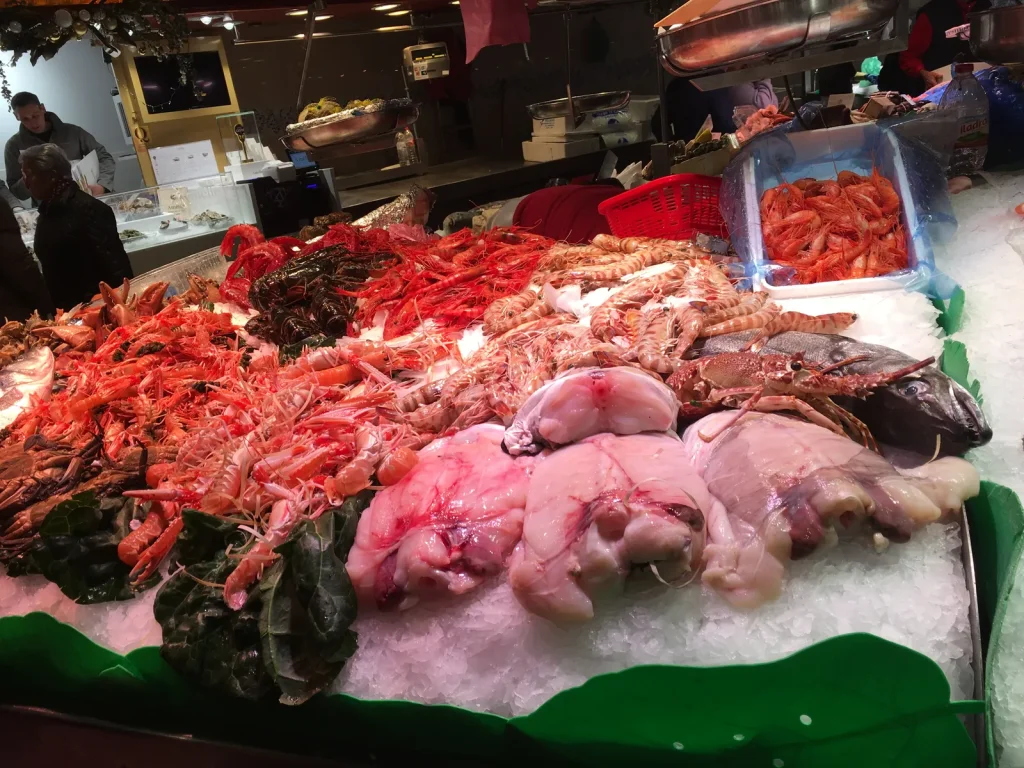
La Boqueria is closed on Sundays, and many stalls start packing up mid-afternoon, so lunch here is perfect timing. Order a few plates at a counter bar – grilled prawns, fried calamari, pan con tomate – and expect around €20–30 per person.

If you have five spare minutes, walk to the bottom of La Rambla to see the Columbus Monument and the port, then loop back into the old town.
14:00 – Gothic Quarter and El Born
This is where Barcelona feels most like itself: narrow lanes, hidden squares and Roman walls. My route: Plaça Reial with its palm trees and fountain → Carrer del Bisbe and its little neo-Gothic bridge → Barcelona Cathedral (there’s a small fee for the tourist visit, and the roof terrace is worth it) → across Via Laietana into El Born for the soaring Santa Maria del Mar.

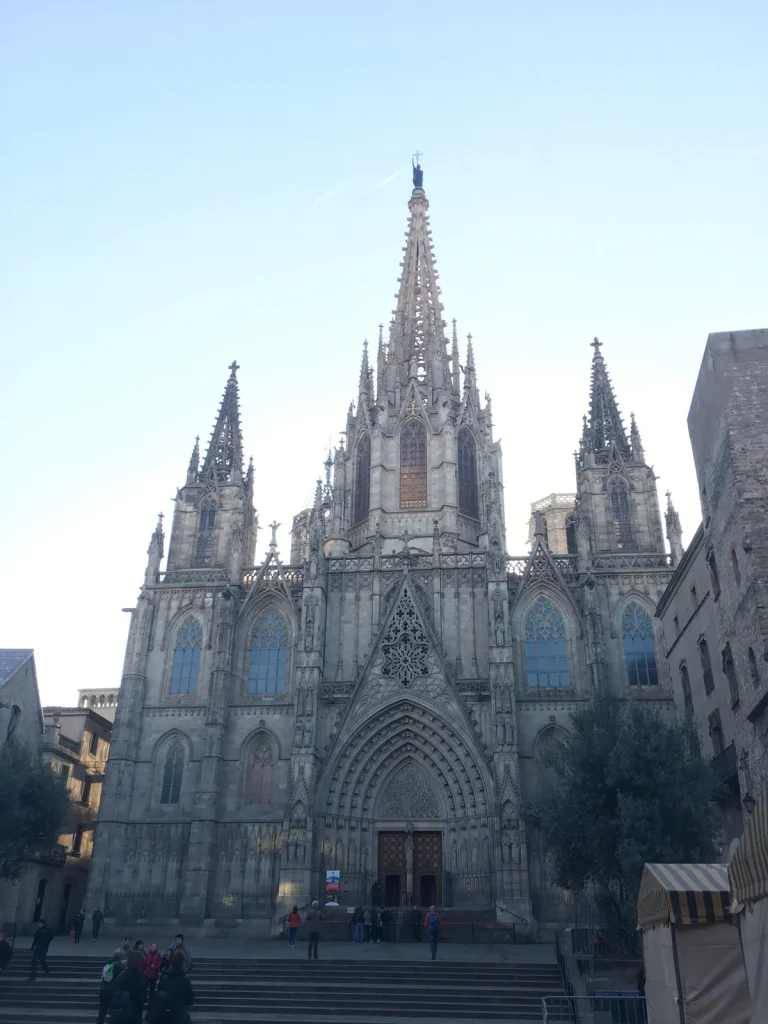
Need a coffee break? El Born is full of small cafés and design shops – much better value than the squares right next to the Cathedral.
16:00 – The port and a quick sea fix
From El Born it’s a 10-minute walk to Port Vell and the Barceloneta seafront. Walk along the marina towards the beach, sit on the sand for half an hour, or just enjoy the sea air. In summer this is the moment for a swim; in winter it’s a lovely, quiet stroll.
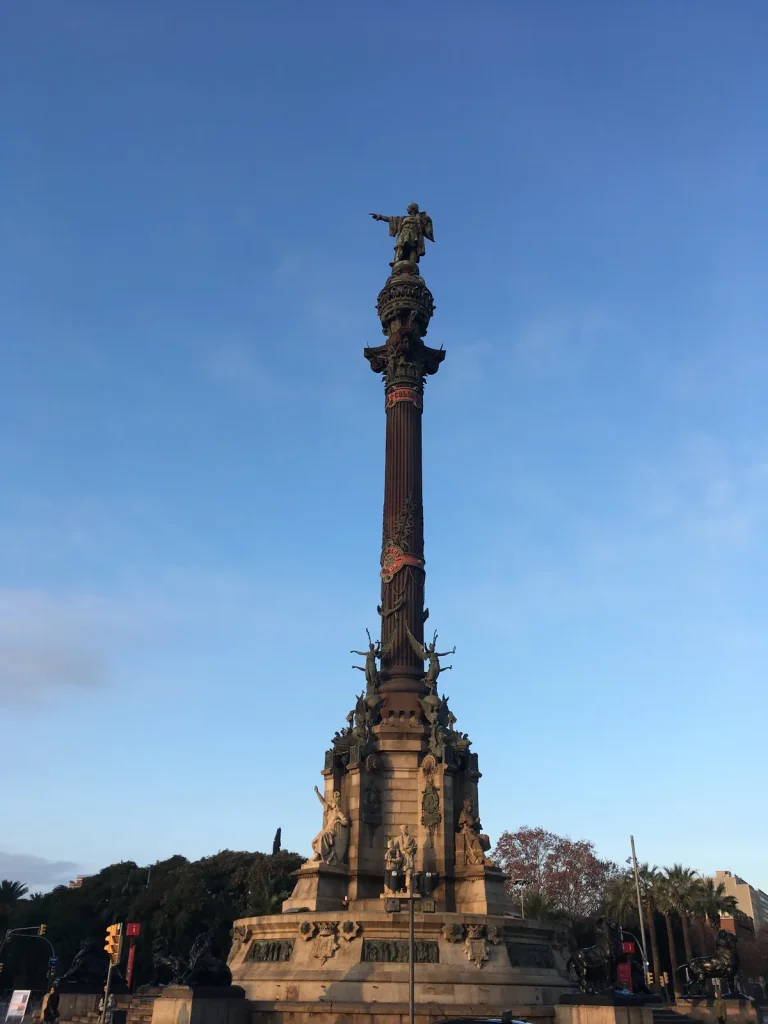
17:30 – Montjuïc for sunset
Take the metro (L3 from Drassanes or Barceloneta via a change) to Espanya. Walk up Avinguda de la Reina Maria Cristina towards the Palau Nacional (home of the MNAC art museum) – there are outdoor escalators most of the way. The terrace in front of the museum is free and gives you one of the best views in the city: Plaça d’Espanya, the Venetian towers and the whole city stretching to Tibidabo.

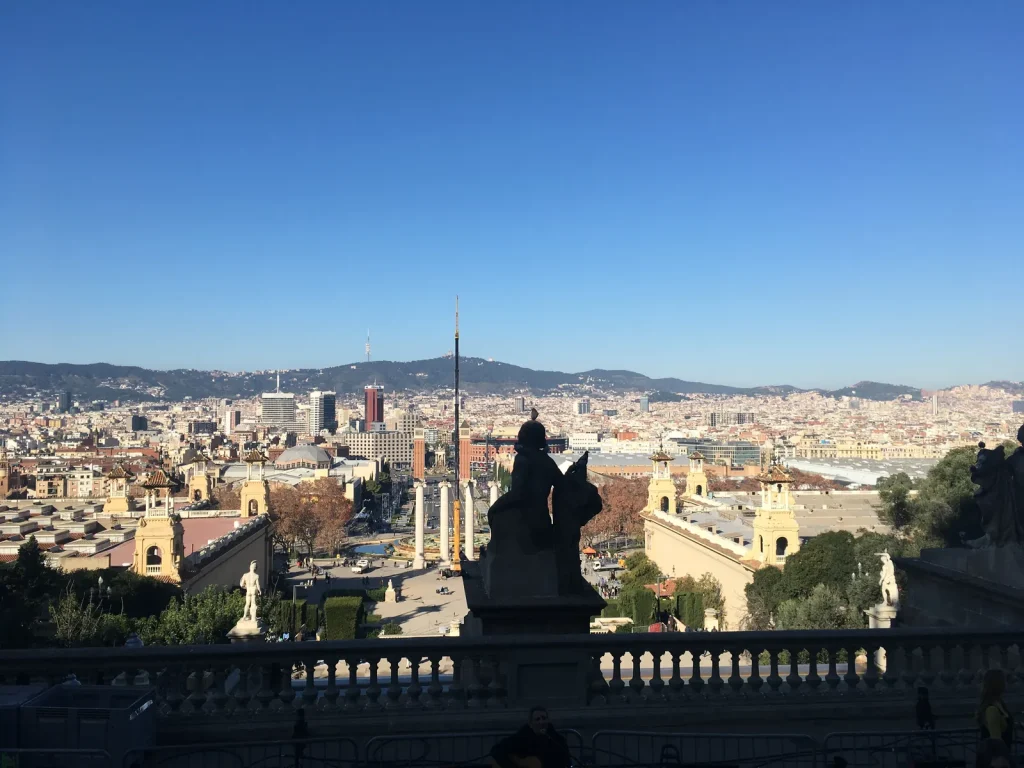
On show nights, stay for the Magic Fountain of Montjuïc right below the museum – it’s free. Shows usually run Thursday to Saturday outside summer and Wednesday to Sunday in summer, but they can be cancelled for maintenance or drought, so check the city’s official schedule on the day.
20:30 – Tapas dinner in Poble-sec or El Born
Walk down from Montjuïc into Poble-sec: Carrer de Blai is lined with pintxo bars where you pick small bites from the counter and pay per toothpick (about €1.50–3 each). For something sit-down, go back to El Born for vermouth and tapas. Remember: Barcelona eats late, so 20:30 is early here.
Barcelona in winter: what I loved
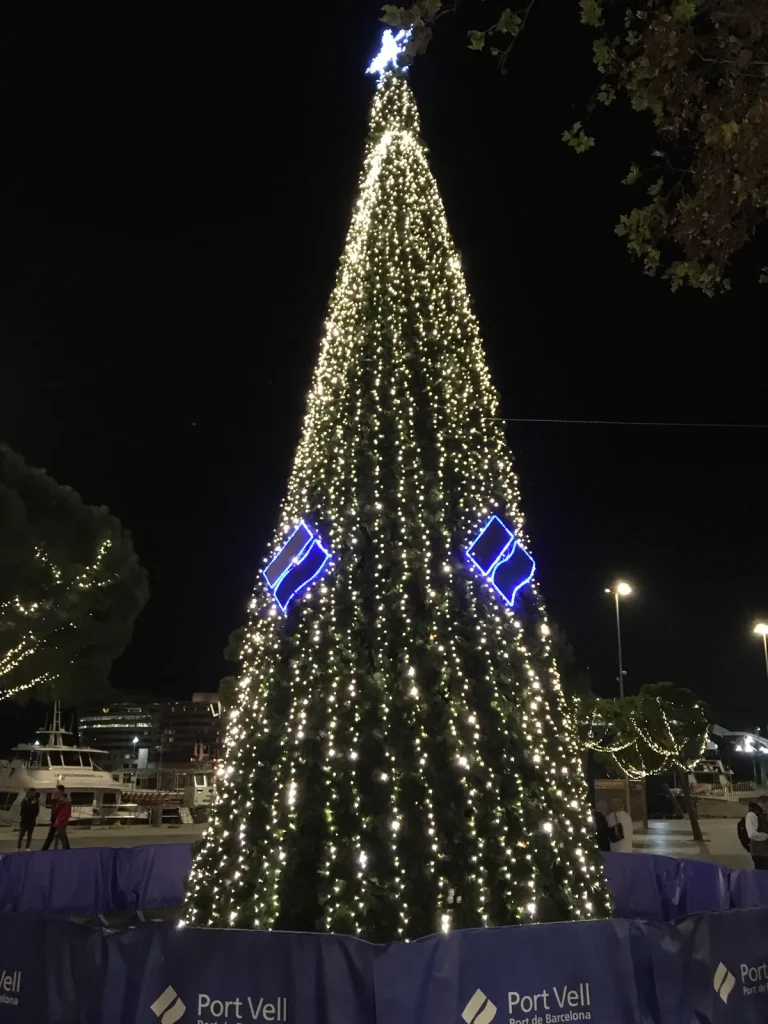
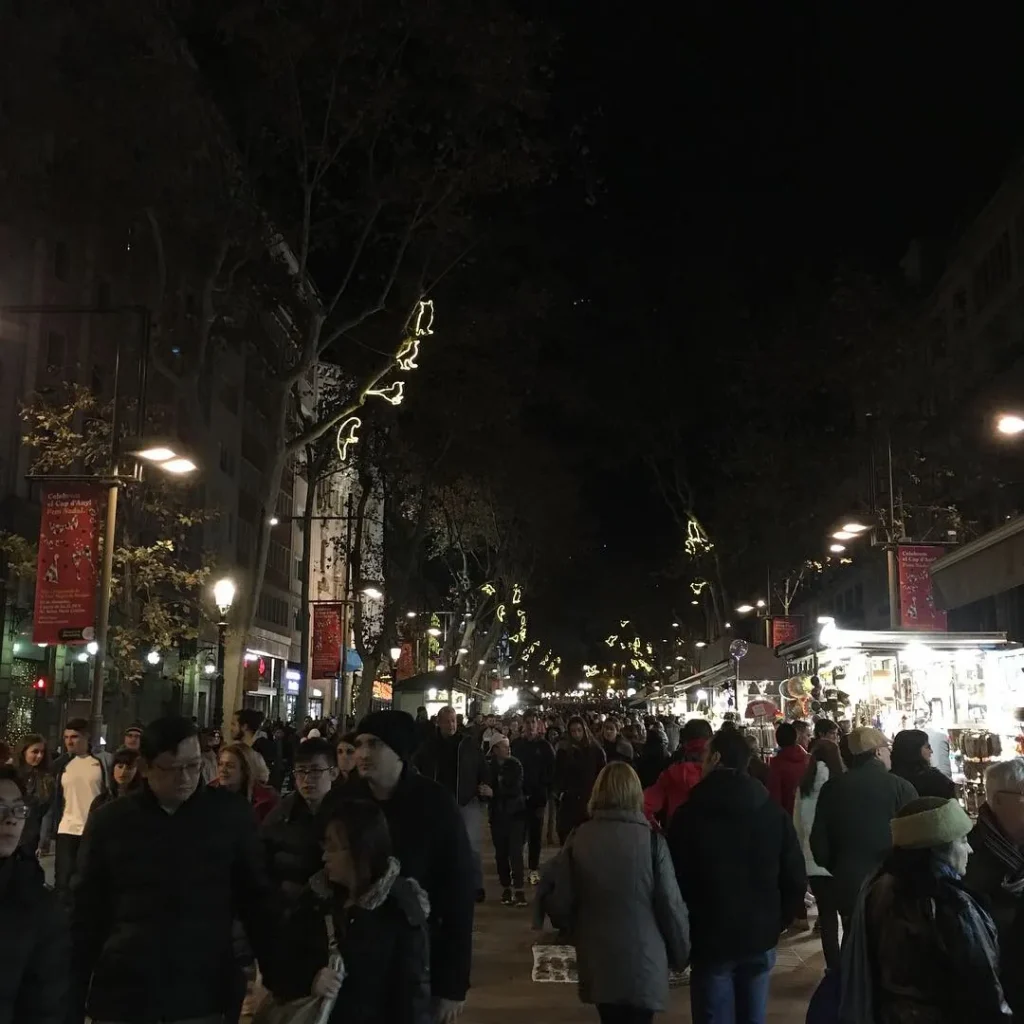
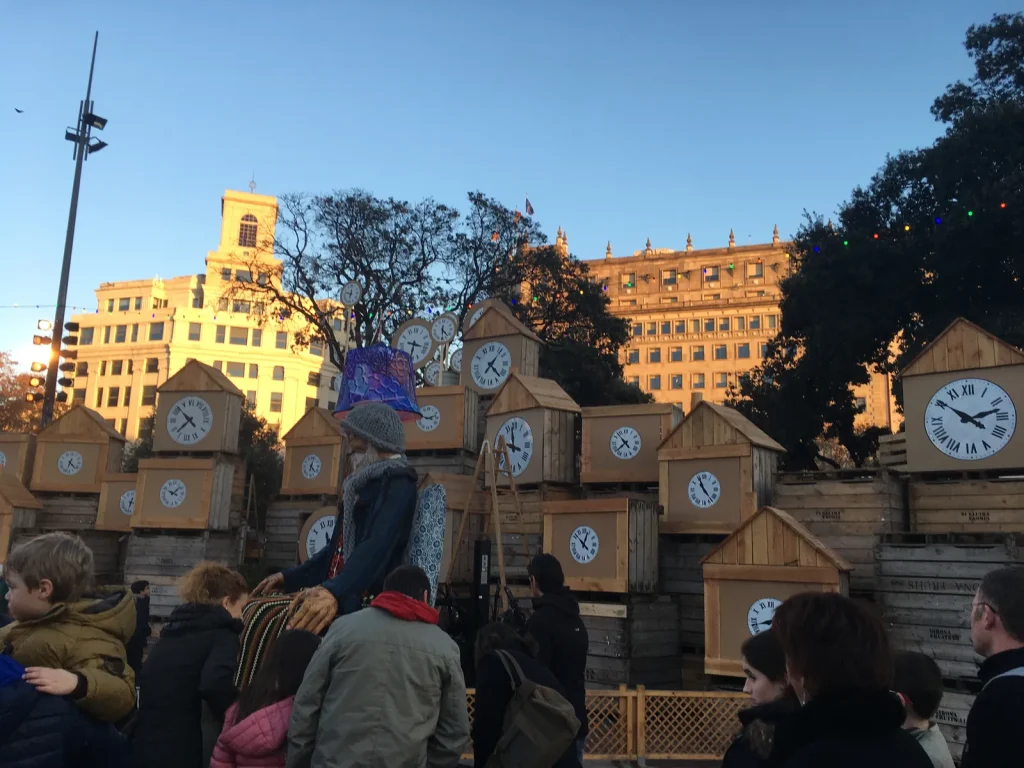
My photos are from a December trip, and Barcelona in winter is underrated. Days are often sunny and mild, queues are shorter, and the city is full of Christmas lights – La Rambla glows at night, Port Vell has a giant Christmas tree, and the traditional Fira de Santa Llúcia Christmas market sets up in front of the Cathedral. Just remember it gets dark around 17:30, so do Montjuïc earlier.

Swap ideas: make the day your own
- Park Güell instead of Casa Batlló: book a morning slot (€18 for the Monumental Zone since 2026). It’s up a hill north of the centre – allow 2.5 hours including travel.
- Beach day: skip the houses and spend the afternoon at Barceloneta or the quieter Bogatell beach.
- Football fans: Camp Nou is being rebuilt – check what is open before you plan around it.
- Bad weather: the MNAC, the Picasso Museum in El Born and the Sagrada Família itself are great rainy-day choices.
Getting to Barcelona and getting around
- From the airport: the Aerobús goes to Plaça de Catalunya in about 35 minutes; the R2 Nord train from T2 is cheaper and accepts the T-casual; the L9 metro needs a special airport ticket (€5.90 in 2026).
- Metro & bus: single ticket €2.90 or T-casual €13 for 10 trips (shareable). Fares usually rise slightly each January, so check before you go.
- On foot: the old town, El Born, the port and La Rambla are all walkable; use the metro for Sagrada Família and Montjuïc.
- Taxis: black-and-yellow taxis are easy to hail and use the meter.
Where to stay in Barcelona
- Eixample: elegant, central and close to Passeig de Gràcia – the best all-rounder.
- El Born / Gothic Quarter: atmospheric and walkable, but can be noisy at night.
- Poble-sec / Sant Antoni: local feel, great tapas and good value, close to Montjuïc.
- Barceloneta: for the beach – but busy and more expensive in summer.
Budget for the tourist tax: it’s charged per person per night on top of your room price, and in Barcelona it includes both the Catalan rate (which depends on the type of accommodation) and the city surcharge, which goes up to €6 in 2027.
How much does one day in Barcelona cost?
| Item | Budget | Mid-range |
|---|---|---|
| Breakfast | €5 | €10 |
| Sagrada Família | €26 | €36 (with tower) |
| Casa Batlló or Casa Milà | – (façades only) | ≈ €35 |
| Lunch at La Boqueria | €15 | €30 |
| Coffee & snacks | €6 | €12 |
| Metro (T-casual trips) | €5 | €8 |
| Tapas dinner + drinks | €20 | €45 |
| Total per person | ≈ €77 | ≈ €176 |
Prices are based on official 2026 rates and my own spending; check current prices before booking, as they tend to rise each year.
Best time to visit Barcelona
April–June and September–October are the sweet spot: warm, sunny and great for both sightseeing and the beach. July and August are hot and very crowded. November to February is mild, cheaper and much calmer – and December brings the Christmas lights and markets.
My honest local tips
- Book the Sagrada Família first and build the day around your time slot.
- Pickpockets are the #1 problem – phone in your front pocket, bag closed, never on the table at outdoor cafés.
- Eat away from the big sights: one street back usually means better food for less.
- Don’t buy sangria on La Rambla – order vermouth or a caña (small beer) in a neighbourhood bar instead.
- Respect the neighbourhoods: keep noise down at night and don’t walk around in swimwear outside the beach – it can get you fined.
- Tap water is safe but tastes of chlorine; many locals drink bottled or filtered water.
More one-day trips in Spain and nearby
Barcelona is just the start. Fly or take the train south for one day in Málaga – Picasso, a Moorish fortress and the beach in one city – or one day in Seville, the home of flamenco and the Real Alcázar. For the bigger picture, read my Spain travel guide or browse all my Europe guides, including Portugal, Italy and Croatia.
Work with me
Are you a hotel, restaurant, tour operator or tourism board in Barcelona or elsewhere in Spain? I create honest one-day itineraries, photos and Instagram stories that help travellers plan real trips. Find out how we can work together or get in touch.
Barcelona FAQ
Is one day in Barcelona enough?
One day is enough to see the highlights – the Sagrada Família, the Gothic Quarter, La Boqueria and a sunset on Montjuïc – if you book tickets in advance and follow a set route. Two to three days let you add Park Güell, the beaches and museums at a slower pace.
How much is a Sagrada Família ticket in 2027?
In 2026 the official basic ticket with audio guide cost €26 and the ticket with tower access around €36. Prices are set by the basilica and may rise in 2027, so book on the official website.
Do I need to book Park Güell in advance?
Yes. The Monumental Zone works with timed tickets (€18 for adults since 2026) and popular morning slots sell out, especially in spring and summer.
How much is the tourist tax in Barcelona?
It is charged per person per night and combines the Catalan rate, which depends on the type of accommodation, with a Barcelona city surcharge that rises to €6 in 2027. In a five-star hotel the total is well over €12 per night.
Is La Boqueria open on Sundays?
No, La Boqueria market is closed on Sundays, and many stalls close early in the afternoon on other days, so visit in the morning or around lunchtime.
Is Barcelona safe for tourists?
Barcelona is generally safe, but pickpocketing is very common on La Rambla, in the metro and at the beach. Keep your phone and wallet secure and stay aware in crowds.

