
Seville in One Day: The Perfect 2027 Itinerary (Alcázar, Tapas & Flamenco)
Seville is the city that ruined every other Spanish city for me – in the best way. Orange trees on every corner, horse carriages clip-clopping past a cathedral the size of a small town, tapas bars where locals shout their orders over the counter, and a flamenco guitar drifting out of a doorway at midnight. Can you see it in one day? Honestly, you could spend a week here. But if Seville is a stop on a bigger Andalusia trip, one well-planned day gives you the Real Alcázar, the Cathedral and Giralda, Plaza de España, Triana and a proper tapas crawl – and this is exactly how I would do it in 2027.
This guide is part of my Spain travel guide. Heading further along the coast? Pair it with my one-day guides to Málaga and Barcelona.
Seville at a glance
- Best for: Moorish palaces, tapas, flamenco, beautiful plazas and orange-scented streets
- Time needed: 1 full day (2–3 days if you can)
- Getting around: on foot – the historic centre is flat and compact
- Must-book in advance: Real Alcázar (timed entry)
- Currency: Euro (€) – cards accepted almost everywhere
- Budget for the day: about €110–175 per person, without accommodation
- Best time to visit: March–May and October–November
- Avoid: sightseeing outdoors between 14:00 and 18:00 in July and August
My one-day Seville itinerary
The trick to Seville in one day is timing. The big monuments have timed entries and queues, the afternoon heat is real for half the year, and the city only truly wakes up after dark. So: palaces in the morning, a long lunch, a slow afternoon, and the best bits saved for sunset and night.
8:30 – Breakfast like a Sevillano
Start with a tostada con tomate y aceite (toasted bread with crushed tomato and olive oil) and a café con leche at any busy neighbourhood bar near the cathedral. It costs about €3–5 and it is how half the city starts the day. If you want something sweet, look for churros with thick hot chocolate.
9:30 – Real Alcázar (2–2.5 hours)
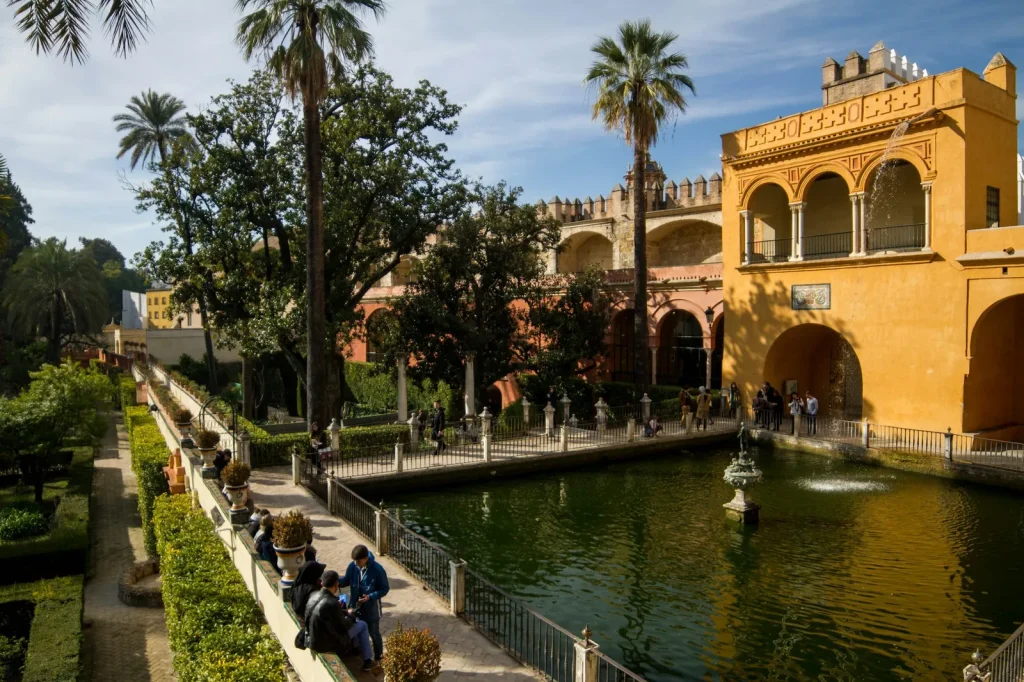
The Real Alcázar is the reason I fell in love with Seville. It is a working royal palace with layer upon layer of history – Moorish-style courtyards with lace-like plasterwork, Renaissance halls and enormous gardens with palm trees, fountains and peacocks. Game of Thrones fans will recognise it as the Water Gardens of Dorne.
- Opening hours: 9:30–19:00 from April to September, 9:30–17:00 from October to March
- Tickets: general admission was about €15.50 in 2026 (reduced about €8 for students up to 30); the Upper Royal Rooms are an extra add-on
- Free entry: there are free time slots on Monday afternoons, but they must be booked online and go fast
- Book ahead: only on the official Alcázar website – timed slots sell out days (in spring, weeks) in advance
My tip: take the first slot of the day. The Patio de las Doncellas is almost empty at 9:30, and by 11:00 it is wall-to-wall tour groups. Leave the gardens for the end of your visit – they are huge, shaded and perfect for slowing down.

12:00 – Seville Cathedral and the Giralda (1.5 hours)
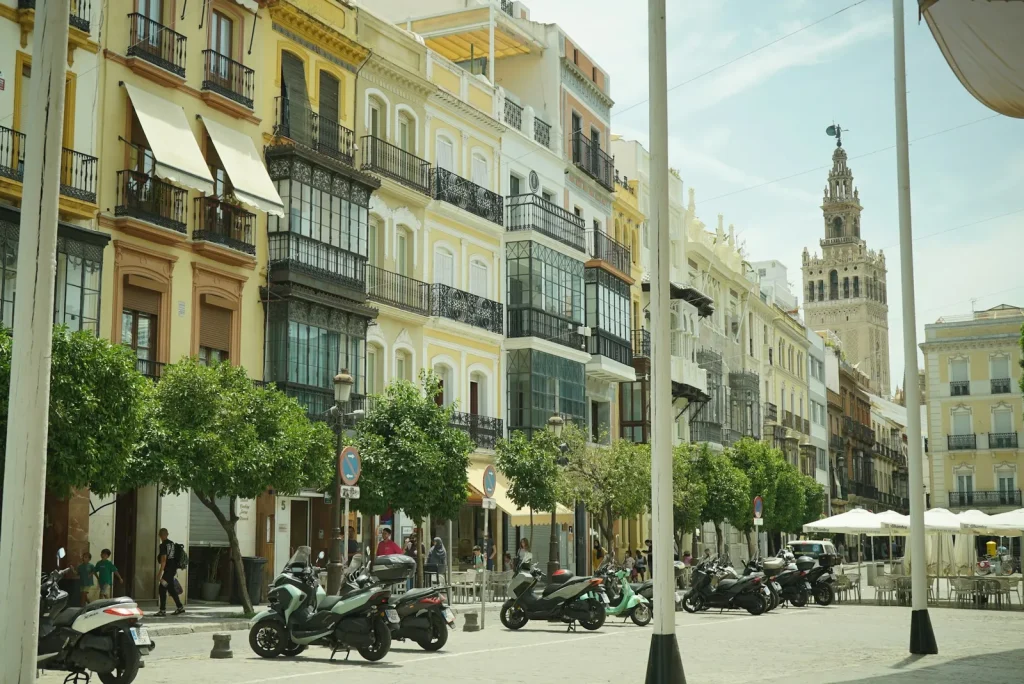
Walk across Plaza del Triunfo and you are at the largest Gothic cathedral in the world. Inside you will find the tomb of Christopher Columbus and an altarpiece covered in gold, but the highlight for me is climbing the Giralda. There are no stairs – just 35 gentle ramps, built so a man on horseback could ride to the top – and the view over the rooftops is worth every step.
- Opening hours: Monday–Saturday 10:45–18:00 (ticket office until 17:00), Sunday 14:30–19:00
- Tickets: €13 online or €14 at the ticket office (2026 prices); the ticket includes the Giralda and the Church of El Salvador
- Dress code: shoulders and knees covered
- Book: on the official Cathedral website to skip the ticket queue
If you are short on time, buy the cathedral ticket online and use it later at El Salvador – a stunning baroque church that is usually much quieter.
13:30 – Lunch and tapas in Santa Cruz
You are now in Barrio Santa Cruz, the old Jewish quarter – a maze of whitewashed alleys, tiny squares and orange trees. Skip the restaurants with photo menus right next to the cathedral and walk five minutes deeper in. Bodega Santa Cruz (known locally as Las Columnas) is loud, cheap and brilliant: order at the bar, they chalk your bill on the counter, and you eat standing outside like everyone else. Expect €2.50–4 per tapa.
15:00 – Plaza de España and María Luisa Park
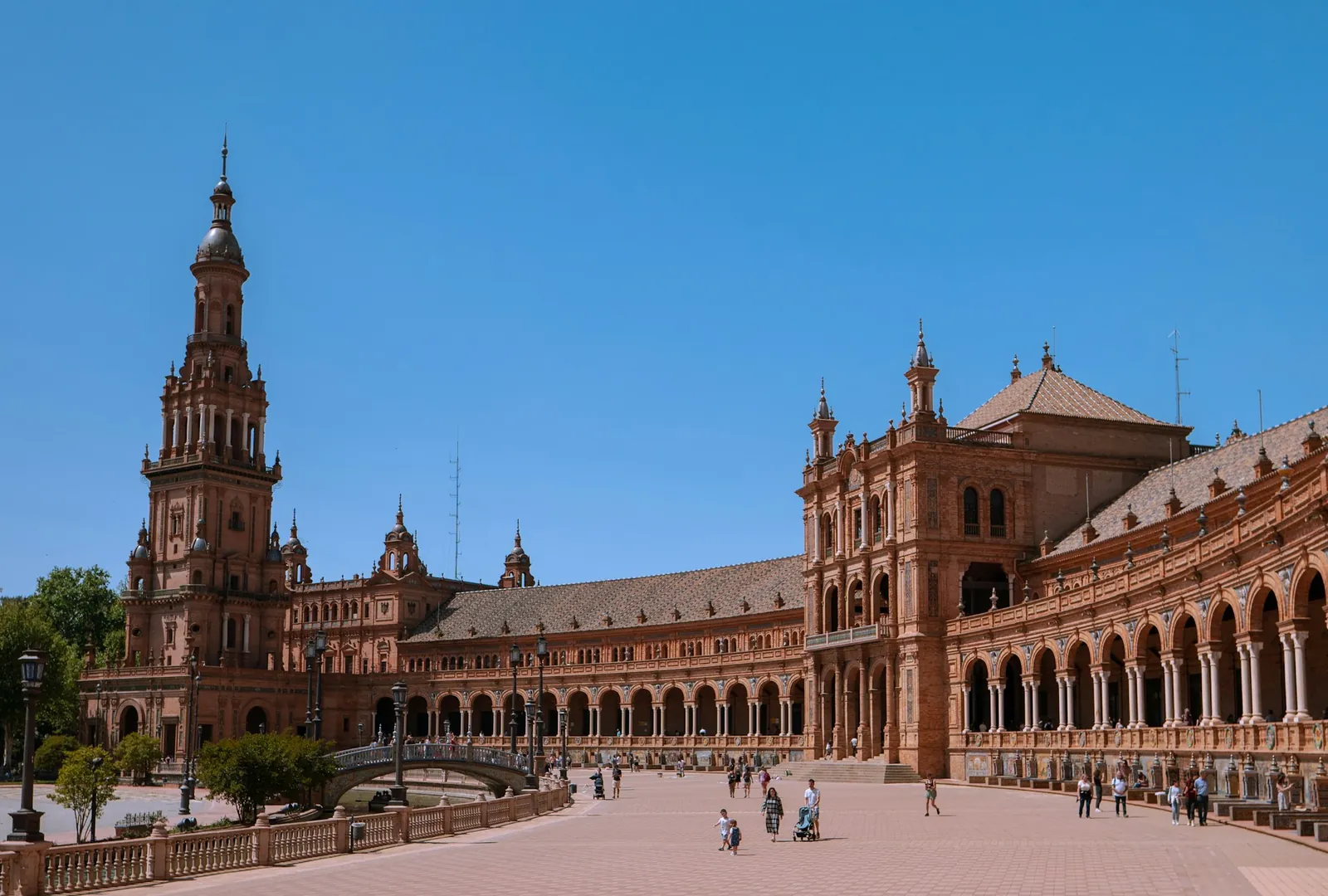
Walk 15 minutes south (or take a horse carriage, if you want the full fairy tale) to Plaza de España, built for the 1929 Ibero-American Exposition. The half-moon building, the canal with little rowing boats and the 48 tiled alcoves – one for each Spanish province – are pure Instagram magic. Find your favourite province bench, then wander through the shaded paths of María Luisa Park next door.
- Entry: free. Seville’s mayor has floated an entry fee for tourists in the past, but as of November 2026 none has been introduced – check before you go
- Rowing boats: available on the canal for a small fee (cash is handy)
- Photo tip: late afternoon light turns the brick golden and the crowds thin out
17:00 – Siesta time (seriously)
From May to September, do what the locals do: go back to your hotel, have a shower and rest for an hour. Seville in summer regularly hits 40°C, and the city only comes alive again after 19:00. In winter, use this time for a coffee in Plaza del Salvador or shopping along Calle Sierpes and Calle Tetuán instead.
19:00 – Las Setas at sunset
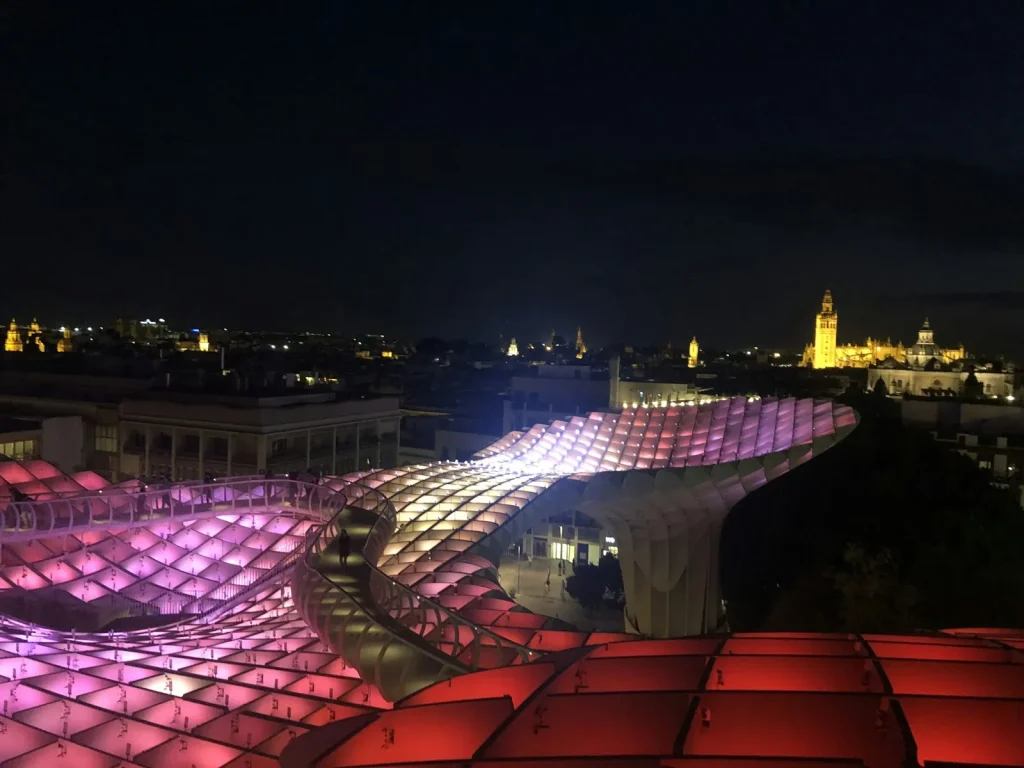
The Metropol Parasol – everyone calls it Las Setas, the mushrooms – is a giant wooden canopy in Plaza de la Encarnación. Walk the curving rooftop path at sunset: the city turns pink, the Giralda glows in the distance and, after dark, the structure itself lights up.
- Tickets: about €16 for the viewpoint experience (2026 price), children 6–14 pay less
- Opening hours: daily from 9:30 until around midnight
- Book: on the official Setas de Sevilla website for sunset slots
20:30 – Cross the river to Triana
Walk down to the river and cross the Triana Bridge (Puente de Isabel II) as the lights come on over the Guadalquivir. Triana is the historic neighbourhood of sailors, potters and flamenco singers. Pop into the Mercado de Triana if it is still open, look for the ceramic shops on Calle Alfarería and then grab a drink on Calle Betis with the whole city reflected in the river.
21:30 – Flamenco and a late dinner
You cannot leave Seville without flamenco. Small, intimate venues are much better than big dinner shows: Casa de la Memoria and the Museo del Baile Flamenco both run nightly performances of about an hour. Expect roughly €25–45 per ticket depending on the venue, and book a day or two ahead. Afterwards, do what Sevillanos do and eat dinner at 22:30 – a few final tapas around the Alameda de Hércules or back in the centre.
Where to eat and drink in Seville
Seville is a tapas city: order a few small plates, move on to the next bar, repeat. These are my favourite spots, all well known among locals:
- El Rinconcillo – often called Seville’s oldest bar (founded in 1670). Order espinacas con garbanzos (spinach with chickpeas) and a glass of fino sherry.
- Bodega Santa Cruz (Las Columnas) – cheap, fast and always buzzing, right in Santa Cruz.
- Eslava – creative, award-winning tapas in the San Lorenzo neighbourhood. Arrive when it opens or expect to wait.
- Mercado de Triana – food stalls and small bars inside a market built on the ruins of an old castle.
- Must-try dishes: salmorejo (thick cold tomato soup), pringá, carrillada (slow-cooked pork cheek), cola de toro, fried fish (pescaíto frito) and, in summer, a tinto de verano.
Timing: lunch is from 13:30 to 16:00 and dinner rarely starts before 21:00. Many kitchens close in the late afternoon.
Getting to Seville and getting around
- From the airport: the EA airport bus runs to the city centre in about 35 minutes; the fare was €6 one way (€8 return) in 2026. A taxi costs roughly €25–30, depending on the time of day.
- By train: Seville Santa Justa station has fast AVE trains to Madrid (about 2.5 hours) and Córdoba (about 45 minutes), plus regional trains to Cádiz and Jerez.
- From Málaga: about 2–2.5 hours by train or bus – see my Málaga in one day guide if you are combining the two.
- In the city: you will walk almost everywhere. The single tram line (Metrocentro) connects Plaza Nueva with San Bernardo, and a single bus ride costs €1.40.
- Don’t drive in the centre: the old town is a maze of narrow one-way streets with restricted access zones.
Where to stay in Seville
- Santa Cruz / around the Cathedral – best for a short trip: everything is on your doorstep, but it is the most touristy and expensive area.
- El Arenal – between the Cathedral and the river, close to the bullring and Torre del Oro, with great tapas bars.
- Triana – more local and authentic, across the river, with lovely evenings on Calle Betis.
- Alameda de Hércules – trendy, younger crowd, lots of bars and a relaxed vibe.
Look for a hotel with air conditioning (essential from May to October) and, if you can, a rooftop terrace – sunset drinks with a view of the Giralda are a Seville tradition.
How much does one day in Seville cost?
| Expense | Budget | Mid-range |
|---|---|---|
| Breakfast | €4 | €8 |
| Real Alcázar | €15.50 (or free Monday slot) | €21 with Royal Rooms |
| Cathedral & Giralda | €13 | €13 |
| Lunch (tapas) | €15 | €30 |
| Las Setas | €16 | €16 |
| Flamenco show | €25 | €45 |
| Dinner & drinks | €20 | €40 |
| Total per person | about €110 | about €175 |
Prices are based on 2026 rates; check official websites before your trip, as monuments usually update prices at the start of the year. Seville did not charge a tourist tax as of November 2026 – the city has asked the Andalusian government for one, so watch out for news before you book.
Best time to visit Seville
Spring (March–May) is magical: the orange blossom (azahar) perfumes the whole city, the weather is warm but not scorching, and you can experience Semana Santa (Holy Week) and the Feria de Abril. In 2027, Easter Sunday falls on 28 March, so Holy Week processions run in late March – hotels book out months ahead and prices jump.
Autumn (October–November) is my second favourite: pleasant temperatures, fewer crowds and lower prices. Winter is mild and sunny, with festive lights and orange trees full of fruit. Summer (June–September) is brutally hot – temperatures above 40°C are common in July and August. If you visit then, sightsee early, rest in the afternoon and live at night.
My honest local tips
- Book the Alcázar first – it is the one ticket that really sells out. Build your day around your time slot.
- Say no to the rosemary sprig. Women near the Cathedral may hand you a sprig of rosemary and then demand money for a ‘fortune’. Just smile, say no and keep walking.
- Carry water and a fan from May to October – and a hat. Shade is your best friend.
- Agree on carriage prices before you get in; official rates are posted, but always confirm.
- Don’t eat oranges from the trees – they are bitter Seville oranges, used for British marmalade, not for snacking.
- Mondays: many museums are closed, but the Alcázar has its free slots – plan accordingly.
- Watch your bag in crowded areas like Avenida de la Constitución, around the Cathedral and on Calle Sierpes.
Easy day trips from Seville
- Córdoba – just 45 minutes by high-speed train. The Mezquita-Catedral is one of the most beautiful buildings in Europe.
- Cádiz – one of Europe’s oldest cities, surrounded by the Atlantic, about 1.5–2 hours by train.
- Ronda – the dramatic town on a gorge with the famous Puente Nuevo bridge, about 2 hours by car or bus.
- Jerez de la Frontera – sherry bodegas and Andalusian horses, about 1 hour by train.
Going further? From the south of Spain, Morocco is a short ferry ride away – see my one-day guide to Chefchaouen. And if you are combining Spain with its neighbour, my Portugal travel guide covers Lisbon, Porto and the Algarve. For more ideas, browse all my Europe guides.
Work with me
Do you run a hotel, tapas bar, flamenco venue or tour in Seville or Andalusia? I create honest, practical one-day itineraries, photos and Instagram stories for travellers planning their trip. I am always happy to hear about collaborations, press trips and sponsored features – read more about me and how I work or get in touch.
Seville travel FAQ
Is one day in Seville enough?
One day is enough to see the highlights – the Real Alcázar, the Cathedral and Giralda, Plaza de España, Las Setas and Triana – if you book the Alcázar in advance and start early. Two or three days let you enjoy the city at a slower pace.
Do I need to book the Real Alcázar in advance?
Yes. Entry is by timed slot and tickets regularly sell out, especially in spring and on weekends. Book on the official Alcázar website as early as possible.
Is Plaza de España in Seville free to visit?
Yes. As of November 2026 Plaza de España is free to visit. Entry fees for tourists have been proposed in the past but none has been introduced.
What is the best area to stay in Seville for a short trip?
Santa Cruz and El Arenal are the most convenient for one or two nights because the main sights are within walking distance. Triana is a more local alternative across the river.
When is the best time to visit Seville?
March to May and October to November offer the best weather. July and August are extremely hot, often above 40°C, so plan indoor visits and rest in the afternoon.
Is there a tourist tax in Seville?
Not as of November 2026. Seville has asked the Andalusian regional government for permission to introduce one, so check for updates before your 2027 trip.
Have you been to Seville, or is it on your 2027 list? Save this guide, follow my travels on Instagram and explore the rest of my Spain travel guide for more one-day itineraries.

