Hi, I’m Miki! Kibera, in the south-west of Nairobi, is the biggest informal settlement in Kenya and one of the best known in Africa. I wanted to see how people really live in Nairobi – beyond the hotels and safari lodges – so we spent an afternoon in Kibera with a local guide. It was one of the most emotional and eye-opening days of my life, and the most beautiful moment of our whole trip to Kenya happened here: in a small school, with the children.
This is my big, honest guide to Kibera: its history, how people live, what we saw with our own eyes, the school visit that made me cry, and all my tips on how to visit in a respectful way.
Kibera at a glance
| Fact | Details |
|---|---|
| Where | About 5–6 km south-west of Nairobi city centre, next to Ngong Road and Lang’ata |
| Size | Around 2.5 km² |
| People | The 2019 census counted about 185,000 people in Kibra; other estimates go much higher – nobody knows the exact number |
| Name | From the Nubian word Kibra – “forest” or “jungle” |
| Villages | 13 villages, such as Laini Saba, Soweto, Gatwekera, Kianda, Makina and Sarang’ombe |
| Tours | Walking tours with local guides take about 3–4 hours and usually cost USD 35–90 per person |
A short history of Kibera
Kibera started as a forest on the edge of Nairobi. In the early 20th century the British colonial government gave land here to Nubian soldiers who had served in the King’s African Rifles, the colonial army – they called the place Kibra, their word for forest. After Kenya’s independence in 1963, people from all over the country came to Nairobi looking for work, settled here and the name slowly turned into “Kibera”.
You can still hear that history in the names: the village of Laini Saba takes its name from an old rifle range. The Kenya–Uganda railway line runs right through Kibera, and in Soweto East the government has built new apartment blocks as part of its slum upgrading programme.
How many people live here is still one of Kibera’s big debates: for years people said “one million”, but the census counts far fewer. Many residents aren’t registered and people move in and out all the time – what’s certain is that it is extremely crowded.
Our afternoon in Kibera
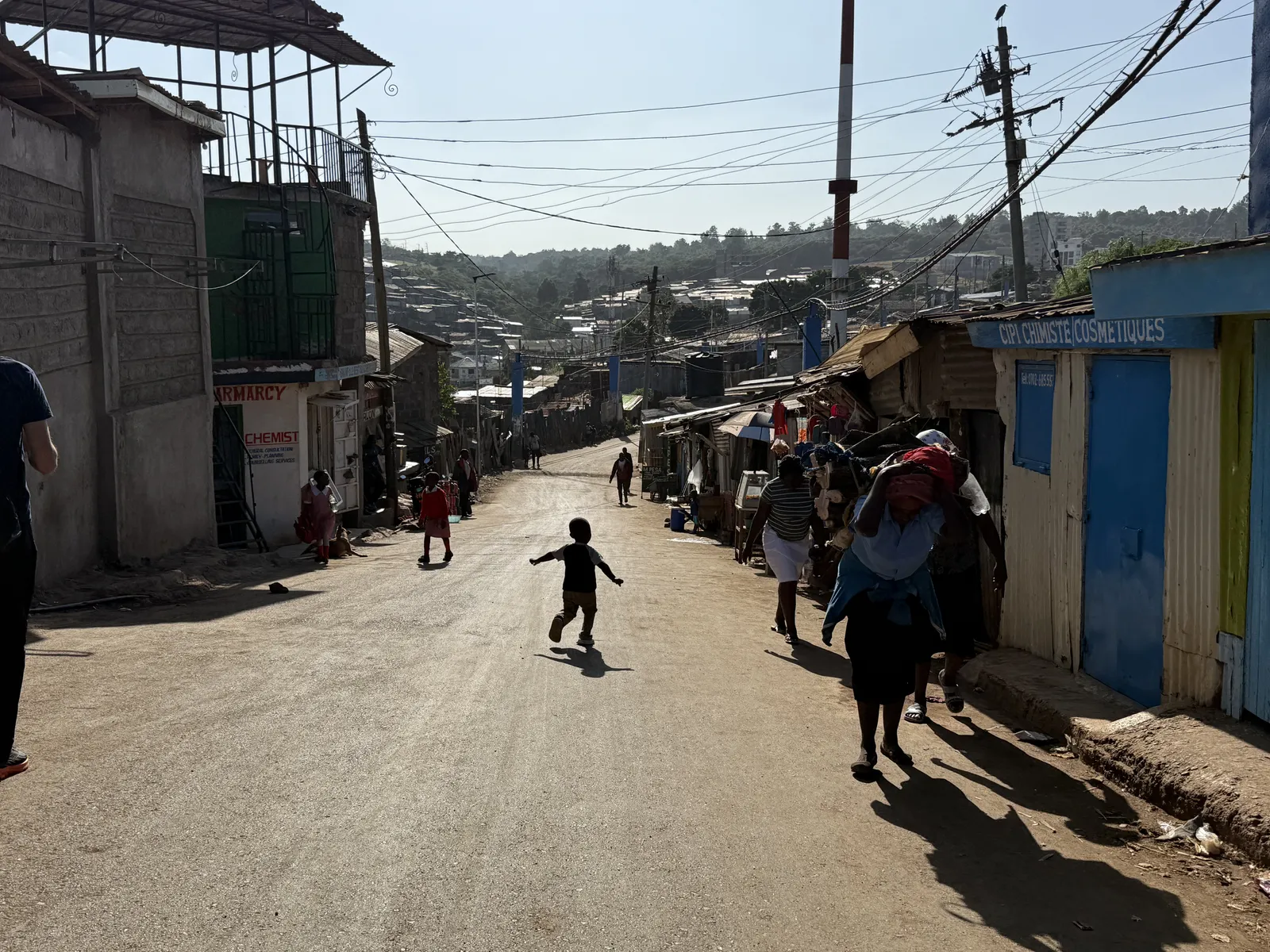
We met our local guide from Kibera and walked in together. The times below are from our photos – this is really how our afternoon looked:
| Time | What we did |
|---|---|
| 14:45 | Met our local guide on the edge of Kibera and walked in along the main road. |
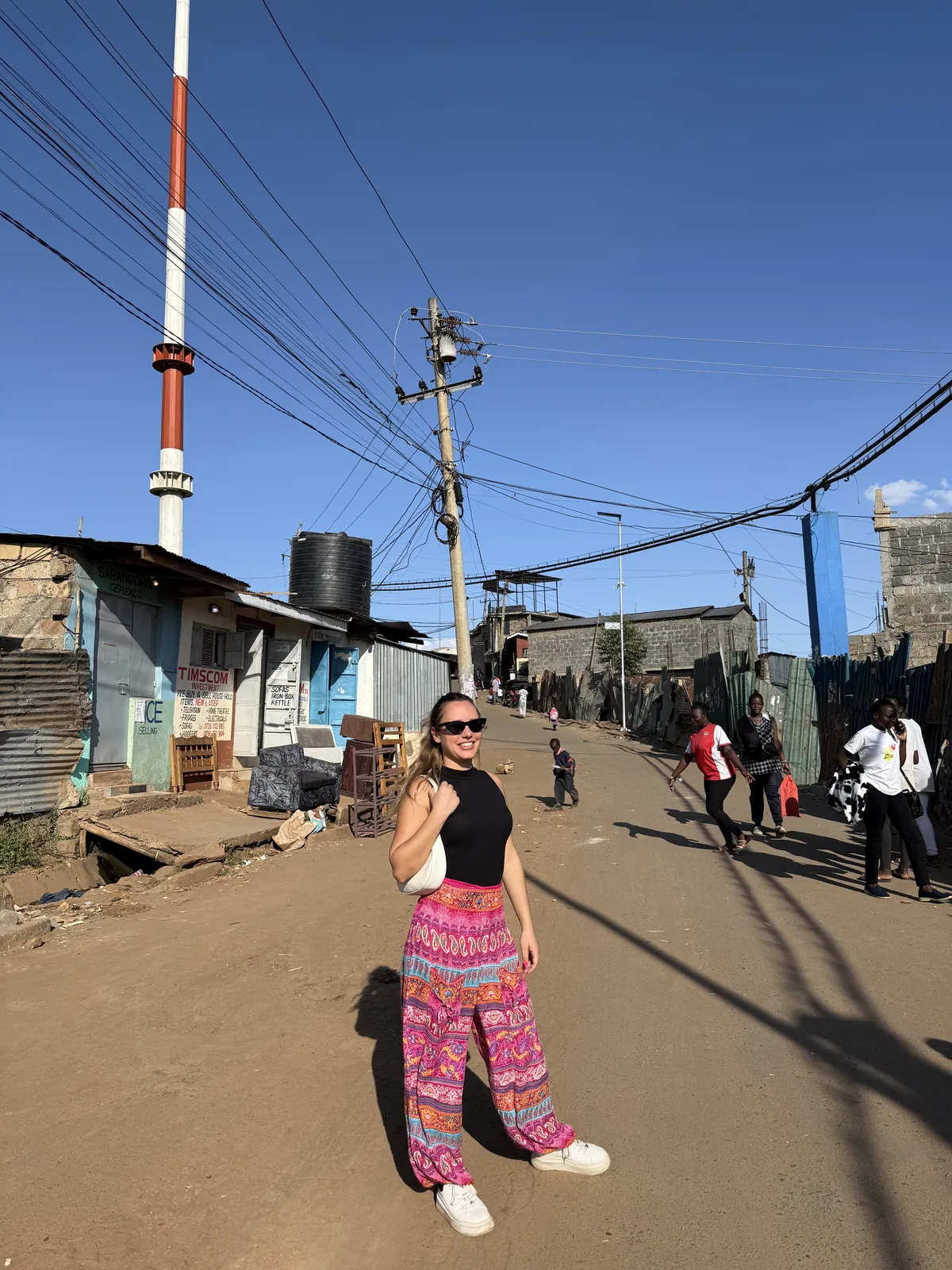
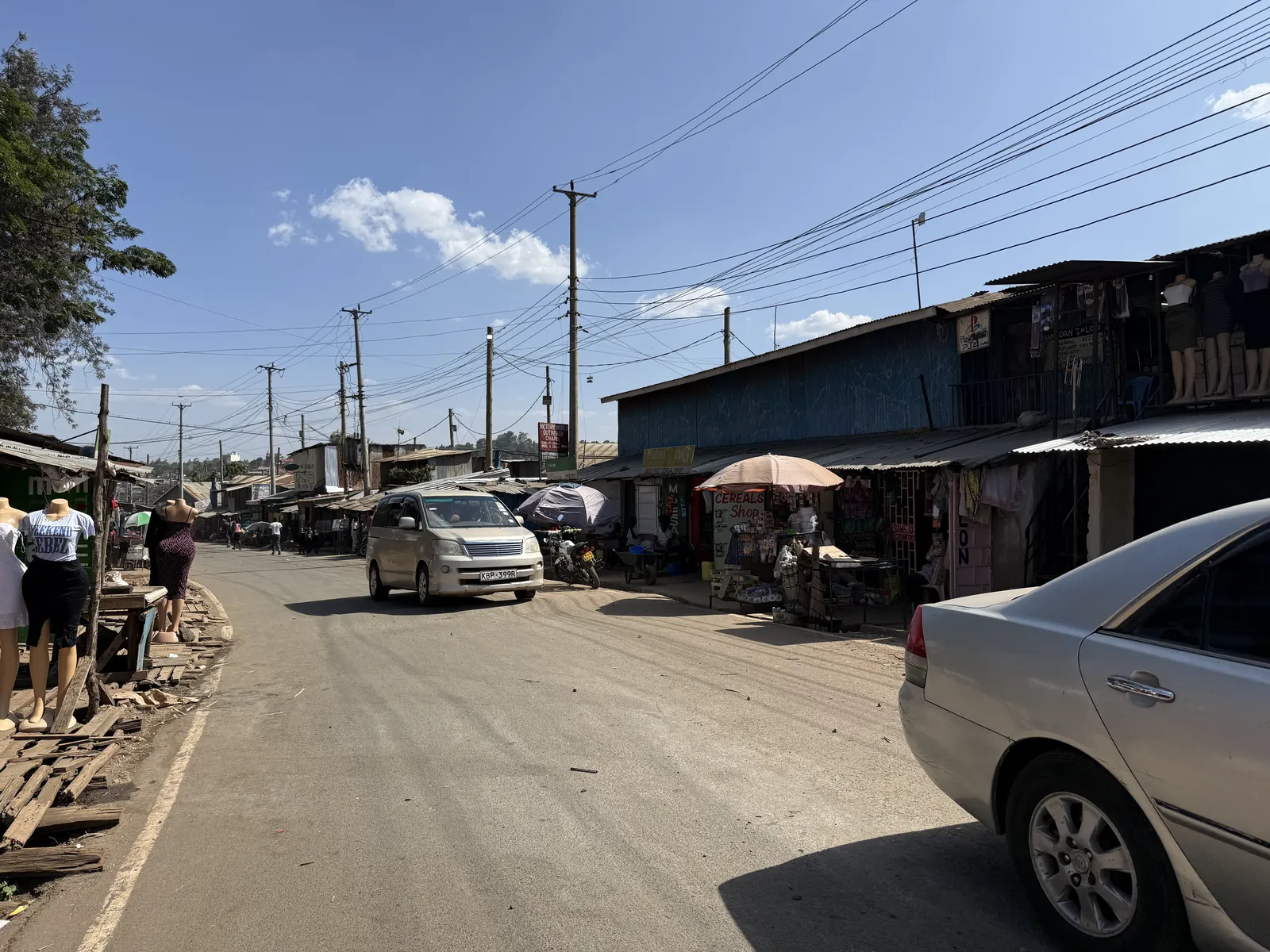
| 15:00–15:30 | Walked through the markets and narrow alleys: tailors, food stalls, salons and little shops. |
| 15:30–16:00 | Visited a small school and sat in the classroom with the children. |
| 16:00–17:00 | Walked through the residential areas with mud and iron houses, past the rubbish heaps on the hillside and back to the road. |

Streets, markets and small businesses
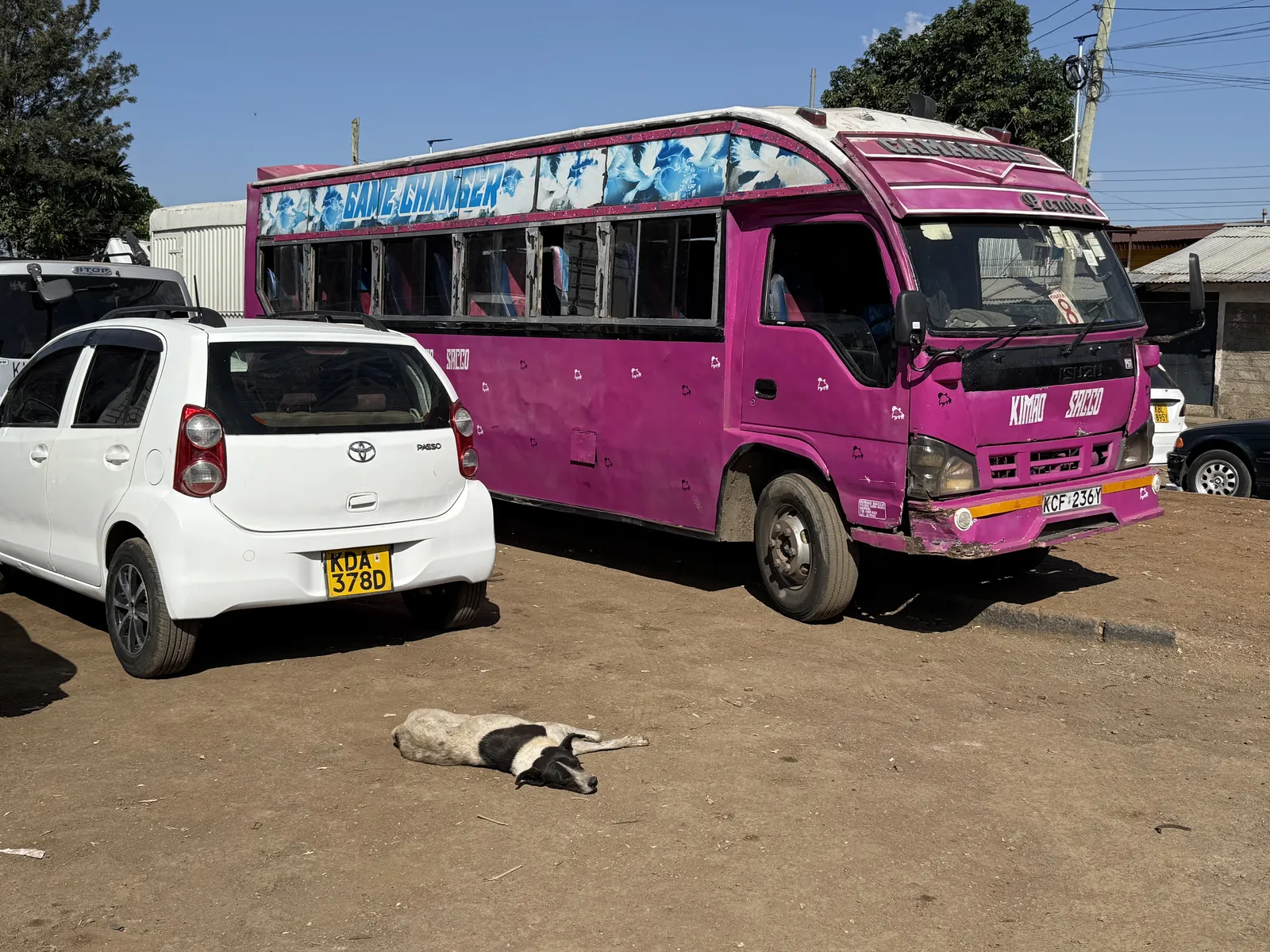
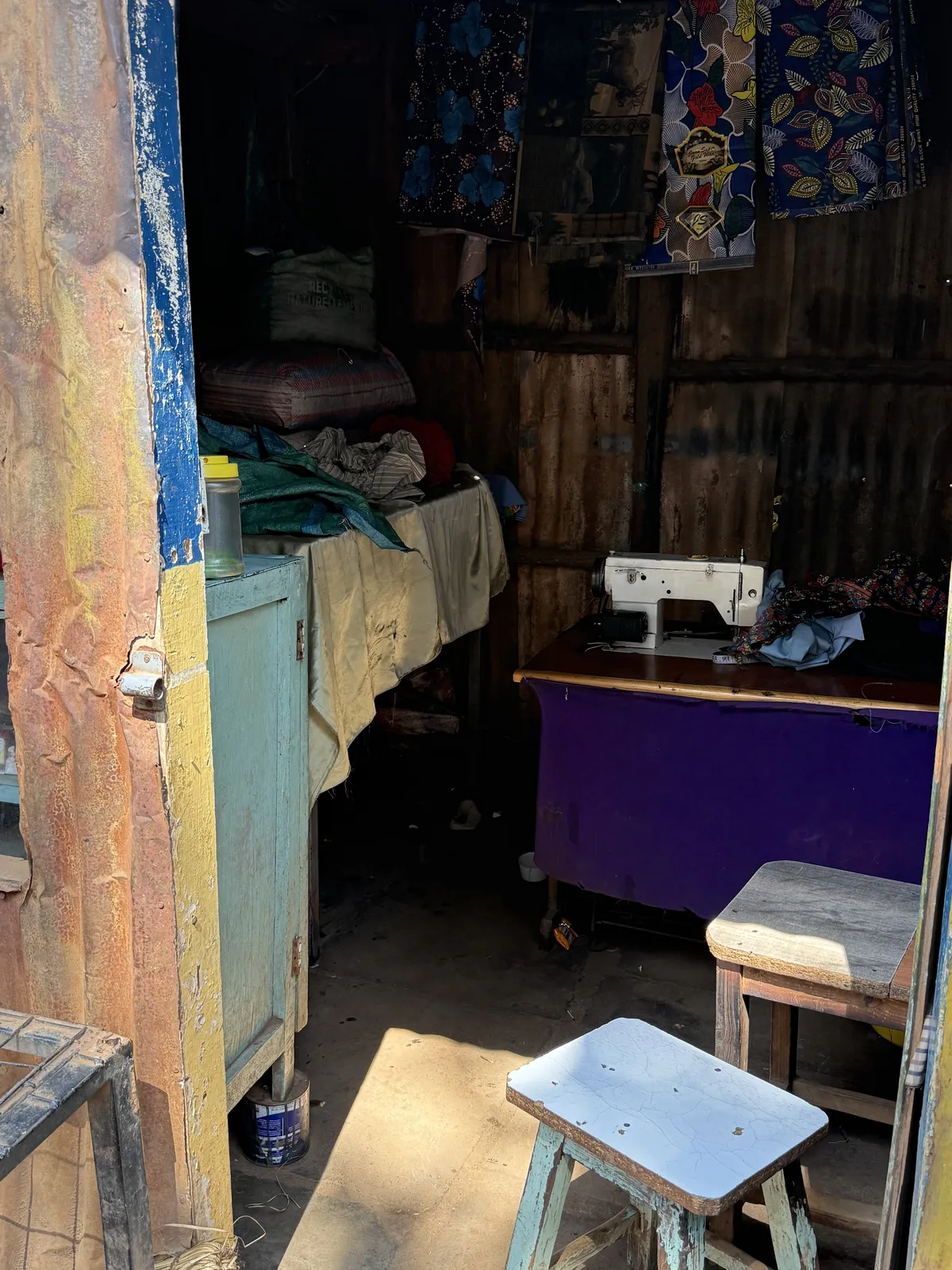
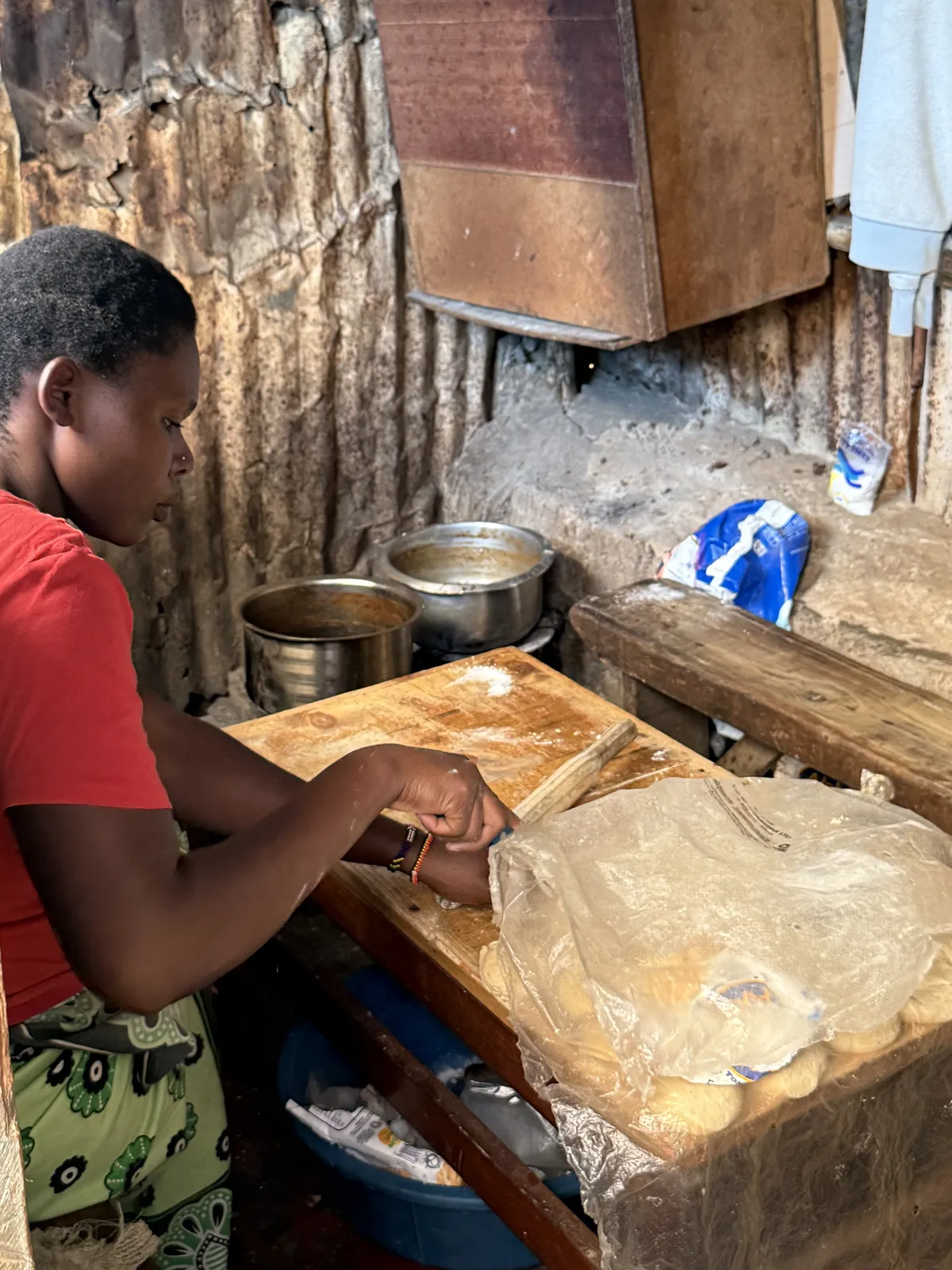
The first thing you notice is how alive Kibera is. Every metre is a small business: a tailor sewing on an old machine, women cooking and selling food, salons, phone repair shops, people selling colourful gas cylinders, charcoal, vegetables and second-hand clothes. Kibera is poor, but it is also full of work, creativity and people trying to build a better life.


How people live in Kibera
Our guide explained a lot about daily life, and we saw much of it with our own eyes:
Homes and rent
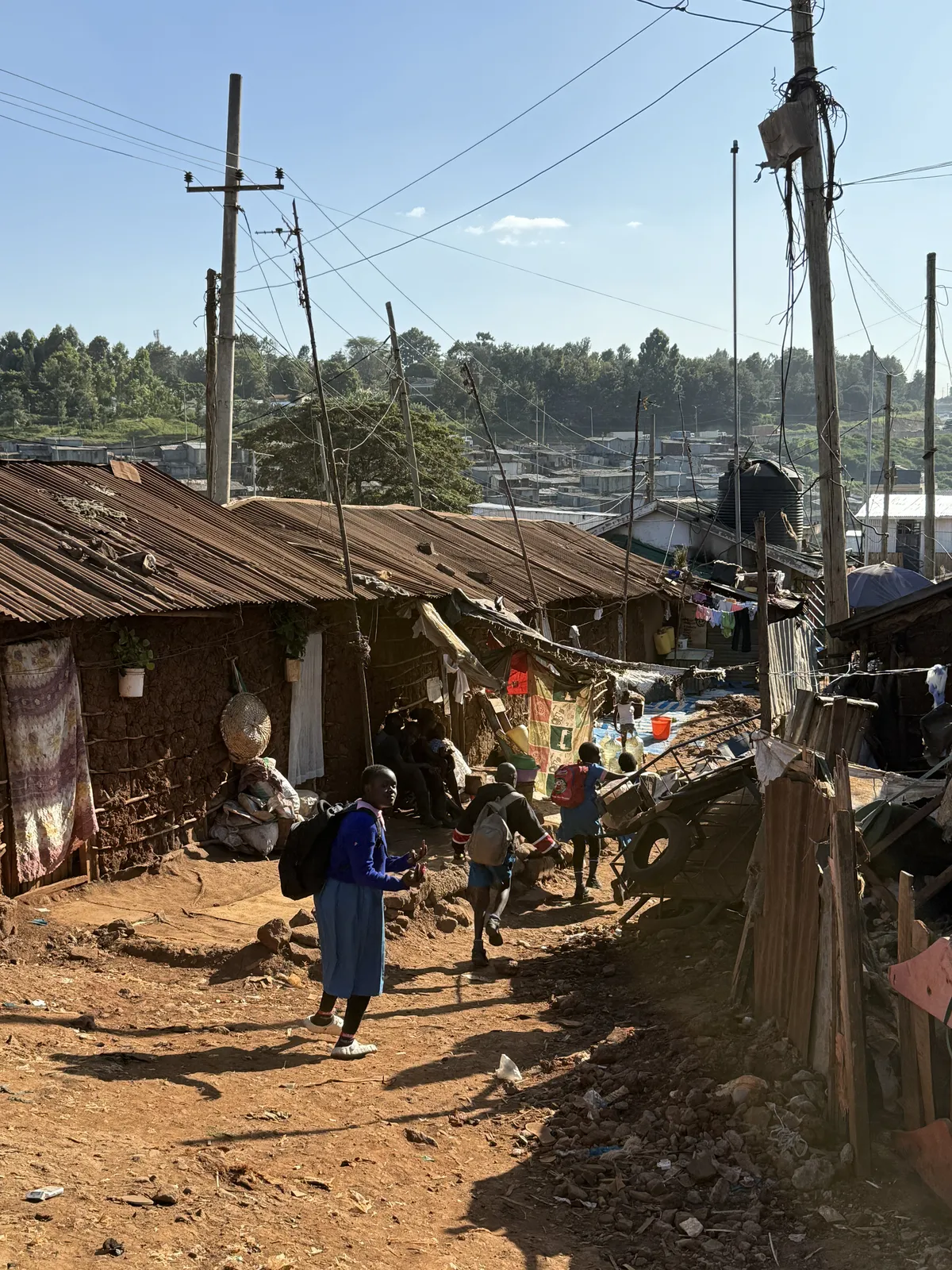
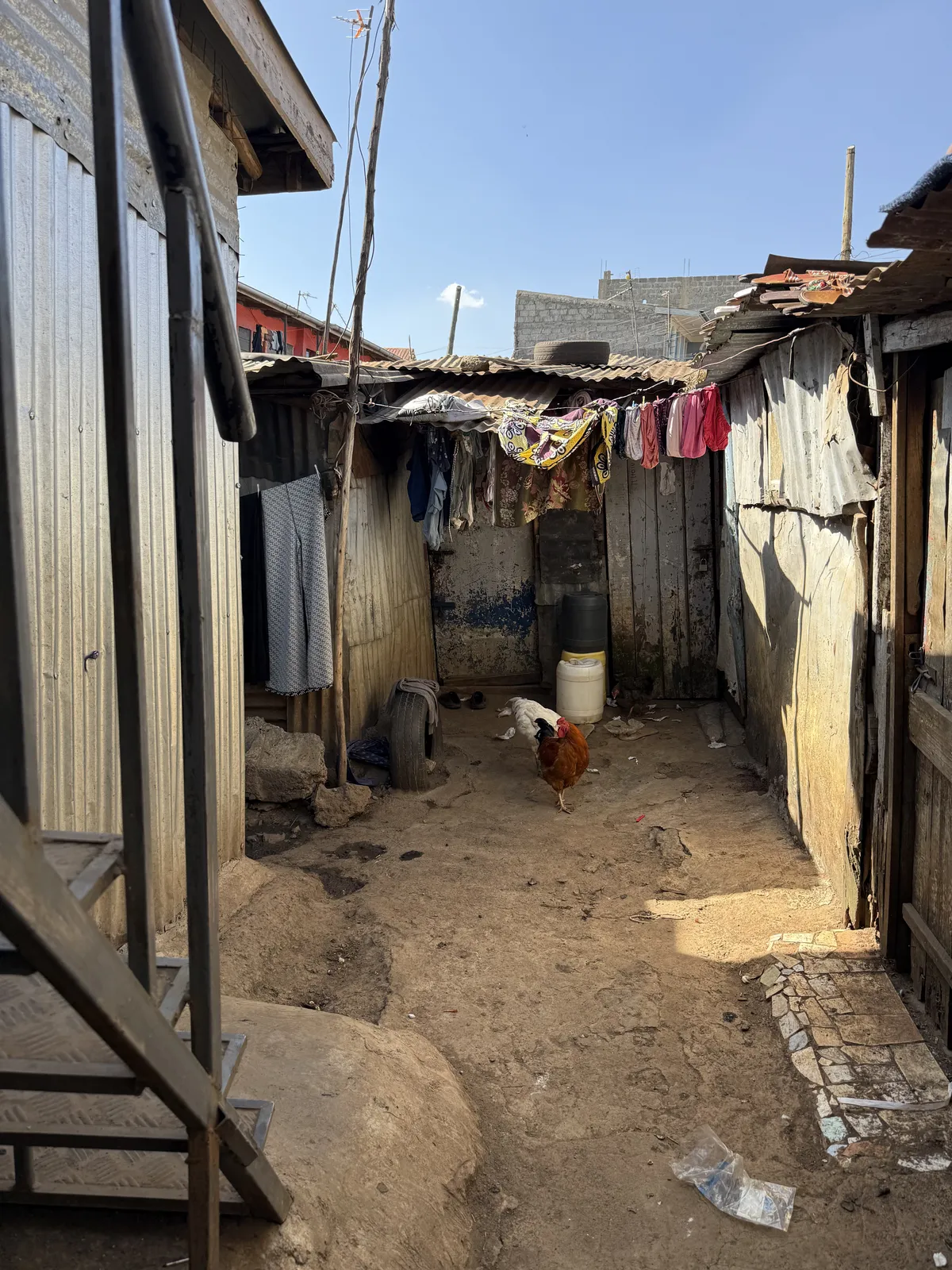
Most people don’t own their homes – they rent them from structure owners. A small room costs about €35 a month, and often a whole family lives in it. If someone can’t pay the rent, people come, shut the door and throw them out – sometimes they even remove the roof. Houses are made of mud, wood and corrugated iron, packed tightly next to each other along narrow alleys.



Water, drains and toilets
There is no proper water network. Water runs through thin pipes laid above the ground – along the alleys, over the drains and between the houses – and many people buy water by the jerrycan at water kiosks. Open drains run down the middle of many alleys, and in the rainy season they overflow and the paths turn to mud.
Most homes don’t have their own toilet. People use public toilets where you pay for every visit, and they shower in front of their homes. Studies have found that many women are afraid to use the shared toilets at night.


Cooking
When it’s warm, people cook outside in front of the house; when it rains or gets cold, they cook inside the small room – usually on charcoal, paraffin or gas.
Health
Healthcare isn’t free, which makes every illness a big worry for families. There are small clinics and projects run by NGOs and community groups, but many people simply can’t afford treatment.
Rubbish
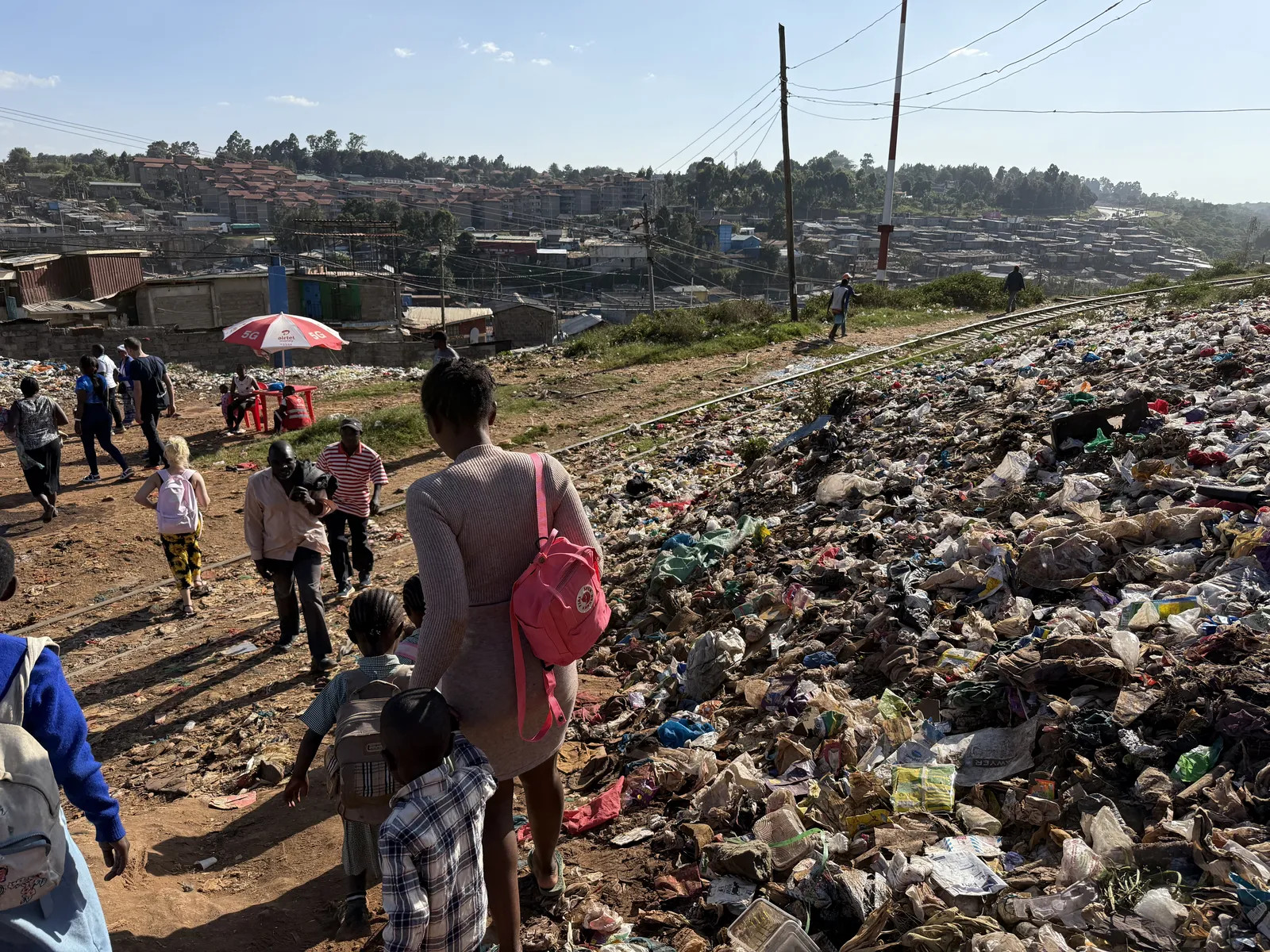
There is no regular rubbish collection in many parts of Kibera, so waste ends up on heaps on the hillsides and along the paths. It’s one of the hardest things to see – and one of the reasons why diseases spread so easily.

The school – the most beautiful moment of our trip
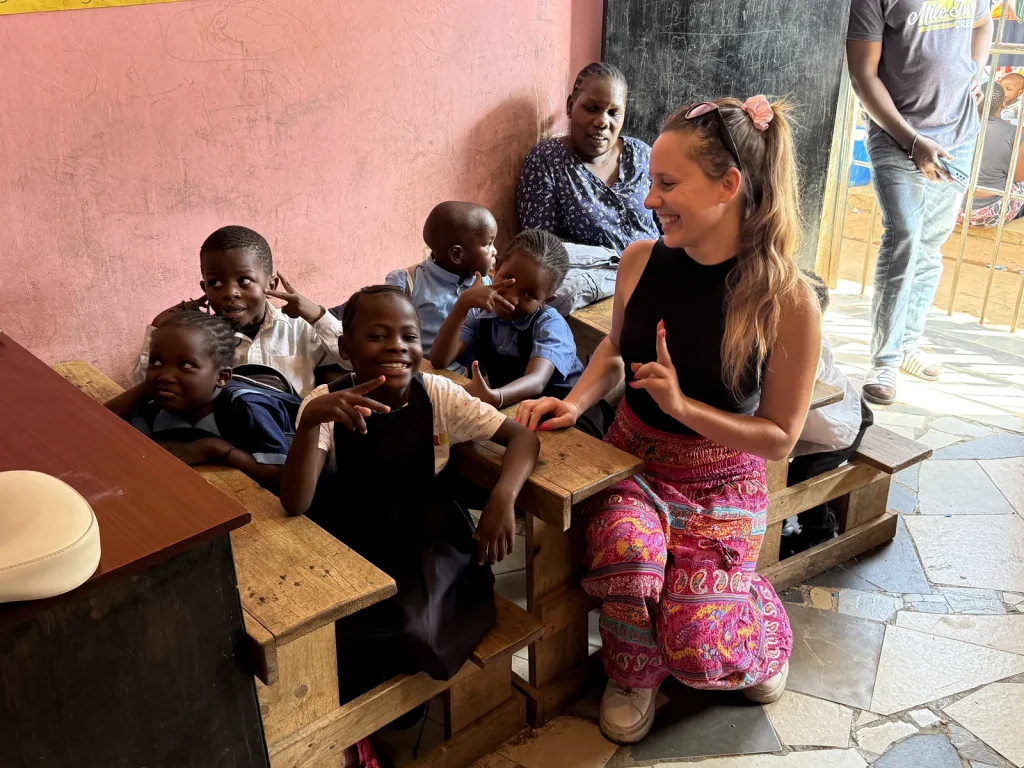
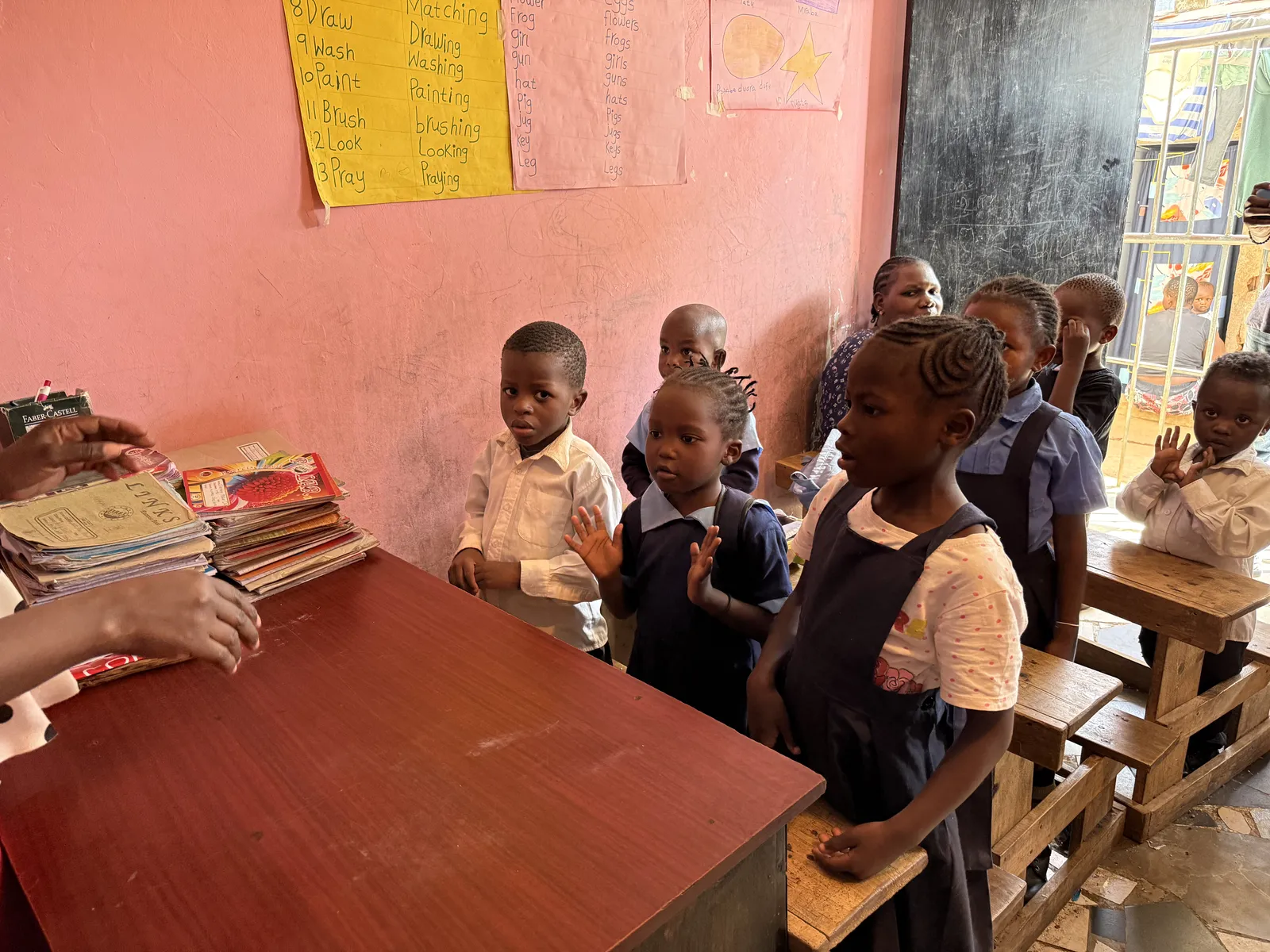
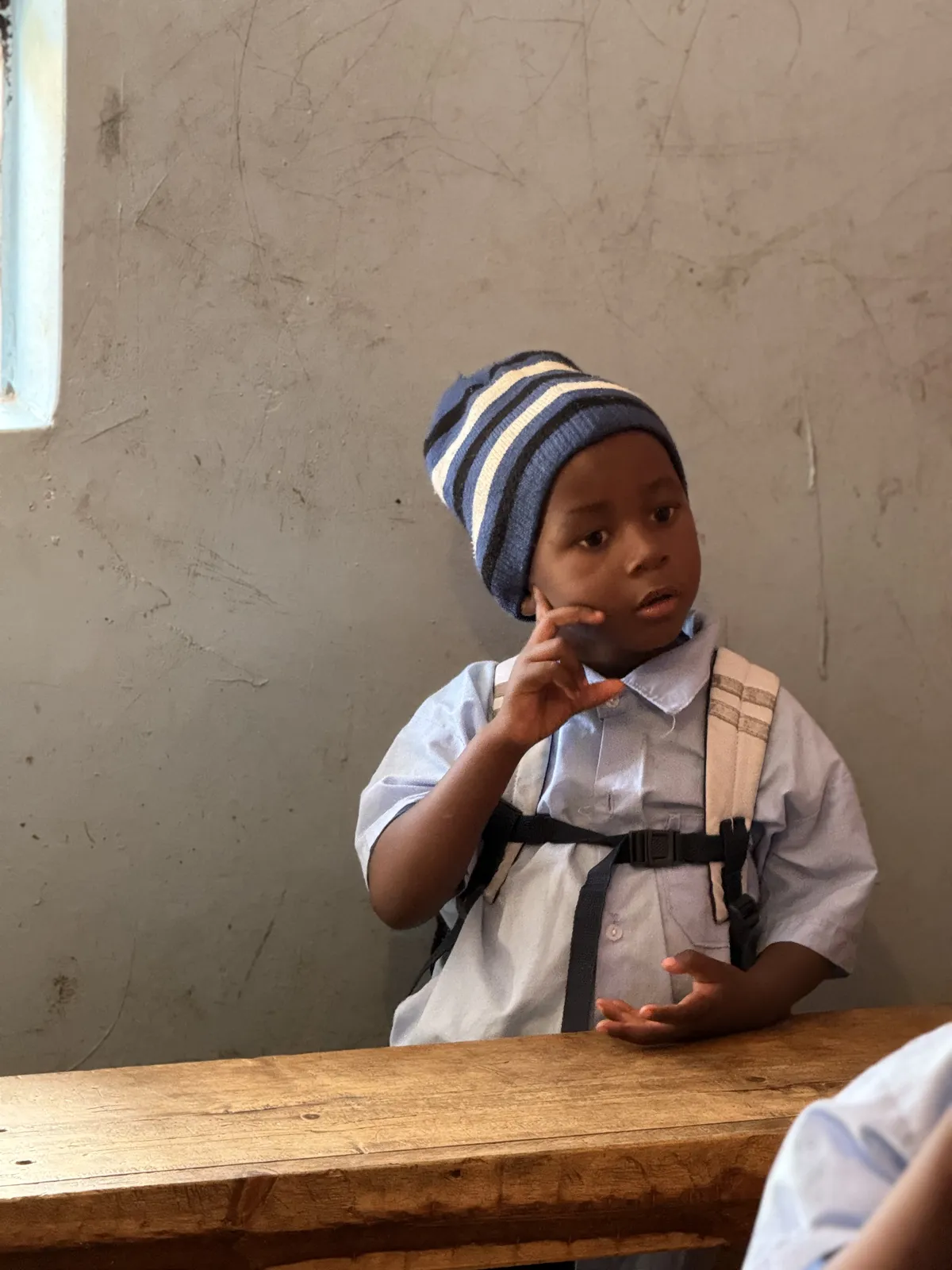
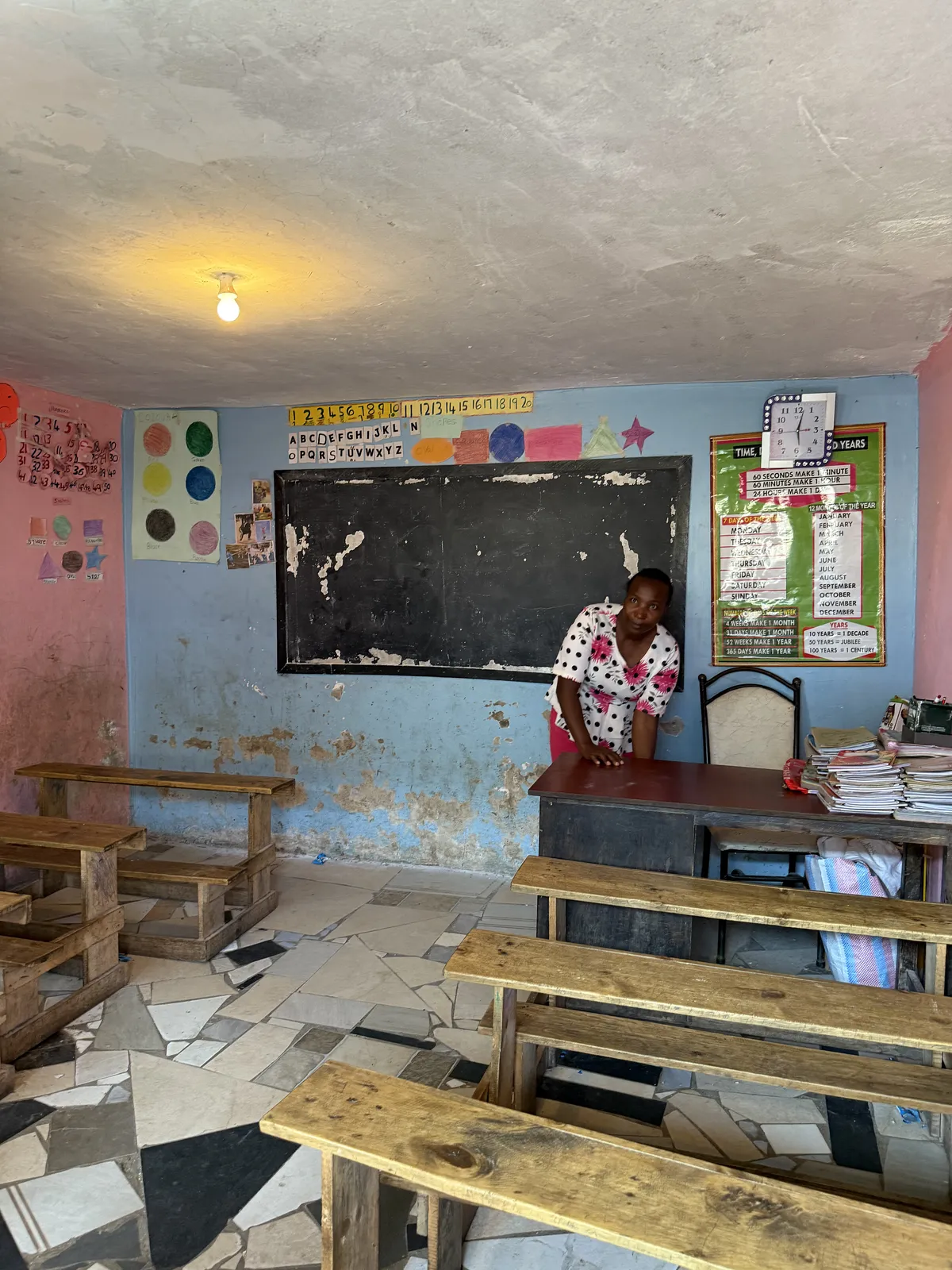
Our guide took us to a small school in Kibera. Simple wooden benches, a blackboard – and a room full of children in their little uniforms.
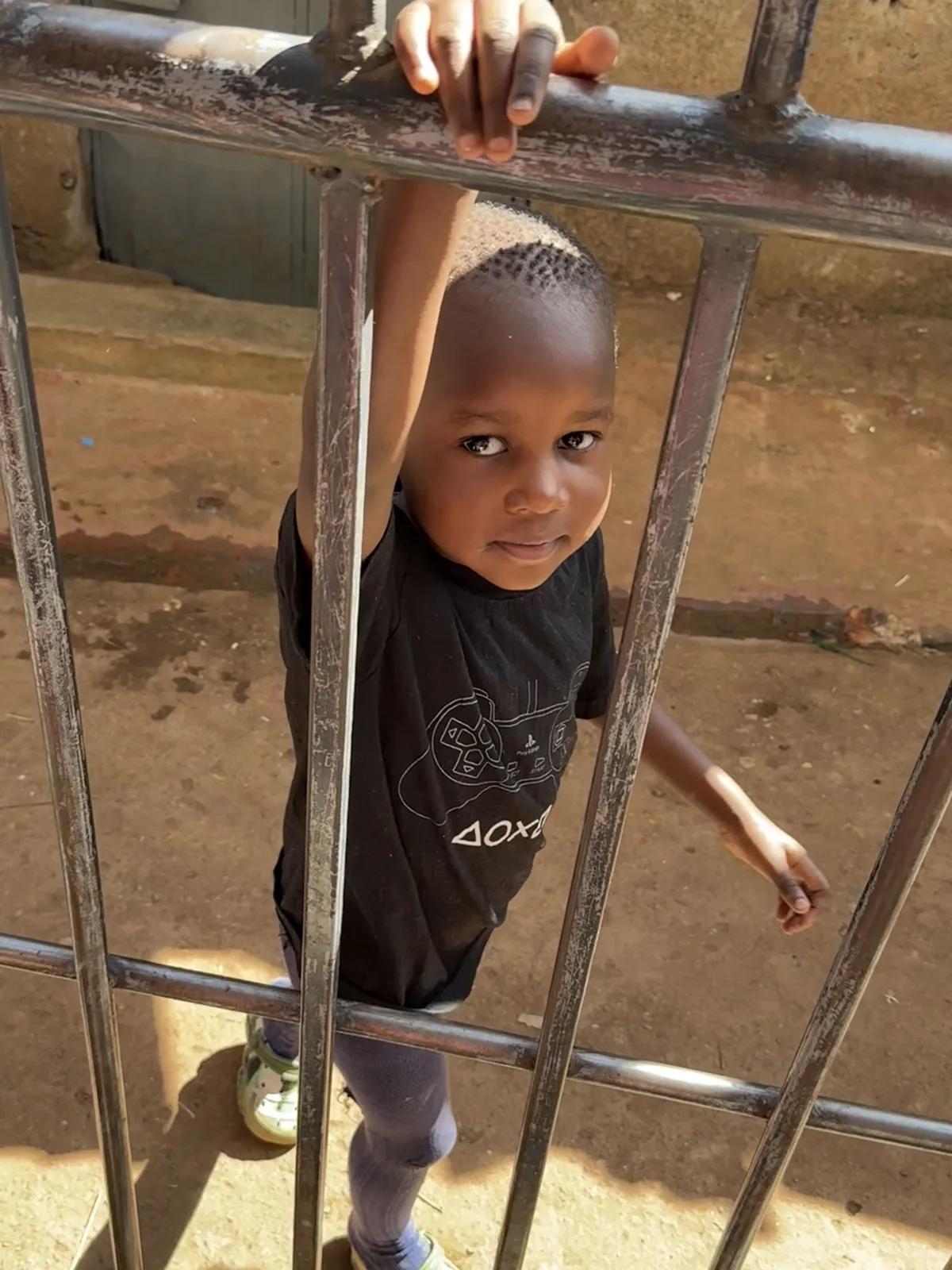
When I sat down in the classroom with those children and saw how happy they were – how they smiled and laughed – tears started running down my face. They have so little, and yet they were full of joy. Of everything we saw in Kenya, from lions to Kilimanjaro, this was the most beautiful moment of the whole trip. I will never forget it.


Children and school in Kibera
- Uniforms – the children wear school uniforms, and you see little groups of them walking through Kibera in blue and purple.
- Primary school – most children go to primary school, but there are only a few public primary schools inside Kibera and they are very overcrowded (a study found around 63 pupils per teacher).
- Community schools – many children go to small informal or community schools instead. They are run by local people, often with almost no resources, and they charge fees that many parents struggle to pay.
- Secondary school and university – far fewer children continue to secondary school, and university is out of reach for most families because it’s simply too expensive.
If a school visit touches you as much as it touched me, the best thing you can do is support the school through your guide or a registered organisation – school fees, books, uniforms or food. Please don’t hand out money or sweets to children directly.


How to visit Kibera responsibly
Rule number one: don’t go to Kibera without a guide. It is really dangerous to wander in on your own. The alleys are a maze, you won’t know which areas are unsafe, and as a foreigner you will stand out immediately. With a local guide, people know who you are and why you’re there – that changes everything.
- Book a guide from the community – many walking tours are run by people who were born and raised in Kibera, so the money stays there.
- Ask before every photo, and never photograph children without their parents’ or teacher’s permission. Your guide will tell you where photos are fine.
- Listen more than you look – ask questions and let people tell their own stories. Kibera is a community, not an attraction.
- Spend money locally – buy a snack, a drink or handmade crafts directly from the people you meet.
- Give through organisations – if you want to help, donate to a school or community project rather than handing out money in the street.
- Don’t treat poverty as a spectacle – avoid tours that just drive through or treat people as a show.
Practical tips for visiting Kibera
- Wear closed, sturdy shoes – the paths are uneven and muddy, and drains run down many alleys.
- Dress simply and leave jewellery and valuables at your hotel.
- Keep your phone safe in crowded places, as anywhere in Nairobi.
- Go during the day, and avoid heavy rain when the paths turn to mud.
- Agree on the price and what’s included (school visit, home visit, transfers) before you start. Tips are not usually included.
- Bring small shillings or M-Pesa for snacks, crafts and donations.
- Cars drive on the left in Kenya – look right first when you cross the road.
- Bring water and sun protection – there’s little shade in the alleys.
Is it right to visit Kibera?
I thought about this a lot before we went. Slum tours can easily become voyeuristic. But going with a guide who lives there, paying a fair price that stays in the community, supporting a school and treating people as people – not as a sight – turned it into one of the most meaningful experiences of my life. It changed how I see Nairobi, and how grateful I am for things I take for granted, like clean water and a school that’s free.
More one-day trips in Kenya
More from our Kenya trip: Nairobi in one day, Amboseli and Kilimanjaro, a 3-day Masai Mara safari, visiting a Maasai village, Lake Nakuru & Lake Naivasha, Mombasa and Diani Beach. For entry rules, budgets and the best time to go, read my Kenya travel guide or browse all my Africa guides.
Kibera FAQ
Is it safe to visit Kibera?
Never go without a local guide – walking in alone is really dangerous. Visiting during the day with a guide who lives in Kibera or works with a community organisation is the safest and most respectful way. Leave valuables at your hotel.
How many people live in Kibera?
Nobody knows exactly. The 2019 census counted about 185,000 people in Kibra, while other estimates are much higher, because many residents are not registered and people move in and out all the time.
What does the name Kibera mean?
It comes from the Nubian word 'Kibra', meaning forest or jungle. Nubian soldiers of the colonial King's African Rifles were given land here in the early 20th century.
How much does a Kibera tour cost?
Walking tours with local guides usually cost around USD 35–90 per person and take about 3–4 hours, depending on whether transfers and school or home visits are included.
Can you visit a school in Kibera?
Yes, many community guides include a visit to a small school. It was the most beautiful part of our visit. If you want to help, support the school through your guide or a registered organisation.
Can I take photos in Kibera?
Only with permission. Always ask people before photographing them or their homes, and never photograph children without a parent's or teacher's consent.
Is visiting Kibera ethical?
It can be, if you go with a community guide, pay a fair price, ask before taking photos, listen to residents and spend money locally. Avoid tours that treat people as a spectacle.
Miki Kokica
Travel blogger behind One Day Itinerary. I test every route myself and write honest, practical guides so you can make the most of a single day anywhere.
Work with me Instagram