Hi, I’m Miki! Lake Nakuru and Lake Naivasha sit next to each other in Kenya’s Great Rift Valley, a few hours north-west of Nairobi, and we saw both in one long, unforgettable day: a morning game drive in Lake Nakuru National Park with rhinos, giraffes and pink flamingos, lunch in Naivasha town, and in the afternoon a boat ride on Lake Naivasha – a lake full of hippos.
This is my big guide to that day: everything we saw, what it cost, why hippos are one of the most dangerous animals in the world, the story of the young fishermen who risk their lives on the lake, and all my tips.
Our day, hour by hour
The times below are from our photos – this is really how our day looked:
| Time | What we did |
|---|---|
| Early morning | Drive from Nairobi to Lake Nakuru (≈ 160 km, 2.5–3 hours). |
| 10:15–12:50 | Game drive in Lake Nakuru National Park: buffalo, zebras, Makalia Falls, Rothschild’s giraffes, rhinos, flamingos and pelicans. |
| 13:00–15:00 | Drive to Naivasha (≈ 1–1.5 hours) and lunch at Urban Dining in Naivasha town. |
| 16:30–17:30 | One-hour boat ride on Lake Naivasha: hippos, fish eagles, cormorants, pelicans and the fishermen. |
| Evening | Back to Nairobi (≈ 2–2.5 hours) or overnight at the lake. |
Morning: Lake Nakuru National Park
Lake Nakuru National Park is small (188 km²), fenced and very well protected, which makes it one of the easiest places in Kenya to see animals that are hard to find elsewhere. It became Kenya’s first government rhino sanctuary in 1984, and in 1977 endangered Rothschild’s giraffes were brought here from western Kenya to save them. In the middle is the alkaline lake – famous for its pink flamingos.
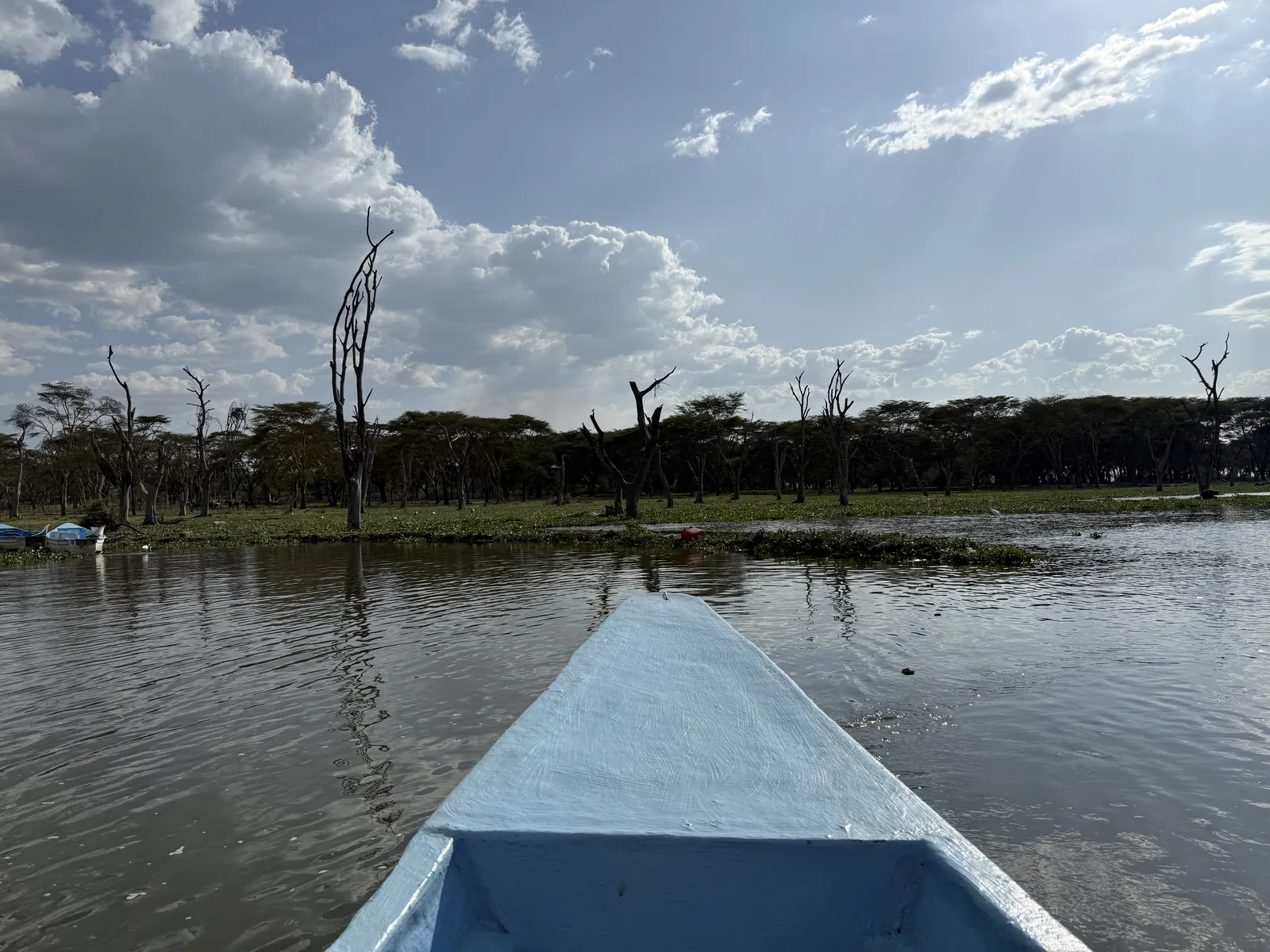
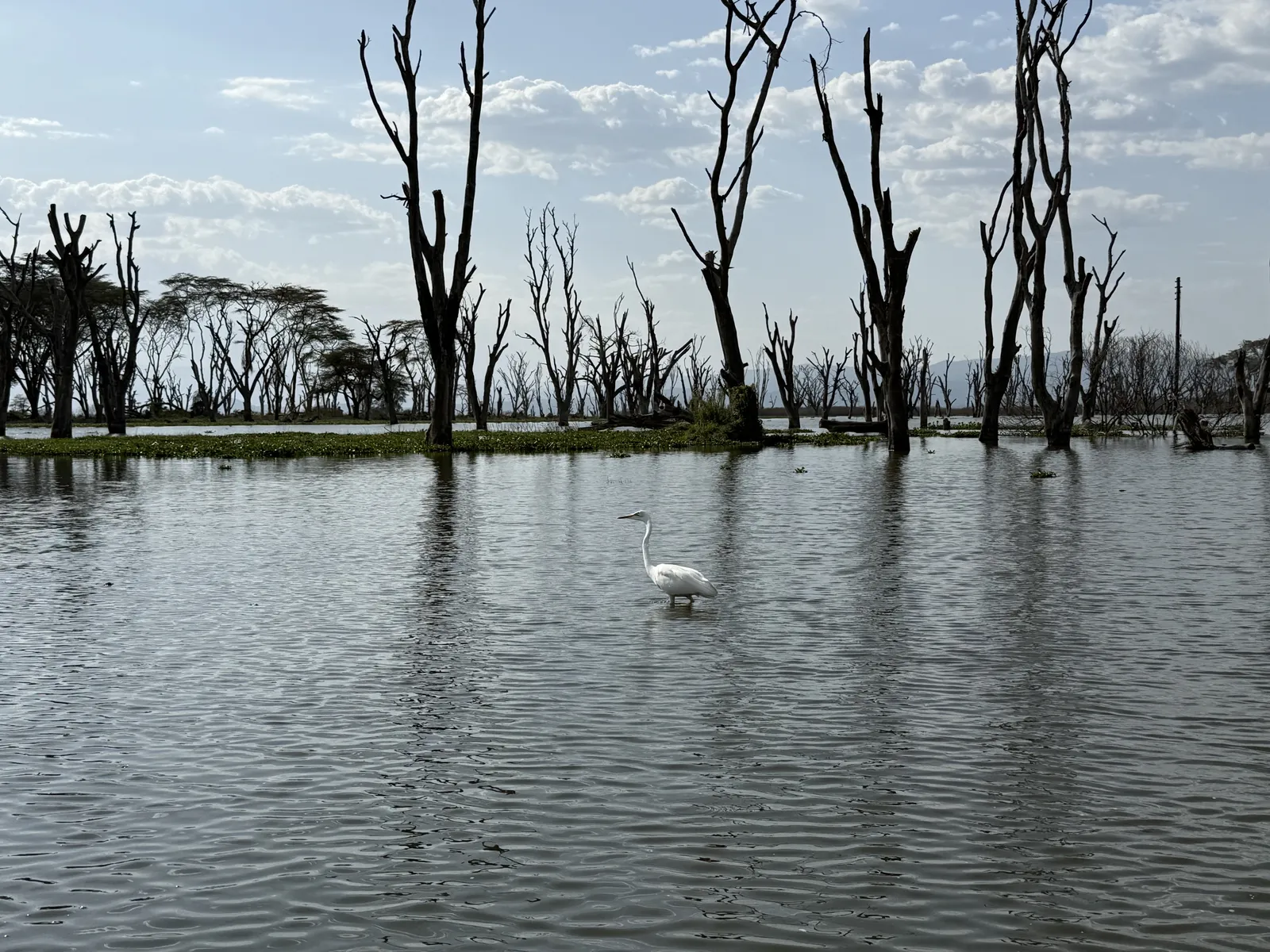
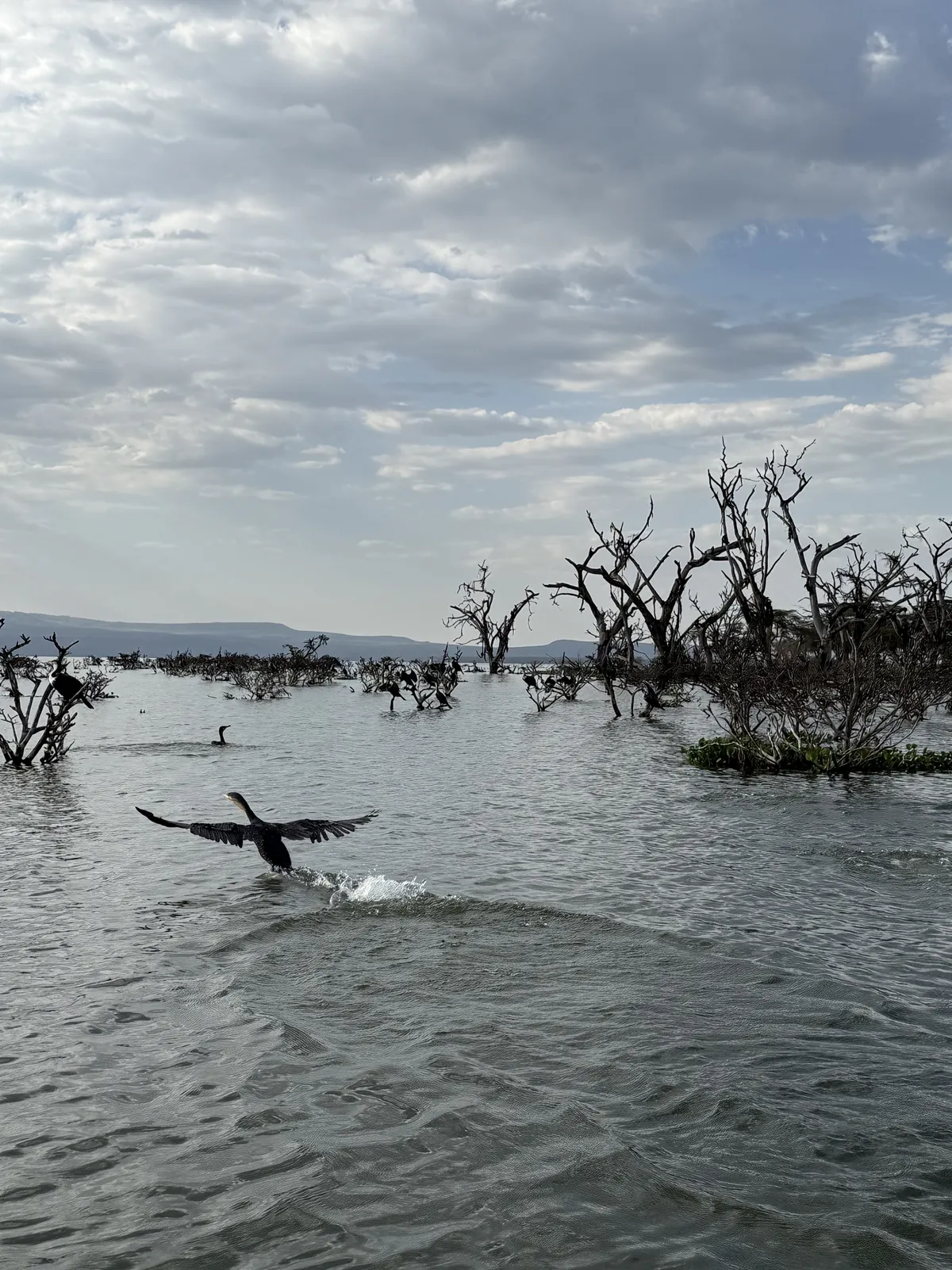
The first thing that surprised me was the water: the lake has risen so much in recent years that whole forests of yellow acacias now stand in the water, dead and silver, like a ghost forest.


Makalia Falls
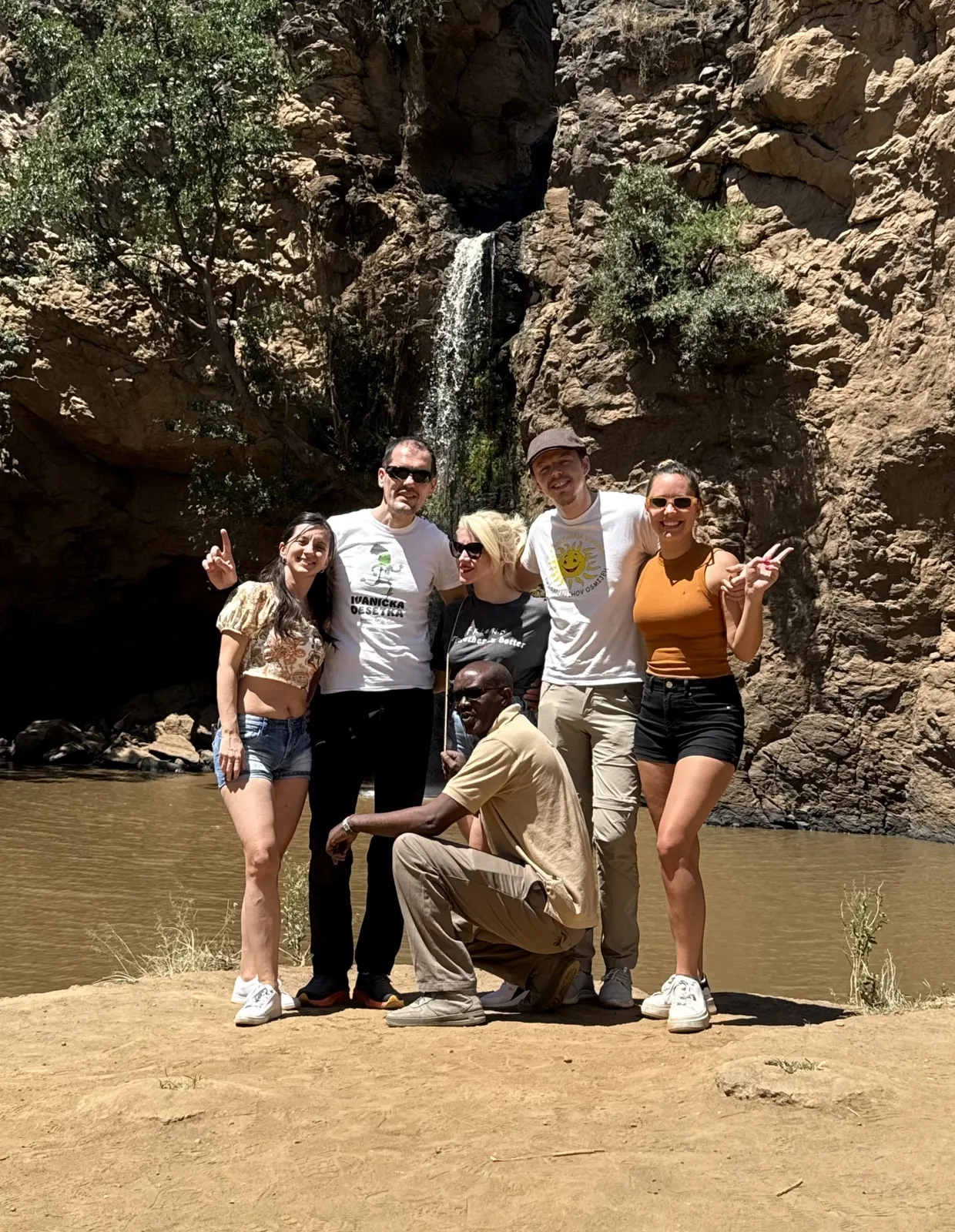
At the southern end of the park is Makalia Falls, a waterfall about 10 metres high falling into a pool – and one of the few places where you can get out of the car. It’s small but really pretty, with unusual red rocks, and it’s the perfect photo stop.

Rothschild’s giraffes
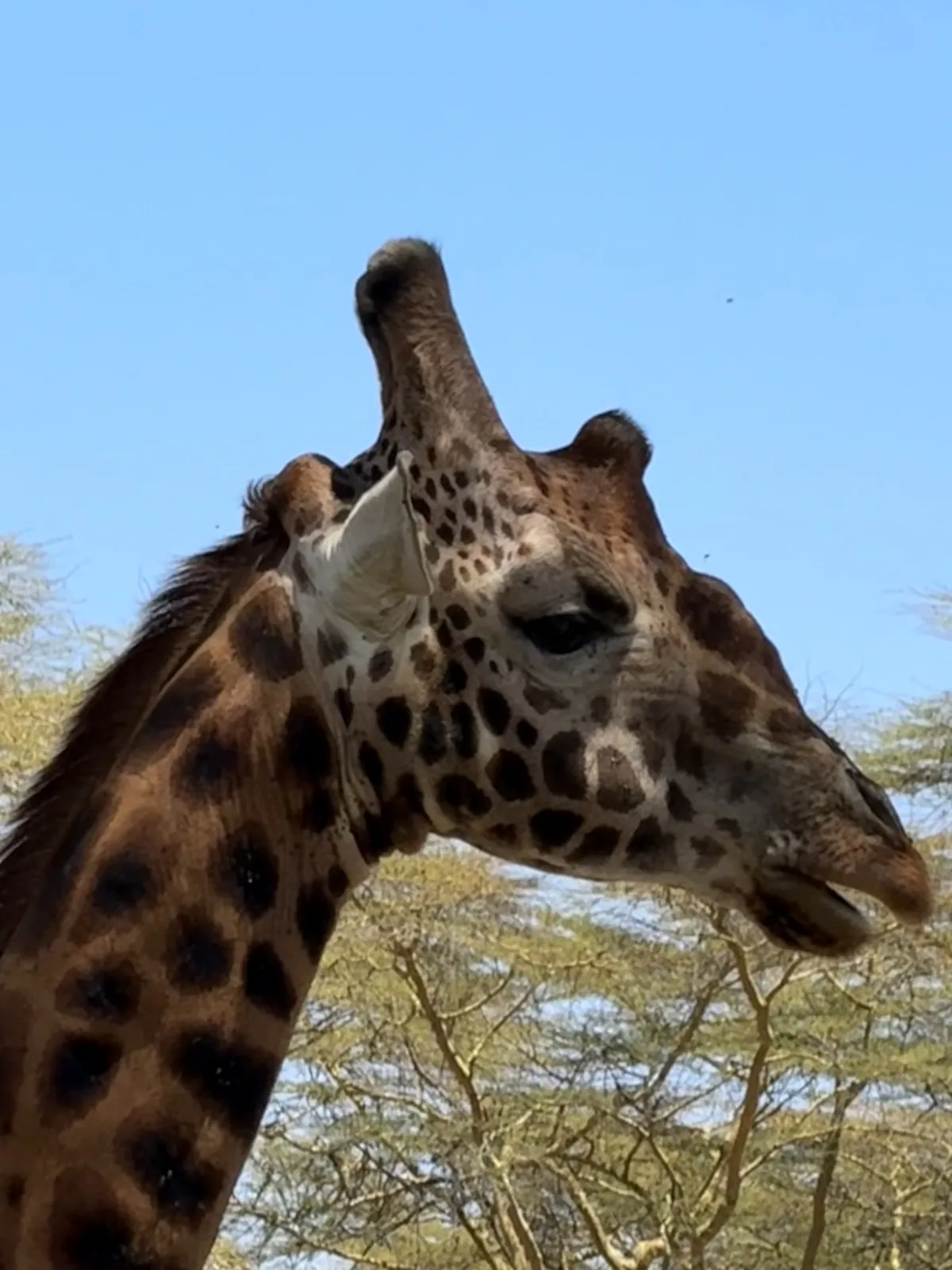
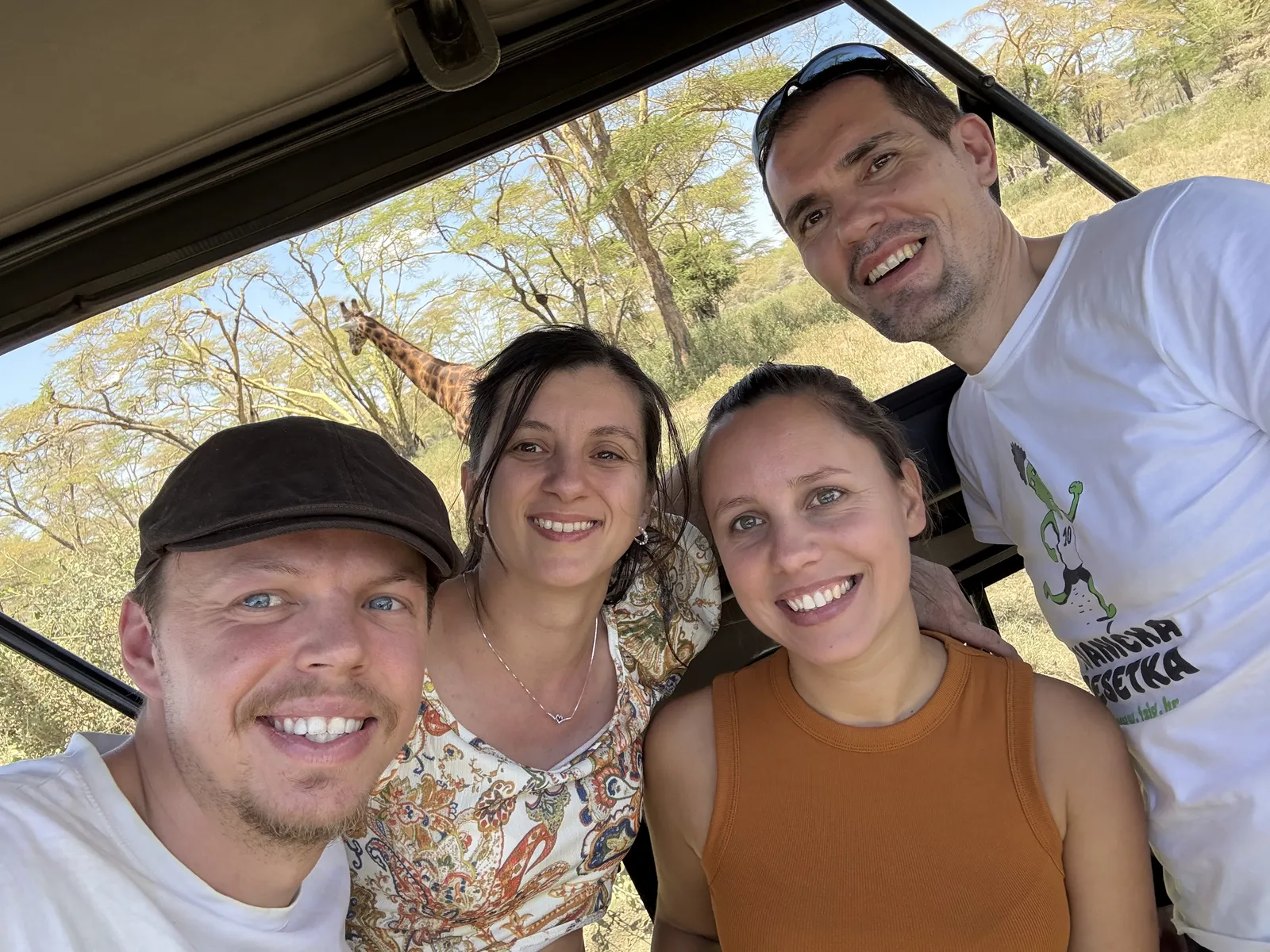
Nakuru is one of the best places to see the rare Rothschild’s giraffe. You can recognise them by their pale, cream-coloured ‘stockings’ – there are no spots below the knees. They walked between the yellow fever trees so calmly that we could watch them eat leaves from just a few metres away.

Rhinos!
One of my favourite moments: white rhinos with a little calf, grazing quietly in the green grass. Lake Nakuru protects both black and white rhinos and is one of the most reliable places in Kenya to see them.

Pink flamingos and pelicans
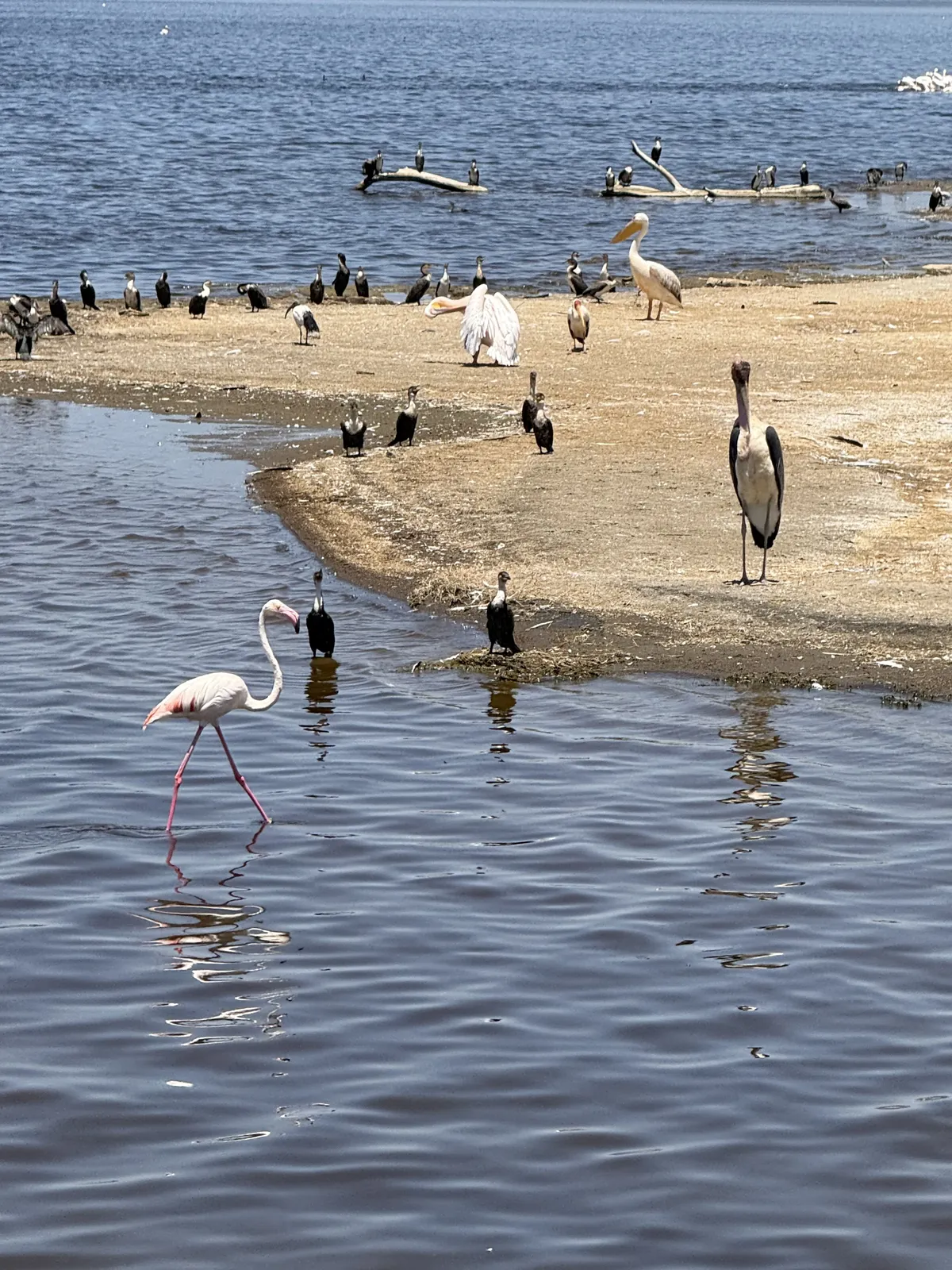
And then the shore of the lake – pink flamingos walking through the shallow water, great white pelicans resting on the sand, cormorants drying their wings and huge marabou storks standing around like old men. Flamingo numbers at Nakuru change with the water level, but we saw beautiful pink ones right in front of us.



Entry: we paid around €60 each (in February 2025) – by card, because the park didn’t accept cash. One person paid for the whole group, because the payment takes a while and we didn’t want to lose time. Since October 2025 the fee for non-resident adults is USD 90 per day.
Lunch in Naivasha town
We ate in Naivasha town at Urban Dining. The food isn’t what we’re used to, but it was okay. Chicken with potatoes and a Coca-Cola came to 480 shillings – about €4.
Afternoon: our boat ride on Lake Naivasha
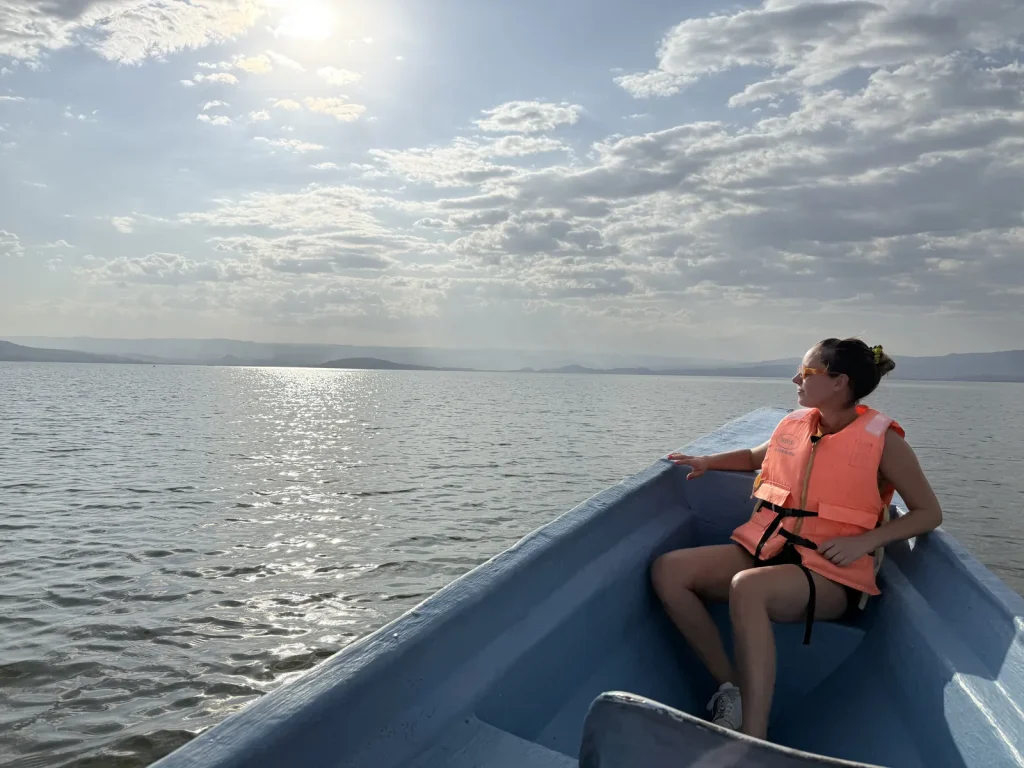
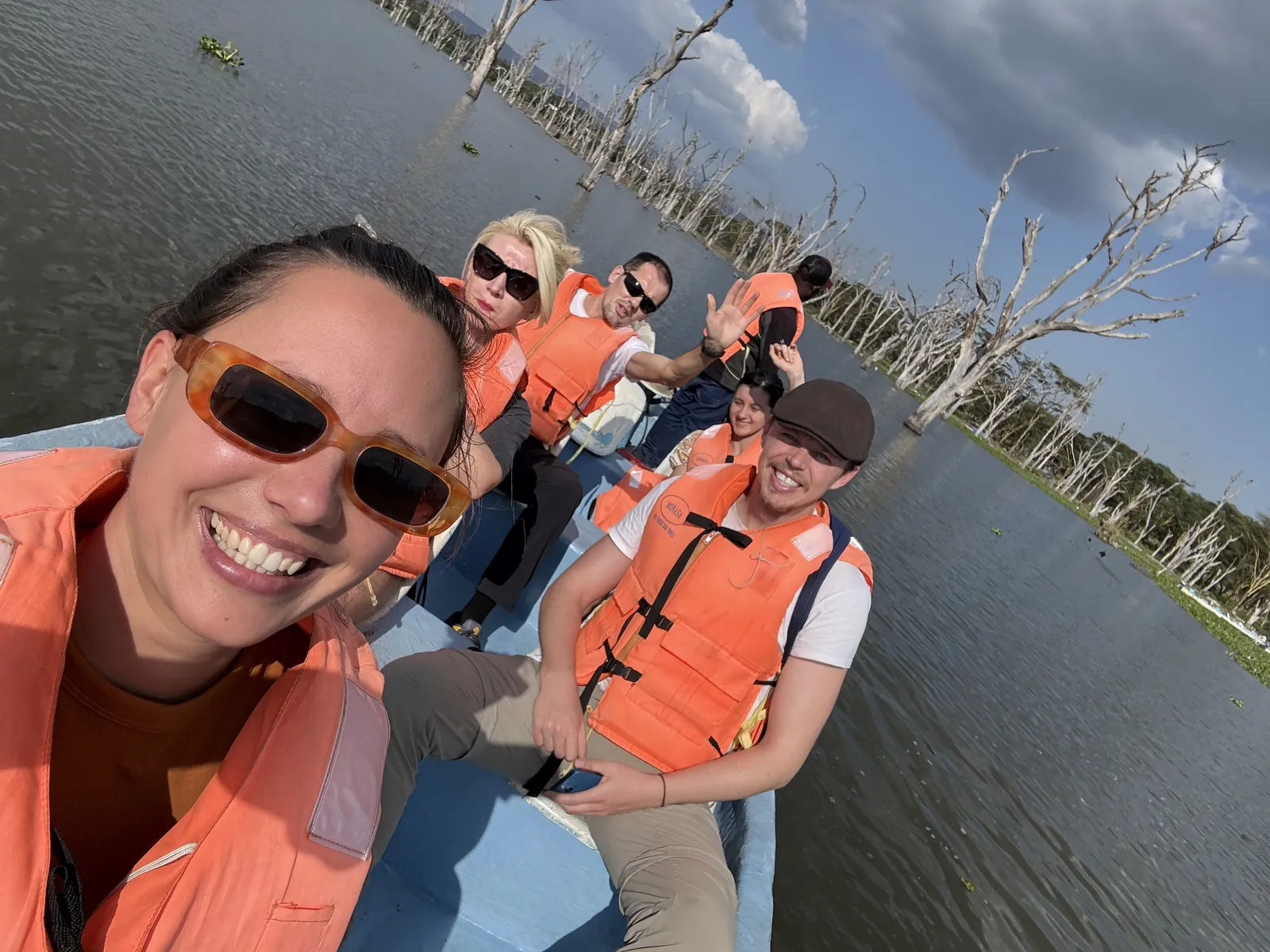
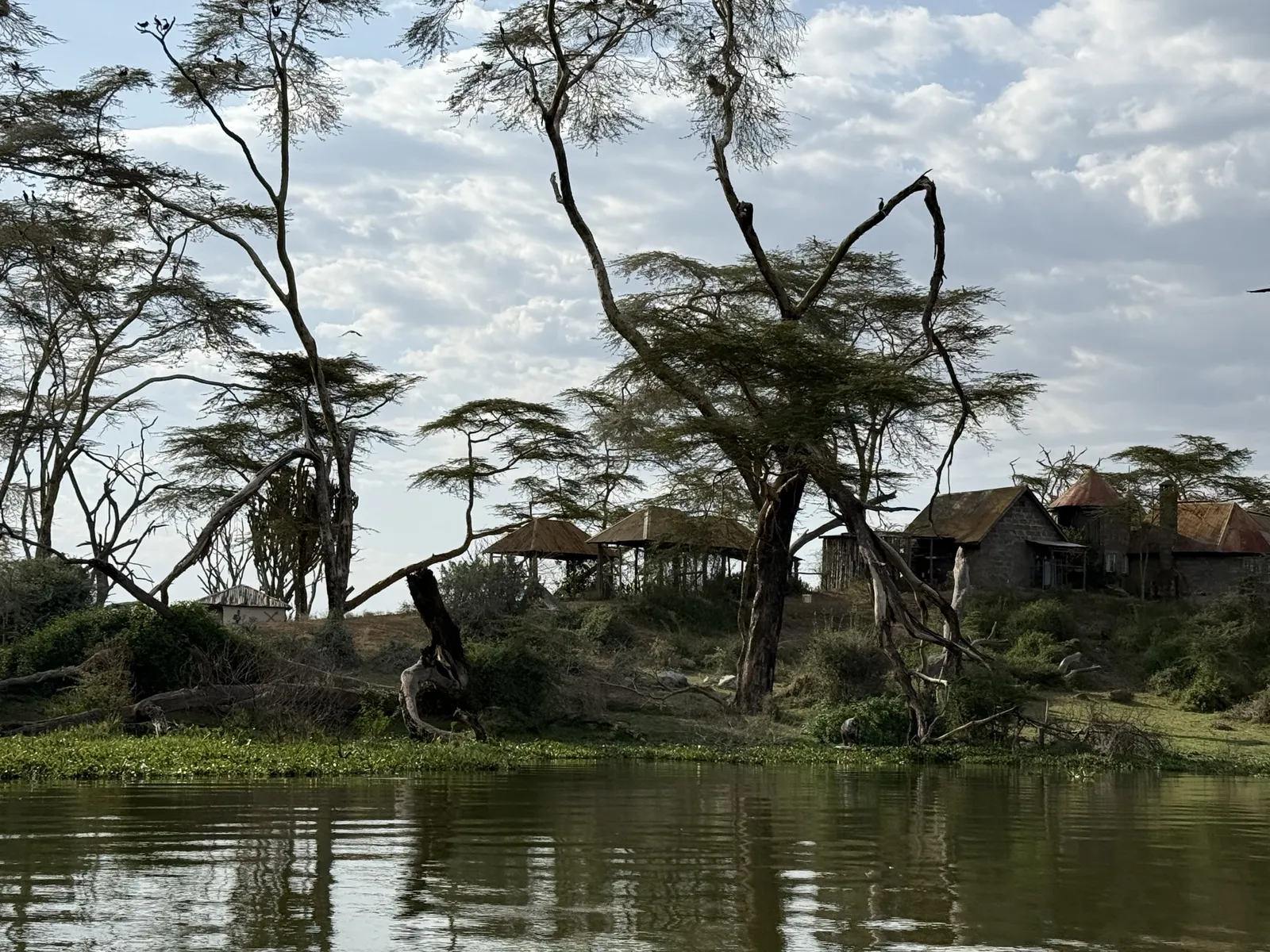
In the afternoon we rented a small boat for an hour (€20 per person) and went out on Lake Naivasha – a freshwater lake that is full of hippos. We all got orange life jackets, climbed into a narrow wooden boat and off we went between drowned trees, water hyacinth and lodges hidden in the acacias.
Honestly? I found the ride really funny – but everyone else was scared to death! Nobody wanted to sit at the front of the boat, closest to the hippos, and every time a hippo lifted its head out of the water the whole boat went silent. The boatmen know the hippos and keep a safe distance, but when you see how big they are from a little boat, you understand why everyone was nervous.

Hippos, hippos, hippos
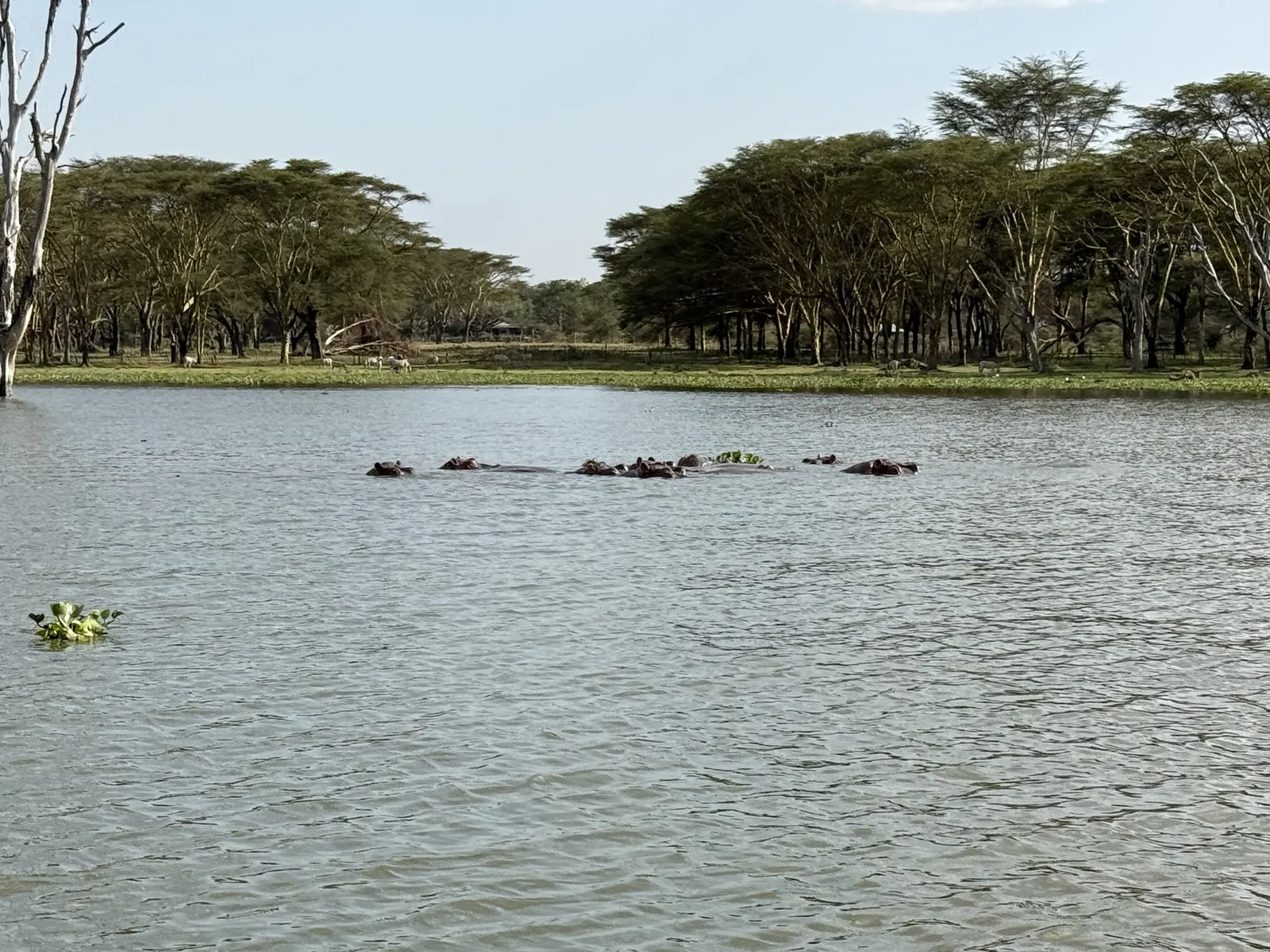
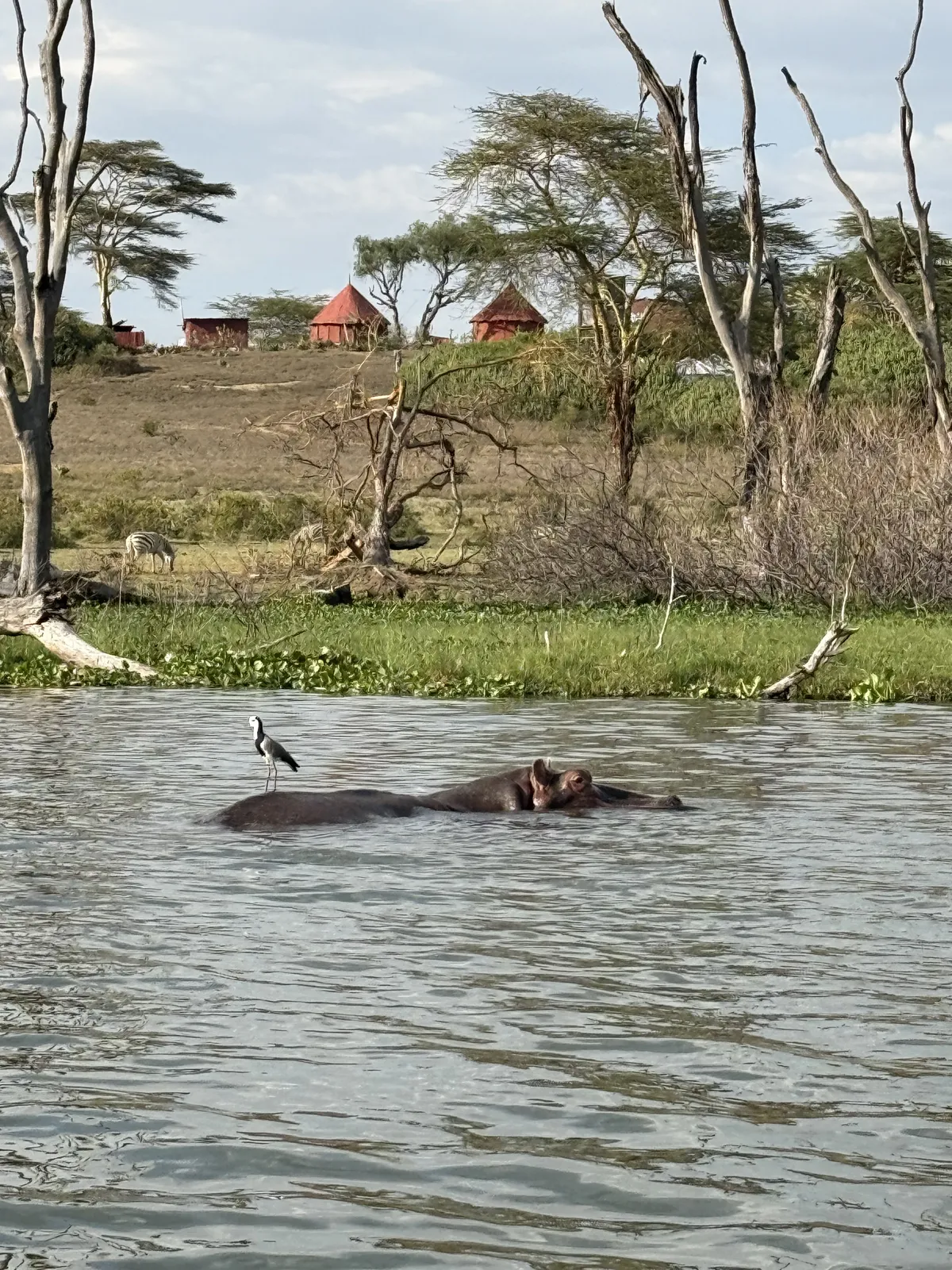
Most of the time you only see their eyes, ears and nostrils above the water – and then suddenly a huge head comes up, or a whole group of them lies together like grey rocks. We saw many hippos, some of them with birds sitting on their backs.

Birds and animals on the shore
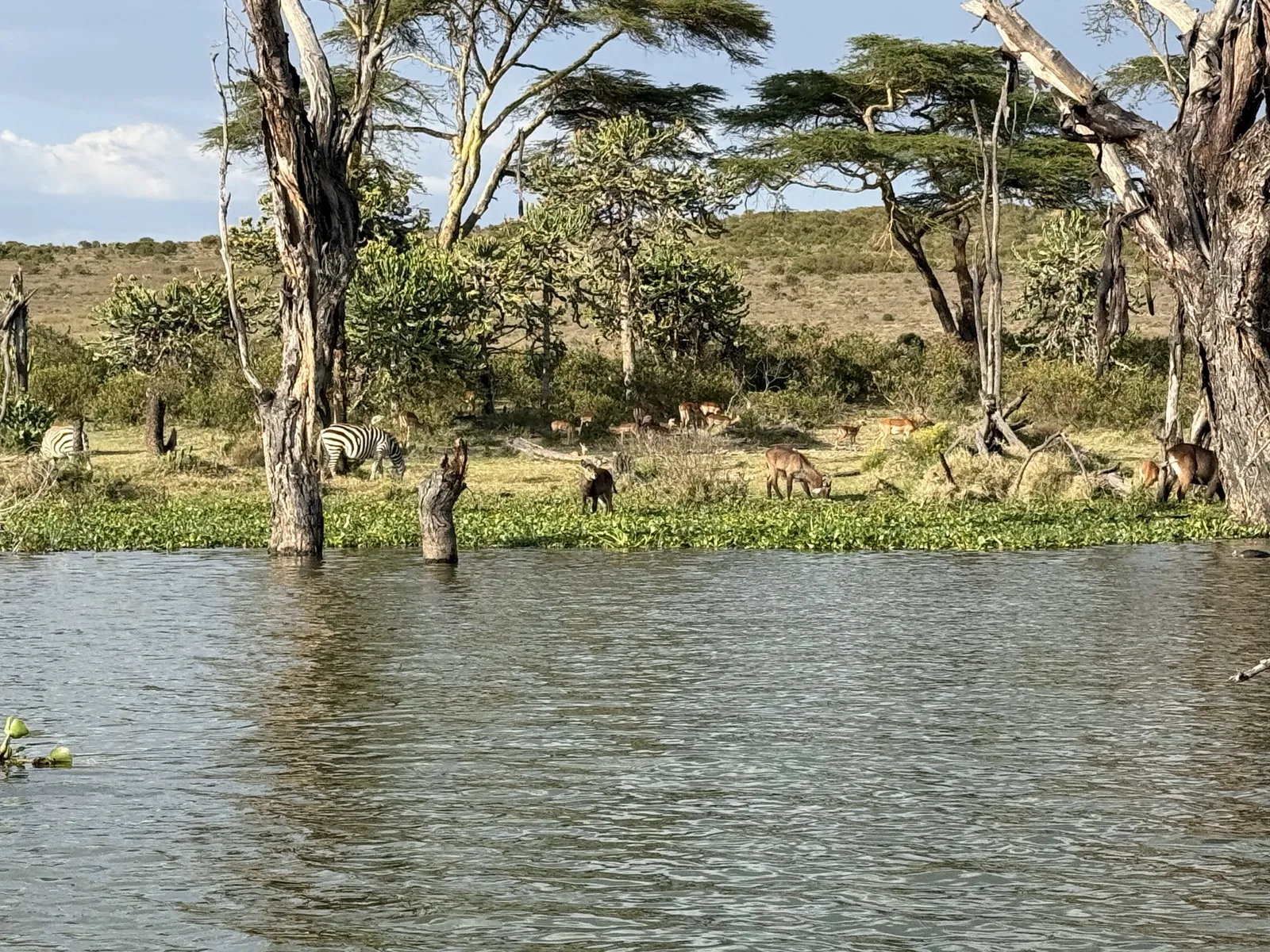
Lake Naivasha is also a paradise for birds. We saw an African fish eagle sitting on a stump (Kenya’s most famous bird call!), whole trees full of nesting cormorants, pelicans resting on floating water hyacinth and egrets between the drowned trees. On the shore, zebras, impalas and waterbucks were grazing right next to the water.




Why hippos are one of the most dangerous animals in the world
Hippos look slow, round and almost cute – but they are considered the most dangerous large land animal in Africa. Here is what makes them so dangerous:
- They kill more people than lions – estimates say hippos cause around 500 human deaths a year in Africa, and some estimates go much higher. Only mosquitoes (because of disease) are deadlier.
- They are surprisingly fast – on land a hippo can run up to about 30 km/h over short distances. That’s faster than almost any person can sprint.
- They can’t actually swim – hippos are so heavy and dense that they don’t float. They walk or bounce along the bottom of the lake, and can stay under water for around five minutes.
- Huge and powerful – an adult weighs around 1,500 kg (big males even more), with jaws that open very wide and long, sharp canine teeth.
- Very territorial – in the water they defend their space and will charge boats or people who come too close, especially mothers with calves.
- Night grazers – they spend the day in the water and come out at night to eat grass on the shore, so meeting one on land after dark is especially dangerous.
- Their own sunscreen – hippos produce a reddish oily liquid on their skin (often called ‘blood sweat’) that protects them from the sun.
- Vegetarians – they don’t eat meat; they attack out of fear and to defend their territory, not to hunt.
The fishermen of Lake Naivasha
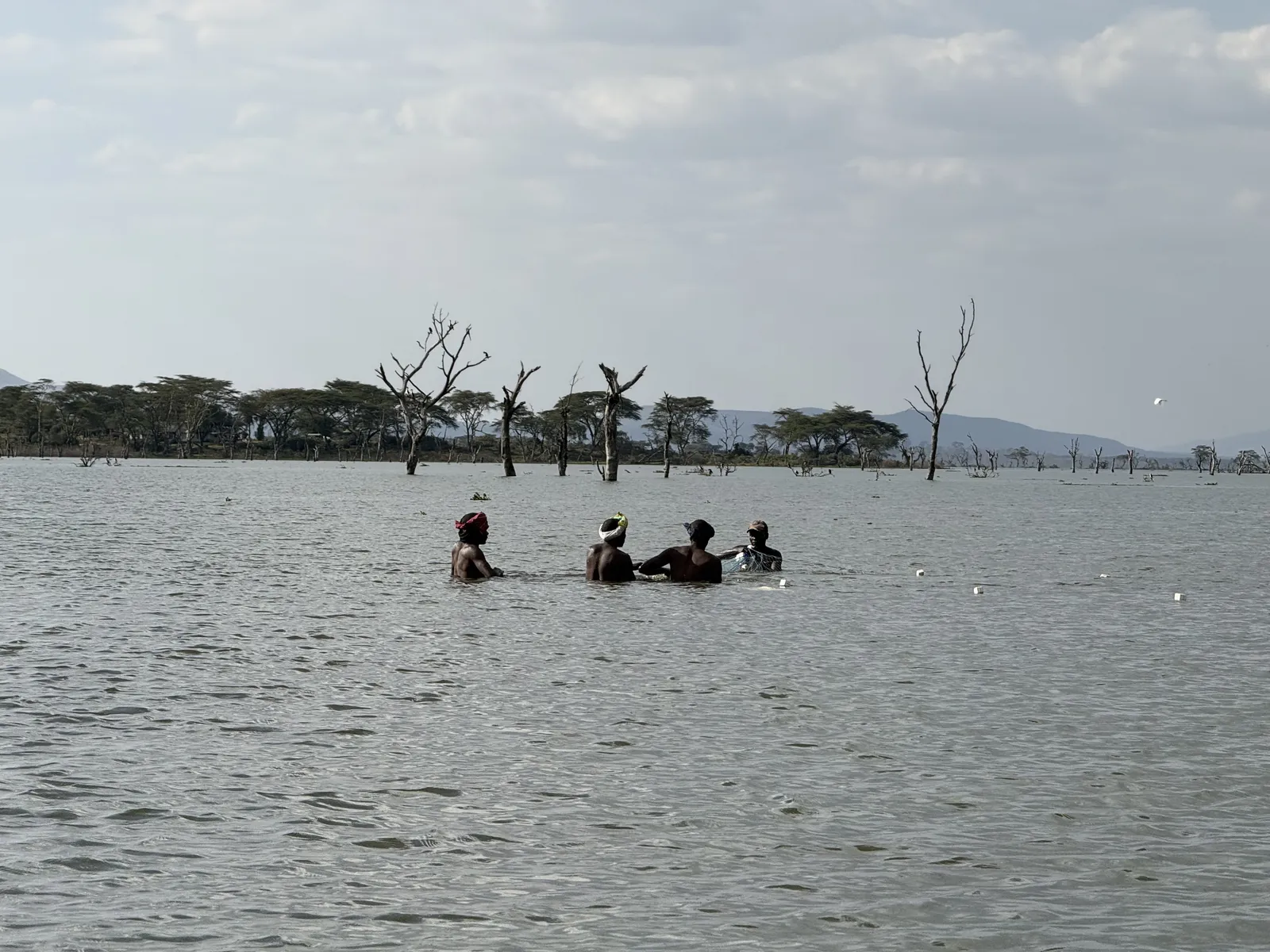
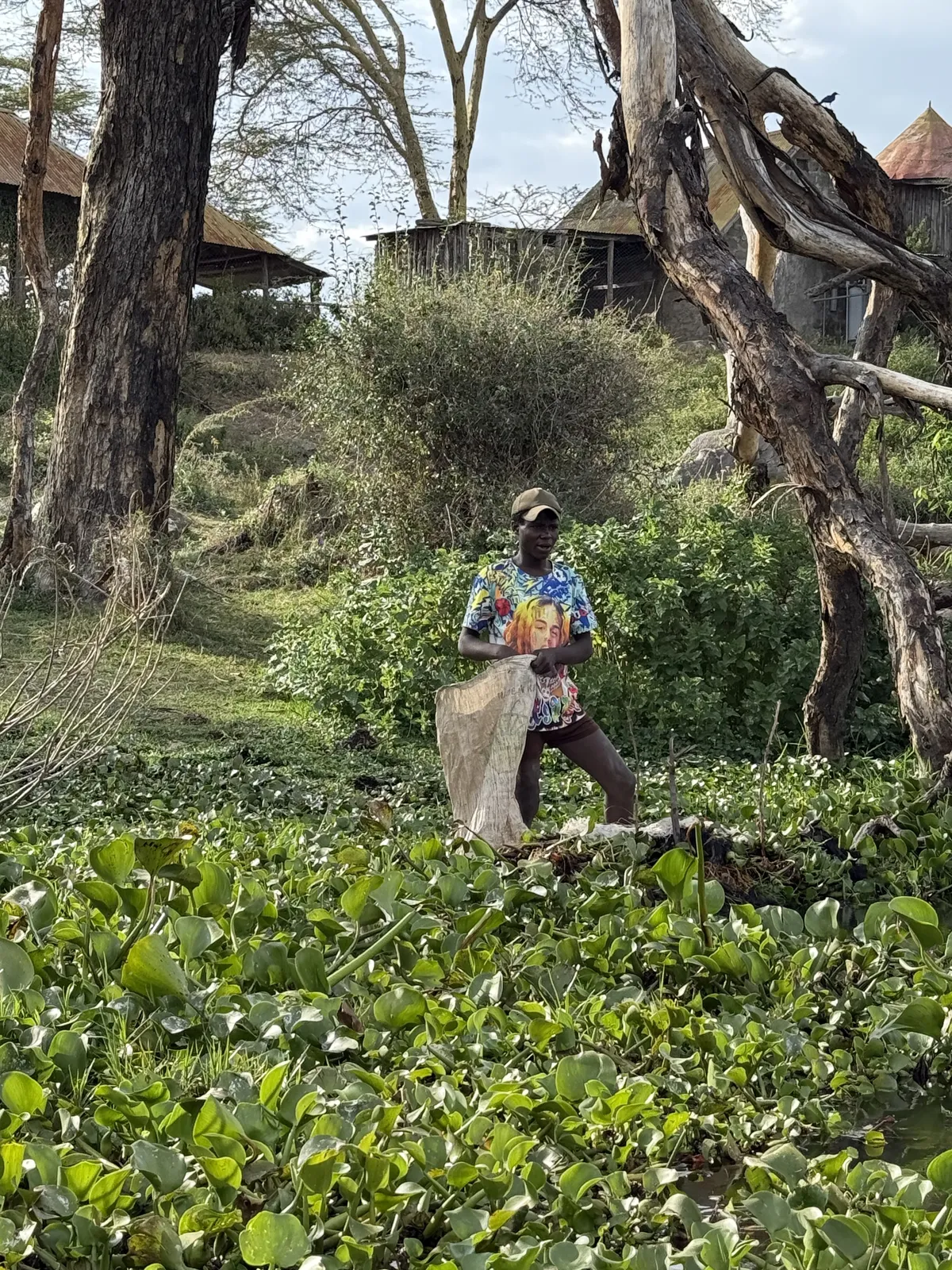
What stayed with me most from Lake Naivasha were the fishermen. We saw young men standing up to their chests in the water, among the hippos, pulling their nets by hand. They fish to survive and to feed their families – and it often happens that a hippo attacks them and they lose their lives. Most of them are just young boys.
Local reports describe the same thing: many of them are unemployed young men from the informal settlements around the lake who fish on foot, often without licences and at night, right where the hippos come out to graze. Kenyan media have reported dozens of deaths from hippo attacks and drowning every year, and in January 2026 four young men died in a single hippo attack. With the lake rising, the number of hippos has grown too – and so has the danger.
It’s a hard thing to see from a tourist boat. If you take a boat ride, choose a licensed operator, listen to the boatman and keep your distance from the hippos – and remember that for the people living here, this beautiful lake is also a daily fight to survive.
All the animals we saw in one day
| Animal | Where we saw it |
|---|---|
| White rhinos (with a calf) | Lake Nakuru National Park |
| Rothschild’s giraffes | Lake Nakuru – acacia woodland |
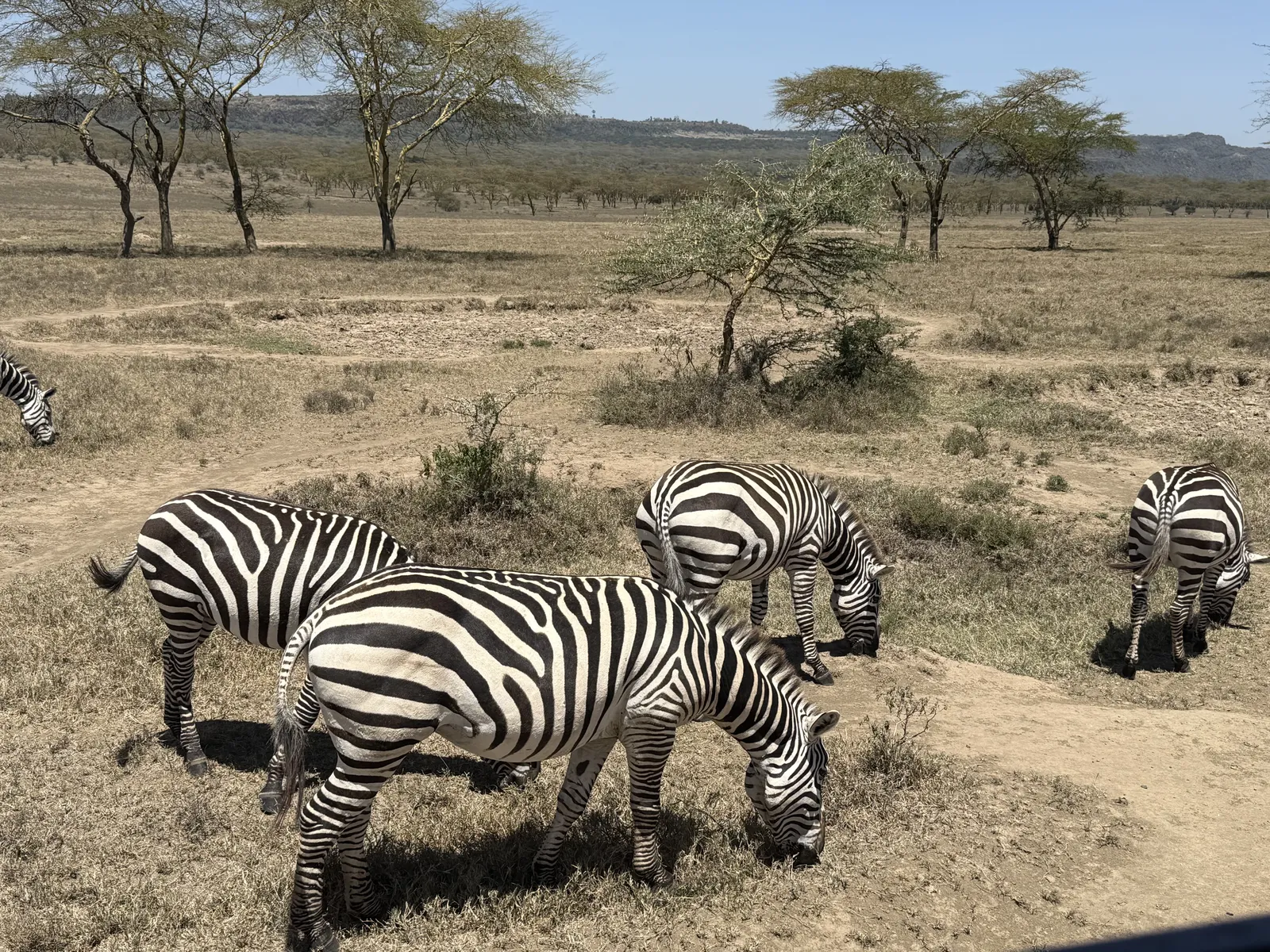
| Zebras | Lake Nakuru and the shore of Lake Naivasha |
| Cape buffalo | Lake Nakuru, under the acacias |
| Pink flamingos | Lake Nakuru shore |
| Great white pelicans | Lake Nakuru and Lake Naivasha |
| Marabou storks | Lake Nakuru shore |
| Cormorants | Both lakes – nesting in the trees at Naivasha |
| Hippos | Lake Naivasha, from the boat |
| African fish eagle | Lake Naivasha |
| Egrets | Lake Naivasha, between the drowned trees |
| Impalas and waterbucks | The shore of Lake Naivasha |
How much did it cost?
| Item | Price |
|---|---|
| Lake Nakuru National Park entry | ≈ €60 each in February 2025 (by card); USD 90 per non-resident adult since October 2025 |
| Boat ride on Lake Naivasha | €20 per person for one hour |
| Lunch at Urban Dining, Naivasha | 480 KSh (≈ €4) for chicken with potatoes and a Coca-Cola |
My tips for Lake Nakuru & Lake Naivasha
- Start early – the roads are slow and you want time for both lakes.
- Pay by card in the national park – cash is usually not accepted.
- Buy a Safaricom SIM card for mobile internet – the other networks often have weak signal outside the cities.
- M-Pesa is how most things are paid in Kenya, but cash and cards also work in many places.
- On the boat: always wear the life jacket, stay seated, don’t ask the boatman to go closer to the hippos and keep your hands inside the boat.
- Never walk near the shore at dusk or at night – that’s when hippos come out to graze.
- Bring a zoom lens or binoculars for the birds, rhinos and hippos.
- Sunscreen and a hat – there’s no shade on the boat.
More one-day trips in Kenya
More from our Kenya trip: Amboseli and Kilimanjaro, a 3-day Masai Mara safari, visiting a Maasai village, Nairobi, Kibera, Mombasa and Diani Beach. For entry rules, budgets and the best time to go, read my Kenya travel guide or browse all my Africa guides.
Work with me
Are you a lodge, safari company, villa or tourism board in Kenya? I create honest one-day itineraries, photos and Instagram stories that help travellers plan real trips. Find out how we can work together or get in touch.
Lake Nakuru & Lake Naivasha FAQ
Can you visit Lake Nakuru and Lake Naivasha in one day?
Yes. We did a game drive in Lake Nakuru National Park in the morning, had lunch in Naivasha town and took a boat ride on Lake Naivasha in the afternoon. It's a long day, so leave Nairobi early.
How much is a boat ride on Lake Naivasha?
We paid €20 per person for a one-hour boat ride. Prices depend on the operator and how many people are in the boat.
Is a boat ride on Lake Naivasha safe?
With a licensed operator, a life jacket and a boatman who keeps a safe distance from the hippos, yes. Never ask to get closer to the hippos and stay seated in the boat.
Why are hippos so dangerous?
They are very territorial, fast (up to about 30 km/h on land) and enormous, and they attack boats and people who come too close. They are blamed for hundreds of human deaths in Africa every year.
How much is Lake Nakuru National Park entry?
Since October 2025 KWS charges USD 90 per day for non-resident adults. We paid around €60 each in February 2025, by card.
Can you see flamingos at Lake Nakuru?
Yes, although their numbers change with the water level. We saw pink flamingos, pelicans and marabou storks on the shore.
Can you see rhinos at Lake Nakuru?
Yes. Lake Nakuru was Kenya's first rhino sanctuary and protects both black and white rhinos – we saw white rhinos with a calf.
Can I pay with cash in Kenyan national parks?
Usually not. Most parks only accept card or online payment through eCitizen, so bring a card.
Miki Kokica
Travel blogger behind One Day Itinerary. I test every route myself and write honest, practical guides so you can make the most of a single day anywhere.
Work with me Instagram