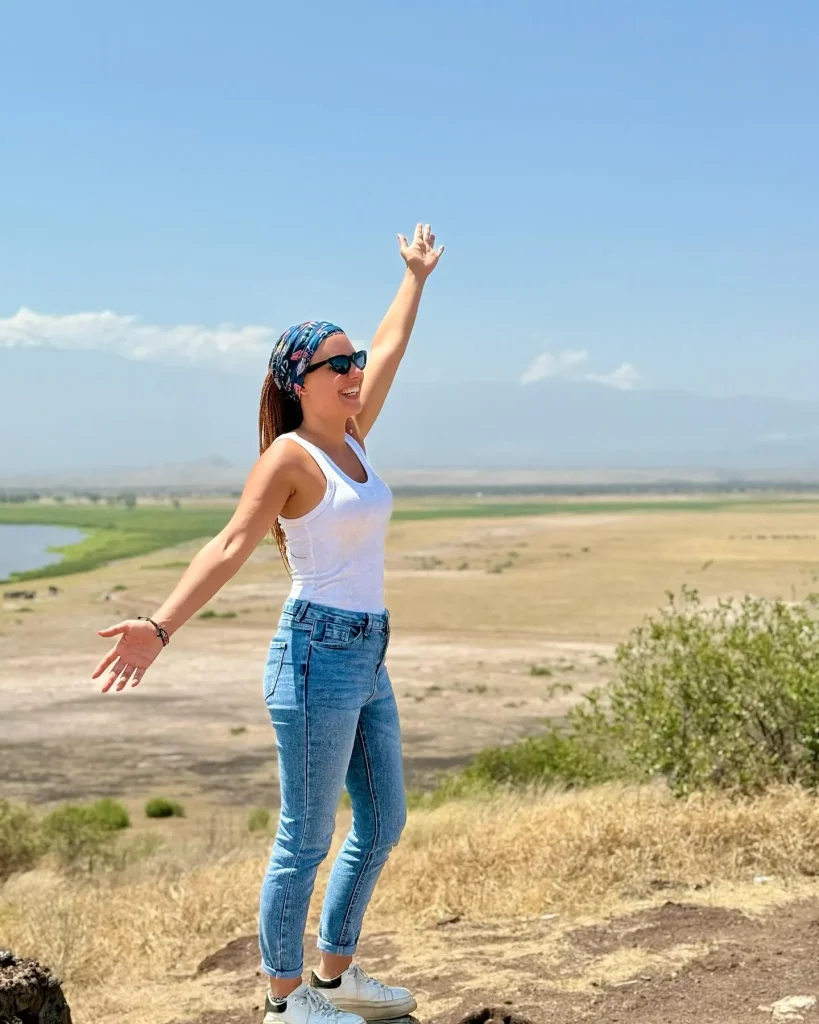
Hi, I’m Miki! While we were staying in Nairobi, we booked a one-day tour to Amboseli National Park – Kenya’s park of giant elephants and the classic view of Mount Kilimanjaro, Africa’s highest mountain. We had to get up really, really early and we spent a big part of the day in the car… but it was absolutely worth it. On the way we even saw Kilimanjaro rising above the plains!
This is my big, detailed guide to Amboseli: how a day trip from Nairobi works hour by hour, every animal you can see in the park (with the famous pink flamingos!), the best time to go, what it costs in 2026 and all my tips.
Amboseli at a glance
| Where | Kajiado County, southern Kenya, right below Kilimanjaro on the border with Tanzania |
| Size | 392 km² – the core of an ecosystem of about 8,000 km² that crosses into Tanzania |
| Protected since | National park since 1974, UNESCO Man and Biosphere Reserve since 1991 |
| Name | From the Maa word Empusel – “salty, dusty place” |
| Famous for | Big elephant herds, super tuskers and Kilimanjaro views |
| Wildlife | 50+ mammal species and over 400 bird species |
| Entry (2026) | USD 90 per non-resident adult per day (KWS) |
| Getting there | ≈ 4 h by road from Nairobi via Emali, or a short flight to the park airstrip |
Amboseli lies in the rain shadow of Kilimanjaro and gets very little rain – yet parts of the park are lush and green. The secret is water from Kilimanjaro’s snow and forests that flows underground and comes up in the park as papyrus swamps (the biggest are Enkongo Narok, Ol Tukai and Olokeya). That’s why the animals gather here, especially in the dry season.
Our day trip from Nairobi to Amboseli, hour by hour
We went with an organised one-day tour – the easiest way to do Amboseli in one day, because you don’t have to drive or deal with the park payment yourself, and most tours pick you up at your hotel. This is how the day works, with real times and drive lengths:
| Time | What happens | Travel time |
|---|---|---|
| 05:00 | Pickup at your hotel in Nairobi – still dark, bring a jacket and a snack. | – |
| 05:00–07:30 | Drive south-east on the Nairobi–Mombasa highway through the Maasai plains. Sunrise on the way. | ≈ 2.5 h |
| 07:30–08:00 | Coffee/breakfast and toilet stop in Emali. | – |
| 08:00–09:30 | Drive from Emali to the park gate on a quieter road – this is where Kilimanjaro can appear on the horizon if the sky is clear. | ≈ 1.5 h |
| 09:30 | Arrive at the park gate, pay the entry fee (card/M-Pesa) and start the game drive. | – |
| 09:30–13:00 | Morning game drive: elephant herds, the swamps, buffalo, zebras, giraffes, birds and Observation Hill. | inside the park |
| 13:00–14:00 | Lunch – picnic or at a lodge, depending on the tour. | – |
| 14:00–15:30 | Short afternoon game drive on the way out of the park. | inside the park |
| 15:30–20:00 | Drive back to Nairobi with a short stop. Expect traffic when you reach the city. | ≈ 4–4.5 h |
| ≈ 20:00 | Back at the hotel – tired, dusty and very happy. | – |
In total that’s around 500 km and 8+ hours of driving for about 5–6 hours in and around the park. Long? Yes. But you get the classic Amboseli picture – elephants in front of Africa’s highest mountain – without paying for a lodge night.
Seeing Kilimanjaro
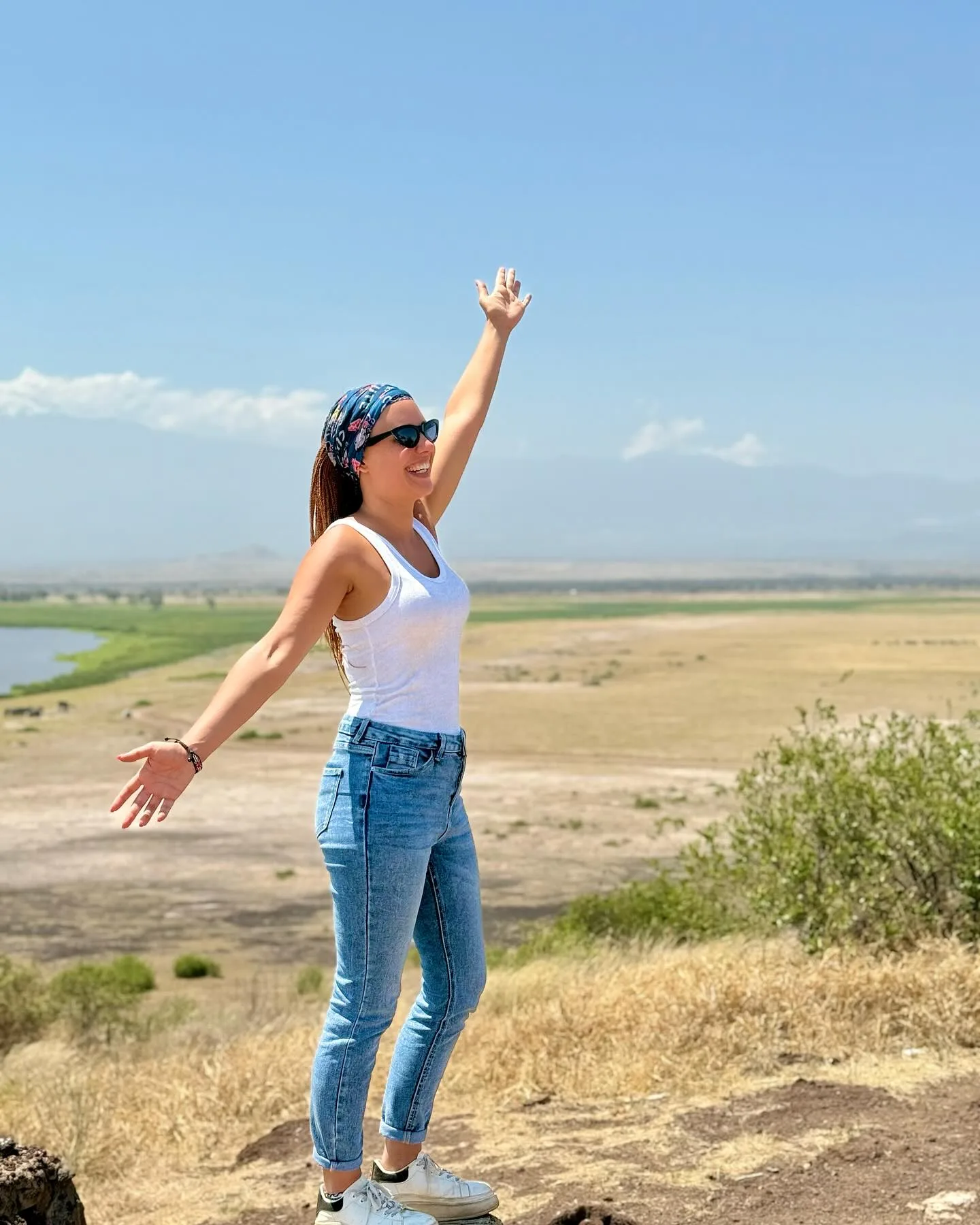
The highlight of the drive was seeing Mount Kilimanjaro (5,895 m) from the road. The mountain is actually in Tanzania, about 40 km behind the border, but the classic views of its northern side are from Kenya, around Amboseli.
- Go early: Kilimanjaro is shy – clouds usually build around the summit by mid-morning, so the early start really pays off.
- Second chance: late afternoon, when the clouds sometimes clear again – keep looking on the way out of the park.
- After rain: the air is clear of dust, which often means the sharpest views.
- Midday is the worst time for mountain photos – heat haze and clouds peak between late morning and mid-afternoon.
The elephants of Amboseli
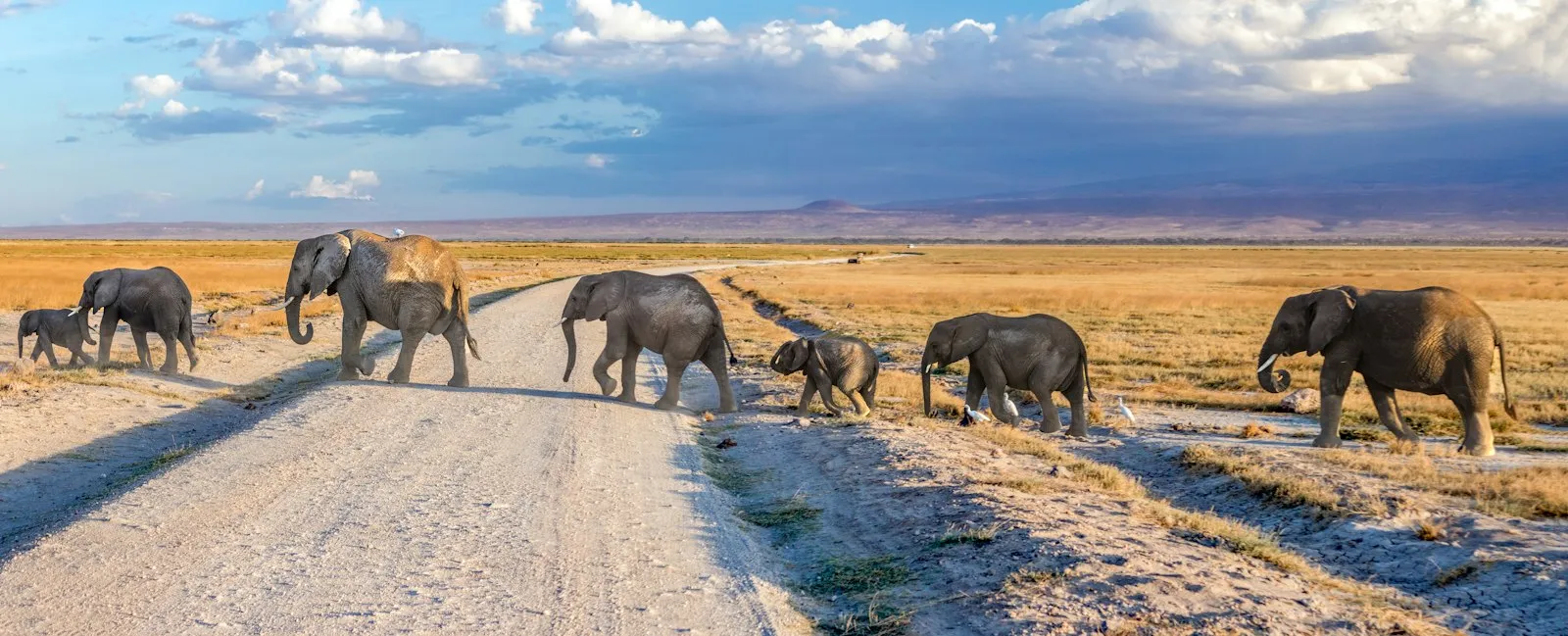
Amboseli is the elephant park. Because of the constant presence of researchers, rangers and tourists, the elephants here are relaxed and you can watch them up close – walking in long lines across the dusty plain, bathing and eating in the swamps, or crossing the road right in front of your car.
- Around 2,000 elephants – at the end of 2025 the Amboseli population was 2,065 individuals, every single one identified and followed by the Amboseli Trust for Elephants.
- The world’s longest elephant study – the Amboseli Elephant Research Project has been running since 1972.
- Super tuskers – about ten bulls in the Amboseli ecosystem carry tusks of 45 kg or more each, among the biggest left in Africa. The legendary Craig is one of the best known.
- Baby boom – more than 200 calves were born in the ecosystem in 2025 after the rains returned, so look out for tiny babies sheltering under their mothers.
- Famous names – the matriarch Echo, star of many documentaries, lived here until 2009, and the great tusker Tim until 2020.
Best spots: the swamps around Ol Tukai and Enkongo Narok, where the herds spend the hot hours eating and bathing – sometimes so deep in the water you only see their backs.
The pink flamingos of Lake Amboseli
One of the most beautiful surprises of Amboseli is pink. The western part of the park is an old, dried-up lake basin with Lake Amboseli, which stays dry most of the year. But after heavy rains it fills with shallow, salty water – and then thousands of flamingos fly in and paint the lake bright pink, with Kilimanjaro behind them. It’s one of the most magical pictures in Kenya.
- Two species – the smaller, deep-pink lesser flamingo and the taller, paler greater flamingo.
- Why are they pink? Flamingos are born grey-white – the pink colour comes from the tiny algae and bacteria they eat in salty, alkaline lakes.
- When to see them: after good rains, when the lake has water. In July 2026 counters watched enormous flocks crowding on the last remaining water of Lake Amboseli – so they can stay well into the dry season.
- Where: the western lakes (Lake Amboseli and nearby Lake Kioko) and the edges of the swamps – ask your driver where the flocks are that week.
Want to be sure to see flamingos? In Kenya we also saw them at Lake Nakuru, together with giraffes and zebras – it’s one of the classic flamingo lakes of the Rift Valley.
All the animals you can see in Amboseli
Big cats and predators
- Lions – Amboseli has a good lion population on the open plains; look for them resting under acacias or near the swamps.
- Cheetahs – the flat, open grassland is perfect cheetah country, so you may see one hunting gazelles.
- Spotted hyenas – very common; there is usually an easy-to-find hyena den that guides know about.
- Jackals and bat-eared foxes – small but fun to spot, especially early in the morning.
- Leopards are rare here – Amboseli has few trees and rocks, so don’t count on them (the Masai Mara is better for leopards).
Grazers and big herds
- Cape buffalo – big herds in and around the swamps.
- Hippos – in the deeper swamp water, often only ears and eyes showing.
- Maasai giraffes – the tallest animals in the park, with jagged, star-shaped patches.
- Plains zebras and blue wildebeest – often grazing together in large groups.
- Gazelles and antelopes – Thomson’s and Grant’s gazelles, impalas and the huge eland.
- Warthogs – running with their tails straight up like little antennas.
Monkeys
- Yellow baboons – troops walk along the roads and picnic sites; keep food inside the car.
- Vervet monkeys – small, cheeky and fast around the lodges.
Birds – over 400 species
Amboseli is an Important Bird Area with more than 400 recorded species, including over 40 birds of prey. Even if you’re not a birdwatcher, you’ll notice these:
- Flamingos – when Lake Amboseli has water (see above).
- Pelicans, herons and egrets – in the swamps, often riding on the backs of buffalo and elephants (cattle egrets).
- Grey crowned cranes – Uganda’s national bird, with a golden crown of feathers.
- African fish eagle – listen for its famous call near the water.
- Kingfishers and bee-eaters – tiny flashes of colour along the swamp edges.
- Secretary bird, ostrich and kori bustard – big birds walking on the open plains.
- Marabou storks and vultures – the clean-up crew of the savannah.
Amboseli wildlife checklist
| Animal | Where to look | Chance on a day trip |
|---|---|---|
| Elephants | Everywhere, especially the swamps | Almost guaranteed |
| Kilimanjaro view | Whole park, early morning | Good in the morning, depends on clouds |
| Buffalo, zebra, wildebeest, giraffe | Plains and swamp edges | Very likely |
| Hippos | Deeper swamps | Likely |
| Flamingos | Lake Amboseli / western lakes | Seasonal – after rains |
| Hyenas | Plains, dens near the road | Likely |
| Lions | Open plains, near swamps | Possible |
| Cheetahs | Open grassland | Possible |
| Leopards | Rare in Amboseli | Unlikely |
Observation Hill – the only place to get out
Inside the park you have to stay in the vehicle, except at Observation Hill (Normatior) – a small volcanic cone in the middle of the flat park. A short walk up (around 100 natural steps) gives you a 360° view of the swamps, the dry lakebed, the elephant herds and, if you’re lucky, Kilimanjaro. There are toilets at the bottom, so it’s also the perfect stretch-your-legs stop on a long day trip.
Best time to visit Amboseli
| Season | Months | What to expect |
|---|---|---|
| Long dry season | June–October | Best for wildlife – animals gather at the swamps; dusty and busy |
| Short dry season | January–February | Great wildlife and often good Kilimanjaro views |
| Rainy seasons | March–May, November–December | Green, fewer people, clearer air after rain; April is the wettest month and roads can be bad |
Flamingos depend on the lake having water, so they are most likely after a good rainy season – but they can stay for months.
How much does an Amboseli day trip cost?
| Item | Price (2026) |
|---|---|
| Park entry (non-resident adult) | USD 90 per person per day (KWS fees in effect since October 2025) |
| Organised day tour from Nairobi | roughly USD 185–230 per person, depending on group size and what’s included |
| Breakfast stop in Emali | a few euros – usually not included |
Always check whether the park fee is included in the tour price – many cheaper offers add it on top. Kenyan national parks take card or M-Pesa, not cash, so it’s easiest when the tour company handles it.
Amboseli or the Masai Mara?
| Amboseli | Masai Mara | |
|---|---|---|
| Best for | Elephants and Kilimanjaro views | Big cats and the Great Migration |
| Landscape | Flat, dusty plains and green swamps | Rolling grassland, rivers and acacias |
| From Nairobi | ≈ 4 h – possible as a day trip | ≈ 5–6 h – better for 2–3 days |
We did both – read my 3-day Masai Mara safari guide and my story of visiting a Maasai village.
Is the Amboseli day trip worth it?
Honestly – yes. Getting up before five and sitting in a van for most of the day isn’t everyone’s idea of fun, and we were really tired in the evening. But seeing Kilimanjaro rise above the plains made it one of the most memorable days of our Kenya trip. If you have more time, staying one night near the park lets you do a sunrise game drive with even better chances of a clear mountain.
My tips for a one-day trip to Amboseli
- Sleep early the night before – the 5:00 pickup comes fast.
- Bring layers: it’s chilly before sunrise and hot and dusty at midday.
- Sunglasses, sunscreen and a scarf for the dust in the pop-up roof vehicle.
- Snacks and water for the long drive.
- Binoculars or a zoom lens – for flamingos, birds and distant lions.
- Card or M-Pesa for payments – the parks don’t take cash.
- Ask your guide where the elephants, lions and flamingos have been seen that week – they share news by radio.
More one-day trips in Kenya
More from our Kenya trip: Nairobi in one day, a 3-day Masai Mara safari, visiting a Maasai village, Lake Naivasha & Lake Nakuru, Kibera, Mombasa and Diani Beach. For entry rules, budgets and the best time to go, read my Kenya travel guide or browse all my Africa guides.
Amboseli FAQ
Can you do Amboseli as a day trip from Nairobi?
Yes. Organised day tours pick you up around 5:00, reach the park gate around 9:30 and bring you back to Nairobi around 19:30–20:30. It's a long day with about 8 hours of driving in total.
How far is Amboseli from Nairobi?
About 240–250 km. The drive takes roughly 4 hours each way via the Nairobi–Mombasa highway and Emali, depending on traffic and stops.
How much is the Amboseli entry fee in 2026?
Non-resident adults pay USD 90 per day under the Kenya Wildlife Service fees in effect since October 2025. Check the KWS eCitizen portal before you travel, as fees can change.
Are there flamingos in Amboseli?
Yes, seasonally. When Lake Amboseli fills with water after heavy rains, large flocks of lesser and greater flamingos arrive and can stay for months, even into the dry season.
How many elephants live in Amboseli?
About 2,000. At the end of 2025 the Amboseli Trust for Elephants counted 2,065 individually known elephants, including some of Africa's last super tuskers.
When can you see Kilimanjaro from Amboseli?
Your best chances are early in the morning and in the late afternoon. Clouds usually build around the summit by mid-morning.
Can you get out of the car in Amboseli?
Only at designated spots. Observation Hill is the one place inside the park where you can get out and walk up for a panoramic view.
Are there lions and leopards in Amboseli?
Lions, cheetahs and hyenas live in Amboseli, but leopards are rare because there are few trees and rocks. For leopards, the Masai Mara is a better bet.
Miki Kokica
Travel blogger behind One Day Itinerary. I test every route myself and write honest, practical guides so you can make the most of a single day anywhere.
Work with me Instagram