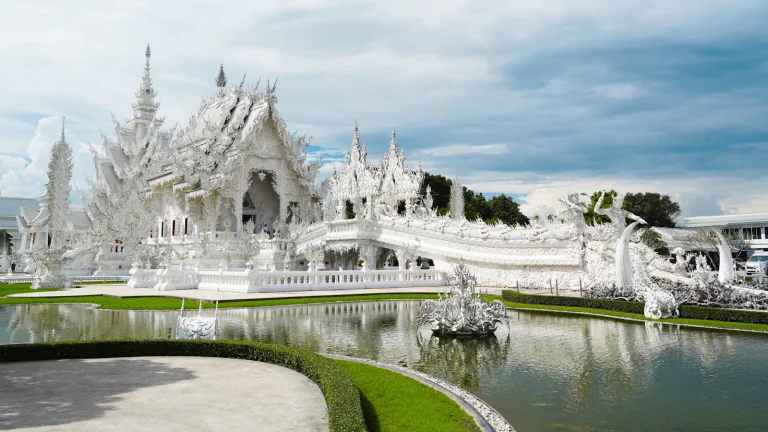
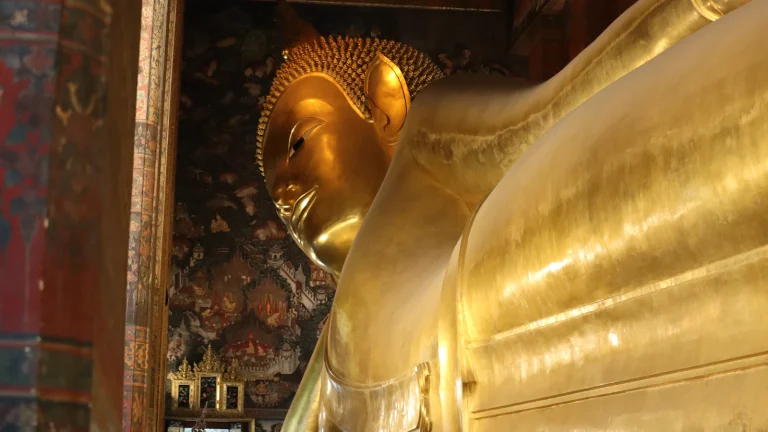
Wat Arun is the temple you’ve seen on every Bangkok postcard: a tall, porcelain-studded tower rising from the bank of the Chao Phraya River, glowing gold at sunset. In this Wat Arun guide I cover everything you need for a smooth visit in 2027: ticket price and opening hours, the dress code, how to get there by boat (the easiest and most fun way), what to look for once you’re inside, and where to watch the famous sunset view.
Wat Arun means “Temple of Dawn”, named after Aruna, the Hindu god associated with the rising sun. Ironically, most people come for the sunset. I’d do both: explore the temple in the cooler morning or late afternoon, then cross back over the river to watch it light up as the sun goes down.
Wat Arun at a glance
| What | Details |
|---|---|
| Location | Thonburi bank of the Chao Phraya, opposite Wat Pho |
| Ticket | 200 THB for foreigners (Thai nationals free), usually with a small bottle of water |
| Opening hours | Daily, about 8:00–18:00, last entry around 17:30 |
| Time needed | 45–90 minutes |
| Getting there | Cross-river ferry from Tha Tien (about 5 THB) or the blue-flag tourist boat to Wat Arun pier |
| Dress code | Shoulders and knees covered, no see-through or very tight clothing |
| Best time | Opening time for quiet, late afternoon for light, sunset from across the river |
| Payment | Cash is safest at the ticket counter |
Why Wat Arun is worth visiting
A temple stood on this spot back in the Ayutthaya period. After Ayutthaya fell in 1767, King Taksin made Thonburi his capital and this became the royal temple, and for a few years it even housed the Emerald Buddha before it moved across the river to Wat Phra Kaew. The central prang you see today took its current form in the first half of the 19th century, under Kings Rama II and Rama III.
What makes Wat Arun special is the decoration. The prang and the four smaller prangs around it are covered in broken porcelain, coloured glass and seashells pressed into the plaster as flowers, many of them pieces of ballast from Chinese trading ships. From a distance it looks white and gold. Up close, every surface is a mosaic. Reported heights for the central prang vary between about 67 and 86 m depending on the source, but either way it’s a giant on the Bangkok skyline.
What to see at Wat Arun
1. The central prang: climb the steep steps
You can climb part of the way up the central prang. The steps are extremely steep and narrow, more like a ladder in places, so hold the rail and take your time, especially coming down. The upper levels are closed, but even the terraces you can reach give you a lovely view across the river to Wat Pho and the Grand Palace roofs. Look closely at the figures around the base: demons and monkeys appear to be holding the tower up.
2. The four smaller prangs and the guardians
Each corner prang has a niche with a statue of the wind god Phra Phai on his horse. Chinese stone guardian figures stand around the courtyard, and the whole complex is ringed by white walls with ornate gates.
3. The ordination hall (ubosot)
Many visitors skip this, which is a mistake. Two giant demon guardians, one white and one green, stand at the gate. Inside, a golden Buddha image is said to have been designed by King Rama II, and his ashes are said to be kept in its base. Take off your shoes, sit quietly for a few minutes and look at the murals.
4. The Thai costume photo spots
Just outside the temple, several shops rent traditional Thai costumes for photos, and you’ll see dozens of people posing in silk outfits around the prang. It’s fun and very popular, especially at golden hour. Just remember that the temple is still a religious site, so keep poses respectful.
How to get to Wat Arun by boat
Wat Arun is on the Thonburi side of the river, and the boat is by far the nicest way to arrive. There are three main options:
- Cross-river ferry from Tha Tien: The simplest option if you’re coming from Wat Pho or the Grand Palace. The ferry pier is behind Wat Pho, at Tha Tien. Boats shuttle across every few minutes from early morning until late evening, and the crossing costs about 5 THB.
- Chao Phraya Tourist Boat (blue flag): Stops directly at Wat Arun pier and at the other main sights along the river. At the time of writing it costs about 40 THB per ride or 150 THB for a hop-on day pass. You can board at Sathorn pier next to BTS Saphan Taksin.
- Public express boats: Cheaper (under 20 THB), but their stops and timetables depend on the flag colour and time of day. Take one to Tha Tien (N8) and use the cross-river ferry from there.
If you’d rather not use a boat, the nearest MRT station is Itsaraphap on the Blue Line, about 15 minutes’ walk away. Grab and taxis can also drop you at the entrance, but traffic around the bridges can be slow.
Wat Arun tickets and opening hours in 2027
- Price: 200 THB for foreign visitors. Thai citizens enter free.
- Where to buy: At the counter at the main entrance. There’s no need to book online. Bring cash, as card or QR payment isn’t always available.
- What’s included: Entry to the prang complex and courtyards, and usually a small bottle of water you collect inside.
- Hours: About 8:00–18:00 daily, with last entry around 17:30. Some sources list an 8:30 opening, so don’t plan to the minute.
Prices have risen in recent years, so check the counter on the day.
Best time to visit Wat Arun: morning, afternoon or sunset?
Here’s the thing many people don’t realise: the famous sunset photo of Wat Arun is taken from the other side of the river. The temple closes at around 18:00, and in Bangkok the sun sets between roughly 17:45 and 18:50 depending on the month. So you can’t really be inside at sunset.
- 8:00–9:30: Coolest and quietest. Best if you want to climb the prang without crowds.
- 15:30–17:30: Warm light on the porcelain and good photos. It’s busier but manageable.
- Sunset: Cross back to the Tha Tien side and watch the sun go down behind the prang.
- After dark: The temple is beautifully lit at night. A dinner cruise or a riverside restaurant is a great way to see it.
As for months, November to February is the most comfortable time in 2027, with lower humidity and clearer sunsets. March to May is extremely hot on the white stone courtyards, so go early. In the rainy season, roughly June to October, afternoon storms can roll in quickly, so the morning is the safer choice.
Where to watch the Wat Arun sunset
- Tha Tien riverbank: The free option. Stand by the ferry pier or along the river behind Wat Pho.
- Rooftop bars and terraces around Tha Tien: Several riverside hotels and restaurants have terraces facing the temple. Arrive at least 45 minutes before sunset to get a table by the railing.
- From the river: Sunset and dinner cruises pass Wat Arun just as it lights up.
- From your room: A few small hotels at Tha Tien have rooms facing the temple (see where to stay below).
Wat Arun dress code
Wat Arun is a working royal temple, and the dress code is enforced at the entrance. Shoulders and knees must be covered for everyone. No tank tops, crop tops, short shorts, mini skirts, or see-through and very tight clothing. If you’re not dressed properly, you can rent a sarong near the entrance for a small fee plus a refundable deposit, but I’d bring my own scarf or wear loose trousers.
- Take off your shoes before entering the ordination hall.
- Never point your feet at a Buddha image, and don’t climb on statues.
- Women shouldn’t touch monks or hand anything to them directly.
- Wear shoes with grip for the steep prang steps. Flip-flops are a bad idea here.
Nearby temples to combine with Wat Arun
- Wat Pho: Directly across the river, home of the 46 m Reclining Buddha. See my Wat Pho guide.
- Grand Palace and Wat Phra Kaew: A 10-minute walk from Tha Tien. Go there first, as tickets stop at 15:30. Details in my Grand Palace guide.
- Wat Rakhang: A short walk or boat stop north on the Thonburi side, free and famous for its bells.
- Wat Kalayanamit: South along the Thonburi bank, with an enormous seated Buddha and few tourists.
Where to stay near Wat Arun
The small area around Tha Tien, right across the river, is the best base. You can walk to Wat Pho and the Grand Palace, hop on the ferry to Wat Arun and come home to a view of the prang lit up at night. These are properties I’d look at:
| Hotel | Category | Why |
|---|---|---|
| Sala Rattanakosin | Luxury | Boutique riverside hotel with Wat Arun views from rooms and the rooftop |
| Chakrabongse Villas | Luxury | Historic villas in a riverside garden, directly opposite the temple |
| Riva Arun Bangkok | Mid-range to luxury | Riverside hotel at Tha Tien with temple views and a rooftop |
| Arun Residence | Mid-range | Small hotel on the river, a short walk from Wat Pho |
| Inn A Day | Mid-range | Fun, compact rooms right next to the Wat Arun ferry |
Rooms with a temple view at these small hotels sell out fast, especially from November to February, so book early. For more ideas around the country, see my best temples in Thailand roundup and my Thailand travel guide.
Wat Arun FAQ
How much is the Wat Arun entrance fee?
200 THB for foreigners. Thai nationals enter free. The ticket usually includes a small bottle of water.
Can you visit Wat Arun at sunset?
You can be at the temple in the late afternoon, but it closes around 18:00, so the classic sunset view is from the opposite bank at Tha Tien, looking back at the prang.
How do I get from Wat Pho to Wat Arun?
Walk a few minutes to Tha Tien pier behind Wat Pho and take the cross-river ferry. The crossing takes only a few minutes and costs about 5 THB.
Can you still climb Wat Arun?
Yes, partway. The lower terraces of the central prang are open, but the upper levels are closed. The steps are very steep, so wear proper shoes.
How long do you need at Wat Arun?
Around an hour is enough for most people, a bit longer if you want photos in a Thai costume or a quiet moment in the ordination hall.
Is Wat Arun worth it if I’ve seen the Grand Palace?
Yes. It’s completely different in style, cheaper and more relaxed, and the boat trip across the river is part of the fun.

Written by
Miki Kokica
Travel blogger behind One Day Itinerary. I test every route myself and share honest, practical guides so you can plan better trips in less time.
Work with me Instagram