Greece has around 6,000 islands and islets, so finding clear water is easy. Picking is the hard part. I put this guide together to help you choose the best snorkeling in Greece for the trip you’re actually taking: sea caves you can only reach by boat, turtle bays in the Ionian, sunken ancient ruins in Crete and quick rocky coves an hour from Athens.
Be realistic: this is the Mediterranean, so there’s no coral. You’ll find rocky seabeds, seagrass meadows, caves and arches, and fish like bream, wrasse, damselfish and the odd octopus or grouper. The water is famously clear, and from July to September it’s usually 23–26°C, warmer in the south. Most of the spots below work for confident beginners on calm days. A few, mostly the boat-only caves, are better for strong swimmers.
Best snorkeling in Greece at a glance
| Spot | Area | Level | Depth | How to get there | Best for |
|---|---|---|---|---|---|
| Kleftiko | Milos, Cyclades | Intermediate | Shallow edges, deep blue in the middle | Boat from Adamas | Sea caves, rock arches |
| Laganas Bay & Marathonisi | Zakynthos, Ionian | Beginner | Shallow, sandy | Beach or boat from Laganas/Keri | Loggerhead turtles |
| Keri Caves | Zakynthos, Ionian | Intermediate | Deep cliffs | Boat from Keri/Limni Keriou | Visibility, caves |
| Antipaxos | Paxos, Ionian | Beginner | Shallow near shore | Boat from Gaios or Parga | Turquoise water |
| Paleokastritsa | Corfu, Ionian | Beginner–intermediate | Shallow in the coves, deeper off the headlands | Car or bus, boat taxis | Coves and caves |
| Elounda & Olous | Crete | Beginner | Shallow | Car from Agios Nikolaos | Sunken ruins |
| Anthony Quinn Bay | Rhodes, Dodecanese | Beginner–intermediate | Shallow near shore, deeper off the rocks | Car or bus from Faliraki/Rhodes Town | Rocky cove, fish |
| Alonissos Marine Park | Sporades | Beginner–intermediate | Varies | Boat trips from Patitiri | Wild, protected coast |
| Aliki | Thassos, North Aegean | Beginner | Shallow near shore | Car or bus | Ancient marble quarry by the sea |
| Athens Riviera (Lemos, Limanakia) | Attica, mainland | Intermediate | Deep water off the rocks | Bus or car from Athens | City-break snorkel |
Depths are rough guides. Conditions change with the wind, so check on the day.
1. Kleftiko, Milos: the “Meteora of the sea”
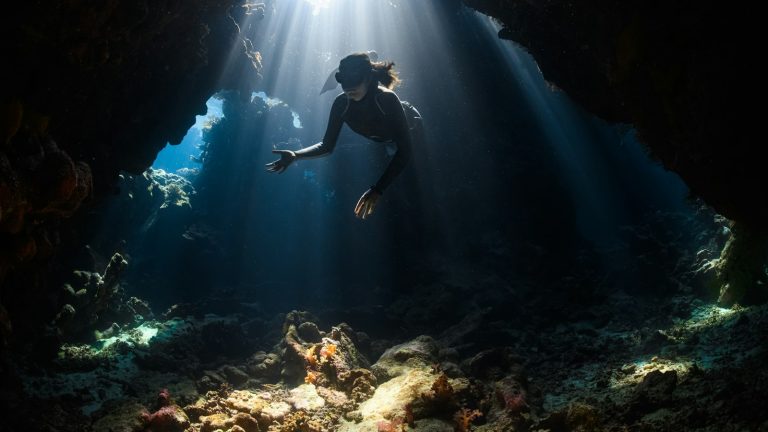
If I could pick only one snorkeling trip in Greece, it would be Kleftiko. This bay on Milos’ southwest tip is ringed by huge white volcanic rocks that form little bays, arches and sea caves. It used to be a pirate hideout, and it’s often nicknamed the Meteora of the sea. The formations carry on underwater, in incredibly turquoise water.
Kleftiko is boat-only in practice. The footpath isn’t considered safe and crosses Milos viper habitat. Most cruises leave from Adamas port and combine Kleftiko with the Sykia cave and other west-coast stops.
- How to get there: Half-day or full-day cruise from Adamas, or a private boat.
- Level/depth: Intermediate. The water gets deep quickly away from the rocks.
- What you’ll see: Arches, caves, swim-throughs at the surface, bream and wrasse along the walls.
- Tip: Pick a smaller boat. Big catamarans arrive together around midday, and a small boat can get you closer to the caves.
2. Laganas Bay and Marathonisi, Zakynthos: snorkel with turtles
Laganas Bay sits inside the National Marine Park of Zakynthos, and it’s one of the main loggerhead turtle nesting areas in the Mediterranean. Turtles are mostly around from May to October, so it’s probably the most reliable place in Greece to see one while snorkeling. Little Marathonisi (“Turtle Island”) in the bay has sea caves and clear water, and turtles are often in the sea around it.
Rules matter here. Keep at least 15 m from turtles, never approach from the front, and don’t touch or feed them. Boats are limited to 6 knots, some zones are closed to boats, and nesting beaches close from sunset to sunrise. Pick an operator that follows the rules, not one promising to get you “up close”.
- How to get there: Boats run to Marathonisi from Keri, Limni Keriou, Agios Sostis and Laganas. You can also snorkel from Laganas, Kalamaki, Dafni or Gerakas beaches.
- Level/depth: Beginner, with sandy, shallow entries.
- What you’ll see: Loggerhead turtles, seagrass, small fish, caves at Marathonisi.
- Tip: Go in the morning. In the afternoon the wind stirs up the sand and boat traffic peaks.
3. Keri Caves, Zakynthos: the clearest water on the island
On Zakynthos’ southwest tip, limestone cliffs drop straight into deep water below the Keri lighthouse. Boat trips stop at the arches and caves, where the water glows electric blue. You’re floating over deep water beside sheer walls, so the visibility feels endless.
- How to get there: Boat only, from Keri or Limni Keriou. Half-day and full-day options are available.
- Level/depth: Intermediate. Deep water, so you need to be comfortable swimming away from the boat.
- What you’ll see: Caves, arches and walls, plus fish along the rock.
- Tip: Don’t book a Navagio (Shipwreck Beach) trip expecting a swim. Landing and swimming there have been banned in summer, and boats have to stay offshore.
4. Antipaxos, Paxos: Caribbean colours in the Ionian
Antipaxos (Antipaxi) is a tiny island of vineyards and scrub, just a few minutes by boat from Gaios on Paxos. Its beaches, Voutoumi and Vrika the best known, have pale pebbles and shallow water so bright it looks fake. This is easy, relaxing snorkeling along the rocky edges of the coves. It’s a perfect half-day if you’re travelling with kids or non-swimmers who want to paddle.
Many visitors come on day cruises from Parga or Corfu, which usually add Paxos’ Blue Caves and Gaios.
- How to get there: Water taxi or small boat from Gaios, a hired motorboat on Paxos, or a day cruise from Parga or Corfu.
- Level/depth: Beginner. Shallow near shore and deeper towards the middle of the bays.
- What you’ll see: Small fish over pebbles and rock, and incredible light.
- Tip: Snorkel the rocky sides, not the middle of the bay where the boats anchor.
5. Paleokastritsa, Corfu: coves, caves and green cliffs
Paleokastritsa on Corfu’s west coast is a cluster of small bays tucked between wooded headlands, with a monastery on the hill above. The coves are sheltered and fun to explore with a mask, and local boat taxis run short trips to the sea caves along the cliffs. It’s also one of Corfu’s main diving areas.
Corfu’s east coast is another option. Nissaki has a shallow rocky and grassy seabed where salema and saddled seabream gather in big numbers, and you can walk in straight from the shore.
- How to get there: About 25 km from Corfu Town by car or bus, then boat taxis to the caves.
- Level/depth: Beginner in the coves, intermediate around the headlands.
- What you’ll see: Rocky reefs, caves, schools of bream.
- Tip: The west coast can get afternoon waves. Swim early, and save the east coast for windy days.
6. Elounda and Olous, Crete: snorkel over a sunken city
Near Elounda in eastern Crete, the remains of the ancient city of Olous lie in shallow water by the narrow causeway to the Spinalonga peninsula. You can see lines of submerged stone walls from the surface, in calm, clear water. It’s the closest thing to snorkeling over history you’ll find without a dive certificate.
- How to get there: About 10 km north of Agios Nikolaos by car, at the causeway near Elounda.
- Level/depth: Beginner, shallow water.
- What you’ll see: Submerged ancient walls, seagrass, small fish.
- Tip: Look but don’t touch. These are protected antiquities, and taking anything is a criminal offence in Greece.
7. Anthony Quinn Bay, Rhodes: a classic cove
This small emerald cove south of Faliraki is named after the actor, who filmed The Guns of Navarone nearby. It’s one of the best-known snorkeling spots on Rhodes. The beach is tiny, but the rocky sides of the bay are where the fish hang out, and the water is usually calm and clear.
It fills up fast in high season. Kallithea, a few kilometres north, is a good backup with rocky coves.
- How to get there: About 20 minutes by car from Rhodes Town, or by boat trip from Faliraki.
- Level/depth: Beginner to intermediate. Deeper water opens up off the rocks.
- What you’ll see: Rocky beds, wrasse, bream, damselfish.
- Tip: Arrive before 10am or come late afternoon. Wear water shoes for the rocky entry.
8. Alonissos Marine Park, Sporades: wild and protected
The National Marine Park of Alonissos and Northern Sporades was set up in 1992, and it’s often described as the largest marine protected area in Europe. It’s a refuge for the endangered Mediterranean monk seal, and dolphins are seen here too.
Boat day trips from Patitiri tour the park’s islets and stop at quiet bays to swim. You’re unlikely to see a monk seal, and you must never approach one, but the clean water and empty coves are the real draw.
- How to get there: Ferry or fast boat from Volos or Skiathos (Skiathos has the nearest airport), then boat trips from Patitiri.
- Level/depth: Beginner to intermediate, depending on the cove.
- What you’ll see: Seagrass, rocky reefs, fish. Dolphins sometimes appear on the boat ride.
- Tip: Some parts of the park are strictly protected, and boats can’t approach them. Go with a licensed operator who knows the zones.
9. Aliki, Thassos: snorkel by an ancient marble quarry
On Thassos’ south-east coast, Aliki is a little peninsula with an archaeological site and an ancient marble quarry right at the water’s edge. The sheltered bays either side are clear, and the smaller, rockier coves are best for snorkeling. The water here is a bit cooler than in the south.
- How to get there: By car or island bus from Limenas. Ferries to Thassos leave from Keramoti and Kavala.
- Level/depth: Beginner.
- What you’ll see: Marble rocks, small fish, sea urchins on the rocks.
- Tip: Bring water shoes. The marble is smooth but slippery, and there are urchins.
10. Athens Riviera, mainland: a snorkel on a city break
You don’t need an island for clear water. The coast running south from Athens towards Cape Sounion has rocky coves where the seabed drops away quickly. Lemos cape near Vouliagmeni and the rocky inlets of Limanakia near Varkiza are local favourites, and Limanakia is a known dive area too.
- How to get there: Bus or car from central Athens.
- Level/depth: Intermediate. Many entries are from rocks straight into deeper water.
- What you’ll see: Rocky walls, wrasse, bream, sometimes octopus.
- Tip: Go on a weekday morning. Weekends are busy with locals.
Best time for snorkeling in Greece in 2027
The season runs from late May to October. June and September are my sweet spot: warm water, excellent visibility and calmer beaches than August.
- May–early June: Water around 19–22°C. It’s refreshing, and a shorty wetsuit helps on long swims.
- July–August: Water around 24–26°C, and warmer in Crete and the Dodecanese. These are the busiest months, with the strongest meltemi wind in the Cyclades.
- September–October: Often the warmest water of the year, with fewer boats and calmer beaches. Some tours wind down from mid-October.
- Winter: The sea rarely drops much below 15–16°C in the south, but you’ll need a proper wetsuit.
Visibility can reach 20–30 m in summer. Wind is the main variable: when the northerly meltemi blows in July and August, head for south-facing coves.
Prices and how to book
- Beach snorkeling: Free. Mask and snorkel rental at beach kiosks usually costs a few euros, but your own set fits better.
- Group snorkel boat trips: On Zakynthos, for example, these start from around €30–45 per person. Half-day and full-day cruises on Milos, Corfu or Paxos cost more, especially with lunch.
- Try-dive (Discover Scuba Diving): Around €70–130 per person, depending on the island and whether it’s from the shore or a boat.
- How to book: In July and August, book boat trips a few days ahead. Read what’s included (gear, lunch, stops). Choose operators that respect the marine park rules on Zakynthos and Alonissos.
Prices change from season to season, so treat these as ballpark 2027 figures and check before booking.
What to pack
- A well-fitting mask and snorkel, plus fins if you’re doing boat trips
- Water shoes for rocky entries and sea urchins
- A rash guard or shorty wetsuit for sun protection and longer swims
- Reef-safe, mineral sunscreen and a hat
- A dry bag for your phone and keys
- A brightly coloured swim buoy if you snorkel from shore near boat traffic
- Plenty of water and snacks. Many remote coves have no facilities.
Safety tips
- Check the wind forecast. Greek seas can switch from glassy to choppy in an hour, especially during the meltemi.
- Watch for boats. Stay close to the shore or inside buoyed swimming zones, and use a surface buoy in busy bays.
- Snorkel with a buddy, and don’t swim into caves when there’s swell.
- Watch out for sea urchins on rocks, and jellyfish on some days. Ask locally if there have been jellyfish.
- Don’t touch or feed marine life. Keep your distance from turtles and seals.
- Don’t take anything from archaeological sites underwater. It’s illegal.
Greece snorkeling FAQ
Is snorkeling in Greece good?
Yes, if you like clear water, caves and rocky landscapes. Don’t expect coral. The highlights are the scenery, turtles on Zakynthos and sunken ruins.
Which Greek island is best for snorkeling?
For scenery, Milos with Kleftiko. For turtles, Zakynthos. For variety and warm water, Crete. For easy, family-friendly coves, Paxos and Antipaxos. For quiet, protected nature, Alonissos.
Where can I snorkel with turtles in Greece?
Laganas Bay and Marathonisi in the National Marine Park of Zakynthos, mostly from May to October. Keep at least 15 m away and never block a turtle’s path.
Can I snorkel in Santorini?
Yes, but mostly by boat. The coast is steep volcanic rock. Caldera cruises stop for swims, and dive centres run trips along the cliffs. See my Santorini diving and snorkeling guide.

Written by
Miki Kokica
Travel blogger behind One Day Itinerary. I test every route myself and share honest, practical guides so you can plan better trips in less time.
Work with me Instagram