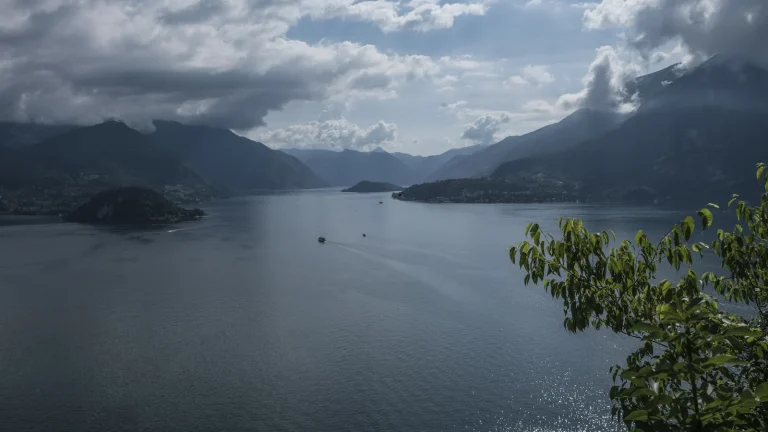
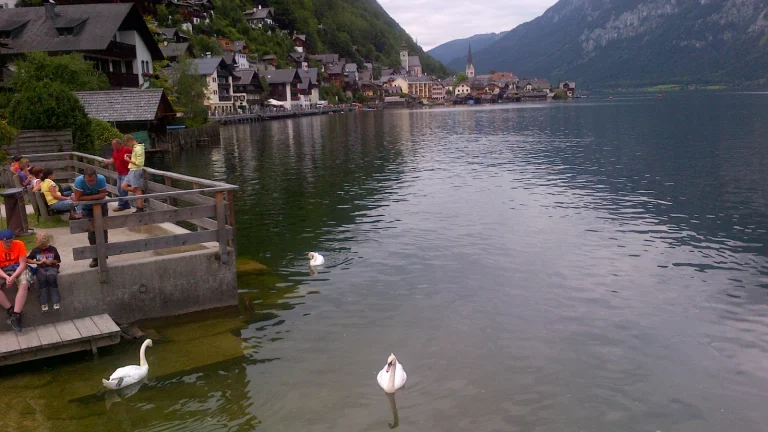
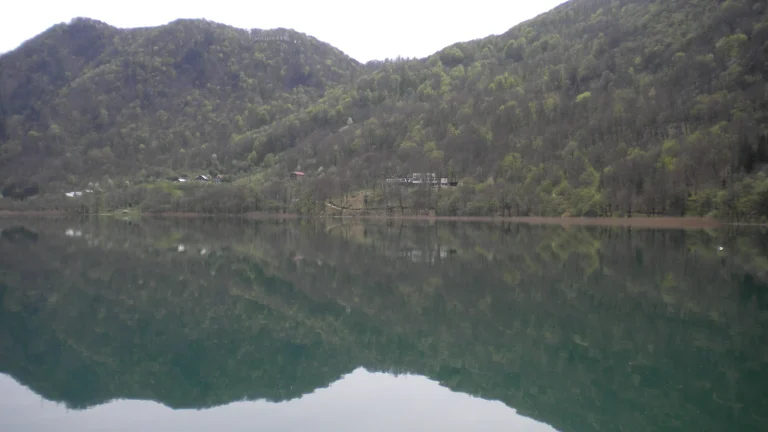
Most people come to Croatia for the sea, and I get it. But some of my favourite days here have been spent at lakes: walking the boardwalks at Plitvice before the tour buses arrive, looking down 200 m into a sinkhole in Imotski, and floating in a warm salt lake on Dugi otok with the open Adriatic just behind a ridge of rock. The best lakes in Croatia are surprisingly varied, and several of them are an easy add-on to a coast trip.
Below are the ten I think are worth planning a day around, with how to get there, what it costs and if you can actually swim. Prices come from the official park price lists and were checked in November 2026. A few of these lakes change a lot with the seasons (one can dry out completely), so I’ve flagged that too.
Lakes in Croatia at a glance
| Lake | Region | Size / depth | How to get there | Entry fee* | Swimming? | Best time |
|---|---|---|---|---|---|---|
| Plitvice Lakes | Lika | 16 named lakes | Car or bus from Zagreb or Zadar | €10–40 | No | May–Jun, Sep–Oct |
| Visovac lake (Krka) | Šibenik hinterland | River lake with an island | Park boat from Skradinski buk, Roški slap or Stinice | €7–40 + boat €10–20 | No | Apr–Jun, Sep–Oct |
| Vransko jezero | Pakoštane, between Zadar and Šibenik | 30.2 km², 2–6 m deep | Car via Pakoštane or Biograd na Moru | €6 | Check before you go | Spring, autumn |
| Modro jezero (Blue Lake) | Imotski | Up to about 90 m of water | Car from Makarska or Split | None listed | Yes, when there is water | Late spring, early summer |
| Crveno jezero (Red Lake) | Imotski | Water up to 287 m deep | Car, edge of Imotski town | None listed | No (viewpoint only) | All year |
| Mir salt lake | Telašćica, Dugi otok | About 900 × 300 m, 6 m deep | Ferry from Zadar, then drive | €6–8 | Yes | Jun–Sep |
| Vransko jezero (Cres) | Island of Cres | 5.8 km², 74 m deep | Car on the main island road | None | No (no access) | All year |
| Bajer, Lepenica and Lokve | Gorski kotar | Reservoirs, 7–40 m deep | Car from Rijeka or Zagreb | None listed | Lepenica and Lokve in summer | Jul–Aug, Oct |
| Jarun and Bundek | Zagreb | City lakes | Tram or bus from the centre | Free | Yes, lifeguards in summer | Jul–Aug |
| Baćina lakes | Near Ploče | 7 lakes, 138 ha | Car on the coast road | None listed | Yes | Jun–Sep |
*Adult day-ticket range from low to high season, from the official price lists (checked November 2026). Krka prices are from the park’s 2027 list, Plitvice from its 2026 list, Vransko jezero from its 2027 list and Telašćica from the 2025 list still shown on its website.
1. Plitvice Lakes, the one everyone asks about
Plitvice is the lake trip every friend asks me about, and it lives up to it. The lake system is made of 16 named lakes and several smaller ones, cascading one into the next over travertine barriers, split into the Upper Lakes and the Lower Lakes. It became Croatia’s first national park in 1949 and has been on the UNESCO World Heritage List since 1979.
What I love most is how close the boardwalks bring you to the water. What I’d do differently on a first visit: start much earlier than you think you need to.
- How to get there: by car or bus from Zagreb or Zadar; both park entrances (Entrance 1 and Entrance 2) have car parks. From Split it’s a long day, so I’d stay a night nearby.
- Fee (2026 list): adults €10 from January to March and in November and December, €23 in April, May and October, and €40 from June to September (€25 after 16:00 in June to August and after 15:00 in September). Children 7–18 pay €4–15, under-7s go free (checked November 2026). The ticket includes the electric boat and the panoramic train.
- Opening hours: in winter the entrances open 8:00–15:00 and tickets are sold until 13:00. Summer hours are longer, so check before you go.
- Swimming: no, it’s banned in the whole park. Dogs must be on a lead, including on the boats and trains.
- Good to know: the park recommends buying tickets online in advance; tickets at the entrance are sold only while they last.
Plitvice takes a full day and fits perfectly into my 4 days in Croatia route with Zagreb, Plitvice and Zadar. If you want the waterfalls in more detail, I cover Veliki slap in my guide to the best waterfalls in Croatia. Tickets are on the official Plitvice Lakes website.
2. Visovac lake in Krka National Park, the island monastery
Above Skradinski buk, the Krka river widens into a calm lake, and in the middle of it sits Visovac, a tiny island covered in trees with a Franciscan monastery. The Franciscans settled here around 1445 and built the monastery in 1576, according to the Skradin tourist board, and it still has its own museum, library and archive.
- How to get there: park excursion boats leave from Skradinski buk (2 hours with 30 minutes on the island) and from Roški slap. The quickest crossing is the 35-minute trip from Stinice to Visovac and on to Remetić. Boat trips to Visovac run from 1 April to 31 October.
- Fee: you need a park ticket (adults €7 from November to March, €20 in April, May and October, €40 from June to September, €30 after 15:00) plus the boat: €15 for the 2-hour trip from Skradinski buk, €20 for the 4-hour trip that adds Roški slap, €10 from Stinice (2027 prices, checked November 2026).
- Swimming: no. Swimming at Skradinski buk has been banned since 2021, and the park only allows it in marked areas.
- Good to know: the park asks you to dress appropriately on the island, so bring something to cover your shoulders.
Krka is an easy half day from Šibenik and is on the route of my 7-day Croatia itinerary. Boat times are on the official Krka National Park website.
3. Vransko jezero, Croatia’s largest natural lake
This one surprised me. Vransko jezero near Pakoštane is the largest natural lake in Croatia, about 30.2 km² and 13.6 km long, yet it is only 2 to 6 m deep. It lies right next to the sea, and some seawater seeps in underground, so the water is slightly brackish. The tourist board of Zadar calls it the lake of birds: it’s a well-known ornithological reserve with 251 recorded bird species, 102 of which nest here.
It’s not a dramatic, mountain kind of lake. It’s flat, reedy and quiet, and that’s exactly why I liked it after a few busy days on the coast.
- How to get there: by car from Pakoštane or Biograd na Moru. The park has three info centres where you buy tickets: Kamenjak, Prosika and Crkvine.
- Fee: adults €6, children 7–18 €3, family ticket €15. Extras: electric boat ride €10, bike rental €5 per hour, kayak €5 per hour (2027 list, checked November 2026).
- Swimming: the park doesn’t advertise swimming spots, so check before you go. The sea beaches of Pakoštane are minutes away.
- Best time: spring and autumn for birdwatching; bring binoculars or rent the park’s birdwatching kit (€3).
It’s an easy half day from Zadar or Šibenik. Prices are on the official Vransko Lake Nature Park website.
4. Modro jezero (Blue Lake), Imotski
Imotski, inland from Makarska and close to the Bosnian border, has two of the strangest lakes in Europe. Modro jezero is the friendly one. It fills a huge sinkhole on the edge of town, about 800 m long and 250 to 400 m wide, and its water level swings wildly: in the rainy season it can be up to 90 m deep, and in very dry years it disappears completely. Locals have famously played football on the dry lake bed.
A stone path zigzags down from the viewpoint to the water, and in summer this is where Imotski goes to swim. Walking down is easy, walking back up in the afternoon heat is not, so take water.
- How to get there: by car from Makarska or Split. The lake is right by the town centre and you can walk from the old town.
- Fee: none listed.
- Swimming: yes, when there’s enough water. It’s a popular local bathing spot.
- Best time: late spring and early summer, when the lake is full. By late summer the level can be very low.
5. Crveno jezero (Red Lake), the deep one
A short walk from the Blue Lake, the Red Lake is something else. The cliffs drop more than 240 m to the water, and the lake itself is up to 287 m deep, so the total depth of this sinkhole is about 530 m. That makes it one of the largest sinkholes in the world. The cliffs get their reddish-brown colour from iron oxides, which is where the name comes from.
Standing at the rail and looking down honestly made my stomach turn a little. There’s no path down, and that’s fine: this is a lake you look at, not one you visit.
- How to get there: it’s on the edge of Imotski, close to the Blue Lake, so you can easily see both on the same morning.
- Fee: none listed.
- Swimming: no, there’s no safe way down. Stay behind the railings.
- Good to know: the viewpoints are the whole visit here, so allow half an hour and then head back into town for lunch.
6. Mir salt lake in Telašćica, Dugi otok
This is my favourite swim in Croatia. Lake Mir lies on a narrow strip of land between Telašćica bay and the open sea, in the southern part of Dugi otok. It’s about 900 m long, up to 300 m wide and only 6 m deep, and it’s saltier than the sea because of evaporation. In summer the water can reach about 33°C, much warmer than the Adriatic next to it. Seawater gets in through tiny cracks in the rock, and one part has fango, a mud the park describes as healing.
Over the ridge, the cliffs on the open-sea side rise up to 160 m. About 14 donkeys also roam freely around the lake, and they are very used to people.
- How to get there: Jadrolinija runs a car ferry from Zadar (Gaženica) to Brbinj on Dugi otok, and there are passenger boats from Zadar to Sali. From there you drive south into the park.
- Fee: adults €6 out of season and €8 from June to September via the Dolac land entrance, plus a separate €6–8 ticket for a car (2025 list, still shown in November 2026, so check before you go).
- Swimming: yes, it’s the main reason people come. The loop trail around the lake is 2.2 km.
- Good to know: the park ticket includes a free shuttle to the Grpašćak cliffs and the interpretation centre there. Approach the donkeys slowly.
The park’s rules and tickets are on the official Telašćica Nature Park website.
7. Vransko jezero on Cres, the lake you can’t touch
Yes, there are two Vransko jezero in Croatia, and they couldn’t be more different. The one on the island of Cres is a deep freshwater lake in the middle of the island: about 5.8 km² and 74 m deep. Its surface sits about 13 m above sea level, while its bottom lies around 60 m below it. It has supplied drinking water to the town of Cres since 1953, and to Mali and Veli Lošinj since about ten years later.
Because of that, it’s strictly protected and access to the lake is prohibited. I still think it’s worth a stop: the colour from above, on an island surrounded by sea, is something I didn’t expect.
- How to get there: the village of Vrana sits above the lake, about 15 km south of Cres town. Cres is reached by car ferry; check the Jadrolinija timetable.
- Fee: none, since you only see it from above.
- Swimming: no. Don’t try to reach the shore.
- Good to know: it pairs well with a few days in Kvarner; my Opatija guide covers the mainland side.
8. Bajer, Lepenica and Lokve, the mountain lakes of Gorski kotar
Gorski kotar is Croatia’s green, forested mountain region between Rijeka and Karlovac, and it’s where I go when the coast is too hot. The three lakes here are reservoirs, but you’d never guess it. Bajer, right by the centre of Fužine, was built in 1952 and is 2 to 7 m deep, with a 7 km path around it for walkers and cyclists, plus a tourist boat and a little tourist train. Lepenica, built in 1988, is the largest reservoir around Fužine, up to 18 m deep, and the tourist board says the water can pass 23°C in summer.
Lokvarsko jezero near Lokve dates from 1954 and is up to 40 m deep in places, stretching to the foot of Risnjak. It’s popular with hikers and good for swimming in summer.
- How to get there: by car from Rijeka or Zagreb. Fužine and Lokve are close to each other, so you can see all three lakes in a day.
- Fee: none listed for the lakes.
- Swimming: Lepenica and Lokvarsko jezero in the summer months. Bajer is better for walking and boat rides.
- Best time: July and August for swimming, October for autumn colours.
The lakes are described on the official Gorski kotar tourism website.
9. Jarun and Bundek, Zagreb’s city lakes
If you’re in Zagreb in July, you’ll understand why locals call Jarun the Zagreb Sea. It’s two connected lakes, the Large Lake and the Small Lake with its six islands, surrounded by a path for walkers, cyclists and skaters, with pebble beaches, rowing lanes, cafés and, at night, clubs. It’s less than half an hour from the centre by tram.
Bundek is the smaller, calmer option, closer to the centre, with barbecue spots and playgrounds.
- How to get there: tram from the centre to Jarun; for Bundek, take a tram towards the Museum of Contemporary Art and walk about 10 minutes.
- Fee: free.
- Swimming: yes at both, with lifeguards in the summer season. Water quality is checked regularly.
- Best time: July and August for swimming; spring and autumn for walks.
10. Baćina lakes near Ploče
On the drive between Makarska and Dubrovnik, just before Ploče, most people speed past a chain of blue-green lakes and never stop. That’s a shame. The Baćina lakes are seven karst lakes covering 138 ha: Oćuša, Crniševo, Podgora, Sladinac, Vrbnik, Šipak and Plitko. Six of them are linked, and Crniševo is the deepest at 34 m. Even though they are so close to the sea, they are freshwater lakes.
It’s a nice change from the beach for a calmer swim or a paddle.
- How to get there: by car on the coast road near Ploče, between Makarska and Dubrovnik.
- Fee: none listed.
- Swimming: yes; kayaking and paddleboarding are popular too.
- Best time: June to September.
How to combine Croatia’s lakes on one trip
The lakes fall into a few easy clusters, so you can see most of them without backtracking:
- Zagreb to the coast (2 to 3 days): Jarun or Bundek in Zagreb, then Gorski kotar (Lokve, Bajer, Lepenica), or go south via Karlovac to Plitvice and sleep nearby.
- Zadar and Šibenik (2 days): Vransko jezero near Pakoštane, then Krka and the boat to Visovac. Add a day for Telašćica and Mir from Zadar.
- Split, Makarska and the south (1 to 2 days): the Blue and Red Lakes in Imotski in the morning, then the Baćina lakes on your way to Dubrovnik.
If you’d rather follow a full plan, my 10 days in Croatia road trip goes from Istria to Dubrovnik, and my 2-week Croatia itinerary leaves time for a few lake days. All my city guides are on the Croatia travel guide page.
Best time to visit lakes in Croatia
For the national parks, May, June, September and October are the sweet spot. You get good water levels, green forests and fewer people, and in October the Krka ticket drops from €40 to €20 and Plitvice from €40 to €23. July and August are the busiest and most expensive months at both parks.
For swimming, it’s the opposite: July and August are best at Mir, Jarun, Lepenica, Lokvarsko jezero and the Baćina lakes. The Blue Lake in Imotski is the tricky one, because it’s fullest in late spring and early summer and can be almost empty by the end of summer. In winter, Plitvice is quiet and costs only €10.
What to pack
- Shoes with good grip for the wet boardwalks at Plitvice and the stone path at the Blue Lake
- Swimwear, a quick-dry towel and water shoes for Mir and the Baćina lakes
- Something to cover your shoulders for the monastery on Visovac
- Binoculars if you’re going to Vransko jezero for the birds
- Plenty of water for the walk back up from the Blue Lake
Safety at Croatian lakes
- Don’t swim where it’s banned: all of Plitvice and Krka outside marked areas
- Stay behind the railings at the Red Lake; the cliffs are over 240 m high
- Keep away from the shore of Vransko jezero on Cres, which is a protected drinking water source
- At Mir, leave the donkeys alone and don’t feed them
Insider tips from travellers
- At Plitvice, arrive at opening time and do the Lower Lakes first. This tip comes up again and again on travel forums, because the big groups arrive mid-morning.
- The afternoon tickets are a real saving in summer: €25 instead of €40 at Plitvice after 16:00, and €30 instead of €40 at Krka after 15:00.
- At Vransko jezero, the €15 family ticket covers parents and children up to 18, which is cheaper than single tickets for most families.
- Bring water shoes for Mir. The park says the shore is mostly low and rocky, with sand only at the far southwestern end.
- In Telašćica the car needs its own ticket, which is one reason so many travellers visit on a boat trip from Zadar instead.
- Don’t plan the Blue Lake as a guaranteed swim in late summer. Look at recent photos or ask locally first.
Heading further? See my guides to the best lakes in Bosnia, the best beaches in Croatia and the most beautiful lakes in Europe.
Croatia lakes FAQ
What is the most beautiful lake in Croatia?
Most people would say Plitvice, a chain of 16 named lakes linked by waterfalls in Croatia’s oldest national park. My other favourites are Visovac in Krka National Park and the Blue Lake in Imotski.
What is the largest lake in Croatia?
Vransko jezero near Pakoštane is the largest natural lake in Croatia, at about 30.2 km². It is very shallow, only 2 to 6 m deep, and is a protected nature park famous for birds.
Can you swim in the lakes in Croatia?
At some of them. Swimming is banned at Plitvice and at Vransko jezero on Cres, and at Krka it’s only allowed in marked areas. Good swimming lakes are Mir on Dugi otok, the Blue Lake in Imotski when it has water, Jarun and Bundek in Zagreb, Lepenica and Lokvarsko jezero in Gorski kotar, and the Baćina lakes near Ploče.
How much does it cost to visit Plitvice Lakes?
On the 2026 price list, adults pay €10 from November to March, €23 in April, May and October, and €40 from June to September, or €25 later in the afternoon. Children 7 to 18 pay €4 to €15. Prices were checked in November 2026.
Is there a salt lake in Croatia?
Yes. Lake Mir in Telašćica Nature Park on Dugi otok is a salt lake, about 900 m long and 6 m deep. It is saltier than the sea and can reach about 33°C in summer.
Are there lakes near Zagreb?
Yes. Jarun and Bundek are inside the city and both have swimming with lifeguards in summer. Plitvice and the Gorski kotar lakes are both possible as day trips by car.
When is the best time to visit Croatia’s lakes?
May, June, September and October for Plitvice and Krka, when it’s quieter and cheaper. July and August are best for swimming at Mir, Jarun and the Baćina lakes.
Cover photo: Vitovidmar / Wikimedia Commons (CC BY-SA 4.0) (source)

Written by
Miki Kokica
Travel blogger behind One Day Itinerary. I test every route myself and share honest, practical guides so you can plan better trips in less time.
Work with me Instagram