Bosnia surprised me more than any other country in the Balkans, and a big part of that was the water. Everyone talks about Mostar’s bridge and the Kravica waterfall, but the best lakes in Bosnia and Herzegovina are a whole trip on their own: a glacial lake under Mount Prenj where locals swim all summer, wooden watermills at Jajce, a heart-shaped lake on the Montenegrin border and even salt lakes in the middle of a city.
Below are the ten I’d plan a day around, with how to get there, what it costs and if you can swim. Fees were checked in November 2026, but several of these places have no official website, so I’ve said clearly where you should check before you go. Some mountain lakes are only reachable by gravel road, and I’ve flagged that too.
Lakes in Bosnia and Herzegovina at a glance
| Lake | Region | Size / depth | How to get there | Entry fee* | Swimming? | Best time |
|---|---|---|---|---|---|---|
| Boračko jezero | Konjic, Herzegovina | 0.26 km², up to 17 m deep | Car, about 20 km from Konjic | None listed | Yes | Jun–Sep |
| Pliva lakes | Jajce, central Bosnia | Two tufa lakes on the Pliva | Car or bus to Jajce, mills about 5 km west of town | Mills free; waterfall platforms about 10 KM | Yes, at the lake beach | May–Sep |
| Jablaničko jezero | Konjic to Jablanica | About 30 km long | Car or bus on the Sarajevo–Mostar road | None | Yes | Jul–Aug |
| Prokoško jezero | Vranica, above Fojnica | Up to 13 m deep, about 1,635 m up | 22 km from Fojnica, mostly gravel | Entrance fee charged, amount not published | Check before you go | Late May–Oct |
| Blidinje | Blidinje Nature Park | 2.5–6 km², very shallow, 1,185 m up | Car from Jablanica, Posušje or Tomislavgrad | Check before you go | Check before you go | Jun–Sep |
| Buško jezero | Livno and Tomislavgrad | 55.8 km² | Car from Livno or Tomislavgrad | None | Ask locally | Summer |
| Trnovačko jezero | Sutjeska NP, Montenegro border | Heart-shaped, 1,517 m up | 4×4 to Prijevor, then about 5 km on foot | 10 KM park fee + €1 Piva fee | Yes | Jun–Sep |
| Ramsko jezero | Prozor-Rama | About 1,500 ha, up to 95 m deep | Car from Prozor | None | No arranged beaches | Summer, autumn |
| Vrelo Bosne | Ilidža, Sarajevo | Spring park of 603 ha | Tram to Ilidža, then 3.4 km on foot | 6 KM | No, it’s a park | All year |
| Pannonian lakes | Tuzla city centre | Three salt lakes | Walk from the centre | 7–9 KM in season | Yes | Jun–Aug |
*Adult prices for foreign visitors, from official price lists where they exist and from recent local reports where they don’t (checked November 2026). 1 euro is about 1.96 KM, and many places only take cash in marks.
1. Boračko jezero, the swimming lake under Prenj
If I had to pick one lake in Bosnia for a hot summer day, it’s this one. Boračko jezero is a small glacial lake at 397 m on the northeastern slopes of Mount Prenj, about 20 km from Konjic. It’s only around 786 m long and 402 m wide, with a maximum depth of 17 m in the southeastern corner, so you can see most of it from one spot on the shore. The water is spring-fed and stays fresh even in July, which is exactly what you want after a morning in the car.
It’s very much a local place: weekend cottages, a lakeside camp, people fishing from the banks, families with picnics. Don’t expect a polished resort. That’s the charm.
- How to get there: drive from Konjic; the lake is about 20 km away and well known locally, so just navigate to “Boračko jezero”.
- Size: 0.26 km², 2.4 km of shoreline and water that is clear to about 8 m.
- Fee: no entry fee is listed for the lake itself (checked November 2026).
- Swimming: yes. In August the water reaches about 25°C; outside high summer it’s cold.
- Good to know: kayaking, camping and hiking trails up towards the Prenj ridges are all possible from the shore.
Boračko pairs perfectly with a night in Konjic, and it’s an easy detour on the way between Sarajevo and Mostar.
2. The Pliva lakes and watermills at Jajce
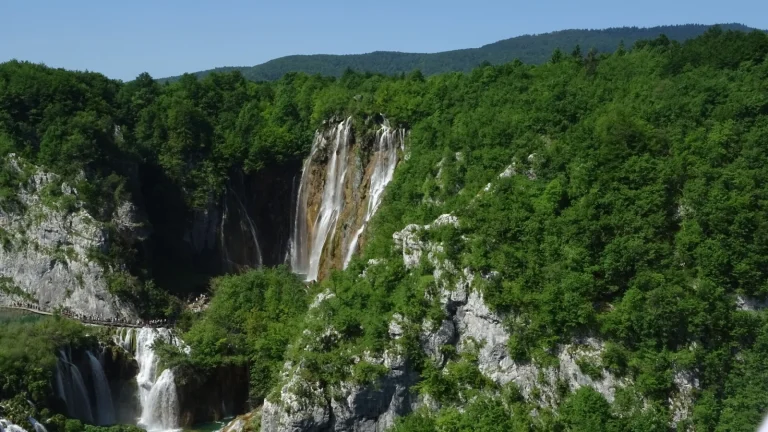
Jajce is the place I send people who want lakes, history and a waterfall in one day. The Pliva river forms two lakes just west of town, Veliko and Malo Plivsko jezero, held back by natural tufa barriers. Between them stand the Mlinčići, about 20 little wooden watermill huts, most of them from the Austro-Hungarian period. Then the Pliva drops over a waterfall right in the centre of Jajce.
- How to get there: Jajce is about a 2-hour drive northwest of Sarajevo. The mills are around 5 km west of town on the road to the lakes, about 10 minutes by car.
- Fee: the watermills are free to see, though you may pay for parking. The top viewpoint over the Pliva waterfall is free and the lower viewing platforms cost about 10 KM; Jajce Fortress is about 5 KM (checked November 2026, from a recent travel guide, so check before you go).
- Swimming: yes, in summer at the lake beach near the “Bridge of Love”. Boats can be rented on the lake.
- Best time: May to September for swimming; autumn for the colours around the mills.
Jajce is an easy drive from Travnik, so the two slot into one central Bosnia loop. The Pliva waterfall itself is in my best waterfalls in Bosnia guide, along with Kravice and the falls of the Una.
3. Jablaničko jezero, the long green lake on the Neretva
You’ve probably seen Jablaničko jezero without knowing it: it’s the long green lake beside the road between Konjic and Jablanica. It isn’t natural. It formed in 1953 when the Jablanica dam was built on the Neretva, and it now stretches for about 30 km, up to 1.2 km wide. The shores are lined with weekend cottages, and in summer it’s full of people swimming, boating and fishing.
- How to get there: Konjic sits just above the lake and Jablanica is at the dam, both on the main Sarajevo–Mostar road, so you can reach it by car or bus.
- Fee: none; it’s an open lake with public shore.
- Swimming: yes, it’s one of the most popular summer swimming lakes in the country.
- Good to know: the level depends on the dam and the weather. In the 2024 drought the lake dried out, so in a very dry summer, check photos from the last few days before you plan around it.
4. Prokoško jezero, the mountain lake on Vranica
Prokoško is the lake that made me fall for the Bosnian mountains. It’s a glacial lake high on Mount Vranica, at about 1,635 m (some sources say 1,670 m), up to 13 m deep and ringed by katuni, the traditional shepherds’ huts. In the warm months people still bring cattle up, pick berries and make cheese, and a few huts are rented to visitors. It’s protected as a nature monument, and it’s home to an endemic subspecies of Alpine newt that lives nowhere else.
- How to get there: 22 km from Fojnica. The road is asphalt to the village of Tocila, then rough gravel along the Jezernica river. Locals recommend a 4×4, a mountain bike or a quad rented in Fojnica; there’s also a marked hiking trail from the Jezernica mountain lodge, about halfway up.
- Fee: there is an entrance fee, but I couldn’t find the current amount published anywhere, so bring some cash in marks.
- Season: the visitor season runs from the second half of May to the end of October. The area is cut off by snow for around six months of the year.
- Swimming: check before you go; it’s a protected area and the water is cold.
Day tours run to Prokoško from Sarajevo, which is the easiest option if you don’t want to drive the gravel road yourself.
5. Blidinje, the big lake on the high plateau
Blidinje feels like another country: a wide, empty plateau between the Čvrsnica and Vran mountains, stećci (medieval tombstones) and a huge shallow lake at 1,185 m. The lake is about 2.5 km long and 2.1 km wide, but its area changes a lot through the year, from about 2.5 to 6 km². It’s the centre of Blidinje Nature Park, declared in 1995, which also has the largest habitat of the endemic Bosnian pine.
- How to get there: by car. The park spreads across Posušje, Tomislavgrad, Prozor-Rama and Jablanica, and roads come up from all of them. There’s no useful public transport.
- Fee: the park doesn’t publish an entry fee online, so check before you go.
- Things to do: canoeing, a walking circuit around the lake, hiking on Čvrsnica and, in winter, skiing at Risovac.
- Swimming: the park doesn’t say either way, and the lake is very shallow, so check locally.
- Good to know: the plateau is exposed. Bring layers, sun cream and water even in summer.
The official site for the park is Visit Blidinje. It’s a natural add-on to a day in Mostar.
6. Buško jezero, the inland sea near Livno
Buško jezero is enormous for Bosnia. It was flooded over farmland in 1974 as a reservoir for hydroelectric power, and it now covers 55.8 km² at 716 m, which makes it one of the largest reservoirs in Europe. About a third of it is in Livno and two thirds in Tomislavgrad. The landscape is big and bare: wind, karst hills and a horizon of water. It isn’t pretty in the Boračko sense, but standing there at sunset is memorable.
- How to get there: by car from Livno or Tomislavgrad; it’s close to the Croatian border.
- Fee: none.
- Things to do: fishing (carp, zander, catfish and trout), photography and quiet walks along the shore.
- Swimming: ask locally; it’s a working reservoir and the level changes.
Base yourself in Livno, the nearest town with a good choice of places to eat and sleep.
7. Trnovačko jezero, the heart-shaped lake
This is the hike I’d tell any fit friend to do. Trnovačko jezero is a heart-shaped glacial lake at 1,517 m, in an amphitheatre of peaks: Trnovački Durmitor, Trzivka and Kom. Technically the lake belongs to Montenegro’s Piva Nature Park, but the easiest way in is from Sutjeska National Park on the Bosnian side.
- How to get there: the park’s tours leave from Hotel Mladost by off-road vehicle for the 50 to 60 minute drive to Prijevor (1,670 m). From there it’s about 5 km to the lake, roughly 1.5 hours of moderate hiking.
- Time needed: 4 to 6 hours in total, with about 3 hours of walking.
- Fee: 10 KM per person for Sutjeska National Park plus €1 for Piva Nature Park, on top of any tour price (checked November 2026).
- Swimming: yes, the park says it’s a good swim on hot days. It’s cold.
- Season: April to November. Bring mosquito repellent, especially in May and June.
- Good to know: you’re crossing into Montenegro on a mountain path, so carry your passport.
The nearest town with places to stay is Foča, and the park runs its own Hotel Mladost. Details are on the Sutjeska National Park website.
8. Ramsko jezero and the Šćit monastery
Ramsko jezero is a reservoir too, created in 1968 when the Rama valley and 20 settlements were flooded. Today it’s a calm, many-armed lake up to 12 km long, with islands, peninsulas and a Franciscan monastery, Rama-Šćit, on its own peninsula. The deepest point is about 95 m, and the water level can swing by up to 55 m, so the shore looks different every season.
- How to get there: roads lead to the lake from Prozor, Tomislavgrad, Livno and the Split direction. From Posušje you can drive via Blidinje.
- Fee: none for the lake.
- Swimming: there are no arranged beaches, so it’s more of a lake for views, fishing, rowing and camping.
- Best time: summer and early autumn. Combine it with Blidinje in one long day.
9. Vrelo Bosne, the springs on the edge of Sarajevo
Vrelo Bosne isn’t a lake in the classic sense. It’s the source of the Bosna river at the foot of Mount Igman: a park of clear pools, streams and little wooden bridges. But it’s the easiest “lake day” from Sarajevo and the place locals go for a walk on a Sunday. It’s protected as a natural monument, and in 2025 it had more than 330,000 visitors, so go early.
- How to get there: take the tram to Ilidža, then it’s about 3.4 km to the springs. It’s a flat walk, or you can take a taxi.
- Fee: 6 KM for foreign adults, 3 KM for children 6 to 18, under-6s free, according to the official price list (checked November 2026). Older articles quote 2 KM, but that’s out of date.
- Swimming: no, it’s a protected walking park.
- Best time: any season. It’s lovely in autumn and pretty in snow.
Vrelo Bosne fits into a full day in Sarajevo. The managing institution’s prices are on the official protected areas website.
10. The Pannonian salt lakes in Tuzla
The most unusual lakes in the country are in the middle of a city. Tuzla’s Pannonian lakes are three artificial salt lakes filled from underground salt wells, plus the Slani slapovi, salt waterfalls with five cascades and two bathing pools. It’s a proper summer complex with beaches, slides and a children’s park, and the water is regularly checked by the canton’s public health institute. It draws day-trippers from all over the region for a day of salty “sea” swimming far from the coast.
- How to get there: walk from the centre of Tuzla. By car it’s about three hours from Belgrade.
- Fee: about 7 KM for adults on weekdays and 9 KM at weekends in peak season, with cheaper tickets for children and afternoons (checked November 2026, from August 2026 reports).
- Swimming: yes, that’s the whole point.
- Season: June to the end of August, sometimes into September if the weather holds.
Modrac, the big reservoir near Tuzla, is another option if you want a natural shore instead of a beach complex.
How to combine Bosnia’s lakes on one trip
The lakes fall into four easy groups, so you can see most of them without driving back and forth:
- Sarajevo and the Neretva (2 days): Vrelo Bosne in the morning → drive to Konjic → Boračko jezero for a swim → a night in Konjic → Jablaničko jezero on the way to Mostar.
- Herzegovina highlands (1 to 2 days): Mostar → Blidinje Nature Park → Ramsko jezero → Buško jezero and a night in Livno. Add Kravice on the way back south.
- Central Bosnia (1 to 2 days): Sarajevo → Fojnica and Prokoško jezero (4×4) → Travnik → Jajce and the Pliva lakes.
- The east (2 days): Foča → Sutjeska National Park and Trnovačko jezero. Tuzla and the Pannonian lakes work best as a separate trip from Sarajevo or on the way to Serbia.
All my city guides for the country are on the Bosnia and Herzegovina travel guide page, including border crossings, money and driving.
Best time to visit lakes in Bosnia
For swimming, come in July and August 2027. That’s when Boračko reaches about 25°C, the Pannonian lakes are open and Jablaničko is busy with locals. For the mountain lakes, June to September is the safe window: Prokoško’s season runs from late May to October, Trnovačko’s from April to November, and snow closes the high roads the rest of the year.
September and early October are my favourite months overall: quieter roads, warm days in Herzegovina and autumn colours at Jajce and Vrelo Bosne. Be aware that summer droughts have hit Bosnian reservoirs hard in recent years, so in a very dry year Jablaničko, Buško and Ramsko can look low.
What to pack
- Cash in convertible marks (KM) for parking, entrance fees and lakeside cafés
- Swimwear and a quick-dry towel; Boračko and the Pannonian lakes are proper swims
- Hiking shoes and a warm layer for Prokoško, Blidinje and Trnovačko
- Mosquito repellent for Sutjeska in May and June
- Your passport for Trnovačko jezero, which is just over the Montenegrin line
- Water and snacks; the plateau and mountain lakes have few or no shops
Safety at Bosnian lakes
- Stay on marked paths in the mountains. Bosnia still has areas with landmine risk from the 1990s war, and the marked trails and roads are the safe ground.
- Gravel roads to Prokoško and Prijevor are rough; don’t attempt them in a low rental car after rain.
- Reservoir levels change fast; don’t jump from rocks you haven’t checked.
- Mountain weather turns quickly on Vranica and in Sutjeska, even in summer.
Insider tips from travellers
- Arrive at Boračko and the Pannonian lakes before 10:00 on summer weekends; travellers say both fill up fast with day-trippers.
- If you don’t want to drive gravel roads, book a 4×4 or a tour for Prokoško and Trnovačko; this comes up again and again in reviews.
- At Jajce, see the waterfall from the free top viewpoint first, then decide whether the paid lower platforms are worth it for you.
- Use Konjic, Livno and Foča as bases rather than trying to do the mountain lakes as day trips from Sarajevo or Mostar.
Heading further? See my guide to the best lakes in Croatia next door, the best lakes in Hungary, or my roundup of the most beautiful lakes in Europe.
Bosnia lakes FAQ
What is the most beautiful lake in Bosnia and Herzegovina?
It depends on what you want. Boračko jezero near Konjic is the best for swimming, the Pliva lakes at Jajce combine lakes, watermills and a waterfall, and Prokoško jezero on Vranica and heart-shaped Trnovačko jezero are the most dramatic mountain lakes.
Can you swim in lakes in Bosnia?
Yes. Boračko jezero, Jablaničko jezero, the Pliva lakes at Jajce, Trnovačko jezero and the Pannonian salt lakes in Tuzla are all used for swimming in summer. Vrelo Bosne is a protected park, not a swimming spot, and Ramsko jezero has no arranged beaches.
How far is Boračko jezero from Konjic?
About 20 km. You need a car or a taxi, as there is no regular public transport to the lake.
Do you need a 4×4 to reach Prokoško jezero?
It is strongly recommended. The 22 km road from Fojnica is asphalt only as far as Tocila and then rough gravel. Many visitors rent a 4×4 or quad in Fojnica or join a day tour from Sarajevo.
How much does it cost to visit Vrelo Bosne?
The official price list shows 6 KM for foreign adults and 3 KM for children aged 6 to 18, with under-6s free. Prices were checked in November 2026.
Is Trnovačko jezero in Bosnia or Montenegro?
The lake itself is in Montenegro’s Piva Nature Park, right on the border, but the usual route starts from Sutjeska National Park in Bosnia. The park fee is 10 KM plus €1 for Piva, so carry your passport and cash.
When is the best time to visit Bosnian lakes?
July and August for swimming, June to September for the mountain lakes, and September or early October for fewer people and autumn colours.
Is Kravica a lake?
No, Kravica is a waterfall on the Trebižat river in Herzegovina, although it has a large pool at the bottom where people swim. I cover it in my guide to the best waterfalls in Bosnia.
Cover photo: Zavičajac / Wikimedia Commons (CC BY-SA 4.0) (source)

Written by
Miki Kokica
Travel blogger behind One Day Itinerary. I test every route myself and share honest, practical guides so you can plan better trips in less time.
Work with me Instagram