Austria might be landlocked, but it has some of the cleanest, clearest lakes I’ve ever swum in. In summer, whole towns move to the lido, and the water in Carinthia gets properly warm. In autumn, the Salzkammergut lakes go still and the mountains reflect in them like a mirror. The best lakes in Austria also come with old steam trains, paddle steamers and cable cars, which makes them great for a mix of lazy and active days.
Below are the ten I think are worth planning a day around, from Hallstatt and the Salzkammergut to Tyrol, Carinthia and Styria. For each I’ve added how to get there, what it costs and if you can swim. Prices come from the official operators and tourist boards and were checked in November 2026.
Lakes in Austria at a glance
| Lake | Region | Size / depth | How to get there | Entry / main ticket* | Swimming? | Best time |
|---|---|---|---|---|---|---|
| Hallstätter See | Salzkammergut, Upper Austria | 8.55 km², 125 m deep | Train to Hallstatt station, boat across | Free (funicular €29) | Yes, free bathing areas | May–Jun, Sep–Oct |
| Gosausee | Salzkammergut, Upper Austria | 1.8 km long, up to 96 m deep | Car or bus 542 from Gosau | Free | Yes | Jun–Oct |
| Wolfgangsee | Salzkammergut, Salzburg | 13.1 km², 113 m deep | Bus or car from Salzburg | Free (SchafbergBahn €61 return) | Yes | Jun–Sep |
| Traunsee | Salzkammergut, Upper Austria | 24.4 km², 191 m deep | Train to Gmunden | Free | Yes, free beaches | Jun–Sep |
| Zeller See | Zell am See, Salzburg | 4.55 km², 70 m deep | Train to Zell am See | Free (lidos charge) | Yes, three lidos | Jul–Aug |
| Achensee | Tyrol | 6.8 km², 133 m deep | Achenseebahn from Jenbach | Free (train and boat extra) | Yes (cold) | Jun–Sep |
| Plansee | Reutte, Tyrol | 6 km long, 76.5 m deep | Car from Reutte | Free (parking €6 in one area) | Yes | Jul–Aug |
| Wörthersee | Carinthia | 19.39 km², 85 m deep | Train to Velden or Pörtschach | Free (lidos charge) | Yes, up to 27°C | Jun–Sep |
| Weissensee | Carinthia | 6.5 km², 99 m deep | Car via Greifenburg | Free | Yes, up to 25°C | Jul–Aug, winter ice |
| Grüner See | Tragöß, Styria | Up to about 12 m in spring | Bus 175 or car, paid parking | Parking €6 | No (banned since 2016) | Mid-May to June |
*Adult prices for the main paid sight or service at each lake, from official 2026 price lists (checked November 2026). Lake access itself is free.
1. Hallstätter See, the postcard
You know the photo: pastel houses, a church spire and steep mountains dropping into dark water. Hallstätter See is about 7.75 km long and up to 125 m deep, with Hallstatt, Obertraun and Bad Goisern on its shores. It’s busy, and I won’t pretend otherwise. But if you stay overnight, the village in the early morning and the evening is a completely different place from the day-trip rush in the middle of the day.
My favourite way to arrive is by train. Hallstatt station is on the opposite shore, so you step off the train and take a short boat across, with the village in front of you the whole way.
- How to get there: by train to Hallstatt station, then the boat across the lake. If you drive, the village car parks P1 to P4 charge from about €5 for an hour to €18 for a full day, according to the tourist board’s 2026 listing.
- Fee: the lake and village are free. The Salzwelten funicular up to the Skywalk viewing platform costs €29 return for adults and €14 for children 4–15; with the salt mine tour it’s €49 and €23 (2026 and 2027 prices, checked November 2026).
- Opening hours: in 2027 the funicular runs 9:00–18:00 from 20 March to 31 October and 9:00–16:30 in the shoulder months, and it closes from 7 to 29 January.
- Swimming: yes. The tourist board says all bathing areas around the lake are free, with lidos in Obertraun and Bad Goisern. The water ranges from about 1°C in winter to 24°C in summer.
- Good to know: boat tours run with Hallstättersee Schifffahrt and with Navia on traditional wooden flat boats.
Hallstatt is a classic day trip from Salzburg. Lake facts and boat info are on the official Dachstein Salzkammergut website.
2. Gosausee, the Dachstein mirror
This is the lake I’d pick if I could only see one in Austria. From the end of the lake you look straight at the Dachstein glacier, framed by the jagged Gosaukamm, and on a calm morning the whole thing is reflected in the water. The lake is 1.8 km long and 500 m wide, and the tourist board calls it the clearest lake in the Salzkammergut.
The walk around it is the easiest win in this whole article: 4.2 km, about an hour, flat and graded very easy. I’d still bring a jacket, because the shade under the cliffs is cold even in summer.
- How to get there: by car, about 7 km from the Pass Gschütt junction in Gosau along the Gosausee road. By public transport, take the train to Steeg/Gosau, then bus 541 and bus 542 to the lake.
- Fee: free, and so are the swimming spots.
- Swimming: yes, from wherever you like on the shore; there are no official bathing places. It’s a reservoir, so the water level changes.
- Good to know: there are no boat tours, but you can rent electric boats and SUP boards.
It’s only a short drive from Hallstatt, so the two combine perfectly. Trail details are on the official Dachstein Salzkammergut Gosausee page.
3. Wolfgangsee, steamer and cog railway
Wolfgangsee is the Salzkammergut lake I find easiest to enjoy without a car. It’s about 13 km² and up to 113 m deep, with three villages on it: St. Gilgen, St. Wolfgang and Strobl. Boats have connected them since 1873, including the old paddle steamer Kaiser Franz Josef, and a full crossing from St. Gilgen to Strobl takes 1 hour 15 minutes.
The highlight for me is the SchafbergBahn, a historic cog railway that climbs from St. Wolfgang up the Schafberg. From the top you look over several lakes at once.
- How to get there: by bus or car from Salzburg to St. Gilgen, then by boat.
- Fee: the SchafbergBahn costs €43 one way or €61 return for adults, and €12.90 or €18.40 for children (2026 prices, checked November 2026). Until 31 October 2026, children up to 14 rode free on Fridays from 13:30 with an adult.
- Swimming: yes, from lidos and bathing spots in all three villages.
- Best time: June to September. The SchafbergBahn runs seasonally, so check dates before you go.
Prices and timetables are on the official SchafbergBahn website.
4. Traunsee, Austria’s deepest lake
Traunsee is the deepest lake in Austria, up to 191 m, with the huge Traunstein mountain rising straight out of its eastern shore. Gmunden at the northern end is a proper little town, with a lakeside promenade and a castle on the water.
What I love here is the Gisela, a paddle steamer built in 1871 and named after a daughter of Emperor Franz Joseph. It’s the last of five steamboats that once sailed the lake, and it became Austria’s first floating historical monument after a rescue in 1981.
- How to get there: by train to Gmunden.
- Fee: the lake is free. Boat tickets are extra, so check the current timetable for the Gisela before you go.
- Swimming: yes, from many free beaches. The lake is also windy, which makes it popular with sailors, surfers and wakeboarders.
- Best time: June to September.
It’s an easy day from Linz. Steamer details are on the official Traunsee-Almtal website.
5. Zeller See, the mountain lido lake
Zell am See is where you get a mountain day and a lake day without moving hotels. Zeller See is about 4.55 km² and 70 m deep, at the foot of the Schmittenhöhe. The water quality is checked several times a year, and in summer it reaches about 23°C.
There are three lidos around the lake. The one in Zell am See has a pool with a slide and a diving tower, and the Seespitz lido in Schüttdorf has long wooden jetties and is where the IRONMAN 70.3 swim starts.
- How to get there: by train to Zell am See; the lake is right next to the town.
- Fee: the lake is free; the lidos charge for entry.
- Swimming: yes, at the three lidos and other spots.
- Best time: July and August for swimming, June for the quietest weeks.
Lido details are on the official Zell am See-Kaprun website.
6. Achensee, the Tyrolean Sea
Achensee is the largest lake in Tyrol, about 9.4 km long and up to 133 m deep, set between the Karwendel and Rofan mountains. The colour is a pale turquoise that changes with the light. Locals call it the Tyrolean Sea, and the water is cold even in August, so I’d call it a quick dip lake rather than a long swim.
The fun way to arrive is the Achenseebahn, running since 1889 and described as Europe’s oldest steam cog railway. It climbs 440 m over just under 7 km from Jenbach in the Inn valley.
- How to get there: by train to Jenbach, then the Achenseebahn up to Seespitz. Drivers with an Achenseebahn ticket can use the Jenbach station car park for €2 a day.
- Fee: the lake is free. Train and boat tickets are extra; check current prices with the operators.
- Swimming: yes, but expect cold water.
- Good to know: passenger boats have sailed the lake since 1887, and Pertisau is the main base for boat trips.
It’s a good day trip from Innsbruck. Timetables are on the official Achenseebahn website.
7. Plansee, the clean one near Reutte
Plansee is the second largest lake in Tyrol, 6 km long and 76.5 m deep, close to the German border near Reutte. It’s one of the cleanest lakes in Tyrol, with water quality class I, and it’s quieter than the big Salzkammergut lakes. On an average summer day the water is a refreshing 17 to 21°C.
- How to get there: by car from Reutte. It’s also an easy stop on a road trip between Tyrol and Bavaria.
- Fee: most of the shore is freely accessible. In one area (around Hotel Forelle, the campsite and kiosk, and the Musteralpe) parking costs €6 per car per day from 1 May to 31 October.
- Swimming: yes, it’s popular with swimmers, divers, sailors and anglers.
- Best time: July and August.
Lake info is on the official Reutte tourism website.
8. Wörthersee, the warm one
If you want Austria’s version of a beach holiday, come to Wörthersee. The lake is about 16.5 km long, just west of Klagenfurt, and in summer the water reaches up to 27°C. Velden and Pörtschach have lidos, promenades and a relaxed, almost Mediterranean feel in the evenings.
Don’t miss the Pyramidenkogel tower above Keutschach, the world’s highest wooden viewing tower. The view from the platform at about 905 m covers the lake and the Carinthian mountains, and you can come down on a 120 m slide that starts just under 52 m up.
- How to get there: by train to Velden, Pörtschach or Klagenfurt.
- Fee: the lake is free; lidos and the Pyramidenkogel charge for entry.
- Swimming: yes, from May to September.
- Good to know: dogs can go up the Pyramidenkogel for free.
Base yourself in Klagenfurt or Villach. The tower is described on the official Klagenfurt tourism website.
9. Weissensee, the quiet Carinthian lake
Weissensee is where I’d go to slow down. It lies at 930 m, about 11.6 km long but only 900 m wide, and Austria’s tourist board calls it Europe’s highest bathing lake. The name comes from the pale limestone along its western shore, and in summer the water reaches up to 25°C.
In winter it’s known for skating on natural ice, which is a completely different reason to come.
- How to get there: by car via Greifenburg; Klagenfurt airport is about 120 km away.
- Fee: the lake is free. Lidos such as Strandbad Knaller in Techendorf charge for entry.
- Swimming: yes, from lidos and bathing spots. SUP, kayaking and diving are popular too.
- Good to know: many hotels include a guest card with free use of the boat service, the nature park bus and the mountain railway.
Lake facts are on the official Austria tourism website.
10. Grüner See, the lake that appears in spring
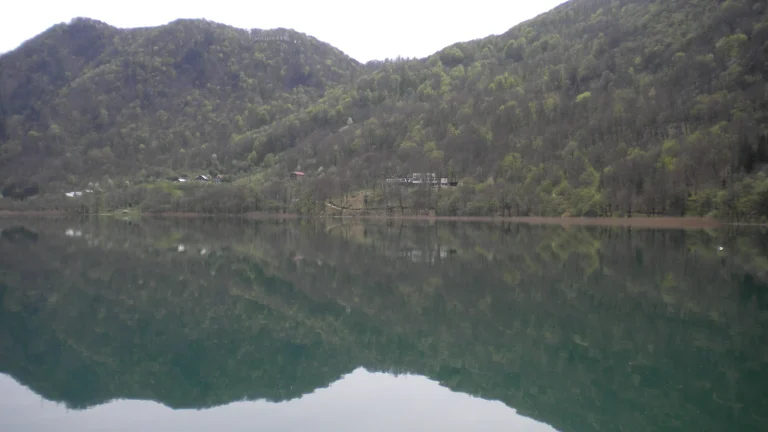
Grüner See in Tragöß, Styria, is the strangest lake on this list. In winter it is just 1 to 2 m deep, or almost dry, and the area is a park with paths and benches. When the snow melts in the Hochschwab mountains, the basin fills up, and by mid-May to June the water can be about 12 m deep and emerald green, with the paths, bridges and benches underwater.
People used to dive here to see the sunken park. Because of the damage that caused, all water sports, including swimming and diving, have been banned since 1 January 2016. You come to walk around and look.
- How to get there: RegioBus 175 from Bruck an der Mur to Tragöß; weekend buses are only guaranteed from May to October. If you drive, there are two paid car parks.
- Fee: parking costs €6 a day, paid at the tourist office at the Grüner See car park (checked November 2026).
- Swimming: no.
- Best time: mid-May to June. From July the water starts to drop.
It’s about a day trip from Graz. Getting there is described on the official Styria tourism website.
How to combine Austria’s lakes
- Salzkammergut (3 to 4 days): base yourself near Hallstatt for Hallstätter See and Gosausee, then move to St. Gilgen or St. Wolfgang for Wolfgangsee. Traunsee is on the way to Linz.
- Salzburg and Tyrol (2 to 3 days): Zell am See, then Achensee via Jenbach, and Plansee if you’re driving on to Bavaria.
- Carinthia (2 to 3 days): Wörthersee from Klagenfurt or Villach, then Weissensee for a quieter end.
- Styria (1 day): Grüner See from Graz in late spring.
All my city guides are on the Austria travel guide page, and I’d pair a lakes trip with the falls in my guide to the best waterfalls in Austria.
Best time to visit lakes in Austria
For swimming, July and August are best. Wörthersee reaches up to 27°C, Weissensee up to 25°C and Zeller See about 23°C, while the Tyrolean lakes stay colder. June and September are quieter and still warm enough for a quick swim on sunny days.
For photos and walks, I love late September and October in the Salzkammergut, when the lakes are calm and the larches turn yellow. Grüner See is the exception: go from mid-May to June, or you’ll miss it. Winter has its own appeal at Weissensee, with skating on natural ice, but many boats, lidos and mountain railways only run in summer.
What to pack
- Swimwear and a quick-dry towel; most lakes have free spots as well as lidos
- A warm layer, even in summer, for Gosausee and the Tyrolean lakes
- Walking shoes for the Gosausee loop and the paths at Grüner See
- A card and some coins for parking machines and lido entry
- A refillable bottle; tap water in Austria is excellent
Safety at Austrian lakes
- Alpine lakes are cold, so get in slowly and don’t swim far from shore at Achensee and Plansee
- Don’t swim or dive at Grüner See; all water sports are banned
- At Gosausee, the tourist board warns not to stop beneath the rock faces, and to respect any barriers
- Watch for boat traffic and stay in marked areas at busy lakes like Wolfgangsee and Wörthersee
Insider tips from travellers
- At Hallstatt, travellers say the same thing again and again: stay overnight, or arrive by train early, before the tour buses.
- Combine Hallstatt and Gosausee in one day; they’re close, and Gosausee is much quieter.
- On Wolfgangsee, take the boat one way and the bus back, so you see the lake from both sides.
- For Grüner See, check recent photos before you go, because the water level depends on the snowmelt that year.
- Ask your hotel about the local guest card. At places like Weissensee it can cover boats, buses and lifts.
Heading further? See my guides to the best lakes in Italy, the best lakes in Hungary and the most beautiful lakes in Europe.
Austria lakes FAQ
What is the most beautiful lake in Austria?
Hallstätter See is the most famous, but my personal favourite is Gosausee nearby, where the Dachstein glacier is reflected in the lake. Wolfgangsee and Achensee are close behind.
Can you swim in Hallstätter See?
Yes. The tourist board says all bathing areas around the lake are free to use, with lidos in Obertraun and Bad Goisern. The water reaches about 24°C at its warmest in summer.
What is the warmest lake in Austria?
Wörthersee in Carinthia is one of the warmest, with water up to 27°C in summer. Weissensee reaches up to 25°C and Zeller See about 23°C.
What is the deepest lake in Austria?
Traunsee in the Salzkammergut, at up to 191 m. Gmunden sits at its northern end.
Can you swim in the Grüner See?
No. All water sports, including swimming and diving, have been banned at Grüner See in Tragöß since 1 January 2016 to protect the lake.
How much is the funicular at Hallstatt?
The Salzwelten funicular up to the Skywalk viewing platform costs €29 return for adults and €14 for children aged 4 to 15. With the salt mine tour, it’s €49 for adults. Prices were checked in November 2026.
Which Austrian lakes can you reach by train?
Hallstätter See (train to Hallstatt station, then a boat), Traunsee (Gmunden), Zeller See (Zell am See), Wörthersee (Velden, Pörtschach or Klagenfurt) and Achensee (train to Jenbach, then the Achenseebahn).
Cover photo: E4024 / Wikimedia Commons (CC BY-SA 4.0) (source)

Written by
Miki Kokica
Travel blogger behind One Day Itinerary. I test every route myself and share honest, practical guides so you can plan better trips in less time.
Work with me Instagram