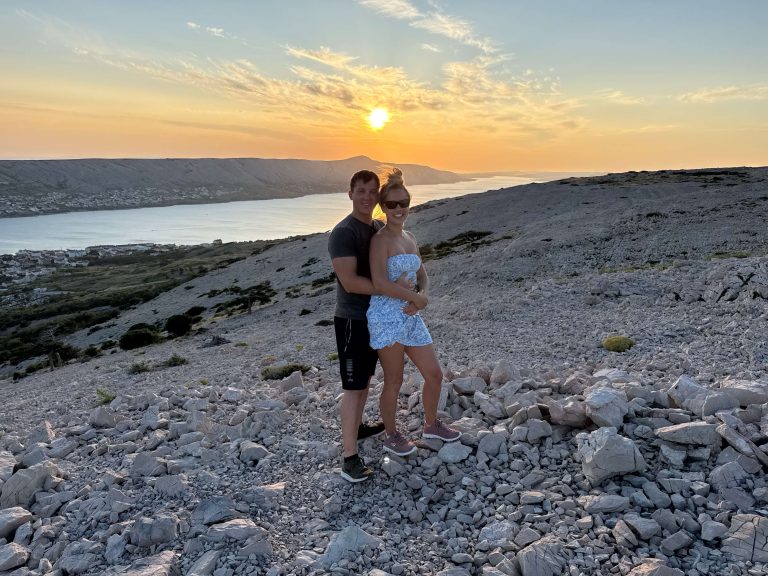
Hi, I’m Miki! I’ve been lucky enough to call Croatia my home for over a decade, and if you ask me how to spend 10 days in Croatia, my answer is always the same: drive it from north to south. Start with the pastel towns and truffles of Istria, cross the mountains to the waterfalls of Plitvice, then follow the Adriatic down through Zadar, Pag, Šibenik and Split all the way to Dubrovnik. Ten days is exactly enough to see the country change from Italian-flavoured hill towns to Roman ruins, moon-like islands and medieval city walls – without spending the whole holiday in the car.
This Croatia 10 day itinerary links together my one-day guides to Rovinj, Zadar, Pag, Pelješac and Dubrovnik, plus the places in between. Every stop on this route is somewhere I’ve been, so the tips are my own, and every price below comes from an official page I checked in November 2026 – if I couldn’t confirm something, I say so.
The 10-day route in one table
| Day | Area | Highlights | Overnight |
|---|---|---|---|
| 1 | Pula & Vodnjan | Roman Arena, olive-oil town, first sunset in Rovinj | Rovinj |
| 2 | Rovinj | St. Euphemia bell tower, old-town lanes, swim near Lone Bay, sunset drinks | Rovinj |
| 3 | Inland Istria & Poreč | Euphrasian Basilica, Motovun, truffle hunt, Grožnjan | Rovinj |
| 4 | Opatija → Plitvice | Lungomare seaside walk, drive into the mountains | Plitvice Lakes |
| 5 | Plitvice Lakes → Zadar | Waterfalls at opening time, Sea Organ at sunset | Zadar |
| 6 | Zadar, Nin & Pag | Roman Forum, Queen’s Beach, Fortica, Pag lace and lamb | Zadar |
| 7 | Šibenik, Krka → Split | St. James Cathedral, Skradinski buk waterfall, Split’s Riva | Split |
| 8 | Hvar day trip | Catamaran to Hvar town, fortress views, Pakleni islands | Split |
| 9 | Pelješac & Ston → Dubrovnik | Bridge viewpoint, Ston walls, oysters, sunset at a Buža bar | Dubrovnik |
| 10 | Dubrovnik | City walls at 8 am, Stradun, cable car or Lokrum – fly home | – |
Shorter trip? See my 3-day, 4-day, 5-day and 7-day Croatia itineraries – or stretch this route into my 14-day version. For entry rules, regions and the big picture, start with my Croatia travel guide.
How this itinerary works
- It’s a one-way road trip. Fly into Pula (seasonal flights) or Zagreb, and fly home from Dubrovnik. Book an open-jaw ticket and a one-way car rental – compare the drop-off fee before you book, because one-way rentals usually cost more.
- Nine nights in five bases: 3 nights Rovinj, 1 night Plitvice, 2 nights Zadar, 2 nights Split, 1 night Dubrovnik. Fewer hotel changes than most 10-day routes, and no day has more than about 3–3.5 hours of driving.
- Landing in Zagreb? Drive straight to Istria on Day 1 (around 2.5–3 hours on the motorway) and swap Opatija on Day 4 for a coffee stop in star-shaped Karlovac on the way to Plitvice. If you have a spare evening near the airport, Velika Gorica or Samobor (famous for its kremšnita cake) are easy.
- Want Dubrovnik slower? Drop Opatija or the Pag afternoon and give Dubrovnik a second night – it’s the one place where an extra night always pays off.

Days 1–3: Istria – Pula, Rovinj and the hill towns
Istria is the most Italian corner of Croatia: bilingual street signs, truffle pasta, Malvazija wine and towns that spent 500 years under Venice. Base yourself in Rovinj for three nights – it’s small enough to walk everywhere, and the rest of the peninsula is within an hour’s drive.
Day 1: Pula’s Arena, Vodnjan and your first Rovinj sunset
- Morning – Pula. Land at Pula airport, pick up the car and start with the Arena, one of the best-preserved Roman amphitheatres anywhere. Tickets are sold at the ticket office and on the Archaeological Museum of Istria’s webshop; I couldn’t confirm the 2027 price, so check it before you go. Then walk to the Arch of the Sergii and the Temple of Augustus on the old forum.
- Afternoon – Vodnjan. About 15 minutes north of Pula, this quiet olive-oil town has the tallest bell tower in Istria. Taste olive oil, then continue to Rovinj (about 25 minutes).
- Evening – Rovinj. Check in, wander down to the harbour and watch the sun drop into the sea with a glass of Malvazija.
My parking tip for Rovinj: free parking actually exists here. My secret spot is a little wooded area just above the Zvane Crnje High School – about a 10-minute walk to the Old Town, mostly downhill on the way there (you’ll feel it on the way back up). If your hotel is in the centre, ask about parking before you arrive.
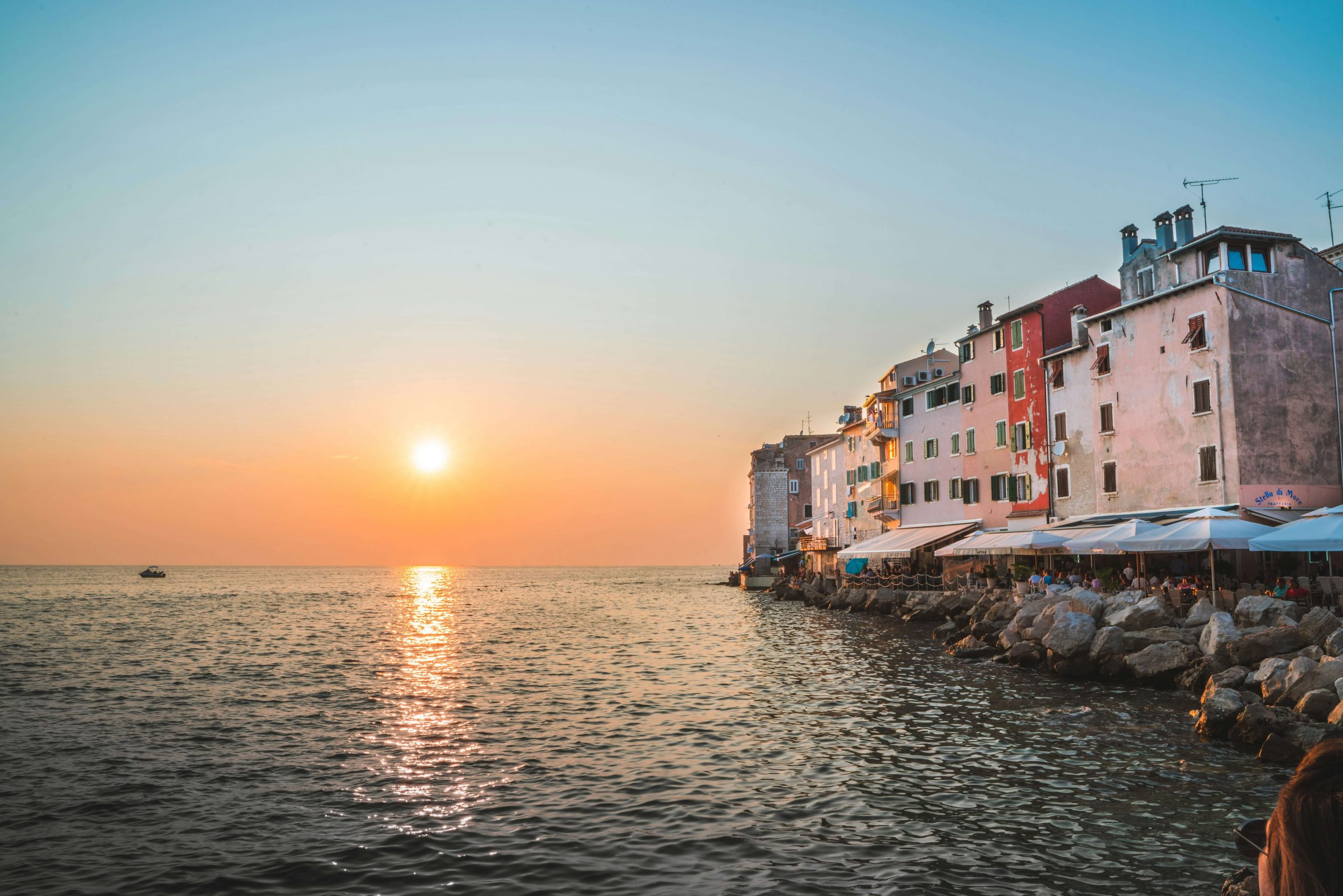
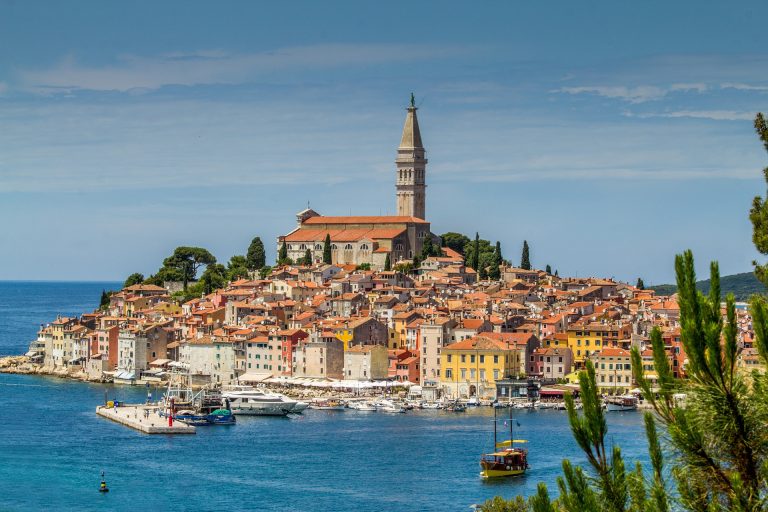
Day 2: a full day in Rovinj
Rovinj is the town I keep coming back to, and I particularly love it in early September, when the sea is still warm, the light turns golden and you have the lanes almost to yourself. In July and August it’s still beautiful – just much busier.
- Morning: climb the bell tower of St. Euphemia’s Church first thing, when the light is soft. When I last went up, the climb cost about €4. Then get lost in the Old Town – start with a gelato and just follow the narrow stone steps and hidden courtyards.
- Midday: my favourite swim is a small sandy beach just to the left of the Old Town near Hotel Lone. For more space, Lone Bay Beach has a big park area with views of the Old Town, and Cuvi Beach is perfect combined with a bike ride through Cuvi Park.
- Lunch: for cheap and delicious pizza, go where the locals go – Dan i Noć bakery.
- Evening: sunset drinks on the waterfront (pricier than the backstreets, worth it), then dinner at Puntulina above the sea, Konoba Jure for simple Istrian food, Michelin-starred Monte for a splurge – or the vineyard tables of Tipico Green Garden just outside town.


Boat trip? If you’d rather see Rovinj from the sea, local agencies such as Nautilus (on Matteo Benussi street, near the bus station) sell island and sunset boat trips and private tours – book a day ahead in summer.
Day 3: Poreč, Motovun, truffles and Grožnjan
- Morning – Poreč (about 40 minutes). See the UNESCO-listed Euphrasian Basilica with its golden 6th-century mosaics before the crowds, then walk the seaside promenade.
- Midday – Motovun (about 35 minutes inland). A medieval hill town on a cone of rock above the Mirna valley and its truffle forests. Walk the town walls and have truffle pasta for lunch.
- Afternoon – truffle hunt. The Karlić family in Paladini near Buzet (about 25 minutes from Motovun) runs a two-hour truffle-hunting experience with their dogs, followed by a tasting of truffle products – and it’s available all year. Book ahead.
- Evening – Grožnjan. The “Town of Artists”, full of tiny galleries, is magical at golden hour. Drive back to Rovinj (about an hour).
Prefer to leave the car? Nautilus in Rovinj offers a private full-day Motovun and Grožnjan tour with an English-speaking driver. Other good alternatives for this day: the castle above the gorge in Pazin, or a slower beach day.

Where to stay in Rovinj
| Hotel | Budget | Why stay here |
|---|---|---|
| Grand Park Hotel Rovinj | Luxury | Maistra’s flagship: modern architecture and top-level service – the top choice if you want to splurge. |
| Hotel Lone | Luxury | Modern design hotel close to the sea and the beaches of Lone Bay. |
| Hotel Adriatic | Mid-range / boutique | Art-filled boutique hotel with just 14 rooms and 4 suites on the main square and waterfront. |
| Villa Valdibora | Mid-range | Apartments and rooms inside the Old Town – good if you want to walk everywhere. |
| Campsite Polari | Budget | Big campsite in a bay near Rovinj with a bike and walking trail into town – bring a tent or rent a mobile home. |
Day 4: Opatija, then into the mountains to Plitvice
- Morning: drive from Rovinj to Opatija (about 1.5 hours). This elegant Habsburg-era resort is all belle-époque villas and parks. I always walk a stretch of the 12 km Lungomare seaside promenade – towards Volosko for lunch by the sea.
- Afternoon: drive inland to Plitvice Lakes (about 2 hours). The motorway climbs through the Gorski kotar forests and the landscape suddenly feels alpine. Fill the tank before you leave the motorway – petrol stations are scarce near the park.
- Detour: if you have an hour, stop in Rastoke, a little village of watermills and waterfalls in Slunj, about 30 minutes north of the park.
- Evening: early dinner and early night – tomorrow you want to be at the gate when it opens.
Where to stay at Plitvice
| Place | Budget | Why stay here |
|---|---|---|
| Hotel Jezero | Mid-range | Run by the national park; in the colder months it’s the only accommodation the park keeps open. |
| Plitvice Lakes Etno Garden | Mid-range | Family guesthouse close to the park – a cosy, quieter alternative to the big hotel. |
| Camp Korana | Budget | The park’s own campsite with bungalows; open 30 March–31 October in 2026. |
Day 5: Plitvice Lakes, then sunset in Zadar
Plitvice is 16 terraced lakes linked by waterfalls and wooden boardwalks – and also one of the busiest places in Croatia. My secret for Plitvice is timing: in summer ticket sales open at 07:00, and the tour buses usually roll in around 10:00. When I visit, I’m there at opening – be early too, and you’ll have the boardwalks almost to yourself for the first couple of hours.

| Programme | Start | Duration | What you see |
|---|---|---|---|
| A | Entrance 1 | 2–3 hours | Great Waterfall and the Lower Lakes canyon – the short classic |
| B | Entrance 1 | 3–4 hours | Lower Lakes + electric boat across Lake Kozjak + panoramic train |
| C | Entrance 1 | 4–5 hours | Lower and Upper Lakes – my pick for a one-night stop |
| H | Entrance 2 | 4–6 hours | The whole lake area, mostly downhill thanks to the panoramic train |
| K1 / K2 | Entrance 1 / 2 | 6–8 hours | Almost everything on foot, incl. the Tomićevo Pogledalo viewpoint |
Plitvice tickets (checked November 2026, official price list): adults pay €10 from January to March and in November–December, €23 in April, May and October, and in June–September €40 before 4 pm (3 pm in September) or €25 after that. Children 7–18 pay €4, €6 or €15; under-7s are free. A two-day ticket costs €60 for adults in summer. The ticket includes the electric boat and panoramic train. Buy online at the park’s ticketing site and keep the ticket on your phone – it’s only valid at the entrance you chose. Swimming is not allowed anywhere in the park.
- Morning (07:00–12:00): Programme B or C from Entrance 1, starting with the Great Waterfall.
- Lunch: food in the park is limited – bring a picnic or eat on the road.
- Afternoon: drive to Zadar (about 1.5 hours) and check in.
- Evening: sit on the marble steps of the Sea Organ while the waves play music, then watch the Greeting to the Sun light up after dark.
I still remember closing my eyes on those steps and letting the sound wash over me – it’s one of the most peaceful moments I’ve had on the whole coast. For dinner I chose Restaurant Foša by the Land Gate: a bit more upscale, with a terrace over the harbour.

Day 6: Zadar’s old town, Nin and the island of Pag
Morning: Zadar
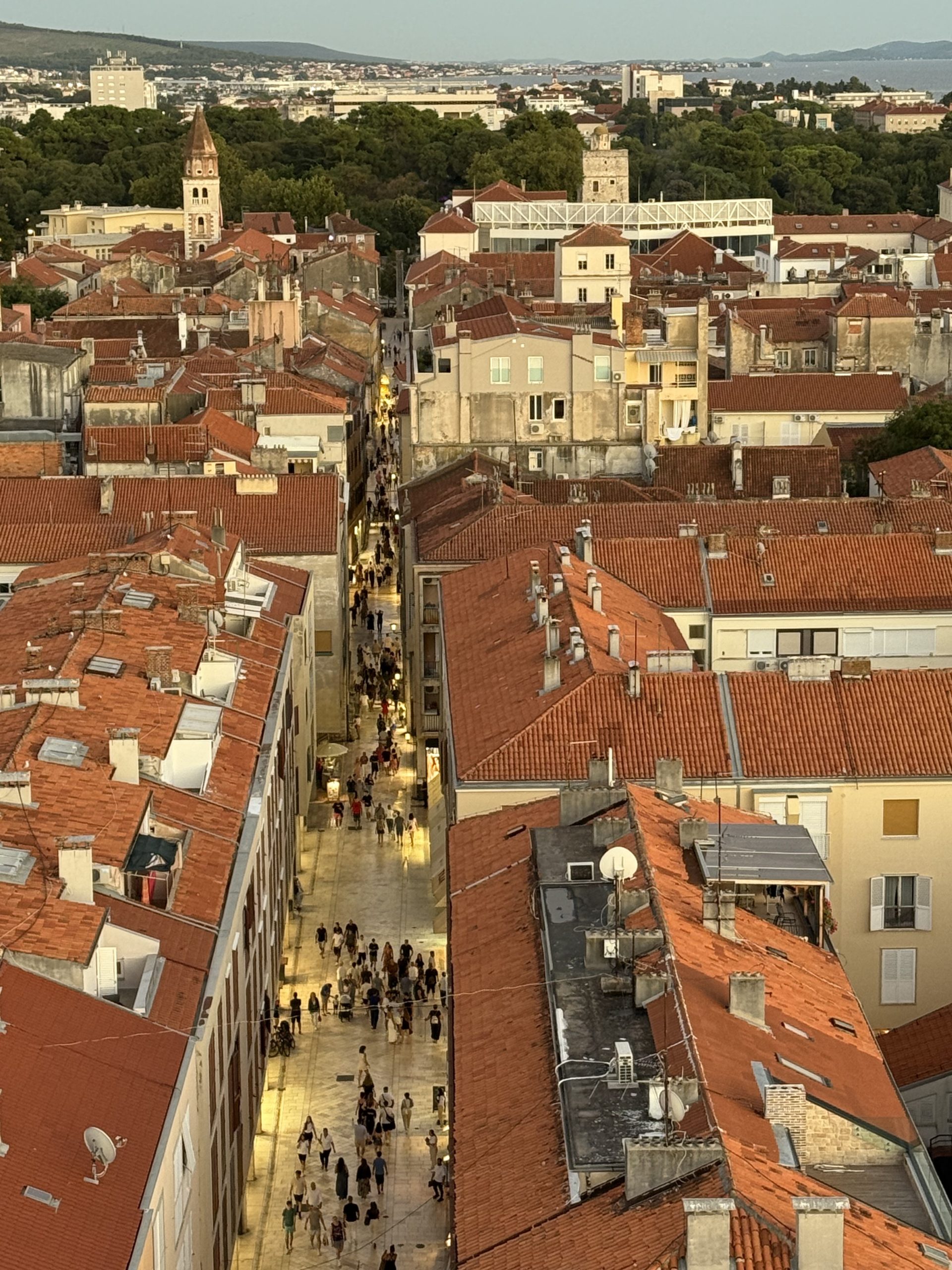
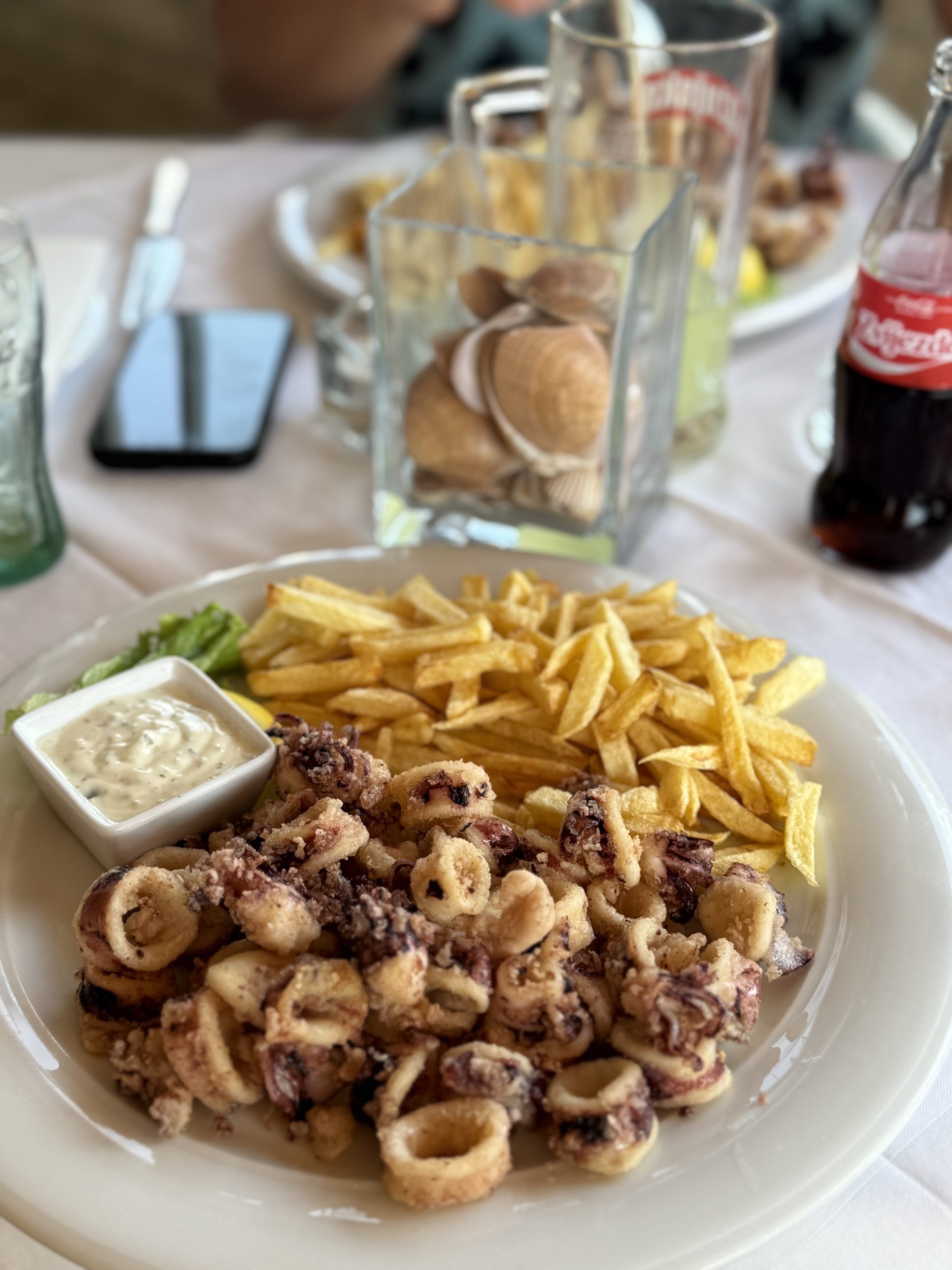
Start with a coffee on Kalelarga, the polished marble main street – that smell of coffee and salty air is still one of my favourite Zadar memories. Then walk to the Roman Forum, the largest on the eastern side of the Adriatic, and step inside round St. Donatus Church (it was €5 when I visited). Climb the bell tower of St. Anastasia’s Cathedral – about 183 steps, I lost count halfway – for a 360° view of the old town and the islands, and finish at the market, where I bought cheese and prosciutto for a picnic lunch.


Midday: Nin
Drive 20 minutes north to Nin, a tiny town on an island in a lagoon, with one of the smallest old churches in Croatia and the shallow sandy Queen’s Beach – perfect for a quick swim, especially with kids.
Afternoon and evening: Pag
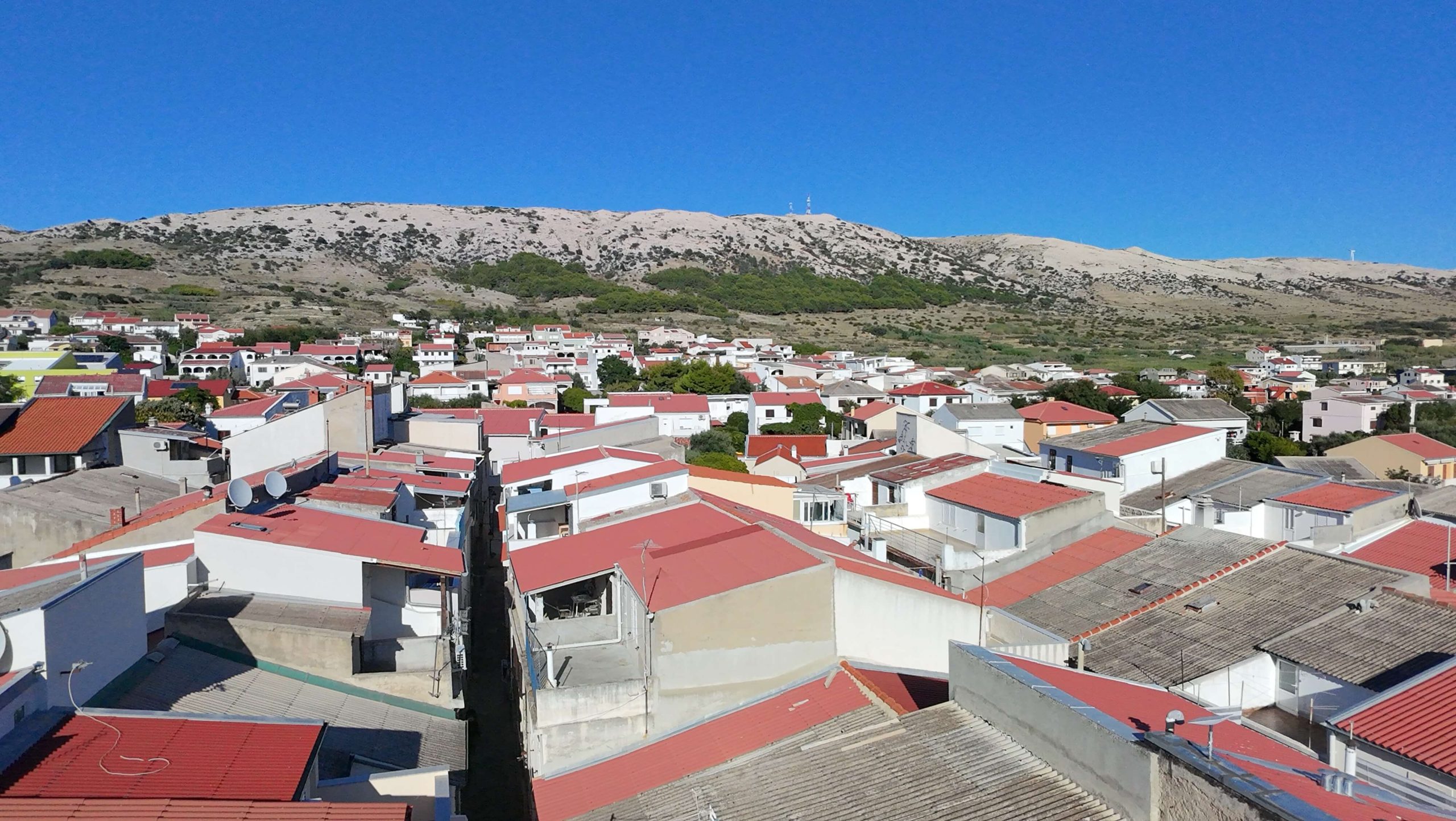
From Nin it’s about 35 minutes to the Pag Bridge. As soon as you cross it, pull over on the left and climb up to Fortica – the little fortress has a stunning view of the bridge, the sea and the bare white rocks that make Pag look like the moon. Then continue to Pag town:
- Watch local women making Pag lace, a UNESCO-protected craft, in their doorways.
- Buy baškotini, the hard sweet rusks baked by the Benedictine nuns of St. Margaret’s convent.
- Eat Pag lamb – I recommend Konoba Bodulo right in Pag town. In a hurry? Tasty makes, in my humble opinion, the best cheeseburger on the planet.
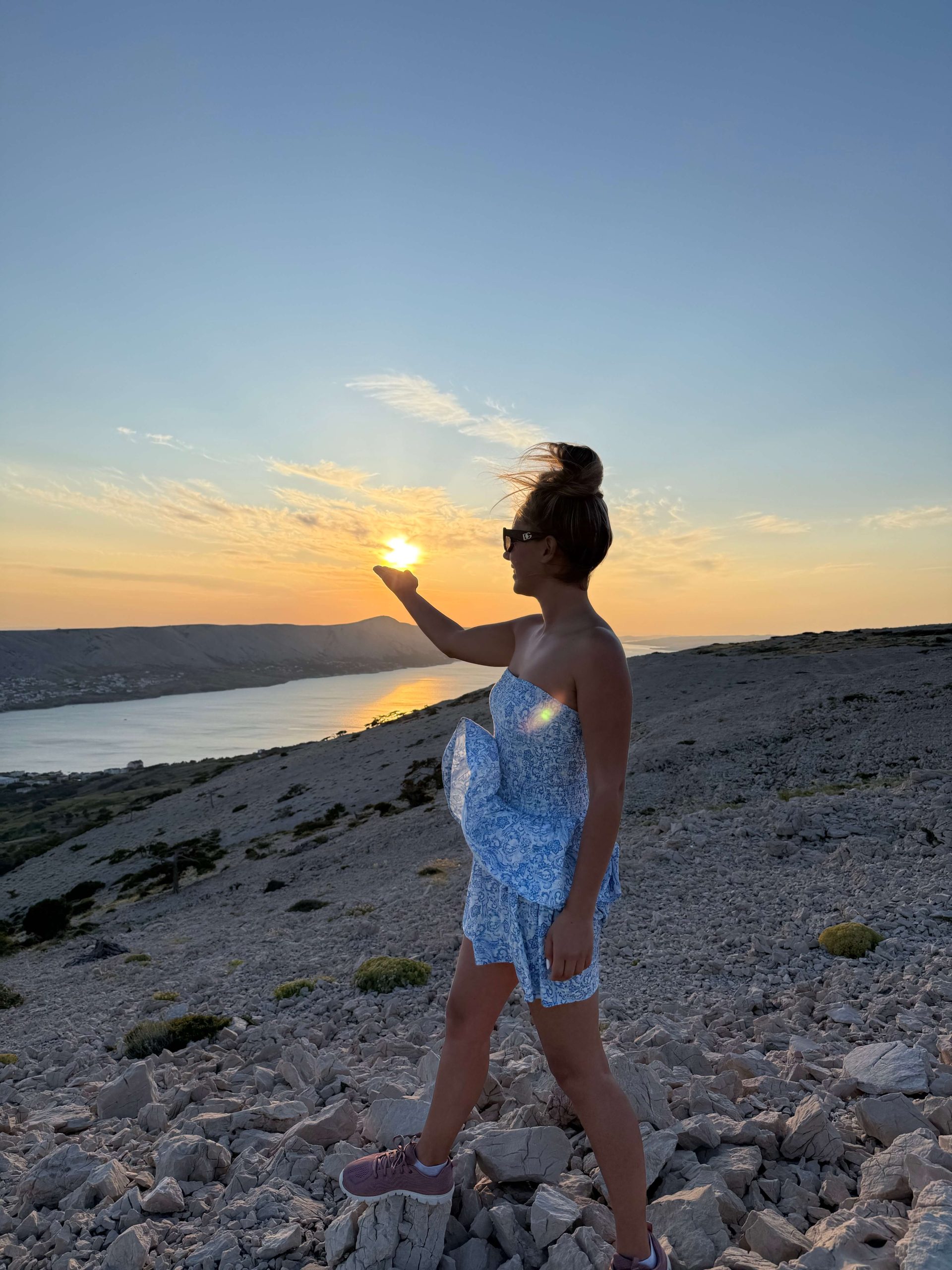
- Stay for sunset on the rocks, then drive back to Zadar (about an hour).


Party people: Pag is also home to Zrće beach near Novalja, Croatia’s summer festival capital. If that’s your thing, sleep in Novalja instead and add the Life on Mars trail near Metajna and the beaches of Ručica and Beritnica. A note from the island: the cold bura wind occasionally closes the Pag Bridge in winter – always check the wind forecast, not just the sun.
Where to stay in Zadar
| Hotel | Budget | Why stay here |
|---|---|---|
| Hotel Bastion | Luxury / boutique | Built on the remains of a 13th-century Venetian fortification in the historic core, walking distance to the Sea Organ. |
| Art Hotel Kalelarga | Mid-range to upper | Art hotel in the old city centre. |
| Boutique Hostel Forum | Budget | Budget beds in the old town centre – you can walk to the Sea Organ. |
Parking: Zadar’s old town is a pedestrian peninsula – park outside and walk in across the footbridge.

Day 7: Šibenik and Krka National Park, on to Split
- Morning – Šibenik (about 1 hour from Zadar). Šibenik’s St. James Cathedral is a UNESCO-listed Renaissance masterpiece built entirely of stone – look for the frieze of 71 carved faces on the outside. Walk up through the stone lanes to St. Michael’s Fortress for the view over the channel.
- Midday – Krka National Park (about 20 minutes to the Lozovac entrance). Krka’s star is Skradinski buk, a wide cascade of travertine terraces. Allow 2–3 hours for the boardwalk loop.
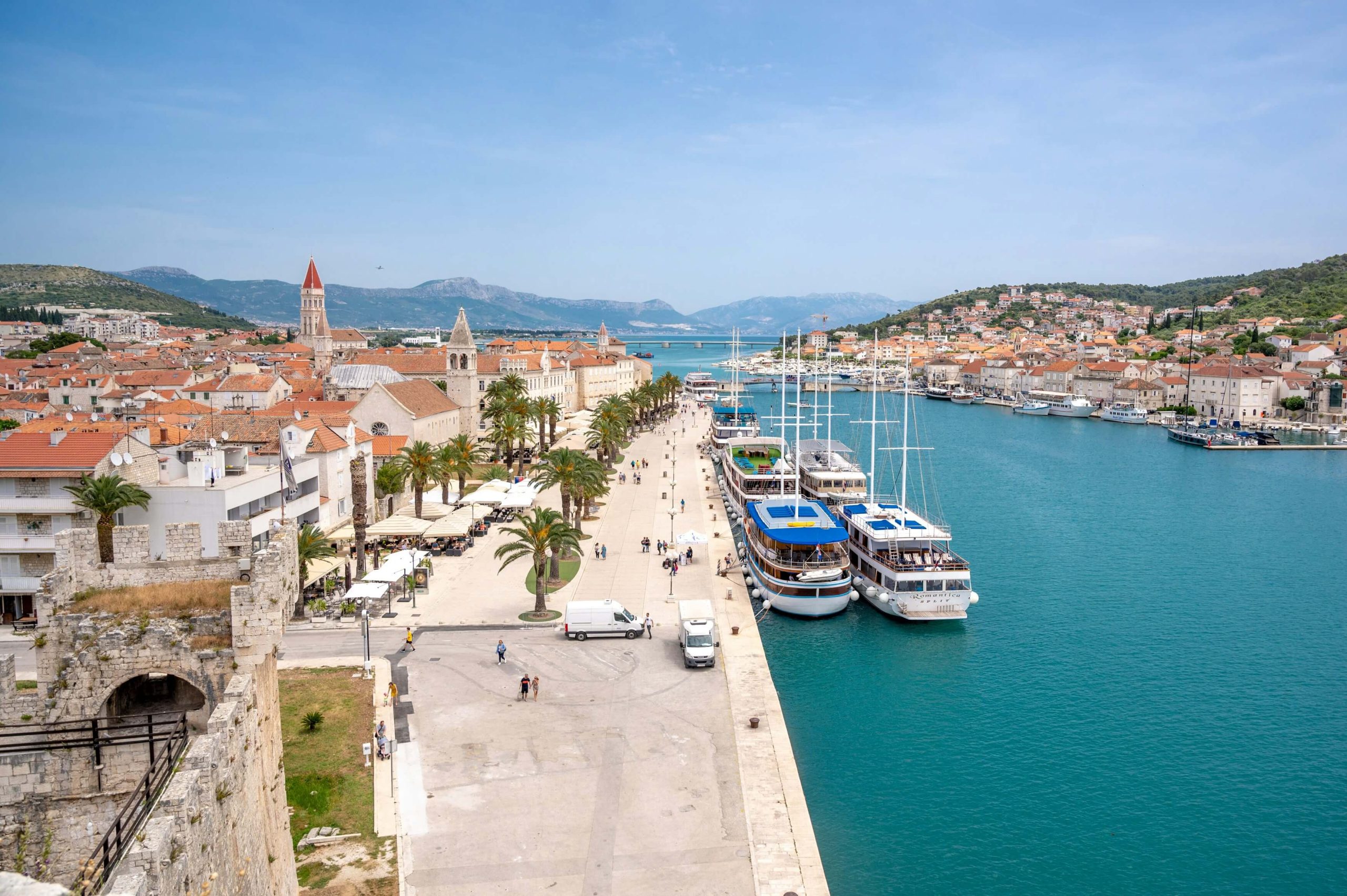
- Afternoon – Split (about 1 hour). With time to spare, stop in UNESCO-listed Trogir, a tiny island-town 30 minutes before Split.
- Evening – Split. Drop the bags and join everyone else on the Riva for the evening promenade.
| Krka National Park (official 2027 price list) | Jan–Mar, Nov–Dec | Apr, May, Oct | Jun–Sep |
|---|---|---|---|
| Adult, all land sites incl. Skradinski buk | €7 | €20 | €40 (€30 after 15:00) |
| Child 7–18 | €4 | €12 | €15 (€11.25 after 15:00) |
| Boat excursion Skradinski buk – Visovac island (2 h) | – | €15 (Mar–Nov) | €15 |
Good to know (checked November 2026): the ticket includes the shuttle bus from Lozovac or the boat from Skradin to the falls (1 April–31 October). Parking at Lozovac is free; in Skradin it’s private and paid. In June–August Skradinski buk is open 08:00–20:00. And no – you can no longer swim under Skradinski buk: swimming is only allowed in marked areas at Roški slap, Stinice and Pisak from 1 June to 30 September. If you want to swim, Roški slap is further upstream – or simply wait for the sea in Split.

Day 8: Split in the morning, Hvar for the day
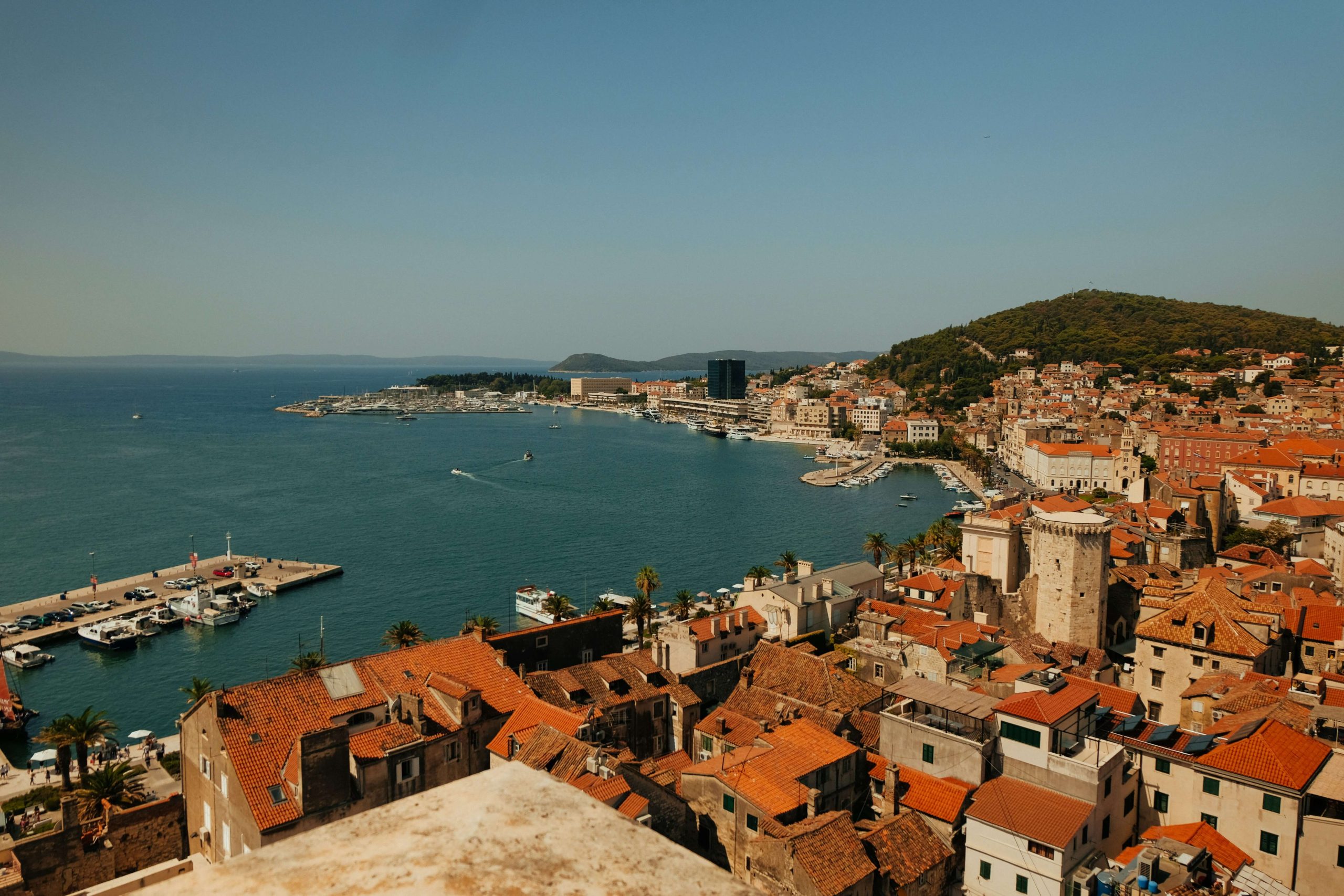
Split’s old town is Diocletian’s Palace – a Roman emperor’s retirement home where people still live, eat and drink inside the 1,700-year-old walls. Walking the palace streets is free, and every time I’m in Split I go at 8 am, before the cruise crowds, when the Peristyle is all yours.
- Morning (08:00–09:45): Peristyle, the Vestibule, the cellars below the palace and the green market just outside the walls.
- 10:10 – catamaran to Hvar. Jadrolinija’s Split–Hvar catamaran takes about 65 minutes. In late summer 2026 it left Split at 10:10 and returned from Hvar at 17:25, and a one-way ticket cost €25 (extra luggage €5) – checked November 2026 on the official 2026 timetable; check the 2027 times before you go.
- Hvar town: climb to the Spanish Fortress (Fortica) above town for the view over the Pakleni islands, then take a taxi boat from the harbour to the Pakleni islands for a swim, or just stroll the main square and harbour.
- Evening: back in Split around 18:30 – dinner in the palace lanes, then a walk up to the Marjan viewpoints if you still have energy.
Driving to Hvar? Don’t take the car – the car ferry from Split goes to Stari Grad on the other side of the island, not to Hvar town. As a foot passenger on the catamaran you arrive right in the harbour.
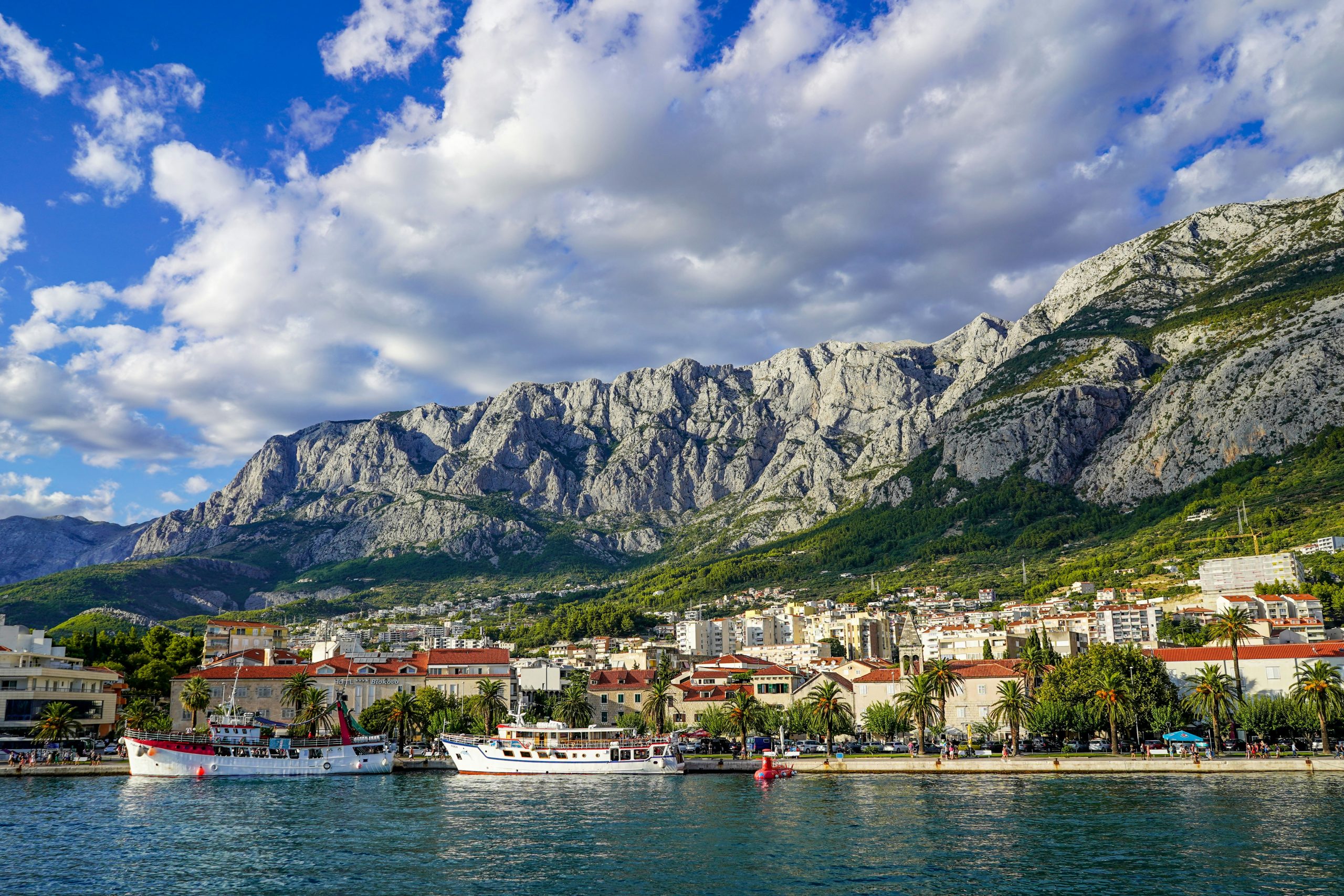
Not an island person? Use Day 8 for a slow Split day plus a swim at Bačvice, or drive down the coast to Makarska, with its pebble beaches under the Biokovo mountain wall.
Where to stay in Split (and Hvar)
| Hotel | Budget | Why stay here |
|---|---|---|
| Hotel Vestibul Palace | Luxury | Luxury boutique hotel in the heart of Diocletian’s Palace, between the emperor’s chambers and the Peristyle. |
| Hotel Park Split | Luxury | Classic five-star hotel by Bačvice beach, a short walk from the centre. |
| Cornaro Hotel | Upper mid-range | Charming, central hotel known for its personal service. |
| Hotel Peristil | Mid-range | Small hotel in the heart of Diocletian’s Palace. |
| Heritage Hotel Slavija | Budget to mid-range | Simple rooms in a historic building close to the waterfront and the palace. |
| Palace Elisabeth, Hvar | Luxury | If you’d rather sleep on Hvar: a five-star historic palace on Hvar’s main square. |
Parking in Split: the old town is car-free. Choose a hotel that offers parking or use a public garage outside the centre, and walk in.
Day 9: over the Pelješac Bridge to Ston and Dubrovnik
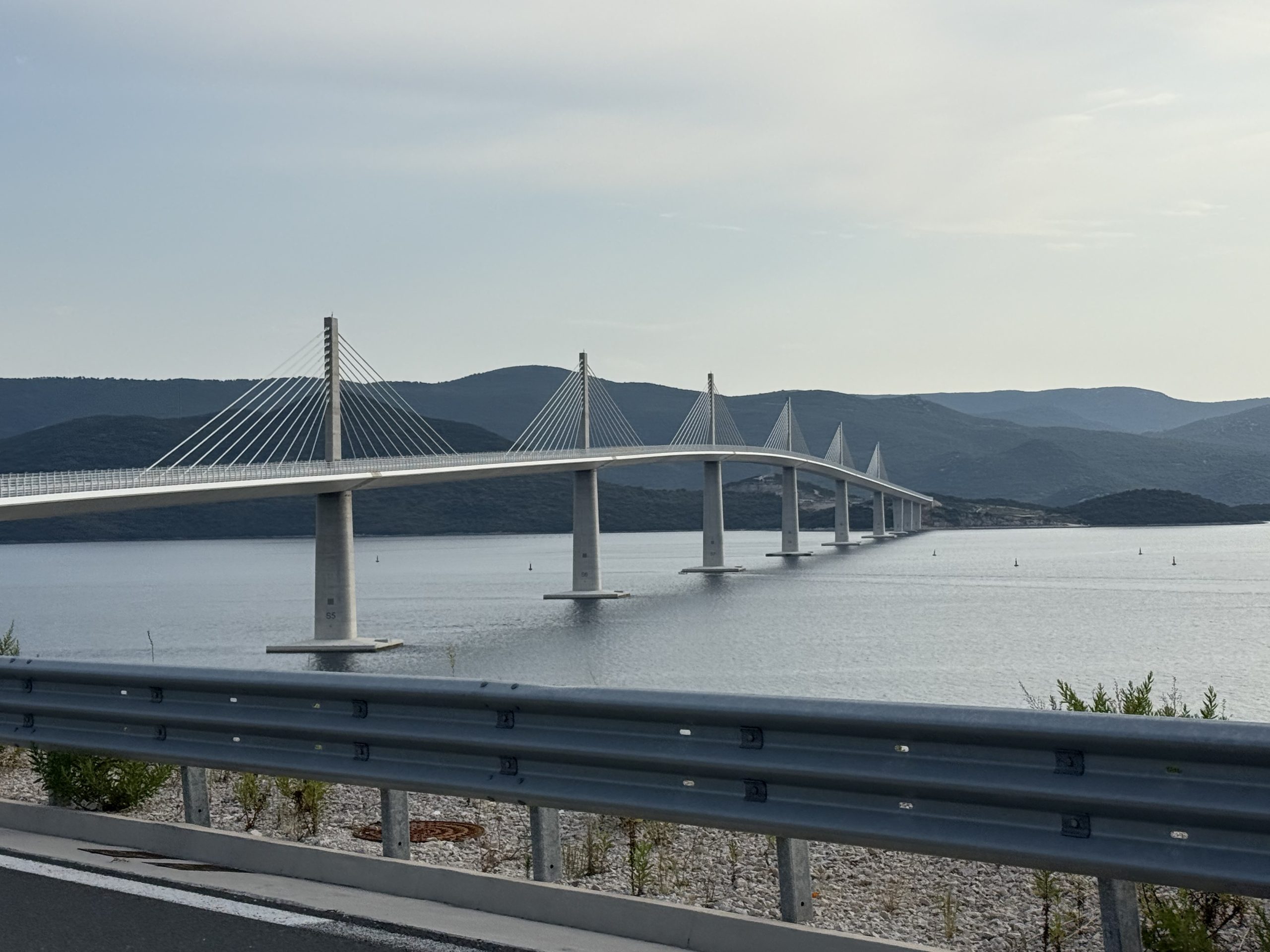
Since the Pelješac Bridge opened in 2022 you can drive from Split to Dubrovnik without crossing into Bosnia and Herzegovina at Neum. It’s about 3 hours of driving in total, so leave Split by 9 am and make a day of it.
- Morning: take the A1 motorway south towards Ploče, then the coast road to the bridge (about 2 hours 15 minutes).
- Late morning – the bridge viewpoint. On either side of the Pelješac Bridge there are viewpoints – my favourite first stop on the drive south. The white curve rising out of the sea is a moment in itself.
- Lunch – Ston and Mali Ston. Walk a section of the Walls of Ston, begun in 1333 and once about 7 km long – often called the longest fortification in Europe. Then do what I always do in Mali Ston: eat oysters and mussels from the bay; Bota Šare is a well-known seafood restaurant right there.
- Afternoon: drive on to Dubrovnik (about 1 hour), return the car if you don’t need it for the airport, and check in.
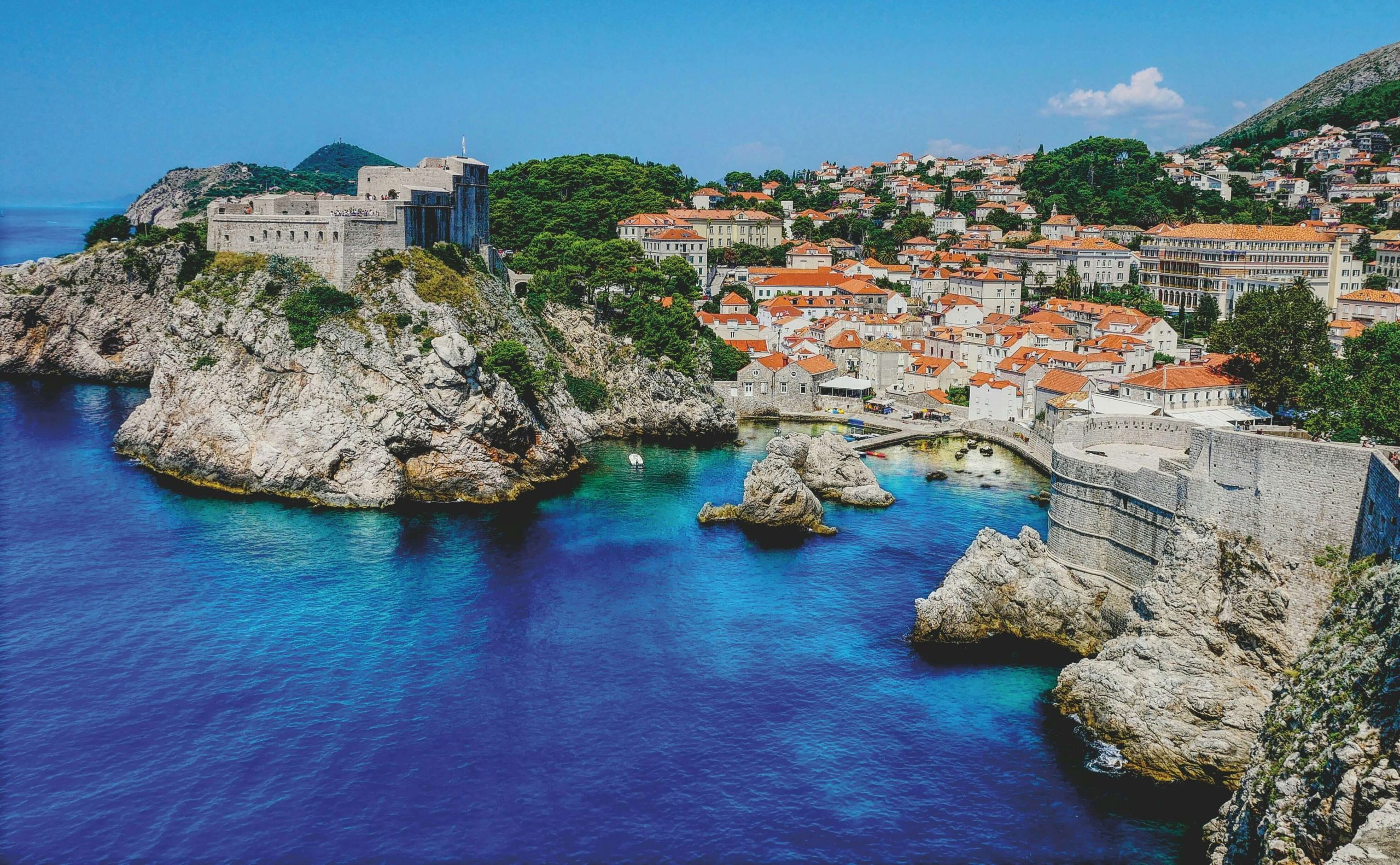
- Evening: squeeze through a hole in the city walls to a Buža bar for sunset on the rocks above the sea, then walk the Stradun once it empties.
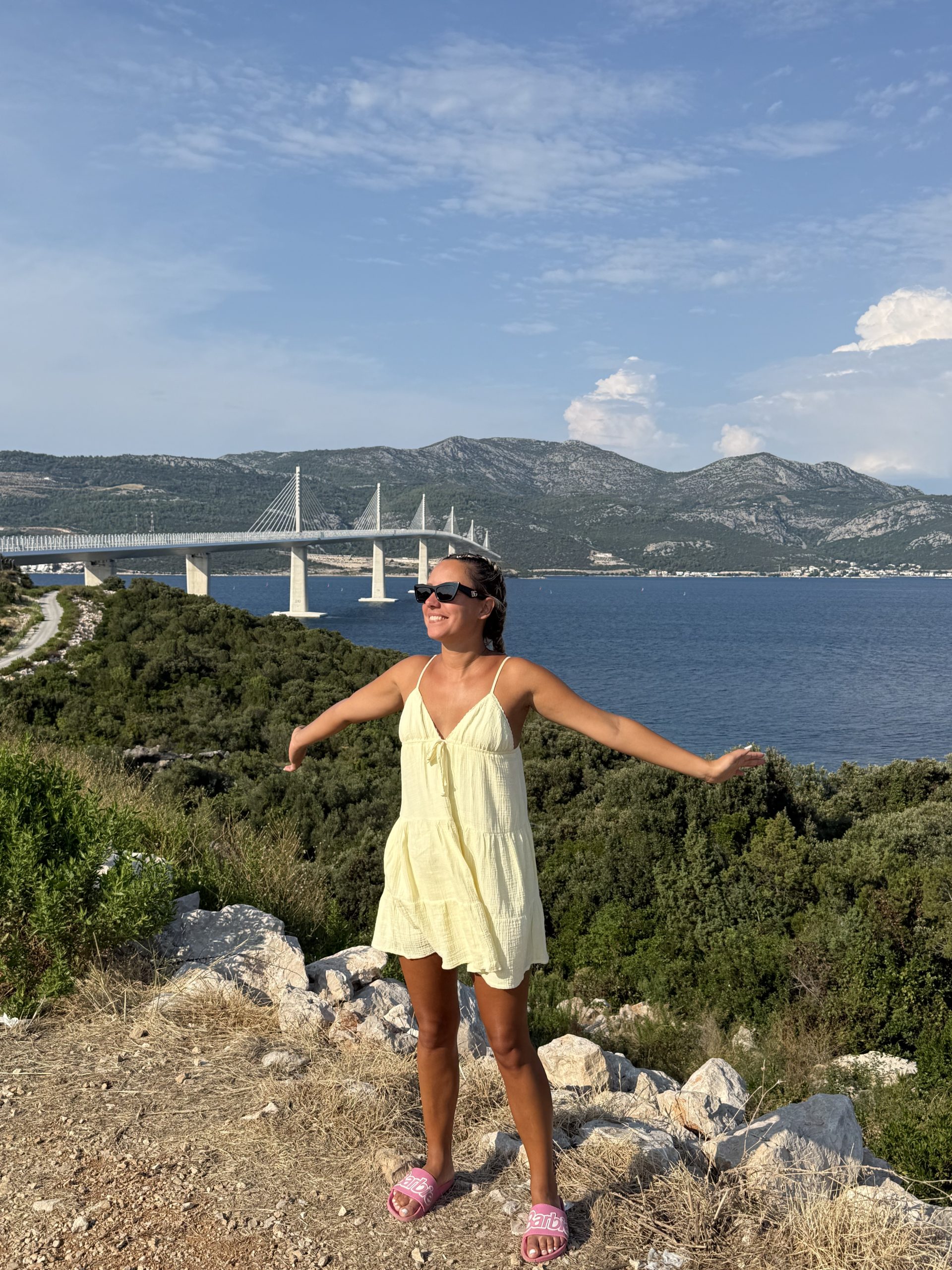
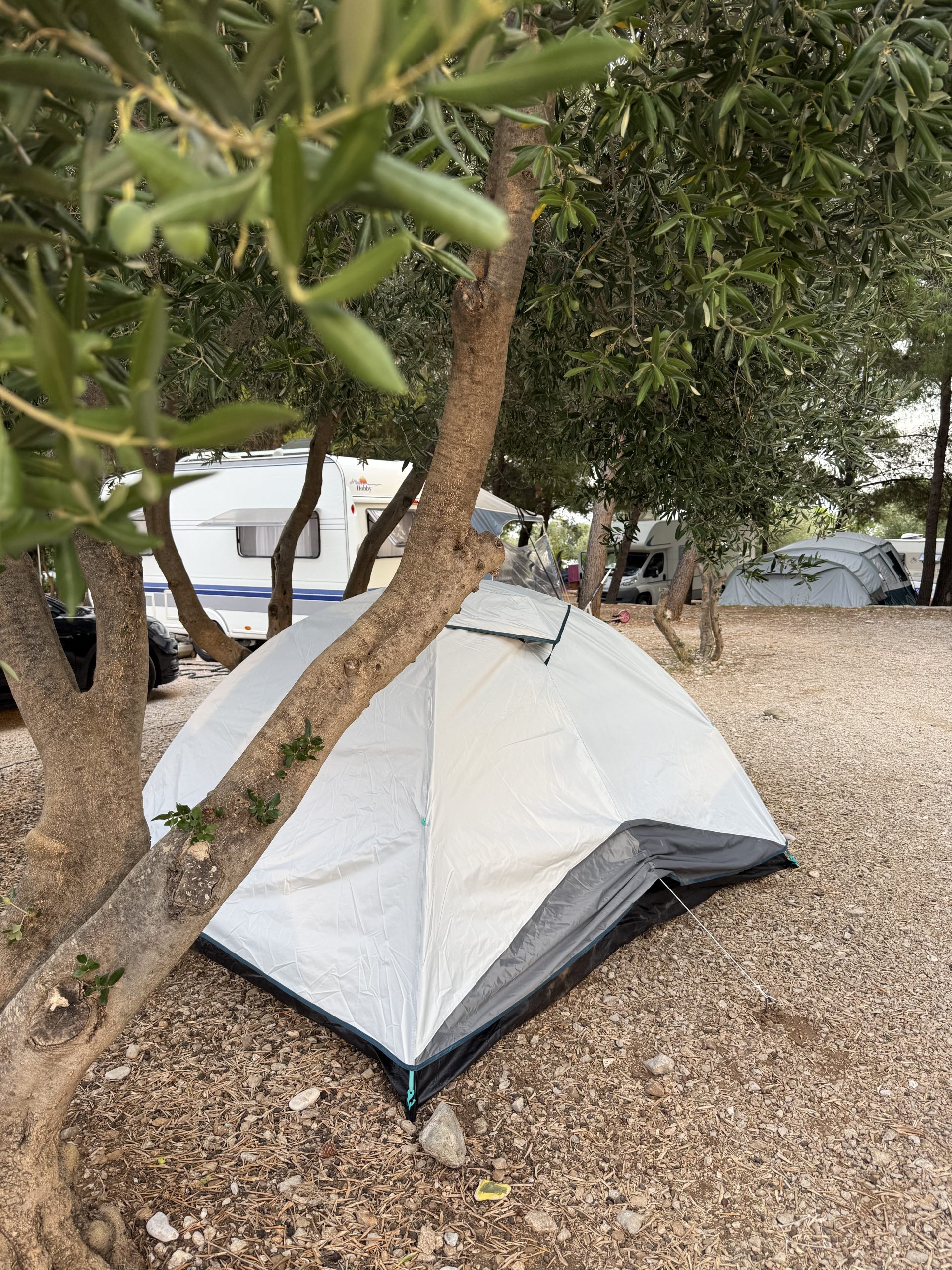
Got an extra day? Spend it on Pelješac itself. I finally visited friends who run Camp Nevio just outside Orebić after 15 years – we stayed in our tent by the sea – and spent the day between Orebić’s captains’ houses, the abandoned village of Donja Nakovana, a sunset swim in Lovište and the windsurfers of Viganj.
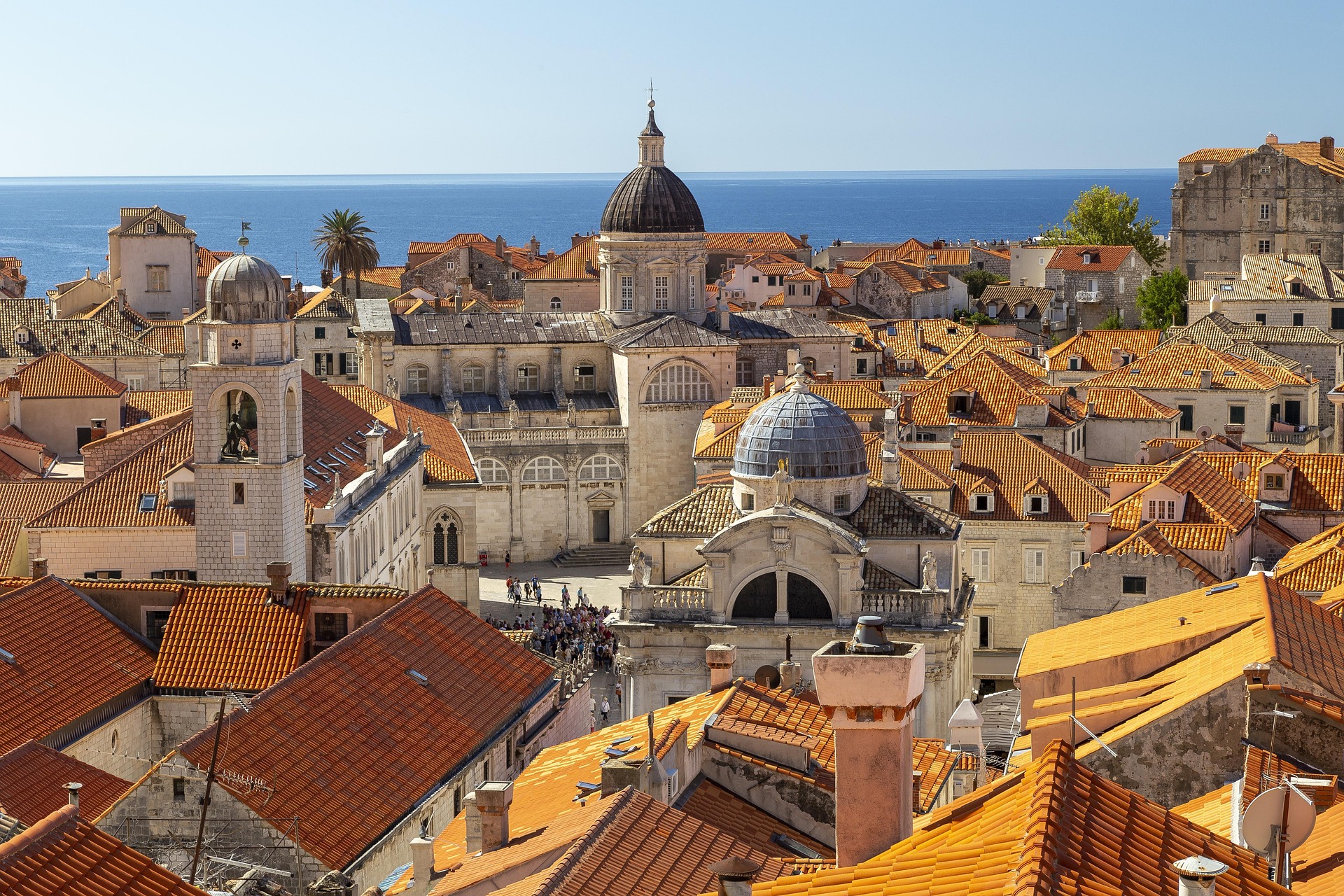
Day 10: Dubrovnik – walls, Stradun and one last view
Dubrovnik genuinely took my breath away the first time – and so did the parking. On my first visit in July 2023 I drove in circles for nearly an hour; some spots charged €10 per hour and a daily ticket in the zone next to the Old Town was €200. Don’t repeat my mistake: park further out, or give the car back.
- 08:00 – city walls. I started my walk at 8 am sharp – the best decision of the day. It’s basically a two-hour workout disguised as sightseeing, with lots of stairs, but every step is worth it. My ticket was €35 and also covered Fort Lovrijenac; buy yours on the official webshop of the Society of Friends of Dubrovnik Antiquities and check the current price.
- 10:30 – Stradun and the Rector’s Palace. Coffee break, then the polished main street, the Franciscan monastery and the Rector’s Palace.
- 12:30 – lunch. My best meal was black risotto at Konoba Dalmatino, hidden in an alley near the cathedral. Lesson learned: in Dubrovnik, choose restaurants by reviews, not by views.
- Afternoon – pick one: the cable car up Mount Srđ (adult return €30, one way €17, checked November 2026; it doesn’t run January–March or in December), or the boat to Lokrum island – €30 including the reserve entrance and the return boat from the Old City Port, checked November 2026.
- Evening: head to the airport (about 20–30 minutes by taxi) – or, if you can, stay one more night.


With more time, I loved my day trip to Lopud in the Elaphiti Islands, with its sandy beach (a rarity in Croatia). Adriatic Kayak Tours runs half-day and full-day kayak trips around Lopud and the Elaphiti, including a sunset paddle. Cavtat, about 30 minutes south, is a calmer alternative to the Old Town.
Where to stay in Dubrovnik
| Hotel | Budget | Why stay here |
|---|---|---|
| Hotel Excelsior | Luxury | Five-star seafront landmark (a villa from 1913) just steps from the Old Town, with views of the walls. |
| Hotel Stari Grad | Upper mid-range / boutique | Eleven rooms and three suites inside the Old Town, with a rooftop restaurant. |
| Hotel Lapad | Mid-range | On the Lapad waterfront, about 3 km from the Old Town – easier for parking, with city buses into town. |
| Hotel Ivka | Budget to mid-range | Simple hotel in the Lapad area, about ten minutes’ walk from the seaside promenade. |
Tours and experiences worth booking
| Experience | Who runs it | What’s included | Time |
|---|---|---|---|
| Truffle hunting in inland Istria | Karlić Tartufi, Paladini | Hunt with the family’s truffle dogs, stories about the tradition, tasting of truffle products | About 2 h, year round |
| Private Motovun & Grožnjan tour | Nautilus, Rovinj | Driver-guide, both hill towns at your own pace | Full day |
| Plitvice lake tour programmes | Plitvice Lakes National Park | Marked routes A–K incl. electric boat and panoramic train | 2–8 h |
| Boat to Visovac island | Krka National Park | Boat from Skradinski buk to the island monastery and back (€15 adult) | 2 h |
| Split–Hvar catamaran | Jadrolinija | Foot-passenger catamaran straight into Hvar town (€25 one way, 2026) | About 65 min |
| Lokrum island | Lokrum Reserve | Return boat from Dubrovnik’s Old City Port + reserve entrance (€30) | Half day |
| Sea kayaking in the Elaphiti | Adriatic Kayak Tours | Guided half- and full-day paddles around Lopud, incl. a sunset tour | Half or full day |
A Blue Cave and five-islands speedboat day from Split or Hvar is another popular option. It’s a long, bumpy day, and the cave visit depends on sea conditions – if you only have one day for the islands, I’d keep it simple with Hvar town and the Pakleni islands.
Getting around: car, ferries, buses and taxis
| Leg | How | Approx. time |
|---|---|---|
| Pula airport → Rovinj | Car | 40 min |
| Rovinj → Poreč → Motovun → Grožnjan → Rovinj | Car (loop) | 2.5–3 h driving in total |
| Rovinj → Opatija | Car | 1.5 h |
| Opatija → Plitvice Lakes | Car (motorway) | 2 h |
| Plitvice → Zadar | Car | 1.5 h |
| Zadar → Nin → Pag town → Zadar | Car (loop over the Pag Bridge) | 2 h driving in total |
| Zadar → Šibenik → Krka (Lozovac) → Split | Car (motorway) | 2.5 h driving in total |
| Split → Hvar town | Jadrolinija catamaran | About 65 min |
| Split → Pelješac Bridge → Ston → Dubrovnik | Car (no border crossing) | About 3 h driving in total |
| Dubrovnik Old Town → airport | Taxi or airport bus | 20–30 min |
- Car: the easiest way to do this route. Motorways are tolled but fast and in excellent condition. Park outside the old towns and walk in – parking in historic centres is limited and expensive in summer.
- Car-free version: buses (Arriva, FlixBus and local companies) connect Pula, Rovinj, Plitvice, Zadar, Šibenik, Split and Dubrovnik. Skip the Istrian hill towns and Pag, swap Krka and Plitvice for organised day trips, and use the catamarans between Split, Hvar and Dubrovnik in summer. Buy bus tickets online in July and August.
- Ferries: Jadrolinija and private lines (TP Line, Krilo and others) link the islands. In July and August car ferries fill up – arrive early or book where you can.
- Trains: don’t run along the coast, so they’re no use on this route.
- Taxis and apps: ride-hailing apps work in the bigger cities such as Split and Dubrovnik; elsewhere agree the fare before you get in.
How much do 10 days in Croatia cost?
Croatia is no longer a budget destination on the coast in summer, especially in Dubrovnik and on Hvar. My rule of thumb for mid-range travel is around €100–150 per person per day, and noticeably less in the shoulder season. These are the big-ticket sights on this route, checked November 2026 on the official pages:
| Item | Adult price | Notes |
|---|---|---|
| Plitvice Lakes, one day | €40 (Jun–Sep before 4 pm) · €25 later · €23 Apr–May & Oct · €10 winter | Online tickets, valid only at the chosen entrance |
| Krka National Park (2027) | €40 (Jun–Sep, €30 after 15:00) · €20 Apr, May, Oct · €7 winter | Includes bus or boat to Skradinski buk |
| Split ↔ Hvar catamaran | €25 each way (2026) | Extra baggage €5 |
| Dubrovnik cable car | €30 return · €17 one way | Closed Jan–Mar and December |
| Lokrum island | €30 | Includes return boat and reserve entrance |
| Dubrovnik city walls | €35 when I visited – check the current price | Ticket also covers Fort Lovrijenac |
| Pag ferry Prizna–Žigljen (optional) | About €20 per car + €4.50 per person in high season (my trip) | Only if you skip the Pag Bridge |
Add it up and a summer trip on this route costs roughly €200 per adult just for Plitvice, Krka, the Hvar catamaran, the walls and the cable car – and around €160 in May or October, when the national park tickets drop. Accommodation is the biggest variable: in each base I’ve listed a budget, mid-range and luxury option so you can mix and match.
Best time for a 10-day Croatia trip
| Season | What to expect | For this route |
|---|---|---|
| Late May – June | Warm days, sea warming up, waterfalls full | My favourite – everything open, fewer crowds |
| July – August | Hot (often above 30 °C), busy, highest prices | Book everything early, sightsee at 8 am, swim at midday |
| September – early October | Warm sea, grape harvest, golden light | My other favourite – early September in Rovinj is magic |
| November – March | Quiet coast, many island hotels closed, bura wind | Cheap park tickets, but no Dubrovnik cable car and fewer ferries |
What to pack
- Comfortable walking shoes with grip – polished stone streets get slippery, and Plitvice and the Dubrovnik walls are hours on your feet.
- Water shoes for pebble and rocky beaches (and the occasional sea urchin).
- A cover-up: swimwear and bare chests aren’t welcome in historic centres like Split and Dubrovnik.
- Hat, sunscreen and a refillable bottle – tap water is safe to drink all over Croatia.
- A light jacket for the mountains around Plitvice, where mornings are much cooler than on the coast.
- Some cash and a power bank for long driving days.
Money, safety and scams to avoid
- Money: Croatia uses the euro. Cards are widely accepted, but keep some cash for small konobas, markets and parking machines.
- Entry: Croatia is in the EU and Schengen. Non-EU visitors are registered in the EU Entry/Exit System (photo and fingerprints) at the border; ETIAS wasn’t required yet as of November 2026 – check the EU’s official travel pages before you fly.
- Safety: Croatia is one of the safest countries in Europe. Watch for pickpockets in crowded old towns and on busy ferries.
- Fish by the kilo: fresh fish is usually priced per kilogram. Ask how much the fish you choose weighs before it goes on the grill, so the bill isn’t a surprise.
- Restaurants with a view: my worst meal in Dubrovnik was at a place I chose for its view – reheated pasta, indifferent service. Check reviews and look for a konoba away from the main square.
- Taxis: use an app or agree the price before you get in, especially at airports and ferry ports.
- Parking fines: pay for street parking (machines or SMS) – zones in Split and Dubrovnik are strictly controlled.
Insider tips and tricks
- Beat the Plitvice tour buses by being at the gate when ticket sales open (07:00 in summer). Groups usually arrive around 10:00, and weekdays are calmer than weekends.
- Late tickets are cheaper: Plitvice drops from €40 to €25 after 4 pm in summer, and Krka from €40 to €30 after 15:00 – perfect if you arrive in the afternoon anyway.
- Use Krka’s Lozovac entrance: parking there is free, while Skradin’s car parks are private and paid.
- Check the cruise ship schedule for Dubrovnik on the Port Authority’s website and plan the walls for the early morning or late afternoon on busy days.
- Don’t keep the car in Dubrovnik. Return it when you arrive, or stay in Lapad and take the city bus to the Old Town.
- Hvar town is a foot-passenger trip – car ferries from Split land in Stari Grad on the other side of the island.
- Pull over right after the Pag Bridge and climb to Fortica – it’s the best first view of the island.
- Check the wind, not just the sun. The bura can close the Pag Bridge and cancel ferries, mostly in winter.
- Plan a picnic for Plitvice – food inside the park is limited.
- Greeting to the Sun only works after dark – stay in Zadar past sunset.
- Fill up before the mountains on Day 4 – petrol stations near Plitvice are few and far between.
- Eat where locals eat: look for a konoba (family tavern) in the backstreets, and in Rovinj grab pizza at Dan i Noć like the locals.
More or less time? Other versions of this trip
- 3 days in Croatia – Dubrovnik and the south.
- 4 days in Croatia
- 5 days in Croatia
- 7 days in Croatia – the classic coastal road trip.
- 14 days in Croatia – this route at a slower pace, with more islands.
- One-day guides on this route: Rovinj · Poreč · Vodnjan · Pazin · Opatija · Karlovac · Zadar · Pag Island · Šibenik · Knin · Trogir · Makarska · Pelješac · Dubrovnik
10 days in Croatia FAQ
Is 10 days enough for Croatia?
Yes. Ten days is enough for a first trip from Istria to Dubrovnik: three days in Istria, Plitvice Lakes, Zadar and Pag, Šibenik and Krka, Split with a Hvar day trip, and Dubrovnik. You won't see every island, but you will see the country's biggest highlights without rushing.
What is the best 10-day Croatia itinerary?
A north-to-south road trip: Rovinj and inland Istria (3 nights), Plitvice Lakes (1 night), Zadar with Nin and Pag (2 nights), Šibenik and Krka on the way to Split (2 nights, with a Hvar day trip), then Ston and Dubrovnik. Fly into Pula or Zagreb and out of Dubrovnik.
Do I need a car for 10 days in Croatia?
Not strictly, but a car makes this route much easier, especially for Istria's hill towns, Plitvice, Pag and Krka. Without a car, use buses between the cities, organised day trips to the national parks and catamarans to the islands.
Do you have to drive through Bosnia to get to Dubrovnik?
No. Since the Pelješac Bridge opened in 2022 you can drive from Split to Dubrovnik entirely in Croatia, without the Neum border crossing. The drive takes about 3 hours with a stop in Ston.
How much does a 10-day trip to Croatia cost?
Plan around 100 to 150 euros per person per day for mid-range travel, more in July and August. On this route, Plitvice, Krka, the Split to Hvar catamaran, Dubrovnik's walls and the cable car add up to roughly 200 euros per adult in summer (checked November 2026).
How much are Plitvice Lakes tickets?
In 2026 an adult day ticket costs 40 euros in June to September before 4 pm (3 pm in September) and 25 euros after that, 23 euros in April, May and October, and 10 euros in winter. Children aged 7 to 18 pay less and under-7s are free (checked November 2026).
Can you swim at Plitvice or Krka?
Swimming is not allowed anywhere at Plitvice. At Krka you can no longer swim at Skradinski buk; swimming is only allowed in marked areas at Roški slap, Stinice and Pisak from 1 June to 30 September.
Is Hvar worth a day trip from Split?
Yes, if you go as a foot passenger. Jadrolinija's catamaran takes about 65 minutes and lands right in Hvar town; in 2026 a one-way ticket cost 25 euros. Car ferries go to Stari Grad on the other side of the island instead.
When is the best time to spend 10 days in Croatia?
Late May to June and September to early October. The sea is warm, ferries run full timetables and you avoid the July and August crowds and peak prices.
Should I start the trip in the north or the south?
Either works, but starting in Istria and ending in Dubrovnik saves the most dramatic city for last and lets you fly home from Dubrovnik's airport, about 20 to 30 minutes from the Old Town. Check one-way car rental fees before you book.

Miki Kokica
Travel blogger behind One Day Itinerary. I test every route myself and write honest, practical guides so you can make the most of a single day anywhere.
Work with me Instagram