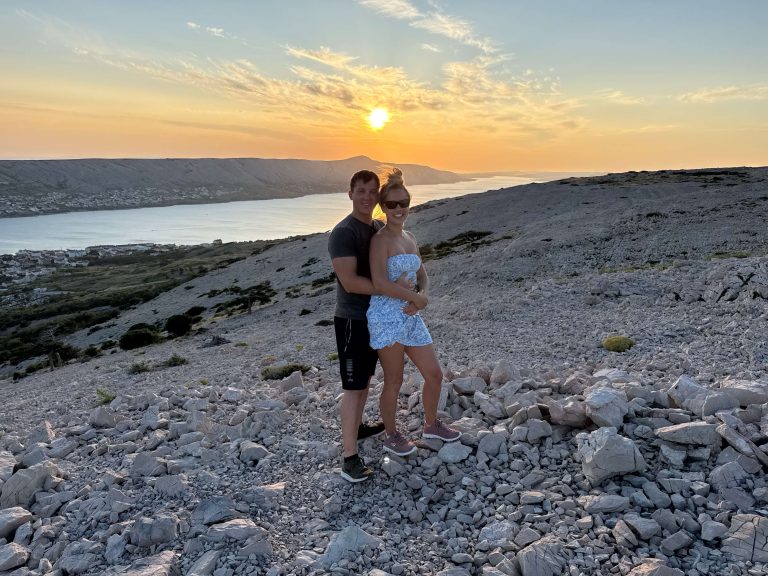
Hi, I’m Miki! Croatia is my home country, and if a friend asked me how to spend their first week here, this is the exact route I’d hand them: a coffee in Zagreb, the waterfalls of Plitvice, a sunset at Zadar’s Sea Organ, Krka and Šibenik, Roman Split with a day on an island, oysters in Ston and, to finish, the walls of Dubrovnik. It’s the classic north-to-south road trip, and it works because every drive is short and every night is in a town worth waking up in.
I’ve built it from my own days on this route – every stop below is somewhere I’ve been, from Zagreb’s cafés and the Plitvice boardwalks to the Pelješac peninsula where I camped by the sea, and a very memorable (and very expensive) parking hunt in Dubrovnik – plus fresh research: national park fees, ferry fares, tolls, one-way car hire rules and real traveller tips, all checked November 2026. Want the big picture first? My Croatia travel guide covers every region.
Day 1 – Zagreb · Day 2 – Plitvice Lakes, then Zadar · Day 3 – Zadar and Nin (or Pag) · Day 4 – Krka waterfalls and Šibenik, then Split · Day 5 – Split and a day on Hvar or Brač · Day 6 – Pelješac Bridge and Ston oysters, then Dubrovnik · Day 7 – Dubrovnik.
Best for: first-timers, couples and families with a car. Fly into Zagreb, fly home from Dubrovnik.
Short on time? See my 3-day, 4-day and 5-day Croatia plans. Got longer? The 10-day and 14-day itineraries add Istria and more islands.
Your 7-day Croatia itinerary in one table
| Day | Route | Highlights | Night |
|---|---|---|---|
| 1 | Zagreb | Upper Town, Dolac market, Museum of Broken Relationships, Tkalčićeva | Zagreb |
| 2 | Zagreb → Plitvice → Zadar | Plitvice Lakes (4–5 h walk), Sea Organ sunset | Zadar |
| 3 | Zadar + Nin | Roman Forum, bell tower, market; Nin’s Queen’s Beach and saltworks | Zadar |
| 4 | Zadar → Krka → Šibenik → Split | Skradinski buk, St James Cathedral, evening on the Riva | Split |
| 5 | Split + Hvar or Brač | Diocletian’s Palace, catamaran to Hvar or ferry to Brač | Split |
| 6 | Split → Pelješac → Ston → Dubrovnik | Makarska Riviera, Pelješac Bridge viewpoint, Ston walls, oysters | Dubrovnik |
| 7 | Dubrovnik | City walls at 8 am, Stradun, Lokrum or cable car, Buža bar sunset | Dubrovnik (fly home next day) |
That’s seven nights: one in Zagreb, two in Zadar, two in Split and two in Dubrovnik. Only two of them are “one-nighters”, and you never pack up more than three times. Driving time adds up to roughly 10–11 hours over the whole week, and no single day has more than about 4 hours at the wheel.
Car, bus or ferry? How to get around in one week
This is the decision that shapes your whole trip, so let’s get it out of the way. A car is my favourite way to see Croatia – Plitvice, Krka, Nin and Ston are all far easier with your own wheels – but the route also works by bus if you don’t want to drive. Ferries and catamarans are only needed for the island day.
| Rental car (one way) | Bus + ferry | |
|---|---|---|
| Best for | Families, couples, anyone who wants Plitvice, Krka, Nin and Ston in one week | Solo travellers, non-drivers, budget trips |
| Plitvice | Easy stop between Zagreb and Zadar | Doable: buses on the Zagreb–coast road stop at Entrance 1 and 2 |
| Krka | Free parking at the Lozovac entrance | Bus to Šibenik or Skradin, then local bus or tour |
| Ston / Pelješac | On the way to Dubrovnik via the bridge | Hard – best as a day tour from Dubrovnik |
| Main costs | Rental, one-way fee (often €50–200), fuel, tolls, parking | Tickets per leg, luggage fees on some buses |
| Downsides | Old-town parking is scarce and pricey in summer | Fixed timetables, some legs only a few times a day |
Renting a car one way: Zagreb to Dubrovnik
Picking up in Zagreb and dropping off in Dubrovnik saves you a whole day of backtracking, but most companies charge a one-way fee. Avis, for example, says a one-way rental within Croatia costs between €50 and €200 depending on the location, while dropping off in another country can cost €300–5,000 (Avis Croatia terms, checked November 2026). My tips:
- Book the one-way drop-off when you reserve, so the fee is in the price you see. Returning to a different office without telling them is charged on the day.
- Compare the total, not the daily rate. Local Croatian companies and the big brands price one-way fees very differently, and longer rentals are often cheaper per day.
- Stay inside Croatia. Since the Pelješac Bridge opened in 2022 you can drive to Dubrovnik without crossing Bosnia and Herzegovina at Neum, so you avoid border queues and cross-border paperwork.
- Check the ferry rule. If you want to take the car to an island, make sure the rental terms allow it. On this route you don’t need to – leave the car in Split on day 5.
- Pick it up on day 2, not day 1. You don’t need a car in Zagreb, and you’ll save a day of rental and city-centre parking.
- Drop it on arrival in Dubrovnik. Parking near the Old Town is the most expensive in the country – more on that on day 7.
Tolls and the new free-flow system
The A1 motorway runs from Zagreb to Split and on towards Ploče, and it’s fast, modern and tolled. For a normal car (category I), Zagreb to Split costs €26.40 and Zagreb to the end of the motorway at Čarapine near Ploče €33.80 (Hrvatske autoceste toll table, checked November 2026). Splitting the drive into legs like this itinerary costs roughly the same. Croatia is also replacing toll booths with a barrier-free “free flow” system that reads number plates, so check the HAC website before you go to see how payment works on your dates.
Without a car: buses and catamarans
Buses link every stop on this route. FlixBus lists the fastest rides as Zagreb–Zadar in about 3 h 30, Zadar–Šibenik 1 h 25, Šibenik–Split 1 h 30 and Split–Dubrovnik 3 h 45, with around seven Split–Dubrovnik rides a day (FlixBus, checked November 2026). Plitvice sits on the main road between Zagreb and the coast, and the park says intercity buses stop right by Entrance 1 and Entrance 2 – check times at the park info desk or on the Zagreb bus station website (akz.hr). Without a car I’d skip Nin and Ston, sleep one night at Plitvice, and take a Pelješac wine-and-oyster tour from Dubrovnik instead.
Day 1: Zagreb – coffee, the Upper Town and a slow first evening
Most transatlantic and many European flights land in Zagreb, and it’s the perfect gentle start. A shuttle runs every 30 minutes between the airport and Zagreb’s main bus station (Pleso prijevoz). Don’t pick up your rental car yet – the centre is walkable, trams do the rest, and after a long flight the last thing you want is to drive. If you land early and want a taste of Croatian small-town life near the airport, my Velika Gorica guide is ten minutes away.
Afternoon: every time I’m in Zagreb I start on Ban Jelačić Square, then walk up to Dolac market under its red umbrellas (best in the morning, so go first thing on day 2 if you arrive late). Climb – or take the tiny funicular – to the Upper Town for St Mark’s Church with its tiled roof, the Stone Gate and the views from the Strossmayer promenade. The Museum of Broken Relationships, a quirky collection of objects left over from break-ups, is the city’s most original museum and right on the way.
Evening: Tkalčićeva street is lined with café bars, and Zagreb’s café culture is the real attraction – sit, order a coffee or a Croatian craft beer, and watch the city go by. Have dinner early and get a proper night’s sleep: tomorrow starts early.
Day 2: Plitvice Lakes, then on to Zadar
Today is the big one. Pick up your car early (or take the first bus) and drive south. The motorway takes you as far as Karlovac – the star-shaped town of four rivers (my Karlovac guide is here if you want a coffee stop) – and from there the D1 road climbs through forest to Plitvice. Allow about 2 hours from Zagreb.
Morning: Plitvice Lakes National Park. Sixteen terraced lakes linked by waterfalls, crossed on wooden boardwalks – it is as unreal as the photos. The single best tip I can give you: be at the entrance when it opens. Walk the lower lakes and the Great Waterfall first, before the tour buses arrive. For a one-week trip, the park’s Programme C (start at Entrance 1, 4–5 hours, 8 km, with an electric boat across Lake Kozjak and the panorama train back) shows you both the Lower and Upper Lakes. Short on time or energy? Programme B takes 3–4 hours (official lake tour programmes).

| Plitvice ticket (adult) | Price 2026 | Notes |
|---|---|---|
| January–March, November–December | €10 | Some trails can be icy or closed |
| April–May, October | €23 | Waterfalls at their fullest in spring |
| June–September, before 4 pm (Sept: 3 pm) | €40 | Peak price |
| June–September, after 4 pm (Sept: 3 pm) | €25 | Late-afternoon discount |
| Students / children 7–18 (summer) | €25 / €15 | Under 7 free |
| Car parking | €2/hour (Jun–Sep), €1.50/hour (Mar–May, Oct–Nov) | Paid when you leave |
Prices are from the official Plitvice price list (checked November 2026). The ticket includes the electric boat and panorama train. Buy it online on the park’s ticketing site – online tickets are tied to the entrance and time slot you choose, and in summer the desks can sell out. In November 2026 the entrances were open 08:00–15:00 (winter hours); summer hours are longer, so check before you go.
Afternoon: have lunch near the park, then drive to Zadar – about 2 hours, rejoining the A1 at Gornja Ploča. Love a bit of adrenaline? The single-line “Beware of the Bear” zipline sits on the western edge of the park near Vrhovine, about 20 km from the A1 – details in my guide to ziplines in Croatia.
Evening: sunset at the Sea Organ. Check in, walk to the tip of the Zadar peninsula and find a spot on the marble steps. The Sea Organ plays music with the waves through tubes under the steps, and next to it the Greeting to the Sun – a 22-metre circle of glass plates – lights up after dark. When I sat there and closed my eyes, it was one of the most peaceful moments I’ve had anywhere. Dinner? I chose Restaurant Foša by the Land Gate, with its terrace over the harbour.

Day 3: Zadar and Nin (or a day on Pag)
Zadar is one of my favourite Croatian cities – a 3,000-year-old town on a peninsula, mostly pedestrian, and far more relaxed than Split or Dubrovnik. My full one-day Zadar itinerary has every detail; here’s the short version.
Morning: coffee on Kalelarga, the polished main street, then the Roman Forum – the largest on the eastern side of the Adriatic – and the round 9th-century St Donatus Church right next to it. Climb the 180-odd steps of St Anastasia’s bell tower (I lost count halfway) for a 360° view of the old town, the islands and the sea. Go in the morning: it’s cooler and quieter.

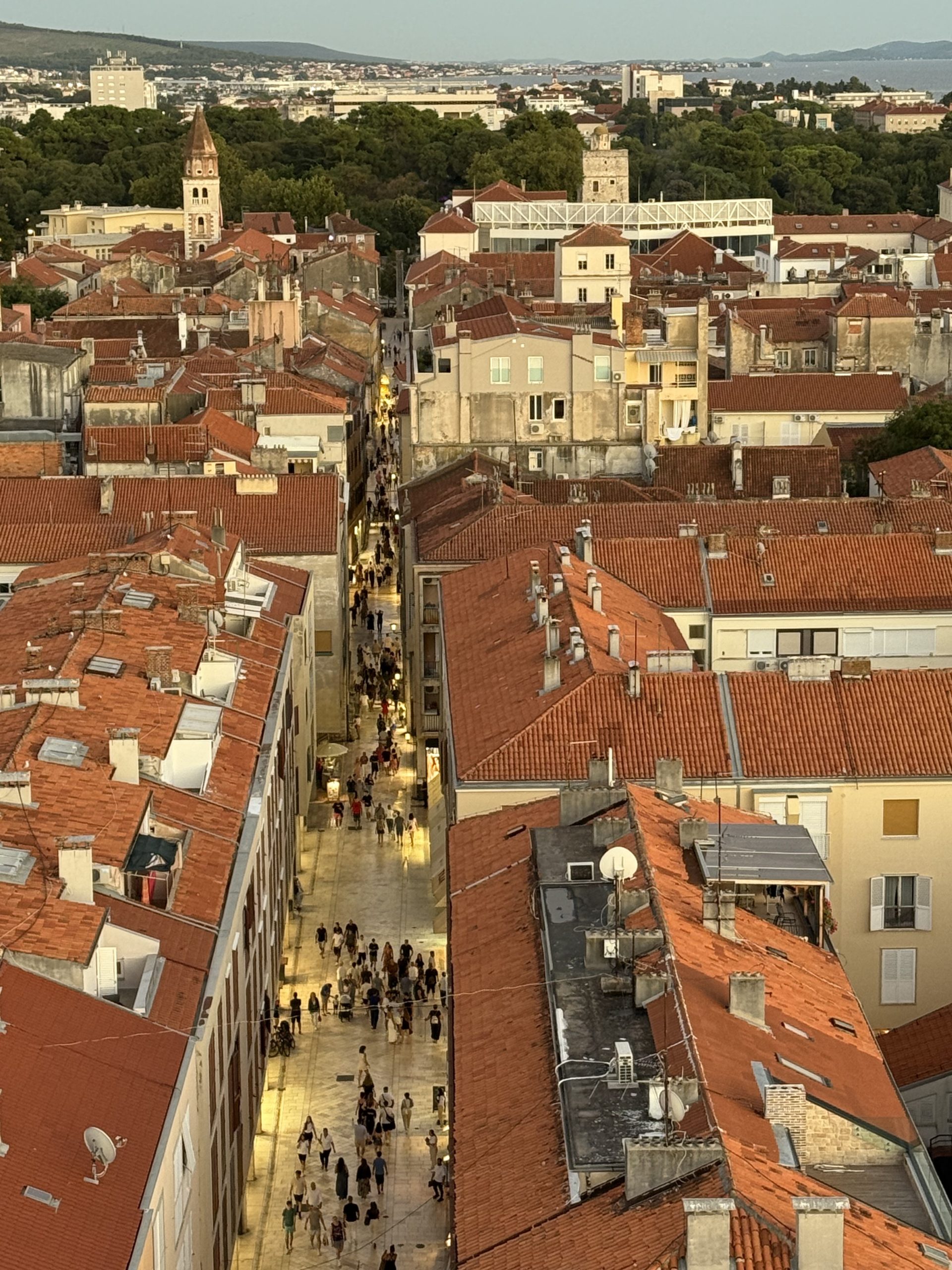
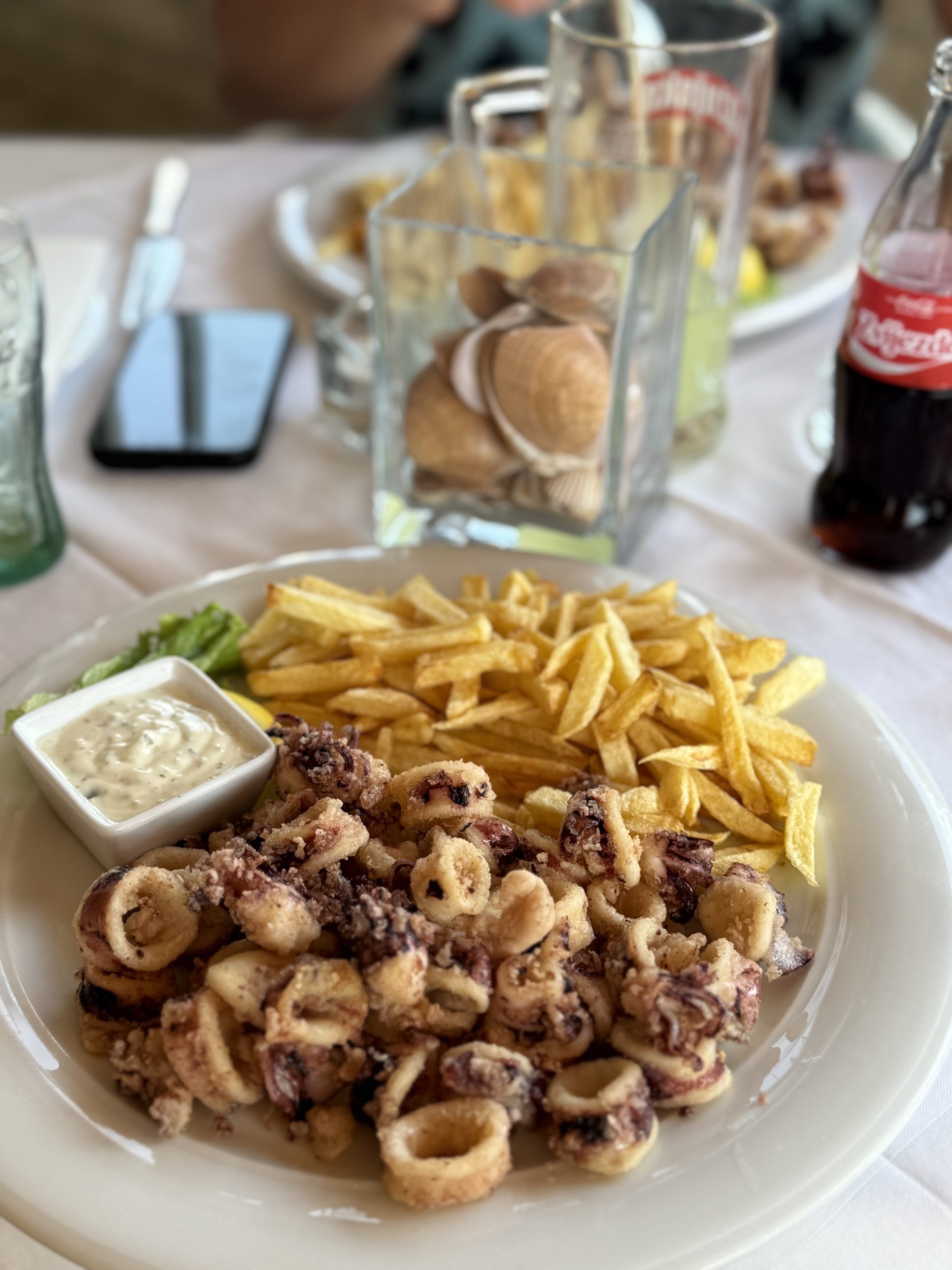
Then wander to the city market by the harbour for cheese, prosciutto and fruit. For lunch I loved Konoba Skoblar, one of the oldest taverns in town, where I had black risotto and a glass of local white – it felt like eating at a friend’s house.

Afternoon: Nin. Just 15 km north, Nin is a tiny island town joined to the mainland by little bridges. Locals come for the long, shallow Queen’s Beach (Kraljičina plaža), the tiny Church of the Holy Cross, often called the smallest cathedral in the world, and the Nin saltworks, where the Solana Nin salt museum runs educational tours of the salt pans. Swim, then head back to Zadar for a last evening on the Riva.

My alternative: a day on Pag Island
If you’ve got a car and love wild landscapes, swap Nin for Pag – it’s about an hour from Zadar over the Pag Bridge, and I’ve spent a lot of time there. Right after the bridge, pull over and climb to the little Fortica fortress for the view. Then: Pag town and its lace makers, Pag lamb at Konoba Bodulo, a swim at Ručica beach and a sunset over the moon-like rocks. Everything is in my Pag Island one-day guide.


Day 4: Krka waterfalls and Šibenik, then Split
Check out early. Krka National Park is about an hour from Zadar on the A1 (exit Skradin), and my tip for Krka is the same as for Plitvice: I always arrive at opening.
Morning: Krka National Park. You have two ways in. From the Lozovac entrance parking is free and a park bus takes you down to Skradinski buk, the biggest waterfall; from the town of Skradin a park boat sails up the river to the falls, but parking in Skradin is private and paid. Both the bus and the boat are included in your ticket from 1 April to 31 October. The circular boardwalk around Skradinski buk takes about 1.5–2 hours at a relaxed pace. Swimming is only allowed in clearly marked areas – the old days of bathing under the falls are over, so save the swim for the coast.
| Krka ticket (adult, all land sites) | Price 2027 | Notes |
|---|---|---|
| January–March, November–December | €7 | Park buses and boats don’t run |
| April, May, October | €20 | Bus from Lozovac and boat from Skradin included |
| June–September | €40 (€30 after 3 pm) | Arrive at opening |
| Children 7–18 | €4 / €12 / €15 | Under 7 free |
| Boat excursion to Visovac island monastery | €15 | 2 hours, from Skradinski buk |
| Boat excursion to Visovac and Roški slap | €20 | 4 hours |
Prices are from Krka’s 2027 price list, published by the park (checked November 2026). Boat excursions can only be booked and paid for inside the park, not online. Tickets are sold for cash and card at the main entrances – see the official Krka website.
Afternoon: Šibenik. Twenty minutes from Krka, Šibenik is a stone town that most people drive straight past – don’t. See the UNESCO-listed St James Cathedral, get lost in the stepped alleys and climb to St Michael’s Fortress for the view over the channel. Lunch tip from my Šibenik guide: Pelegrini, right next to the cathedral. Fancy a thrill? The Čikola canyon zipline near Drniš is a short detour from Krka.

Evening: drive about an hour to Split. Drop your bags, and walk the Riva promenade as the palace walls glow in the evening light. Choose accommodation with parking or near a public garage – the palace area itself is pedestrian.
Day 5: Split and a day on Hvar or Brač
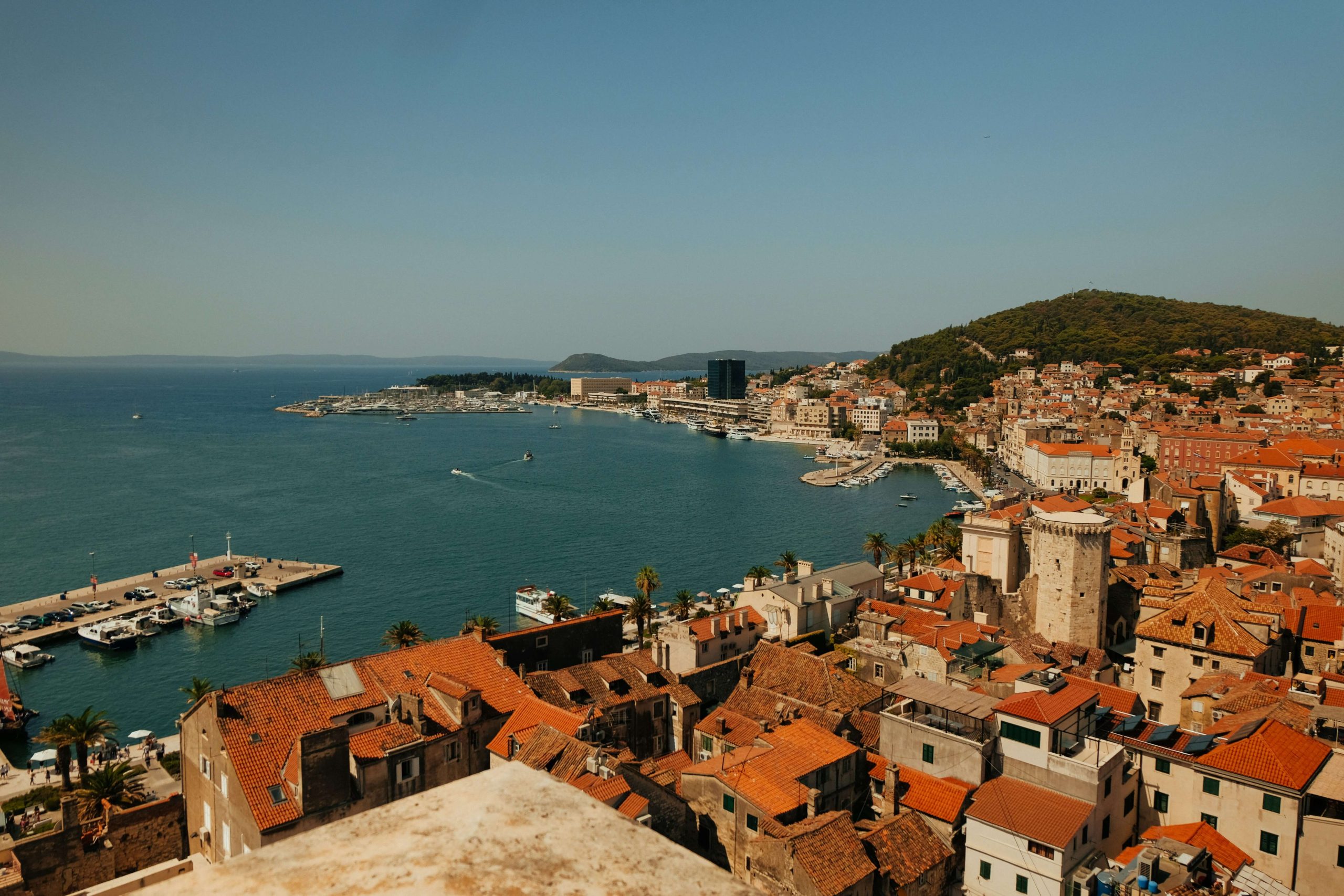
Early morning: Diocletian’s Palace. Split’s old town is a Roman emperor’s retirement palace that people simply moved into, and every time I’m in Split I walk it before 9 am. Walk the Peristyle, the vestibule with its open dome, the cathedral and its bell tower, and the vaulted cellars. Then pick your island.
Option A: Hvar (glamour, lavender and the Fortica)
Jadrolinija’s catamaran line 641 links Split and Hvar town in about 1 hour 5 minutes. On its late-summer 2026 timetable, it left Split at 10:10 and came back from Hvar at 18:30 (or 16:50 later in the season), for €25 one way plus €5 per extra bag (Jadrolinija Split–Hvar, checked November 2026). Krilo also sails Split–Hvar, with fares from €8.50 (Krilo), and TP Line runs catamarans between Split, Hvar, Korčula and Dubrovnik (TP Line). Fast-ship tickets are tied to one departure, so book your return in advance in summer.
On Hvar: climb to the Fortica fortress above town, wander the main square and the harbour, then take a taxi boat to the Pakleni islands for a swim. Back on the evening boat.
Option B: Brač (Zlatni Rat beach)
The car ferry from Split to Supetar on Brač runs up to 14 times a day in summer and takes 50 minutes; a foot passenger pays €6.50 (Jadrolinija Split–Supetar, checked November 2026). From Supetar it’s about 40 minutes by bus or car across the island to Bol and Zlatni Rat, the famous pebble spit that changes shape with the wind. The direct Split–Bol catamaran only leaves Split in the afternoon, so it doesn’t work for a day trip.
Option C: stay on the mainland – Trogir
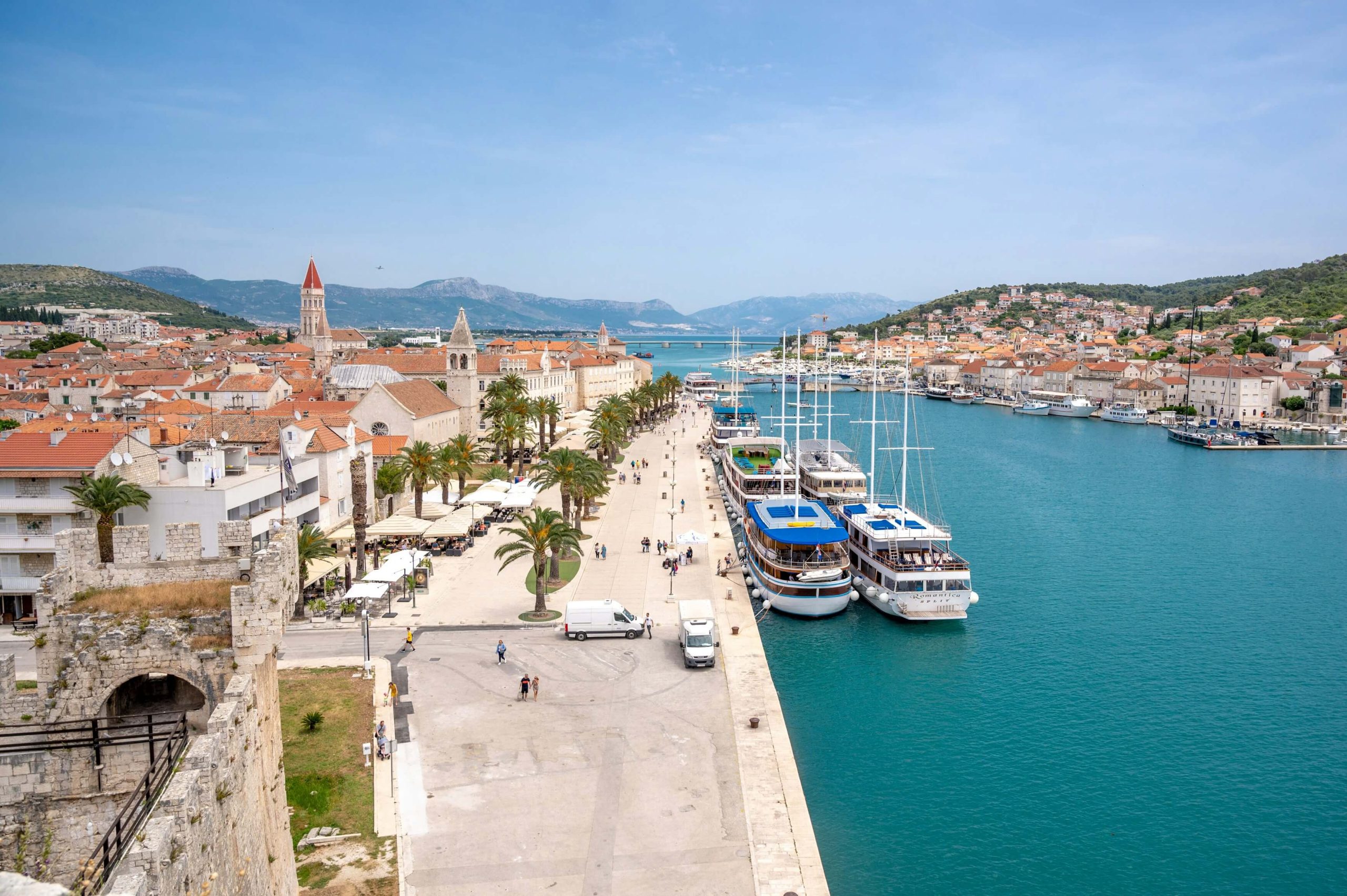
Had enough of moving around? Trogir, a tiny UNESCO island-town 30 minutes from Split, is the easy alternative: Kamerlengo Fortress, the cathedral portal and a long lunch on the waterfront. My Trogir guide has the day planned out.
Day 6: Makarska Riviera, Pelješac Bridge and Ston, then Dubrovnik
This is my favourite driving day in Croatia. From Split to Dubrovnik via Ston it’s about 3.5–4 hours of driving, so leave by 9 am and make it a day of stops.
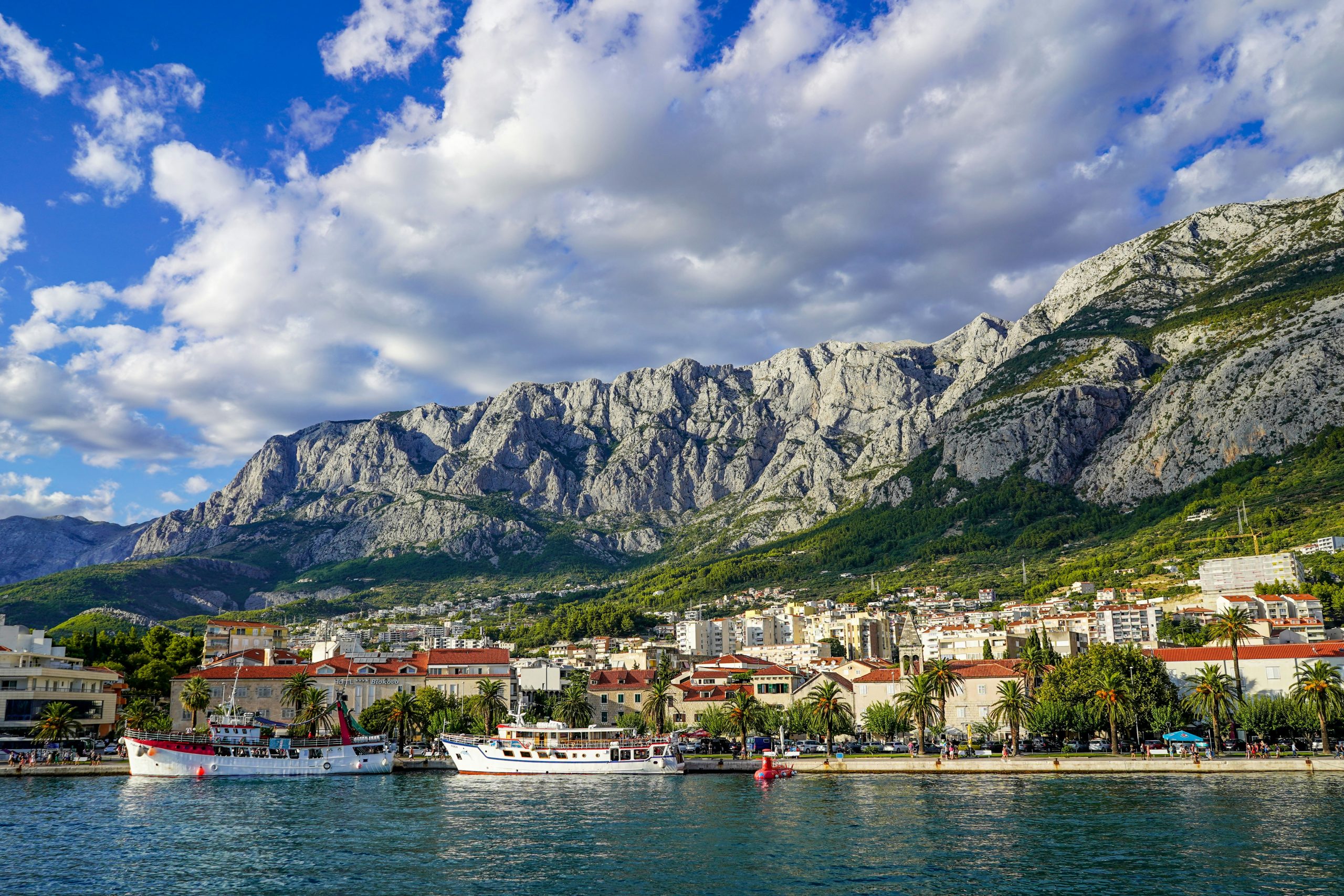
Morning: the Makarska Riviera. Take the coastal road for at least part of the way – the Biokovo mountain wall drops straight into the sea above pebble beaches. Stop for a coffee and a swim in Makarska (my Makarska guide) or the quieter villages around it. If you’re short on time, use the A1 motorway and rejoin the coast near Ploče.
Midday: the Pelješac Bridge. The 2.4 km bridge opened in 2022 and connects the mainland directly to the Pelješac peninsula, so you no longer cross the border at Neum. There are viewpoints on either side, and I just had to pull over – it rises out of the sea like a white ribbon. It’s my favourite first stop on the drive south.
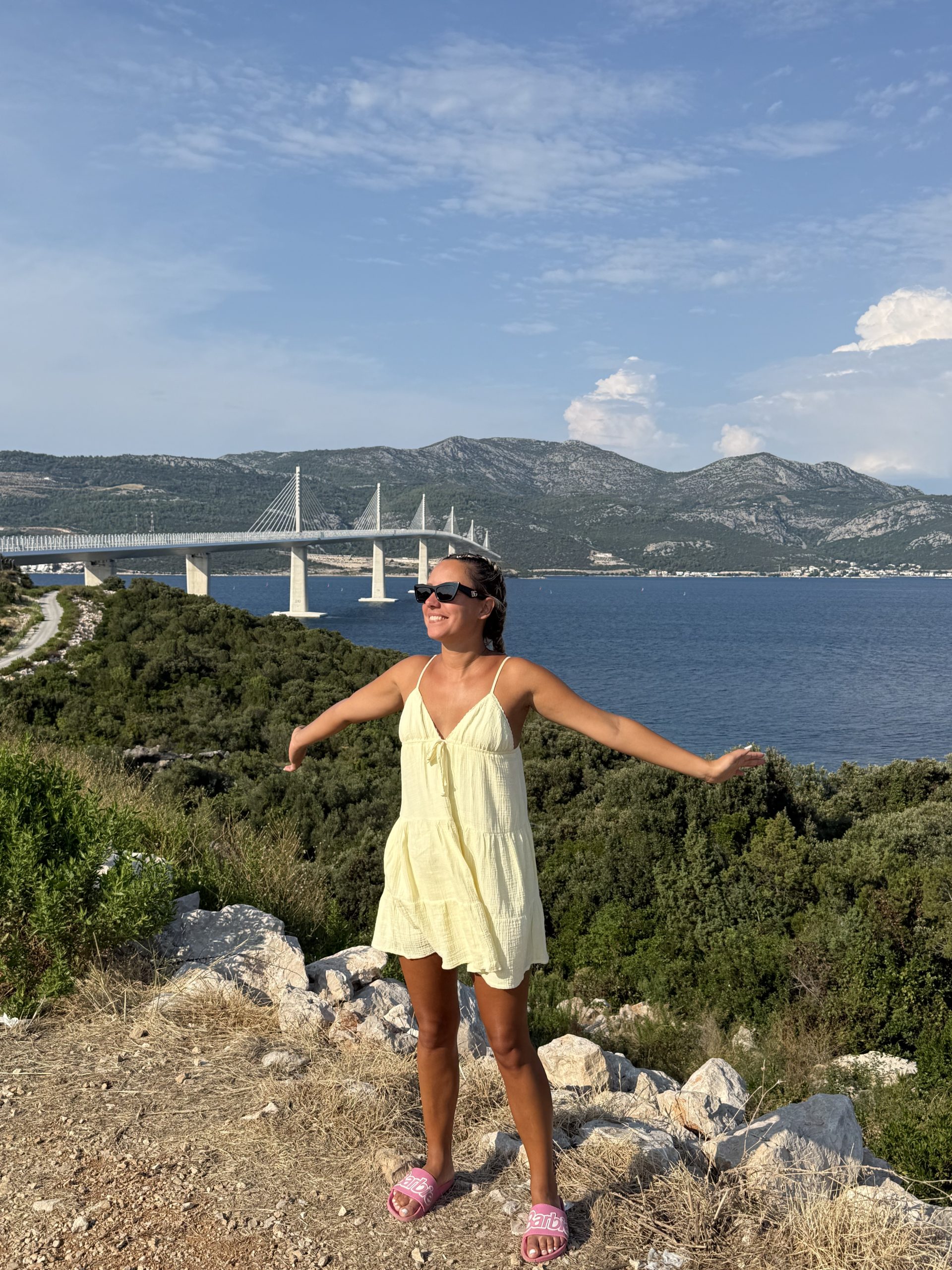
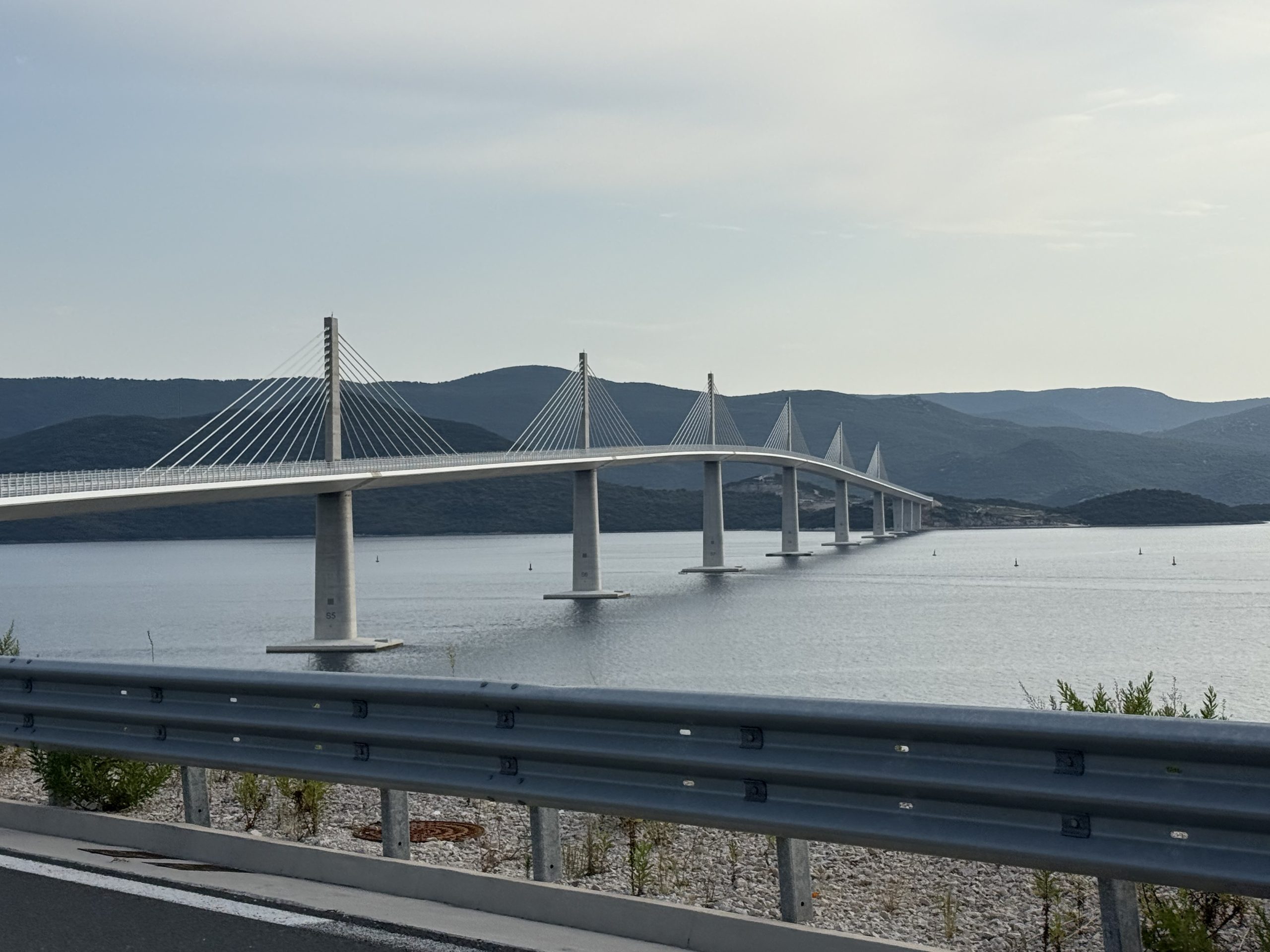
Afternoon: Ston and Mali Ston. Ston is wrapped in a huge system of walls – originally 7 km of walls, forts and towers, started in 1333 after the Dubrovnik Republic took over Ston and Pelješac. Walk a section of the walls between Ston and Mali Ston (tickets from the official city walls webshop, which also sells Dubrovnik’s walls), then eat oysters where they grow. In Mali Ston, Bota Šare runs an oyster bar (bota-sare.hr) and the family-run Hotel Ostrea has the Kapetanova kuća restaurant (ostrea.hr).
Pelješac is also red-wine country – Plavac Mali from the steep Dingač slopes. If you want a tasting, Vina Grgić in Trstenik is one of the best-known cellars (grgic-vina.com); please don’t drink and drive – swap drivers or buy a bottle for the evening.
Evening: Ston to Dubrovnik is about an hour. Return the car (or park it at your accommodation outside the Old Town) and walk down to Stradun for your first look at the lit-up city.
Want to slow down? Add a night on Pelješac
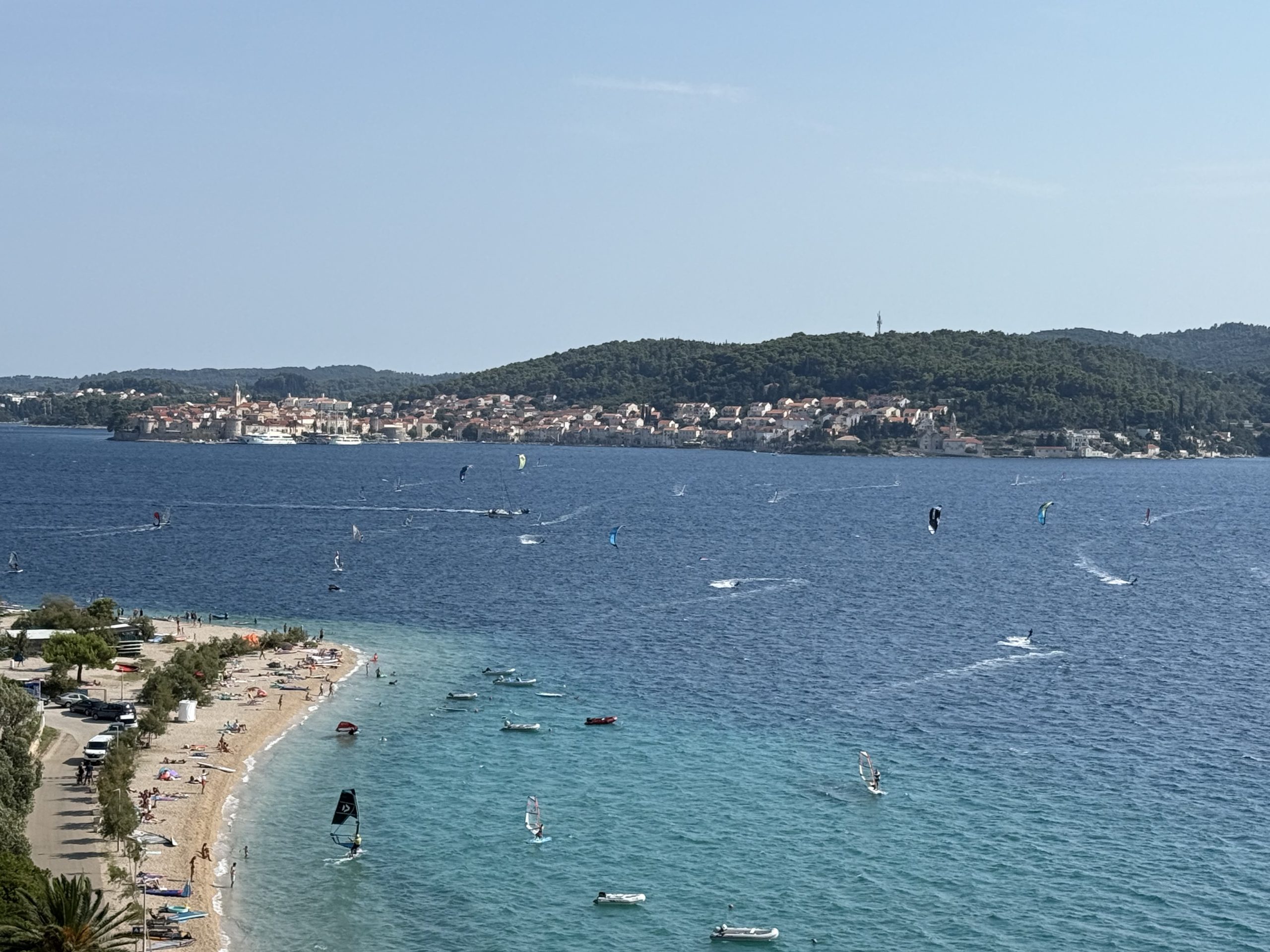
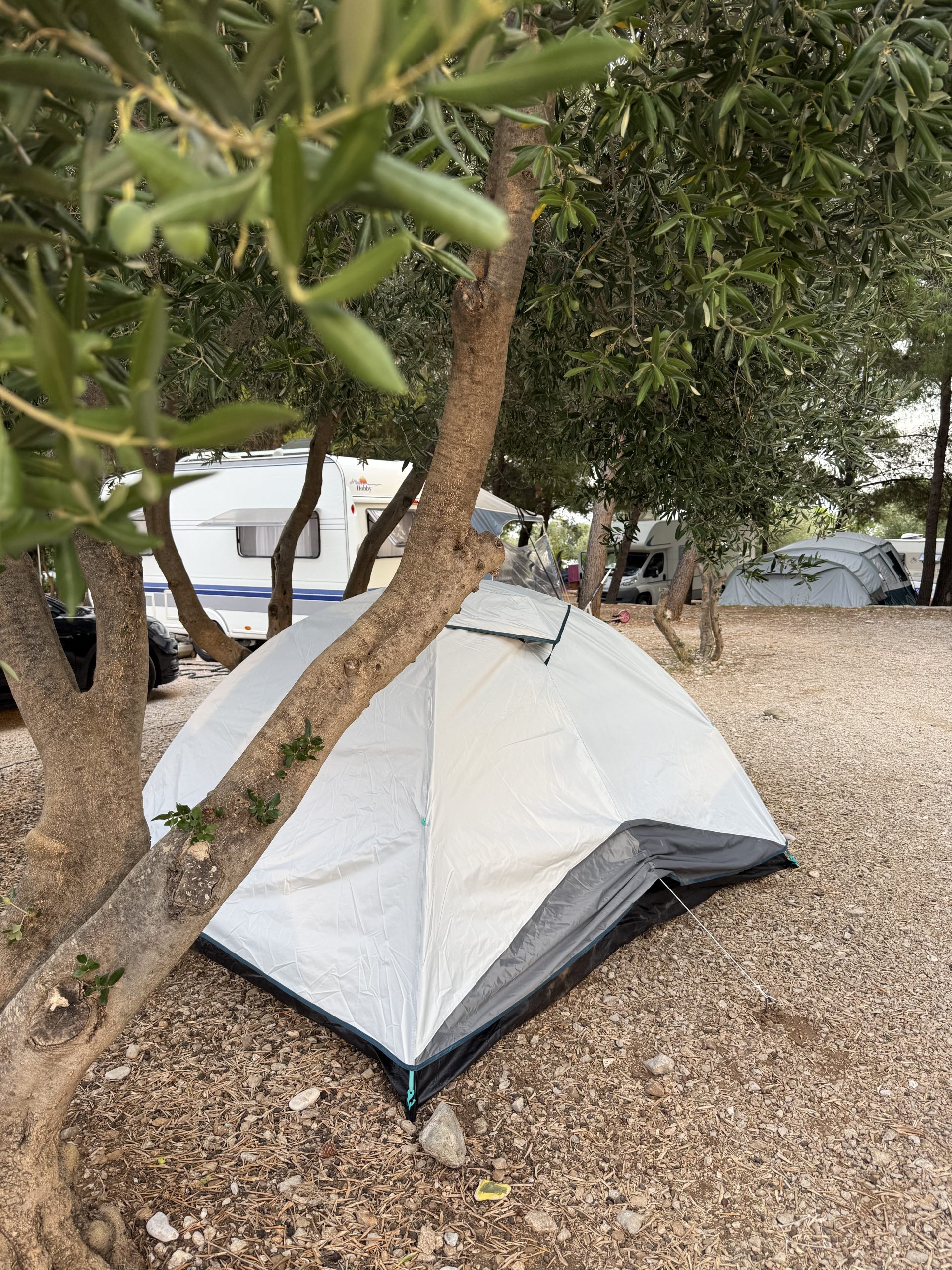
If you can stretch to eight days, sleep on Pelješac. I spent a day driving to Orebić for coffee on the promenade, wandering the abandoned village of Donja Nakovana, swimming at sunset in Lovište and watching the windsurfers in Viganj – and we camped at Nevio Camping near Orebić, run by a family I’ve known for years (nevio-camping.com). The whole day is in my Pelješac one-day guide.

Day 7: Dubrovnik – walls, Stradun and a Buža bar sunset
Dubrovnik needs no introduction, and yes, it’s touristy for good reason. My one-day Dubrovnik itinerary has all my mistakes and favourites; here’s how I’d spend your last full day.
8 am: the city walls. I started at 8 am sharp and it was the best decision of the day – the walk takes about two hours, with a lot of stairs, and by mid-morning the heat and the crowds are intense. When I went, the ticket cost €35 and also covered Fort Lovrijenac; prices have changed since, so check the official webshop for the current fare. Keep the ticket until the end – there’s no re-entry.
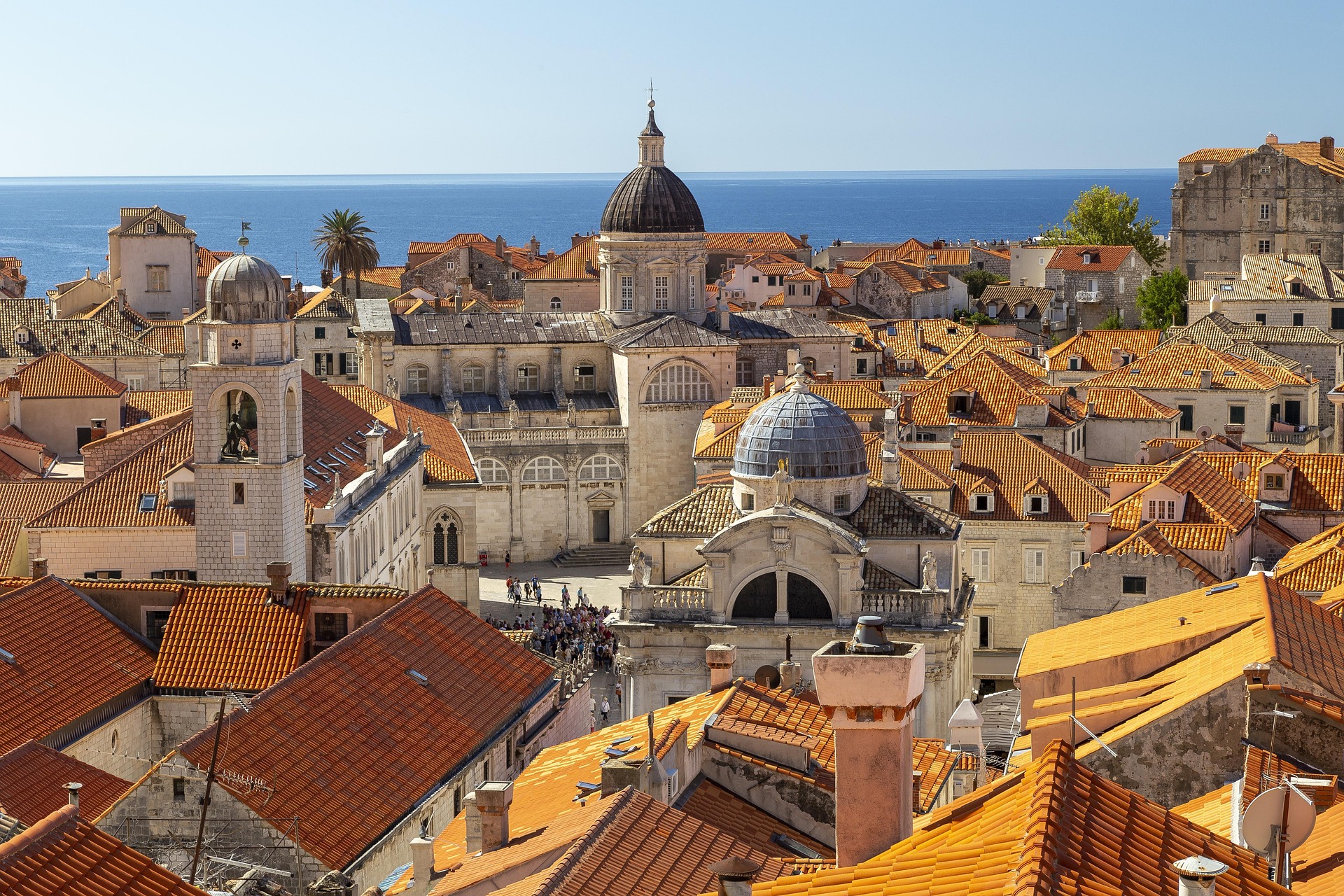

Late morning: walk down Stradun, see the Rector’s Palace, then escape the crowds. For lunch I had my best meal at Konoba Dalmatino near the cathedral (the black risotto!). The lesson I learned the hard way: choose restaurants by reviews, not by the view.
Afternoon – pick one:
- Lokrum island: €30 covers the nature reserve and the return trip on the official Lokrum ferry from the Old City Port; tickets at the Luža office (lokrum.hr, checked November 2026). Swim off the rocks, see the abandoned monastery and the peacocks.
- Mount Srđ cable car: €30 return or €17 one way for adults (Dubrovnik Cable Car, checked November 2026). The view over the walls and the Elaphiti islands is spectacular – I spent almost two hours up there. Note: the cable car closes for annual maintenance in winter and reopens on 1 April.

Sunset: a Buža bar. Squeeze through a hole in the city walls and you’re on a rocky terrace hanging over the sea. It took me twenty minutes (and a local kid) to find it, my beer was €8, and the sunset was worth every cent.
Next morning: the official airport shuttle leaves from town and costs €10 one way or €15 return; from the airport it departs about 30 minutes after every arrival (Platanus shuttle, checked November 2026). Allow about 30 minutes.
Where to stay: hotels for each base
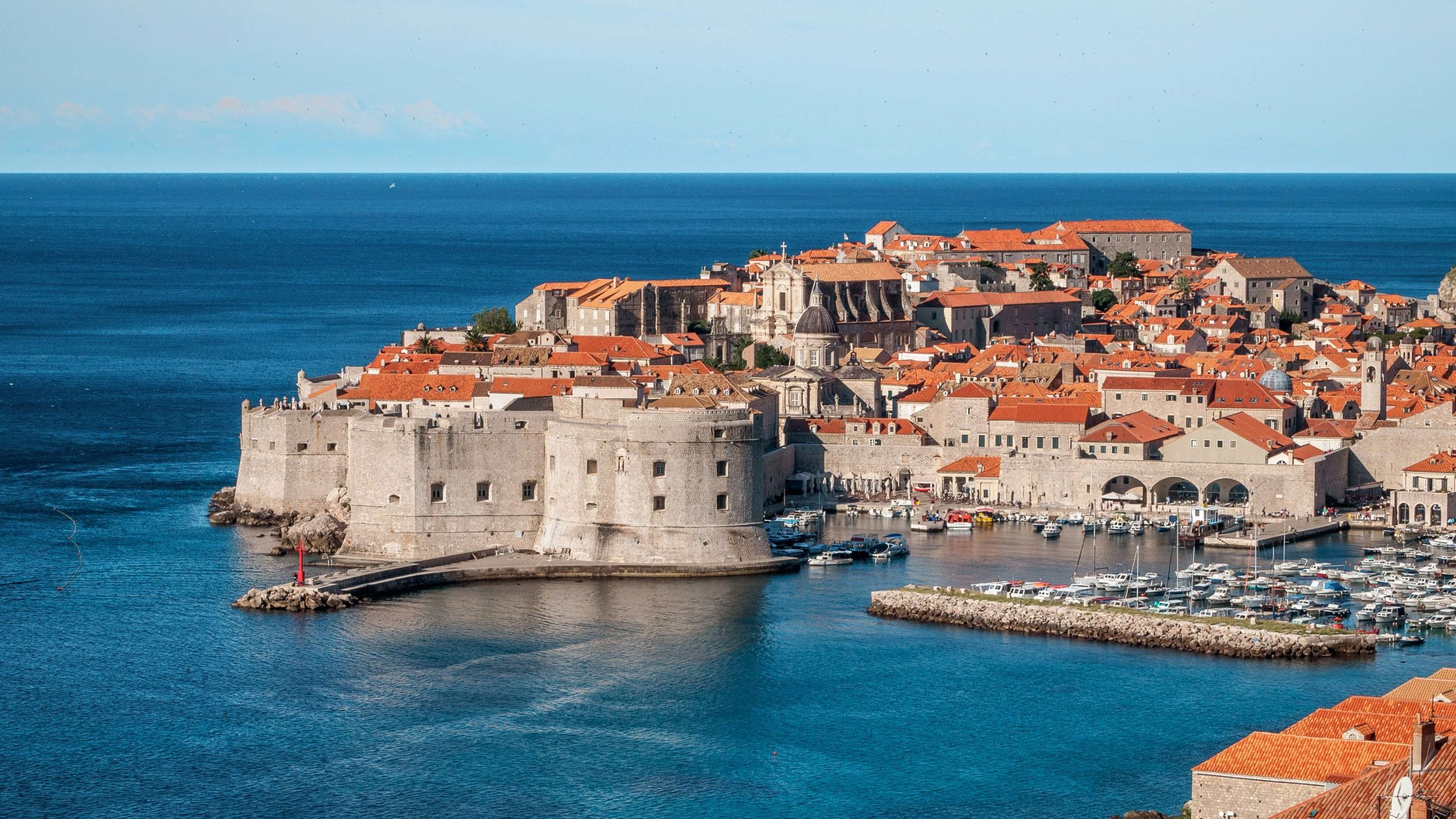
All of these are real properties I checked on their official websites – the places I’d book or send friends to in each base (Nevio is where I camped). I give a budget category rather than prices – rates swing hugely between May and August.
| Base | Luxury | Mid-range | Budget |
|---|---|---|---|
| Zagreb (1 night) | Esplanade Zagreb – the city’s grand historic hotel near the main station | Hotel Jägerhorn – 18-room boutique hotel in the centre, below the Upper Town | Swanky – hostel with its own bar |
| Plitvice (optional) | – | Hotel Jezero – run by the national park; longer stays can extend the one-day ticket | Park campsites Korana and Borje |
| Zadar (2 nights) | Hotel Bastion – boutique hotel in the old town, built on a 13th-century fortress | Hotel Kolovare – by the beach, a short walk from the old town | Boutique Hostel Forum – in the old town centre |
| Split (2 nights) | Hotel Vestibul Palace – inside Diocletian’s Palace | Hotel Peristil – also in the palace, a little simpler | Backpackers Hostel Split – about 5 minutes’ walk to the bus station, ferry port and centre |
| Ston / Pelješac (optional) | – | Hotel Ostrea – small family hotel in Mali Ston | Nevio Camping – pitches and mobile homes near Orebić |
| Dubrovnik (2 nights) | Hotel Excelsior – 5-star on the sea, steps from the Old Town | Hotel Lapad – quieter, about 3 km from the Old Town | Hostel Angelina Old Town – inside the city walls |
Driver’s tip: in Zadar, Split and Dubrovnik ask about parking before you book. Hotels inside the old towns usually have none, and public garages fill up in July and August. Most places also add a small nightly tourist tax.
Tours and experiences worth booking
You can do this whole route on your own, but a few experiences are best booked with the official operator:
| Experience | Operator | What you get | Time / price |
|---|---|---|---|
| Plitvice lake programmes | Plitvice Lakes NP | Marked circuits incl. electric boat and panorama train | Programme C: 4–5 h; ticket €10–40 |
| Krka boat excursions | Krka NP | Boat from Skradinski buk to Visovac monastery island (and on to Roški slap) | 2 h €15 / 4 h €20 (2027) |
| Nin salt pans | Solana Nin | Salt museum and educational salt tour | Check the website |
| Šibenik fortresses | Fortress of Culture Šibenik | St Michael’s Fortress views and summer concerts | Check the website |
| Hvar or Brač day trip | Jadrolinija, Krilo, TP Line | Scheduled catamarans and ferries – no tour needed | Hvar €25 (Jadrolinija) / Supetar €6.50 |
| Wine tasting on Pelješac | Vina Grgić | Pošip and Plavac Mali at a Trstenik winery | Contact the winery |
| Lokrum island | Lokrum Reserve | Official ferry + reserve entry; Trsteno & Lokrum boat trip also offered | €30 (€42 Trsteno & Lokrum) |
| Dubrovnik views | Dubrovnik Cable Car | Ride up Mount Srđ | €30 return |
| Zipline | my zipline guide | Plitvice “Beware of the Bear”, Čikola canyon near Šibenik, Omiš near Split | €39–65 |
Prices checked November 2026 on the operators’ own pages. Prices for the zipline come from my separate zipline guide.
How much does a week in Croatia cost?
Here are the rough daily budgets per person from my Croatia travel guide, based on summer prices on the coast. Travel in May, June or September and you can easily save 30% or more.
| Travel style | Per person per day (summer) | What you get |
|---|---|---|
| Budget | €50–70 | Hostel or campsite, bakery breakfasts, buses, free beaches |
| Mid-range | €100–150 | Private apartment, konoba dinners, a few tours or ferries |
| Comfort | €200+ | Boutique hotels, rental car, boat trips, wine tastings |
And here are the fixed costs for this exact route (checked November 2026), per adult in peak season:
| Item | Cost | Source |
|---|---|---|
| Plitvice ticket (Jun–Sep, before 4 pm) | €40 | NP Plitvice |
| Krka ticket (Jun–Sep, 2027) | €40 (€30 after 3 pm) | NP Krka |
| Split–Hvar catamaran (one way) | €25 | Jadrolinija |
| Split–Supetar ferry (foot passenger) | €6.50 | Jadrolinija |
| Lokrum ferry + entry | €30 | Lokrum |
| Dubrovnik cable car (return) | €30 | Cable car |
| Dubrovnik airport shuttle | €10 | Platanus |
| Motorway tolls, car (Zagreb–Ploče area) | about €34 per car | HAC |
| One-way rental fee (within Croatia) | often €50–200 per car | Avis example |
| Dubrovnik city walls | check current price | Official webshop |
Add parking (Plitvice charges by the hour, Krka’s Lozovac lot is free), fuel and food. Eating at a konoba away from the main square is the easiest way to keep costs down.
Best time for a week in Croatia
My short answer: late May to June, or September to early October. The sea is warm, ferries run full timetables, Plitvice’s waterfalls are full in spring, and you avoid the peak prices and crowds of July and August.
| Season | What to expect on this route |
|---|---|
| April–May | Green parks and roaring waterfalls, mild days; sea still cool. Plitvice €23, Krka €20. |
| June | My favourite: warm sea, long days, full timetables, crowds building. |
| July–August | Hot (often 30 °C+), busiest and most expensive. Book everything early, sightsee early, swim at midday. |
| September–early October | Warm sea, grape harvest, softer light, fewer people. Note the Plitvice summer price runs to 30 September. |
| November–March | Cheapest (Plitvice €10, Krka €7) and quiet, but many island hotels close, ferries thin out and the bura wind can close roads and cancel sailings. |
What to pack, money, safety and scams
What to pack
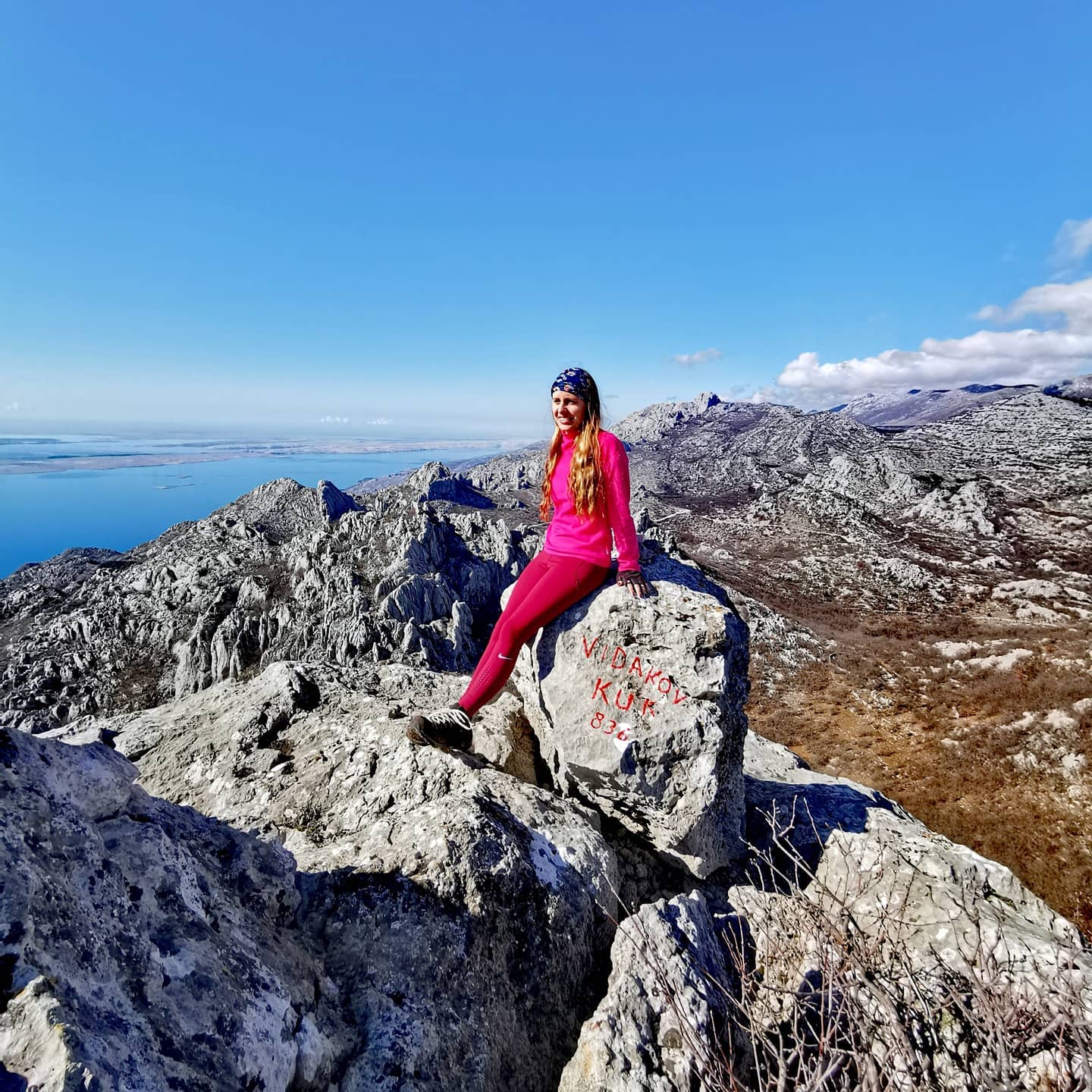
- Water shoes – most beaches are pebbles or rocks, and there are sea urchins.
- Proper walking shoes for Plitvice, Krka, the Dubrovnik walls and Ston’s steps.
- A cover-up – swimwear and bare chests aren’t welcome in the old towns of Split and Dubrovnik.
- Sun hat, high-SPF sunscreen and a refillable bottle – tap water is safe to drink all over Croatia.
- A light jacket for evening ferries and spring or autumn nights.
Money and cards
Croatia uses the euro, and cards work almost everywhere. Still, carry some cash for small konobas, markets, parking machines and island bakeries. Tipping isn’t compulsory – rounding up or about 10% for good service is appreciated.
Entry rules
Croatia is in the EU and Schengen. Non-EU visitors are registered in the EU Entry/Exit System (photo and fingerprints) at the first border, so allow extra time. ETIAS isn’t required yet (no start date as of November 2026) – always check the official EU site, travel-europe.europa.eu, and my Croatia guide for updates.
Safety and scams
- Croatia is one of the safest countries in Europe. Watch for pickpockets in crowded old towns and on busy ferries.
- Parking traps: in Dubrovnik I saw €10 per hour and a €200 daily ticket in the zone right next to the Old Town. Park further out, or return your car on arrival.
- Tourist-trap restaurants: a sea view is not a review. My worst meal in Dubrovnik was at a place with a fantastic view.
- Fish priced by the kilo: ask for the weight and price before it goes on the grill.
- Copycat websites: buy park, ferry and walls tickets only from the official sites linked in this guide – and the same goes for ETIAS when it launches.
Insider tips and tricks
The things I always tell friends, plus a few of the best tips from other travellers on this route:
- Plitvice at opening, or after the price drops. The park is busiest from late morning to mid-afternoon in summer. Be there at opening – or come after 4 pm (3 pm in September), when the ticket drops from €40 to €25, and finish the next morning.
- Do the Lower Lakes first. Starting at Entrance 1 and walking to the Great Waterfall early means you see the most famous view before the crowds.
- Krka from Lozovac. The parking is free and the park bus is included from April to October. Skradin is prettier, but you pay to park there.
- Don’t do both parks if you’re tired. The day after Plitvice, Krka can feel like a smaller version of it. If day 4 looks too long, skip Krka and give Šibenik and Split more time.
- One island, not three. A sensible week is the mainland plus one island day. Island-hopping eats your time in ports.
- Hvar town is a party town in July and August. If you’d rather sleep, Stari Grad and Jelsa on the same island are much calmer.
- Book fast boats and car ferries early in summer. Catamaran tickets are tied to one departure and do sell out; car ferries have long queues.
- Check the wind, not just the sun. The bura can close the Pag Bridge and cancel ferries, especially outside summer.
- Dubrovnik and the cruise ships. Check the cruise schedule and walk the walls early morning or late afternoon.
- Order peka in advance. Lamb, veal or octopus slow-cooked under an iron bell takes hours – call the konoba in the morning for dinner.
- Eat oysters where they grow. Ston’s are the best in the country – and Mali Ston is right on your route.
- Don’t drive after a long-haul flight. That’s why this route starts car-free in Zagreb.
How to adapt this route
- Flying into Split? Do it as a loop: Split → Krka and Šibenik → Zadar → Plitvice → back via Split to Dubrovnik. You’ll drive more, but avoid the one-way fee if you fly home from Split.
- Flying into Dubrovnik? Simply reverse the route and fly home from Zagreb.
- No car? Bus Zagreb → Plitvice (sleep there) → Zadar → Šibenik → Split, catamaran to Hvar, and bus or catamaran on to Dubrovnik. Skip Nin, and visit Ston on a day tour.
- Off-the-beaten-path? Swap Nin for Pag, or add Knin and its fortress near the source of the Krka river.
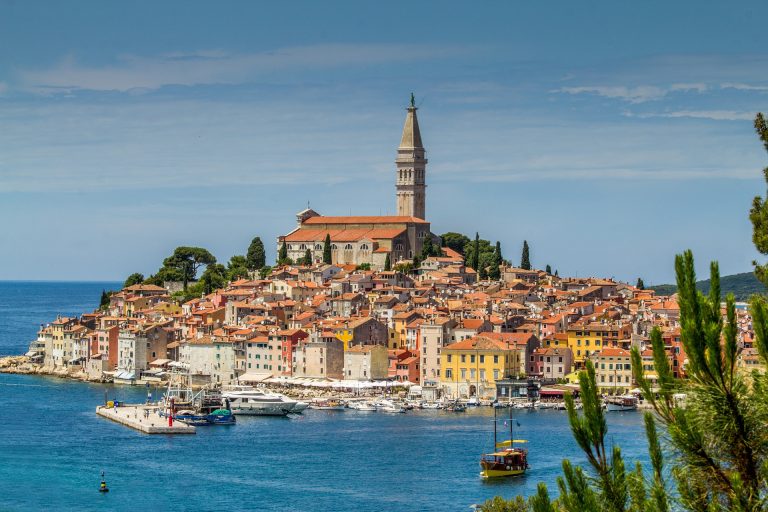
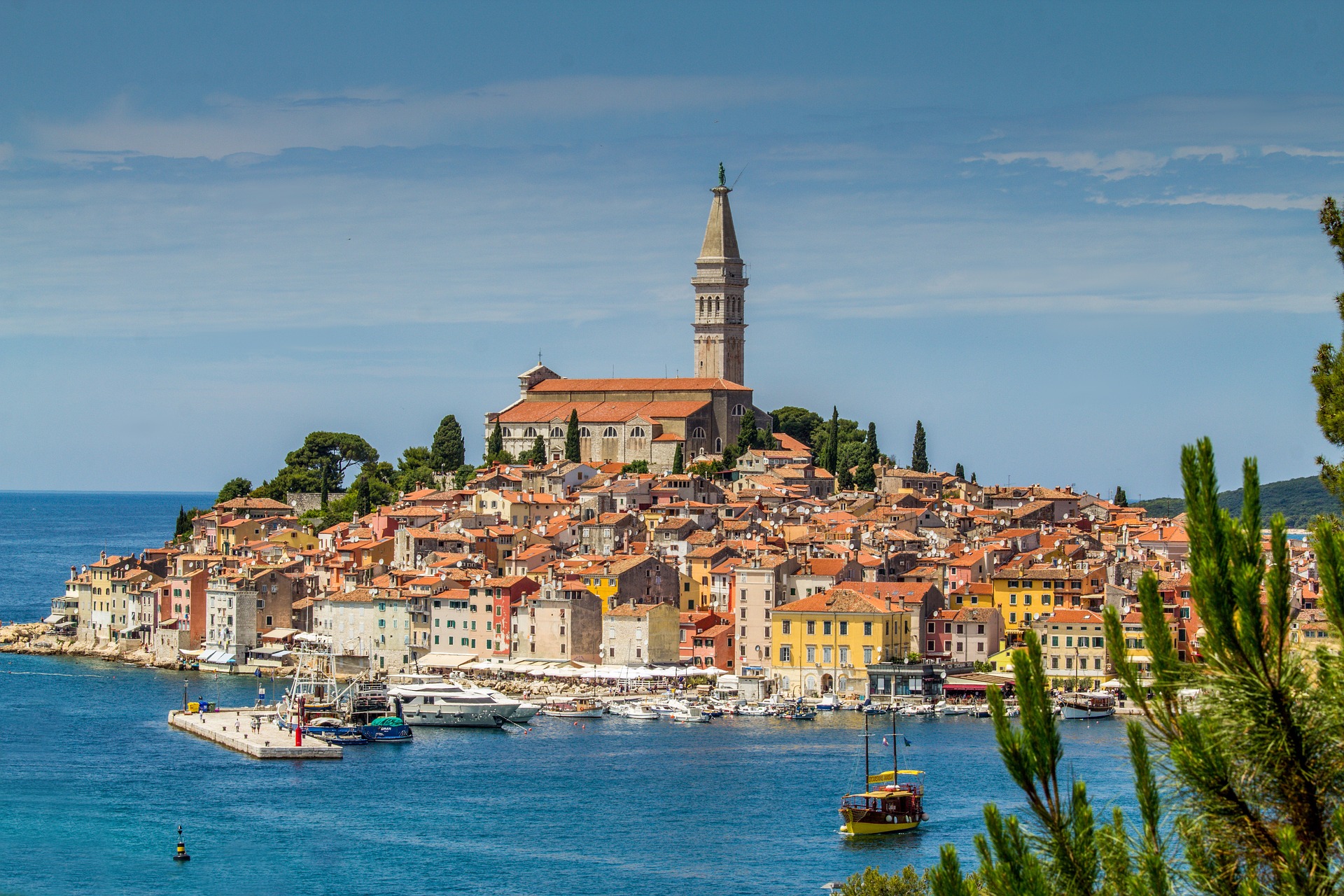
- More time? Read the 10-day Croatia itinerary (adds Istria – Rovinj is my favourite) or the 14-day itinerary for a full north-to-south trip with more islands.
7 days in Croatia: FAQ
Is 7 days enough for Croatia?
Yes – a week is enough for the classic route from Zagreb to Dubrovnik with Plitvice, Zadar, Krka, Split, one island day and Ston. You won’t see Istria or many islands, so pick one island and save Istria for a longer trip.
What is the best 7-day route in Croatia?
For a first trip: Zagreb (1 night), Plitvice on the way to Zadar (2 nights), Krka and Šibenik on the way to Split (2 nights, with a day trip to Hvar or Brač), then Pelješac and Ston on the way to Dubrovnik (2 nights). Fly into Zagreb and home from Dubrovnik.
Do I need a car for a week in Croatia?
Not strictly – buses connect every stop, and ferries take you to the islands. But a car makes Plitvice, Krka, Nin and Ston far easier. Rent it one way from Zagreb to Dubrovnik, pick it up on day 2 and drop it on arrival in Dubrovnik.
How much is the one-way car rental fee in Croatia?
It depends on the company and location. Avis, for example, says a one-way rental within Croatia costs between €50 and €200, while a drop-off in another country costs €300 to €5,000 (checked November 2026). Book the one-way option when you reserve.
How much are Plitvice and Krka tickets?
Plitvice costs €40 for adults from June to September (€25 after 4 pm in June–August and after 3 pm in September), €23 in April, May and October, and €10 in winter (2026). Krka’s 2027 price list shows €40 in June–September (€30 after 3 pm), €20 in April, May and October and €7 in winter.
Hvar or Brač for a day trip from Split?
Hvar for the lively town, the fortress and boat trips to the Pakleni islands; Brač for Zlatni Rat beach. Hvar is easier as a day trip on the catamaran (about an hour); Brač needs the ferry to Supetar plus a bus or drive to Bol.
Do I have to cross Bosnia to drive to Dubrovnik?
No. Since the Pelješac Bridge opened in 2022 you can drive from Split to Dubrovnik entirely in Croatia, which avoids the Neum border crossing.
When is the best time for 7 days in Croatia?
Late May to June and September to early October: warm sea, full ferry timetables, and fewer crowds and lower prices than July and August.
How much does a week in Croatia cost?
Roughly €50–70 per person per day on a budget, €100–150 mid-range and €200+ for comfort in summer, plus fixed costs such as Plitvice (€40), Krka (€40), ferries and the one-way car fee.
More Croatia itineraries
Plan the rest of your trip: 3 days in Croatia · 4 days in Croatia · 5 days in Croatia · 10 days in Croatia · 14 days in Croatia · Croatia travel guide.
One-day guides for this route: Zadar · Pag Island · Šibenik · Knin · Trogir · Makarska · Pelješac · Dubrovnik · Karlovac · Samobor · Velika Gorica · Ziplines in Croatia.

Hotel, tourist board or travel brand in Croatia?
I create honest, practical one-day itineraries read by travellers planning their next trip – plus photos, drone shots and Instagram stories from the road. I’m open to collaborations with hotels, apartments, restaurants, wineries, tour operators and destinations across Croatia: sponsored itineraries, destination features, press trips and social media campaigns.
Work with me Get in touch
Miki Kokica
Travel blogger behind One Day Itinerary. I test every route myself and write honest, practical guides so you can make the most of a single day anywhere.
Work with me Instagram