Hi, I’m Miki! Four days is the trip length I get asked about most: long enough to feel you’ve really seen Croatia, short enough that you have to make smart choices. My answer is not another Split-or-Dubrovnik city break. With four days my pick is the classic north-to-south road trip that shows you three completely different faces of the country – a relaxed Central European capital, the turquoise lakes and waterfalls of Plitvice, and the Adriatic coast at Zadar, where the sea literally plays music at sunset.
This plan starts in Zagreb and ends on the coast, so you can fly into Zagreb and out of Zadar (or simply drive back). It comes from my own time in Zagreb, at Plitvice, in Zadar and on Pag – exactly what I tell friends who ask me for a four-day plan. Prices and timetables come from official pages I checked in November 2026.
Day 1 – Zagreb: Upper Town by funicular, the noon cannon, Dolac market, the cathedral and the Museum of Broken Relationships.
Day 2 – Zagreb → Rastoke → Plitvice Lakes: watermill village on the way, Upper Lakes in the quiet late afternoon, sleep next to the park.
Day 3 – Plitvice → Zadar: Lower Lakes and the Great Waterfall at opening time, drive to the coast, Roman Forum and the Sea Organ sunset.
Day 4 – Zadar + Nin (or Pag): bell tower and market in the morning, the world’s smallest cathedral, Queen’s Beach and salt pans in Nin – or the moon-like island of Pag.
Is 4 days in Croatia enough?
Four days is enough for one region done properly – not for the whole country. Croatia is long and narrow: Zagreb to Dubrovnik is a full day on the motorway, and island ferries eat time. The classic mistake is squeezing Zagreb, Plitvice, Split and Dubrovnik into four days and spending more time in the car than at the places themselves.
This route works because every leg is short: Zagreb to Plitvice is about two hours, Plitvice to Zadar is another 1.5–2 hours, and Nin and Pag are close to Zadar. You get a city, a national park and the sea with only one longer travel day. If you prefer to stay in one base by the sea, my 3-day Croatia itinerary is built around Split or Dubrovnik instead, and with more time you can continue south with the 5-day, 7-day, 10-day or 14-day plans.
The route: overview table
| Day | Route | Highlights | Overnight |
|---|---|---|---|
| 1 | Zagreb | Upper Town, funicular, noon cannon, Dolac market, cathedral, Museum of Broken Relationships | Zagreb |
| 2 | Zagreb → Karlovac/Rastoke → Plitvice (approx. 2–2.5 h driving) | Rastoke watermills, Plitvice Upper Lakes in the afternoon | Plitvice Lakes |
| 3 | Plitvice → Zadar (approx. 1.5–2 h) | Great Waterfall at opening, Zadar old town, Roman Forum, Sea Organ sunset | Zadar |
| 4 | Zadar → Nin (approx. 20 min) or Pag (approx. 1 h) | Market and Kalelarga; Nin’s tiny cathedral, Queen’s Beach and salt works – or Pag | Zadar / fly home |
Car or bus? The plan is written for a rental car, because that lets you stop in Rastoke and drive from Plitvice to Zadar on your own schedule. It also works by bus with small changes – I explain the bus version under each day and in the transport section.
Day 1: Zagreb – the capital in one easy day
Base: Zagreb. Arriving by plane? The Pleso prijevoz shuttle runs from Zagreb Airport to the main bus station for €8 one-way and takes about 35–40 minutes; city bus 290 (ZET) is the cheaper, slower alternative at about 45–50 minutes (checked November 2026).
Zagreb is a green, café-loving city with Austro-Hungarian facades, and its old core is easy to see on foot in one day. Spare hour near the airport? My Velika Gorica guide covers the town right next to it.
Morning: Ban Jelačić Square, Dolac market and the cathedral
I always start on Ban Jelačić Square, the main square. Right behind it are the red umbrellas of Dolac, Zagreb’s open-air market, liveliest in the morning. A few steps away is Zagreb Cathedral with its twin spires. It was damaged in the 2020 earthquake and reopened to visitors on 17 April 2026 after six years of works, open daily from 8:00 to 19:00; restoration is still going on around it, so don’t be surprised by some scaffolding.
If you like context, join the free walking tour by Free Spirit Tours: about two hours, meeting at the orange umbrella at Manduševac fountain on the main square. It covers the cathedral, Dolac and Tkalčićeva and works on a pay-what-you-want basis, paid to the guide in cash at the end.
Midday: the funicular, the noon cannon and Upper Town
Walk to the bottom of the funicular (uspinjača) on Tomićeva street. It climbs its 66-metre track in about 64 seconds, runs every 10 minutes and costs €0.66 (checked November 2026). Time it so you’re at the top, by Lotrščak Tower, just before 12:00 – every day at noon the Grič cannon is fired from the tower.
Then wander through Gornji Grad (Upper Town): St. Mark’s Church with its colourful tiled roof, the Stone Gate with its candle-lit shrine, and the quiet streets of Gradec. The Strossmayer promenade gives you the classic view over Lower Town’s red roofs.
Afternoon: Museum of Broken Relationships and Tkalčićeva
The Museum of Broken Relationships (Ćirilometodska 2) is the one museum I’d pick if you only have time for one. It displays objects donated by people after a break-up, each with its story – funny, sad and very human. It opens 9:00–22:00 in summer and 9:00–21:00 from October to May; adults pay €9, students and seniors €7 (checked November 2026).
Afterwards, walk down to Tkalčićeva street, a former stream bed lined with cafés and bars. Zagreb sits here for hours over one coffee – do the same.
Evening: dinner and an early night
Have dinner in Lower Town – try štrukli, the baked cheese pastry – and don’t stay out too late. Got an extra half-day in Zagreb? Samobor, with its famous kremšnita cake, is an easy add-on – see my Samobor one-day guide.
Day 2: Zagreb → Rastoke → Plitvice Lakes
Driving: about 2 hours to Plitvice on the A1 to Karlovac and then the D1/D429 road; add 30–60 minutes for a stop in Rastoke. Overnight: next to the national park.
Morning: Karlovac and the watermill village of Rastoke
Leave Zagreb after breakfast and take the motorway to Karlovac (toll for a car from Zagreb: €2.80 (checked November 2026)). Karlovac is the star-shaped town of four rivers – if you want to stop for coffee, my {g(‘karlovac’, ‘Karlovac one-day guide’)} has the details. From there the old state road continues south towards Slunj.
Just before Plitvice, stop in Rastoke, a tiny village where the Slunjčica river splits into little waterfalls between old wooden watermills before it flows into the Korana. It’s my favourite leg-stretch on this drive, roughly 30 minutes before the park.
Afternoon: the Upper Lakes when the day-trippers leave
Here is the trick that changes Plitvice completely: don’t arrive at 10:00 with every tour bus from Zagreb and Zadar. Check into your hotel first, have lunch, and enter the park in the afternoon. Every time I visit Plitvice I do it this way, because late afternoon and early morning feel like a different park, with calmer boardwalks and softer light.
From June to August the park even rewards you for it: adult tickets cost €40 before 16:00 and €25 after 16:00 (in September the switch is at 15:00) (checked November 2026). In April, May and October a day ticket is €23, and from November to March just €10. Children under 7 enter free. Buy on the {ext(PLIT_PRICE, ‘official price list’)} and webshop: your ticket is valid for the entrance and time window you choose, you can’t enter earlier but you may be up to one hour late, and the webshop only takes cards.
My favourite afternoon route: start at Entrance 2 and follow programme E: about 2–3 hours and 5.1 km through the Upper Lakes, with a short electric-boat ride across Lake Kozjak and the panoramic train back to the start (both included in the ticket). The Upper Lakes are the green, wooded part with Veliki and Mali Prštavac falls and countless small cascades. In summer the boats and trains run into the early evening, but check the last departures at the entrance. Details of every route are on the park’s lake tour programmes page.

Evening: stay in the park (and use the hotel-guest rule)
Sleeping next to the park is the best decision on this trip. According to the park’s FAQ, guests of the national park hotels and campsites buy the first-day ticket and then enter free on the following days – you just have to extend the ticket at reception before your next visit. That means one ticket covers your afternoon walk and tomorrow’s early-morning Lower Lakes. Ask at check-in to be sure it applies to your booking.
Dinner options around the park are limited, so half board at your hotel is a practical choice.
By bus instead: FlixBus runs Zagreb bus station → Plitvice in about 1 hour 50 minutes, with about two departures a day (6:45 and 14:30 in November 2026) (checked November 2026). Stops are right by Entrances 1 and 2, where luggage storage is free. In summer, take the afternoon bus, check in, and follow the same plan; the rest of the year, take the morning bus.
Day 3: Plitvice’s Lower Lakes, then the coast at Zadar
Driving: about 1.5–2 hours from Plitvice to Zadar. By bus the fastest service takes 1 h 45 min (up to 2 h 40 min with stops).
Early morning: the Great Waterfall before the crowds
Be at Entrance 1 when the park opens. Take programme A (2–3 hours, 3.5 km): down into the canyon of the Lower Lakes, along Novakovića Brod, Kaluđerovac, Gavanovac and Milanovac lakes, to the Great Waterfall – the biggest waterfall in Plitvice and in all of Croatia – and back up the eastern rim, where the viewpoints give you the postcard shot. If you didn’t visit yesterday, do programme C instead (4–5 hours, 8 km, Lower and Upper Lakes with boat and train).
Swimming is strictly forbidden in the lakes and drones are not allowed. Wear shoes with grip: the planks are often wet, and walking poles get stuck in the gaps between them.
Late morning: drive to the coast
Check out and drive to Zadar. The road crosses the Lika plateau and then drops towards the sea. Most navigation apps take you back onto the A1 motorway for the last stretch; for reference, the full Zagreb–Zadar centar toll for a car is €17.60 (checked November 2026), so your partial stretch costs less.
Afternoon: Zadar old town
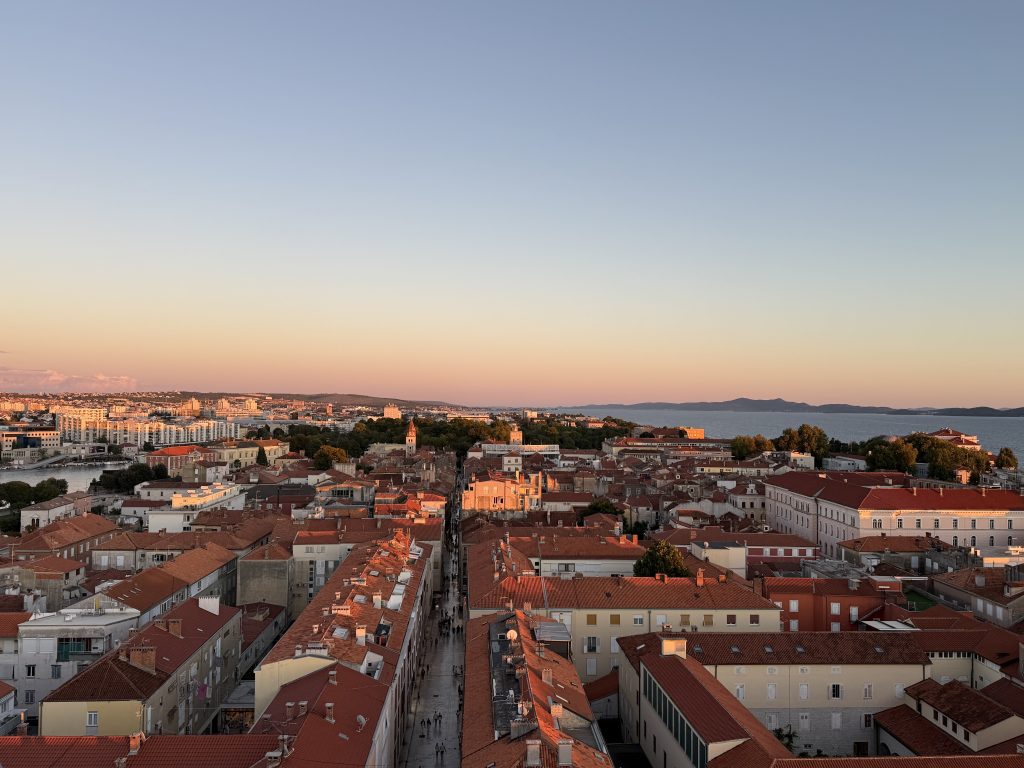
Zadar is the city that surprised me most on this coast. Before my first visit I’d heard it was a ‘quieter Split’ – but it has a magic of its own, and I wrote all about it in my one day in Zadar guide. Start on Kalelarga, the marble main street, and walk to the Roman Forum, the largest on the eastern side of the Adriatic. I spent a good hour wandering among the columns, watching kids play hide-and-seek on two-thousand-year-old ruins.

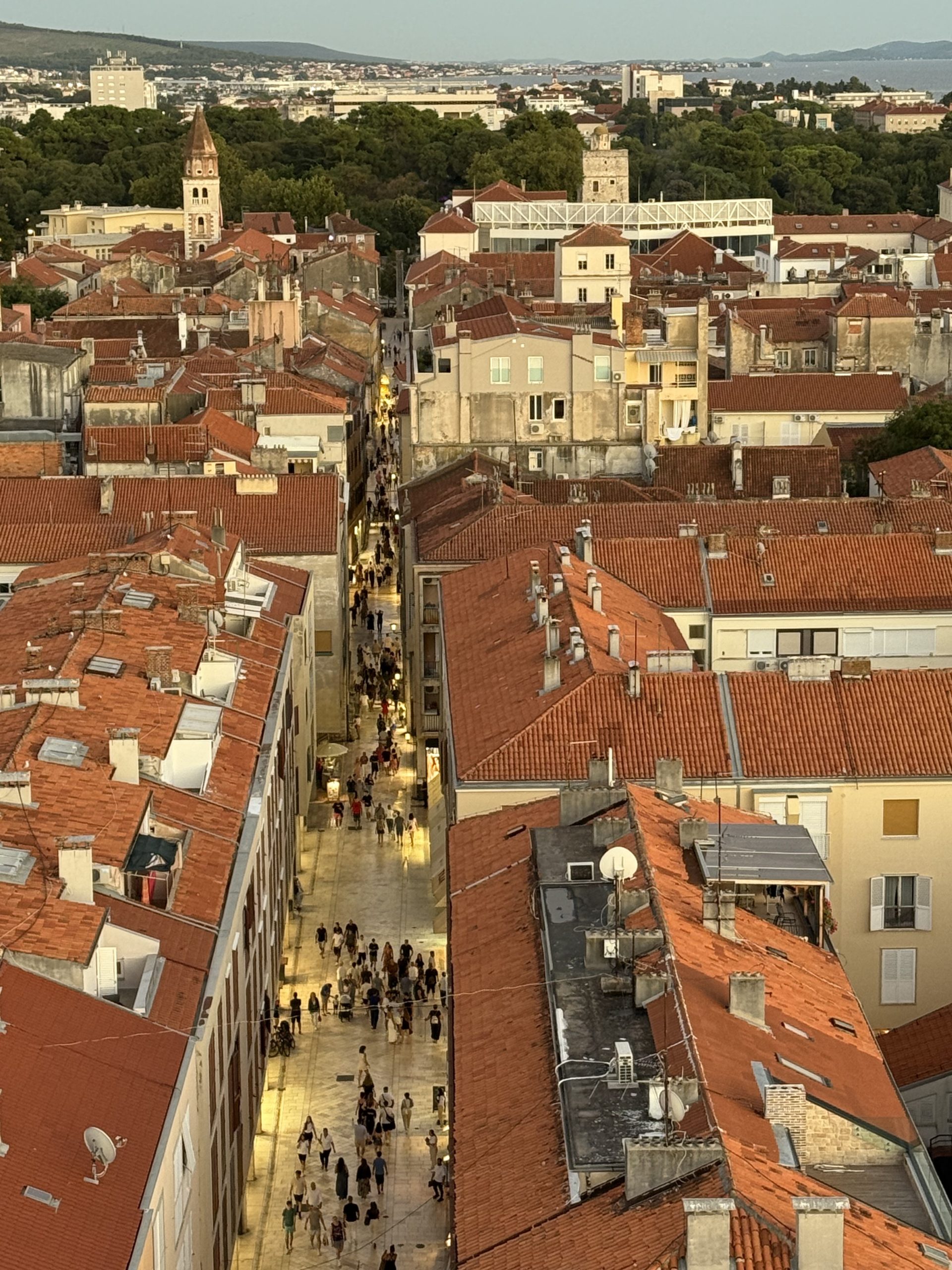
Right next to the Forum is St. Donatus, the 9th-century round church that is the largest pre-Romanesque building in Croatia (it was €5 to go in when I visited). Then climb the bell tower of St. Anastasia’s Cathedral – I counted 183 steps (or was it 184? I lost count halfway) – for a 360° view over the peninsula and the islands. It cost about €4 when I was there; check the current price at the door.
If you have time, walk on to Five Wells Square and the Land Gate from 1543, part of the UNESCO-listed Venetian defence works. For a tiny local experience, cross the harbour with the barkajoli – rowing boatmen who take you 71 metres across the water in about a minute and a half, a tradition centuries old.
Evening: Sea Organ and Greeting to the Sun
Head to the tip of the peninsula about 30–45 minutes before sunset. The Sea Organ, designed by architect Nikola Bašić, is a set of marble steps with pipes underneath that the waves play like an instrument. I found a spot on the steps, closed my eyes and just listened – one of the most peaceful moments I’ve had anywhere. Next to it is the Greeting to the Sun, a 22-metre circle of 300 glass plates that soak up sunlight all day and turn into a light show after dark.


For dinner I loved Restaurant Foša by the Land Gate, with a harbour terrace – a bit upscale but worth it. More casual: Konoba Skoblar (I had a great black risotto there) or Pizzeria Dalmacija, making wood-fired pizza since 1961.
Day 4: Zadar morning + Nin (or Pag)
Today you choose: the gentle Nin option, which leaves time for the beach and an evening flight, or the bigger Pag option for a full day on the island. Both start with a Zadar morning.
Morning: market, Kalelarga coffee – or a kayak
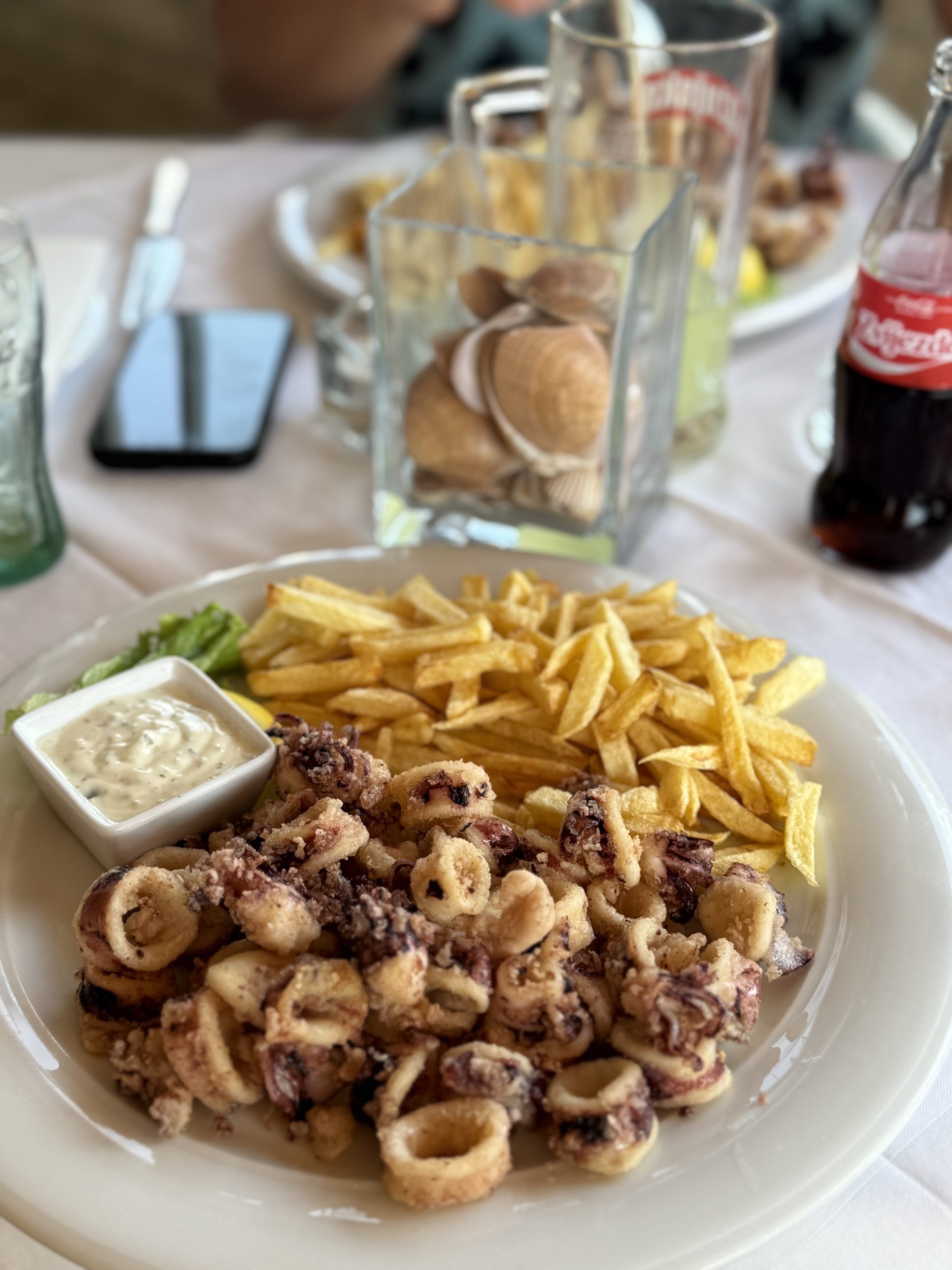
Start with coffee on Kalelarga – my first-morning ritual in Zadar – and then go to the market by the harbour. I bought local cheese and prosciutto there for a picnic lunch. Sporty alternative: the 3-hour sea-kayak tour with Kayak Adventure Zadar (from about €50 with gear, dry bag and guide, starting from Puntamika near Borik beach (checked November 2026)).
Option A – Afternoon in Nin (about 20 minutes from Zadar)
Nin is a tiny town on an islet in a lagoon, joined to the mainland by two little stone bridges, and it was one of the first royal towns of medieval Croatia. Three things to do:
- The Church of the Holy Cross – a 9th-century church of just 7.8 × 7.6 metres, often called the smallest cathedral in the world. Its windows are positioned so the sunlight works like a calendar, marking the solstices and equinoxes.
- Queen’s Beach (Kraljičina plaža) – a long, very shallow sandy beach, rare on the Croatian coast and great for kids. Nearby you’ll see people covered in the local healing mud.
- Solana Nin salt works – the educational salt tour lasts 45 minutes and costs €15 per person or €35 for a family; English tours run Monday to Friday at 9:00, 11:00, 17:00 and 19:00 (times can change) (checked November 2026). You only see salt crystallising in summer. The House of Salt museum is €6. Buy a bag of their flower of salt – it’s my favourite edible souvenir from this area.
Rub the toe of the bronze statue of Gregory of Nin, the medieval bishop who fought for church services in Croatian – the gilded toe is said to bring luck. Then head back to Zadar for a last sunset, or straight to the airport.
Option B – a full day on Pag
If you have the whole day, go to Pag, the ‘moon island’ I keep returning to. Drive over the Pag Bridge (about an hour from Zadar) and pull over on the left right after it: a short climb takes you to Fortica, a ruined fortress with a panoramic view of the sea, the bridge and the bare white rocks. It’s the perfect first stop.

Continue to Pag town, a maze of stone houses where local women still make Pag lace, a UNESCO-listed craft. Try baškotini, the sweet rusks made by the Benedictine nuns, and have Pag lamb at Konoba Bodulo – the sheep graze on wild herbs salted by the bura’s sea spray, and you can taste it. Something quicker? Tasty makes what I think is the best cheeseburger on the planet.
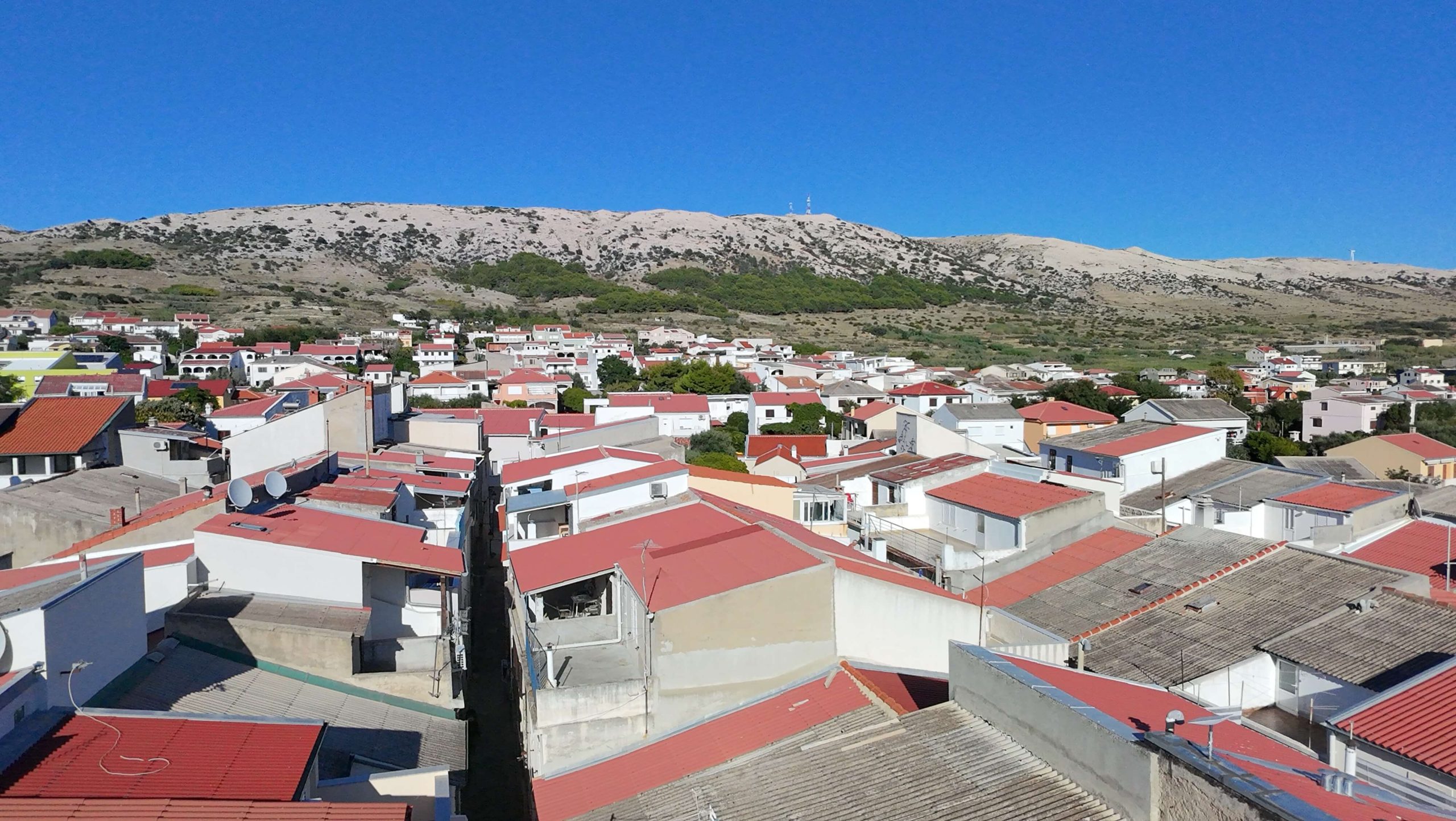
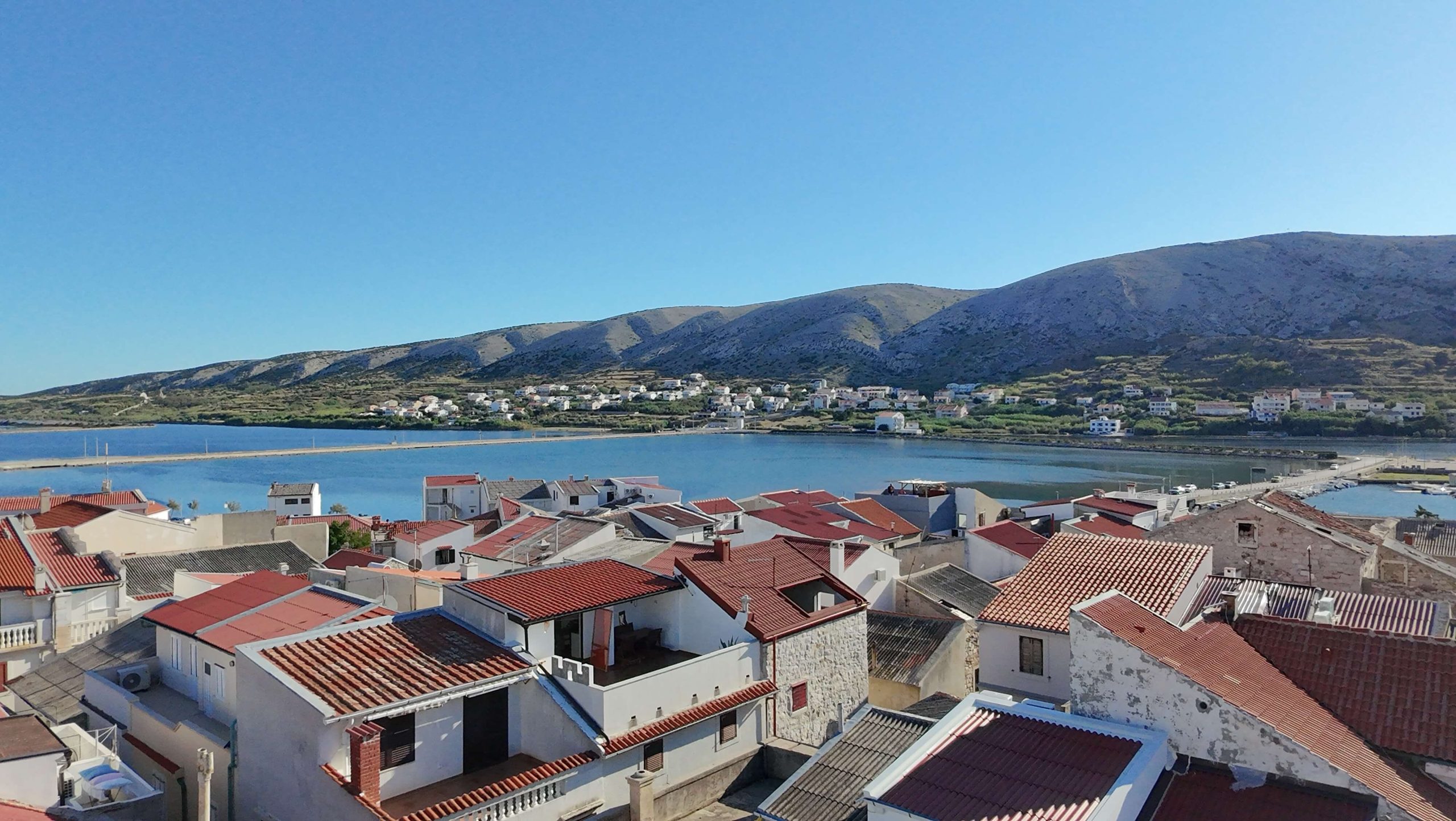
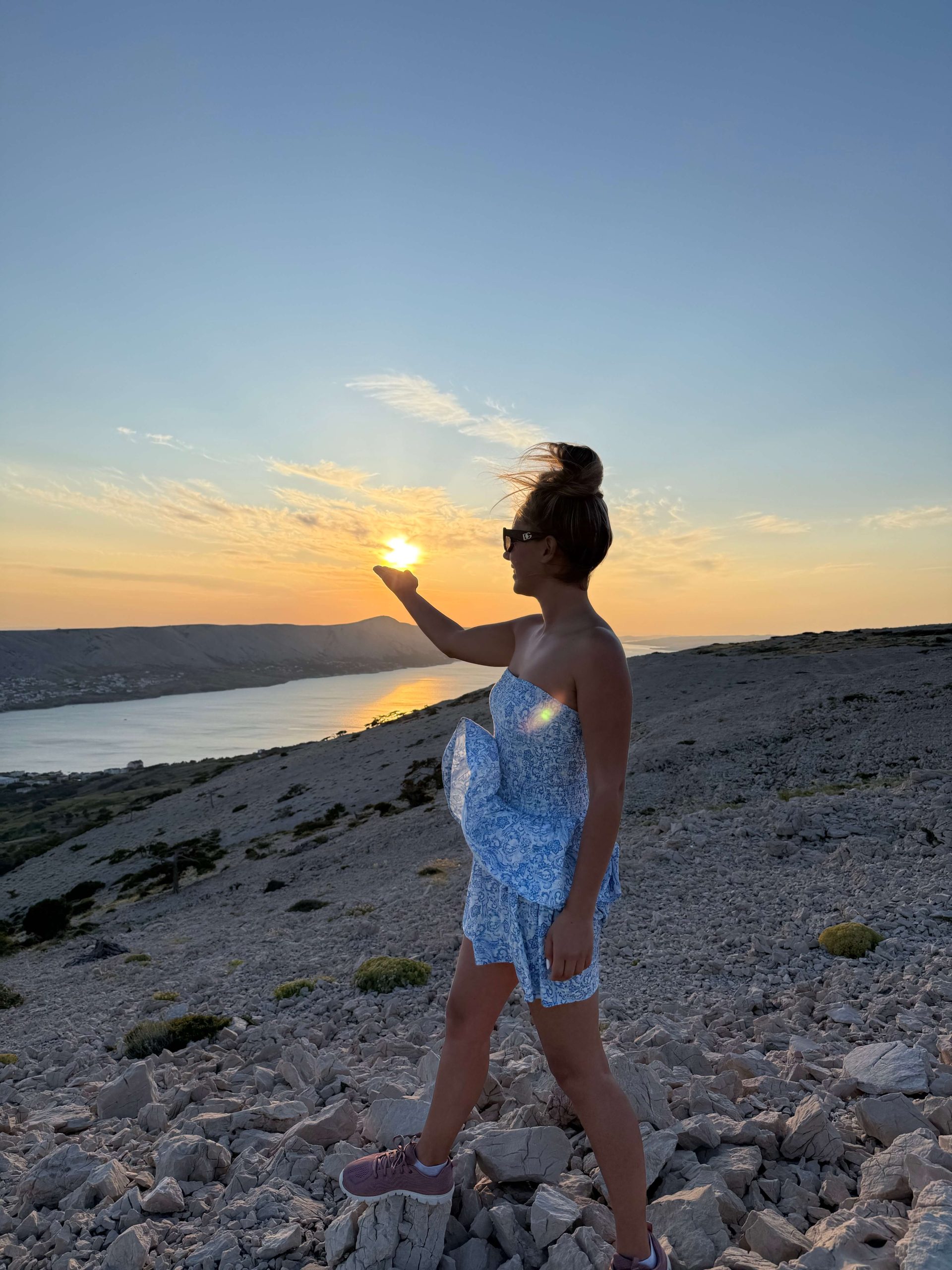
In the afternoon, head to Metajna for the Life on Mars trail and the beaches of Ručica and Beritnica, where crystal-clear water meets white, bare hills. Stay for sunset – the light on Pag’s rocks is unreal. Everything else, from the via ferrata to Novalja pizza and Zrće, is in my Pag one-day guide.

Want a boat day instead? Swap Day 4 for a full-day trip to Kornati National Park and Telašćica Nature Park. One option is Croatica’s full-day boat trip from Zadar: about 9 hours, with a sandwich breakfast, lunch of grilled fish or meat, wine and both park tickets included, from €59.99 (checked November 2026).
Alternative 4-day route: Split and Hvar
If you fly into Split, or you want islands more than lakes, this is the version I would do instead. It overlaps with my 3-day Croatia itinerary, which is built around one base, so here the fourth day goes to the island of Hvar:
| Day | Plan | Overnight |
|---|---|---|
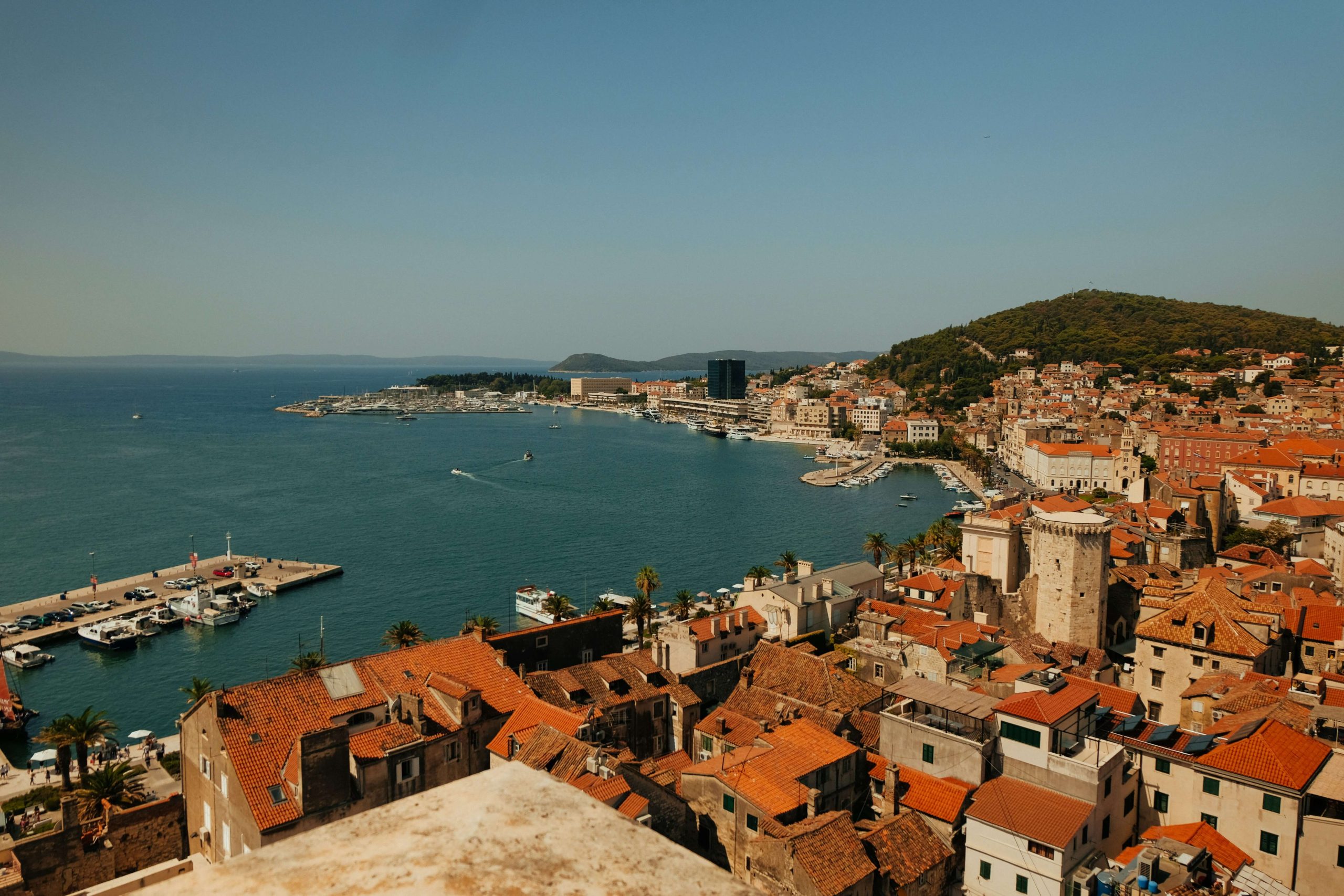
| 1 | Split: Diocletian’s Palace, the Riva and sunset on Marjan hill | Split |
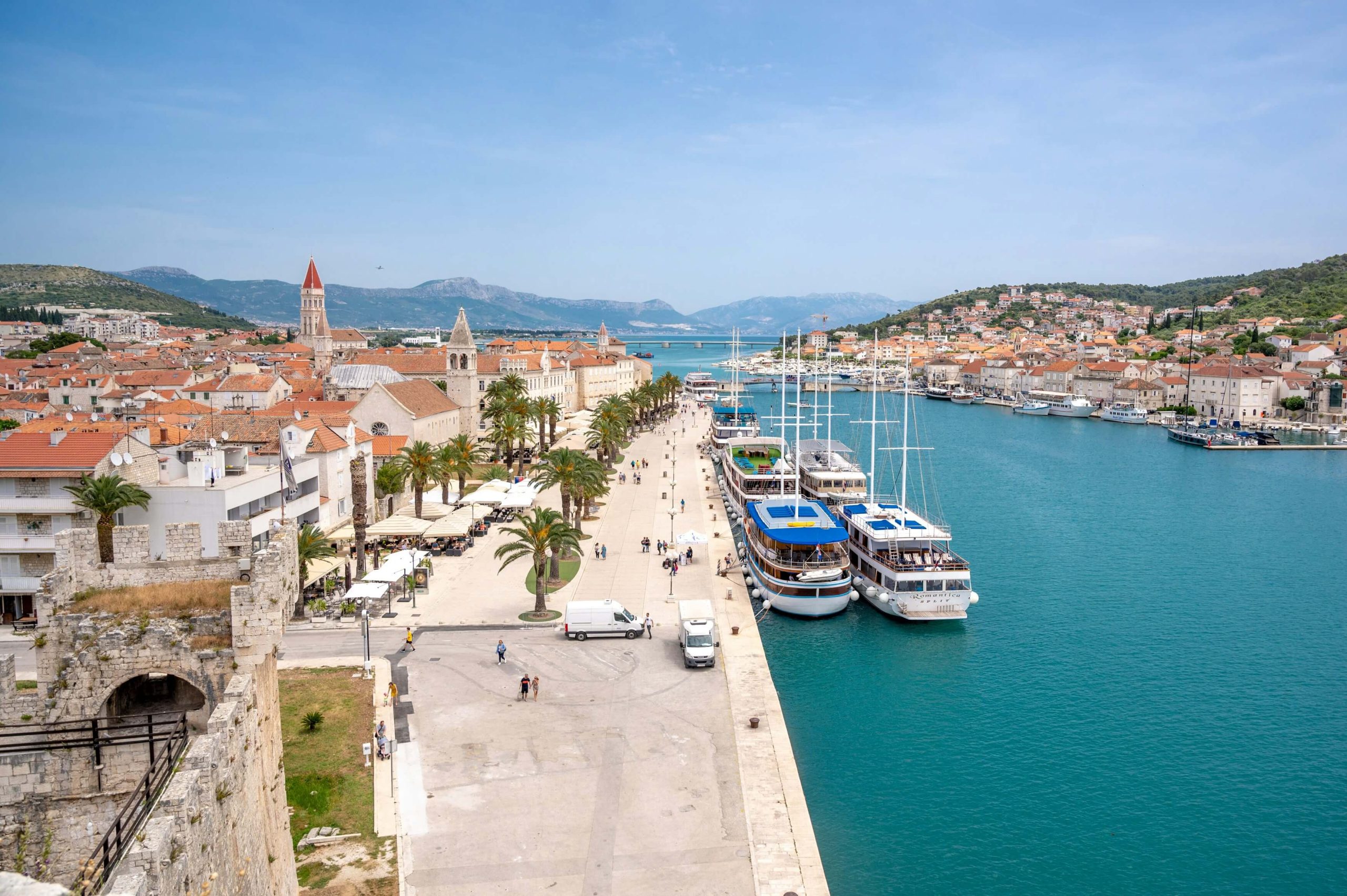
| 2 | Morning in Trogir (the UNESCO island town near Split Airport), afternoon beach in Split – or the Makarska Riviera | Split |
| 3 | Catamaran to Hvar town, fortress viewpoint, swim and evening on the harbour | Hvar |
| 4 | Hvar morning (beach or boat to the Pakleni islands), catamaran back to Split for your flight | — |
The Jadrolinija catamaran from Split to Hvar town takes about 1 hour 5 minutes and cost €25 per person in the 2026 timetable, with €5 for each extra piece of baggage (checked November 2026). Tickets are sold on Jadrolinija’s website, and a ticket also reserves your seat on that departure – in July and August book ahead.
Where to stay: hotels for each base
I checked the official website of every property below. Prices change daily, so I give a budget category instead.
Zagreb (1 night)
- Luxury: Esplanade Zagreb – the grand old hotel next to the railway station, a 10-minute walk from the main square.
- Mid-range: Hotel Dubrovnik – a classic city-centre hotel right by Ban Jelačić Square, so you can walk everywhere on Day 1.
- Boutique: Hotel Jägerhorn – a small boutique hotel on Ilica in the old centre, a few steps from the funicular.
- Budget: Stay Swanky – dorms and budget rooms in several central buildings, with its own bar for meeting other travellers.
Plitvice Lakes (1 night)
- Inside the park: Hotel Jezero – the national park’s own hotel near Entrance 2 and the only one open all year. Being a park hotel, it’s the easiest way to use the free next-day entry rule.
- Comfort: Hotel Degenija – a 4-star boutique hotel with about 50 rooms, a restaurant and a spa, 5 km from Entrance 1 in Selište Drežničko.
- Budget: Camp Korana – the park’s own campsite with bungalows, with an organised shuttle to the park entrance (ask reception for times).
Zadar (2 nights)
- Luxury: Hotel Bastion – on the old city walls of the peninsula, with a restaurant and spa. You walk out of the door straight into the old town.
- Boutique: Art Hotel Kalelarga – a small, stylish hotel on Kalelarga itself, steps from the Forum.
- Mid-range with a pool: Hotel Kolovare – a bigger hotel by the sea with an outdoor pool, direct beach access and parking, a walk from the old town. Handy if you have a car.
- Budget: Boutique Hostel Forum – private rooms and dorms right by the Roman Forum.
Tip for drivers: parking inside Zadar’s old town is practically impossible. Choose a hotel with parking outside the walls, or park once and walk – the whole peninsula is pedestrian-friendly.
Tours and experiences worth booking
| Experience | Operator | Duration | What’s included / price (checked November 2026) |
|---|---|---|---|
| Free walking tour of Zagreb | Free Spirit Tours | 2 h | Old town highlights; pay what you want |
| Official guided tour of Plitvice | Plitvice Lakes National Park | Up to 4 h / 5–6 h | Half-day guide €120, full-day €170; request by email |
| Sea-kayak tour | Kayak Adventure Zadar | 3 h | Gear and guide; from about €50 |
| Kornati & Telašćica boat day | Croatica | approx. 9 h | Meals, wine and park tickets; from €59.99 |
| Salt works tour in Nin | Solana Nin | 45 min | €15 per person, €35 per family |
Getting around: car, bus, taxis and tolls
Rental car (recommended)
A car is the easiest way to do this route: you can stop in Rastoke, arrive at Plitvice early and reach Nin and Pag without timetables. Pick up at Zagreb Airport and drop off at Zadar Airport (expect a one-way fee – check when you book). Motorways are excellent and tolled.
| A1 toll for a car (category I), from Zagreb | Price (checked November 2026) |
|---|---|
| to Karlovac | €2.80 |
| to Otočac | €9.60 |
| to Zadar centar | €17.60 |
| to Šibenik | €22.10 |
| to Split | €26.40 |
New in 2027: Croatia is replacing toll booths with a barrier-free system. According to Croatia Week, the start is planned for March 2027 in phases: cars are recognised by their number plate under 212 toll portals. If you rent a car in 2027, ask the rental company how tolls are charged.
Parking at Plitvice costs €2 per hour from June to September and €1.50 per hour in spring and autumn (checked November 2026). In Zadar, park outside the old town walls.
Bus
Without a car, the route still works. Zagreb → Plitvice is about 1 hour 50 minutes (FlixBus, around two departures a day). Plitvice → Zadar takes between 1 hour 45 minutes and 2 hours 40 minutes depending on the stops, with one-way fares around €7–14 on booking sites in November 2026 – timetables are thinner outside summer, so check the Zagreb bus station website (akz.hr) or the park information office before you go. Bus stops are next to both park entrances, on both sides of the road.
Airports
Zagreb Airport → bus station: Pleso prijevoz shuttle, €8 one-way, about 35–40 minutes. Zadar Airport → old town: Liburnija bus, €5 one-way including luggage, about 20 minutes to the peninsula, with departures timed to flights. The ticket is valid 90 minutes on city buses (checked November 2026).
Taxis: Uber and Bolt operate in Croatia’s big cities and are usually cheaper than street taxis. In Zagreb, trams are the easiest way to hop around.
How much do 4 days in Croatia cost?
These are the real prices I could confirm on official pages, followed by my rough daily budgets per person from my Croatia travel guide.
| Item | Price (checked November 2026) |
|---|---|
| Zagreb Airport shuttle (Pleso prijevoz) | €8 one-way |
| Zagreb funicular | €0.66 per ride |
| Museum of Broken Relationships | €9 adult / €7 student |
| Plitvice adult day ticket | €40 before 16:00, €25 after (Jun–Aug); €23 (Apr–May, Oct); €10 (Nov–Mar) |
| Plitvice 2-day ticket (adult) | €60 (Jun–Sep); €39 (Apr–May, Oct); €15 (Nov–Mar) |
| Plitvice parking | €2/hour (Jun–Sep), €1.50/hour (Mar–May, Oct–Nov) |
| A1 toll Zagreb → Zadar centar (car) | €17.60 |
| Bus Plitvice → Zadar | approx. €7–14 |
| Nin salt works tour / House of Salt | €15 / €6 |
| Zadar Airport bus | €5 |
| Split → Hvar catamaran (alternative) | €25 |
| Travel style | Per person per day (summer) | What it looks like |
|---|---|---|
| Budget | €50–70 | Hostels or campsites, buses, bakery breakfasts, picnic lunches, free sights |
| Mid-range | €100–150 | Private apartments or 3-star hotels, konoba dinners, a tour or two |
| Comfort | €200+ | Boutique hotels, rental car, boat trips and wine |
Travelling in May, June or September saves a lot – a Plitvice ticket is €23 in May instead of €40 on a summer morning, and hotels are cheaper too.
Best time for this 4-day route
My favourite months are late May to June and September to early October. Plitvice is at its most spectacular in spring, when the waterfalls are full, and the sea in Zadar is warm enough to swim from late May. In July and August everything works but it’s hot and busy – book Plitvice tickets and hotels early and do the lakes at opening time or late in the day. Winter is quiet and cheap, but the Upper Lakes are usually closed and hours are short.
One local warning: the bura, a cold north-east wind, can close parts of the road between the inland and the coast. In February 2020, for example, storm-force bura closed the A1 between Sveti Rok and Posedarje for all vehicles, along with the Maslenica road and the Pag Bridge, and traffic was diverted via Gračac and Obrovac (tportal). It mostly happens in the colder months – always check the wind forecast and the Croatian Auto Club (HAK) traffic info before driving to the coast.
Practical tips: packing, money and safety
What to pack
- Shoes with good grip for Plitvice’s wet boardwalks – no flip-flops or heels.
- Water shoes for pebbly beaches and sea urchins (Queen’s Beach in Nin is sandy, most others aren’t).
- A light jacket even in summer: Plitvice is in the mountains and mornings are much cooler than in Zadar.
- Sun protection and a refillable bottle – tap water is safe to drink.
- Modest clothes for churches – no swimwear or bare chests in old town centres.
Money and cards
Croatia uses the euro. Cards are accepted almost everywhere, including the Plitvice webshop (which is card-only), but carry some cash for small konobas, markets, parking machines and the pay-what-you-want walking tour. Tipping isn’t obligatory; around 10% for good service is appreciated.
Entry rules
Croatia is in the EU and Schengen. Non-EU travellers are registered in the EU Entry/Exit System (EES) with a photo and fingerprints at the first border, so allow extra time. ETIAS was not yet required as of November 2026 – check the official EU site before you travel.
Safety and scams to avoid
- Croatia is very safe; the usual risk is pickpocketing in crowded places like Dolac market, the Plitvice boardwalks at peak time and busy ferries.
- Buy Plitvice tickets only on the official park webshop – third-party resellers and ‘skip-the-line’ offers add fees, and your official ticket already has a time slot.
- Fresh fish in restaurants is often priced per kilo. Ask for the weight and price before it goes on the grill.
Insider tips & tricks
- Split Plitvice into two short visits. An afternoon in the Upper Lakes plus the Lower Lakes at opening beats one long midday walk – and if you sleep in a park hotel or campsite, the next day’s entry is free when you extend your ticket at reception.
- In summer, use the 16:00 price switch. From June to August the adult ticket drops from €40 to €25 after 16:00 (15:00 in September) – perfect for the afternoon visit in this plan.
- Go with or against the flow – but go early. On the narrow boardwalks you’ll squeeze past tour groups if you walk against them. In my experience, timing matters much more than direction.
- Pack a picnic for Plitvice. There are only snack bars at the boat stops inside the park; a sandwich by Lake Kozjak beats queueing.
- Leave your suitcase at the entrance. Luggage storage is free at Entrance 1, Entrance 2 and the Flora entrance – ideal if you arrive by bus.
- Be at the funicular top just before noon for the Grič cannon – and cover your ears.
- Arrive at the Sea Organ early. The marble steps fill up before sunset in summer; come 30–45 minutes early and stay after dark for the Greeting to the Sun light show.
- Watch the wind, not just the sun. Bura can close the Pag Bridge and parts of the A1 – check before you set off, especially outside summer.
More Croatia guides for this route
Every stop on this trip has its own one-day guide on my site – and my Croatia travel guide ties them all together, with the best time to visit, entry rules and budgets.
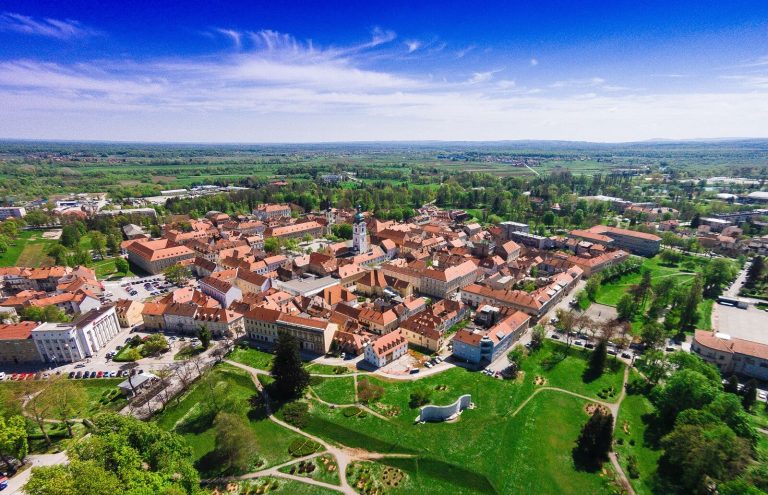 Karlovac in one dayThe star-shaped town of four rivers.
 Samobor in one dayKremšnita cake near Zagreb.
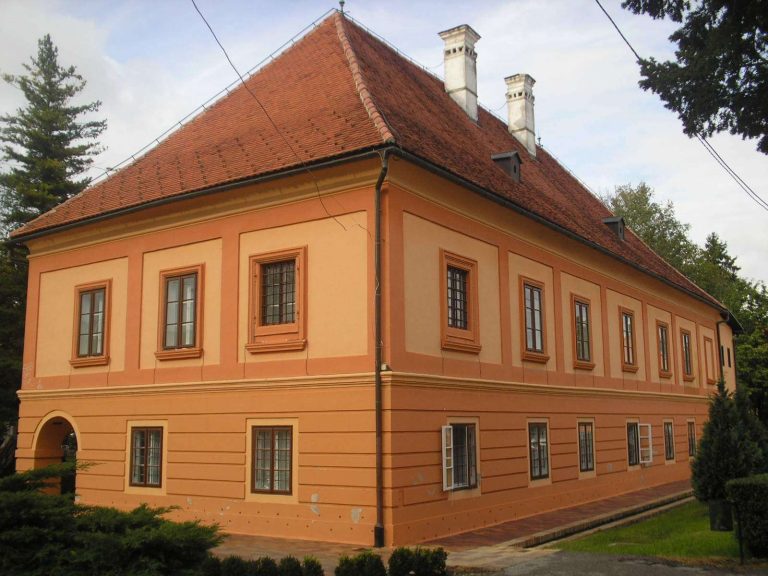 Velika Gorica in one dayRight next to Zagreb Airport.
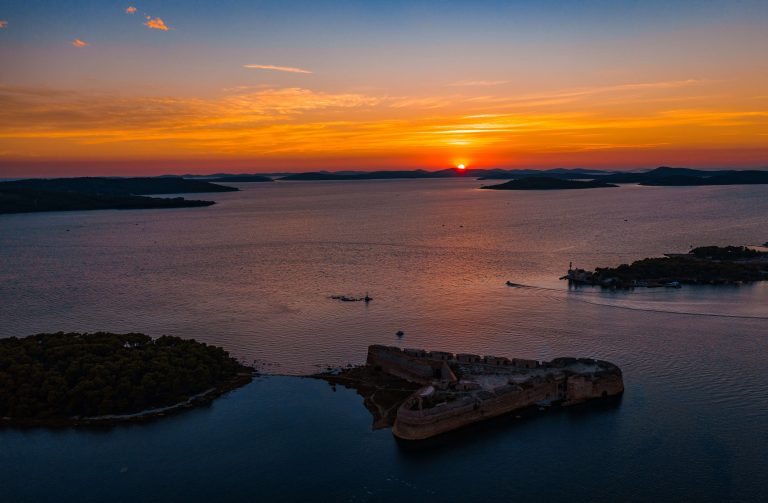 Šibenik in one dayGateway to Krka National Park.
Other trip lengths: 3 days in Croatia · 5 days in Croatia · 7 days in Croatia · 10 days in Croatia · 14 days in Croatia. A fifth day? Add Šibenik and Krka National Park south of Zadar.
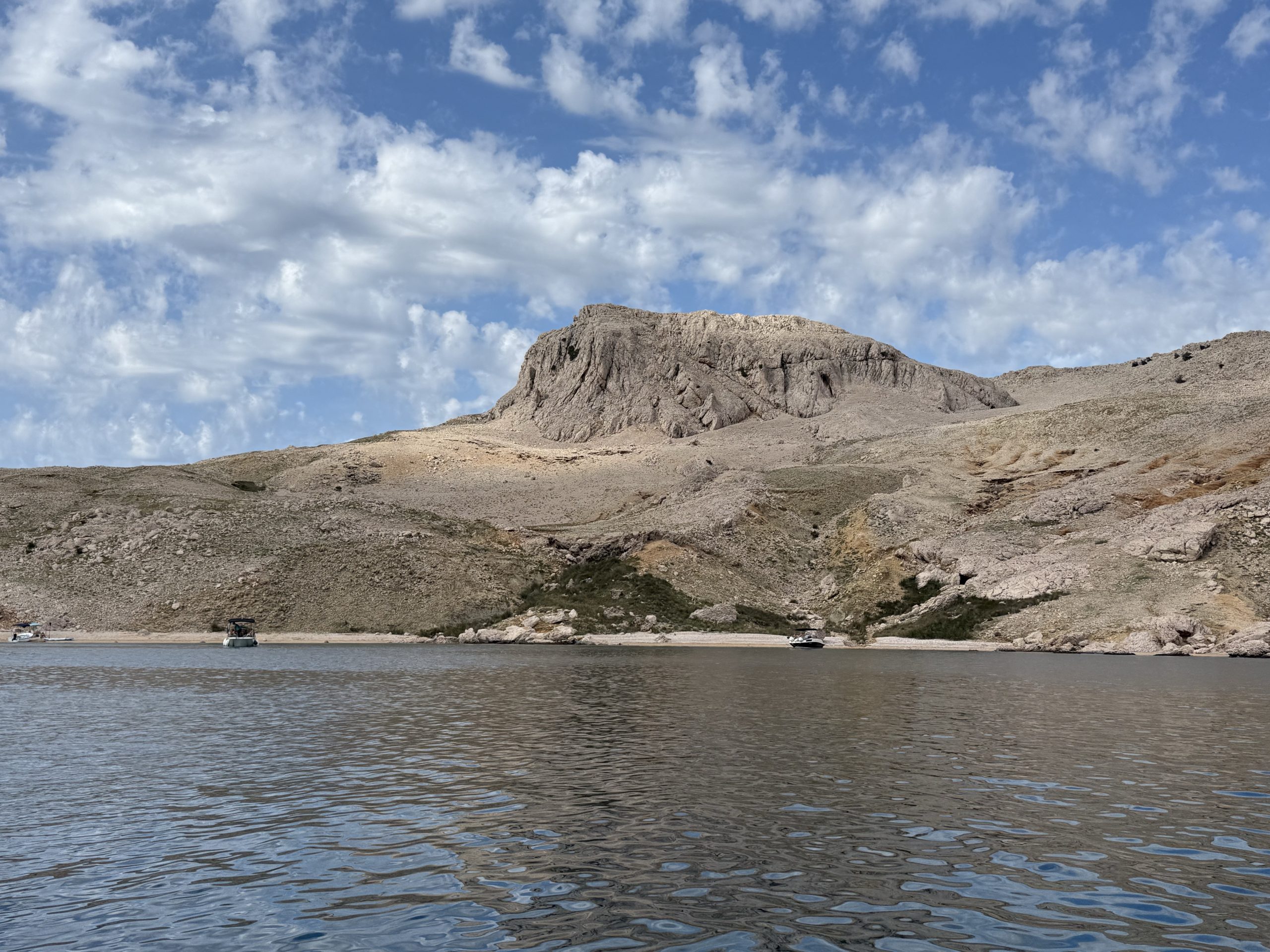
4 days in Croatia FAQ
Is 4 days enough for Croatia?
Enough for one region, not the whole country. Zagreb, Plitvice Lakes and Zadar give you a capital, a national park and the coast with only short drives.
What is the best 4-day Croatia itinerary?
Day 1 Zagreb, Day 2 drive via Rastoke to Plitvice and visit the Upper Lakes in the afternoon, Day 3 the Lower Lakes at opening and then Zadar for the Sea Organ sunset, Day 4 Zadar and a trip to Nin or Pag.
How much is the ticket for Plitvice Lakes?
In November 2026 the official adult day ticket cost €40 before 16:00 and €25 after 16:00 from June to August (the switch is at 15:00 in September), €23 in April, May and October, and €10 from November to March. Children under 7 enter free. Buy online on the official park webshop.
Can I visit Plitvice on the way from Zagreb to Zadar?
Yes, it lies roughly halfway: about 2 hours from Zagreb and 1.5–2 hours from Zadar by car. Luggage storage at the entrances is free, but staying one night near the park is much more relaxed.
Do I need a car for 4 days in Croatia?
Not strictly. Buses connect Zagreb, Plitvice and Zadar, but there are only a few departures a day to and from the park, and a car saves a lot of time for Nin and Pag.
Where should I stay at Plitvice?
The park’s own Hotel Jezero is open all year, Hotel Degenija is a 4-star option 5 km from Entrance 1, and Camp Korana is the budget choice. Park hotel and campsite guests can extend their ticket for free entry the next day.
Is Zadar or Split better for a short Croatia trip?
Zadar is calmer and pairs perfectly with Plitvice on a road trip. Split is busier and better for island hopping to Hvar or Brač.
What is the best month for 4 days in Croatia?
Late May, June and September: full waterfalls, a swimmable sea and no July–August crowds.
Can you swim at Plitvice Lakes?
No. Swimming is strictly prohibited in Plitvice Lakes National Park. Swim in Zadar or at Nin’s Queen’s Beach instead.
How do I get from Zadar Airport to the old town?
The Liburnija airport bus costs €5 one-way including luggage and takes about 20 minutes to the peninsula, with departures timed to flights. The ticket is valid for 90 minutes on city buses.

Miki Kokica
Travel blogger behind One Day Itinerary. I test every route myself and write honest, practical guides so you can make the most of a single day anywhere.
Work with me Instagram