

Hi, I’m Miki! I’ve been to Malta three times now, and every trip has convinced me of the same thing: one week is the perfect amount of time for these islands. Seven days lets you do Valletta properly, cross the harbour to the Three Cities, see temples older than the pyramids, eat your way around Marsaxlokk and Mdina – and still have two slow days on Gozo plus a morning in the turquoise water of Comino.
This is my complete 7-day Malta itinerary for 2027: a day-by-day plan with realistic travel times, the two bases I recommend, where I’d book next time, the boat trips and tours that are worth your money, official 2026 prices for ferries, buses and sites, and the insider tips I wish I’d known on my first trip. Short on time? See my 3 days in Malta, 4-day or 5-day plans. Got longer? My 10 days in Malta guide is the slow version. Everything else – entry rules, food, festas – is in my Malta travel guide.
Day 1 – Valletta · Day 2 – the Three Cities, a harbour cruise & the Hypogeum · Day 3 – the south: Marsaxlokk, Blue Grotto & the temples · Day 4 – Mdina, Rabat & the Dingli Cliffs · Day 5 – northern beaches, then the ferry to Gozo · Day 6 – Gozo in depth · Day 7 – Comino’s Blue Lagoon (or a dive), then back to Malta.
Bases: 4 nights in Sliema/St Julian’s or Valletta + 2 nights on Gozo (+ 1 last night near the airport if you fly out the next morning).
My 7-day Malta itinerary in one table
| Day | Area | Highlights | Overnight |
|---|---|---|---|
| 1 | Valletta | Ferry from Sliema, St John’s Co-Cathedral, Upper Barrakka & the noon gun, Grand Master’s Palace, sunset on the bastions | Sliema / St Julian’s (or Valletta) |
| 2 | Three Cities & Paola | Ferry to Birgu, Fort St Angelo, Senglea’s Gardjola Gardens, Ħal Saflieni Hypogeum, harbour cruise or dgħajsa back | Sliema / St Julian’s |
| 3 | The south | Marsaxlokk fishing boats, St Peter’s Pool, Ħaġar Qim & Mnajdra temples, Blue Grotto boats | Sliema / St Julian’s |
| 4 | Centre & west | Mdina, St Paul’s Catacombs, pastizzi in Rabat, sunset at the Dingli Cliffs | Sliema / St Julian’s |
| 5 | North → Gozo | Mellieħa Bay or Golden Bay / Għajn Tuffieħa, Popeye Village viewpoint, ferry Ċirkewwa → Mġarr | Gozo |
| 6 | Gozo | Ċittadella in Victoria, Ġgantija temples, Ramla Bay, Xwejni salt pans, Dwejra & the Inland Sea | Gozo |
| 7 | Comino → Malta | Early boat to the Blue Lagoon, Santa Marija Bay or a dive/snorkel, afternoon ferry back to Malta | Malta (or fly home) |
Why this order? The first four days share one base, so you unpack once and use ferries and buses that all radiate from the harbour. Day 5 moves you north with your luggage and onto the Gozo ferry, and Comino is far easier to reach from Gozo or the north than from Valletta. If the sea is rough on the day you planned for the Blue Grotto or Comino, simply swap it with Mdina – the inland days work in any weather.
Where to stay for 7 days in Malta: two bases
After three trips, my advice is simple: don’t move hotels every night, but don’t try to “do” Gozo from Malta either. Pick one base around the Grand Harbour for four nights and spend two nights on Gozo. Which harbour base suits you depends on your style:
| Base | Best for | Good to know |
|---|---|---|
| Sliema & St Julian’s | First-timers, nightlife, lots of choice and value | Ferry to Valletta, seafront promenade, many restaurants. Paceville (part of St Julian’s) is loud at night – choose a hotel on the Sliema or Balluta side if you want sleep. |
| Valletta | Culture lovers, couples, evenings in a historic city | Boutique hotels in old palazzi, everything on foot, very quiet at night. Lots of stairs and fewer budget rooms; it gets crowded when cruise ships are in. |
| The Three Cities | Quiet, local feel, harbour views | Fewer hotels and restaurants, but water taxis and ferries to Valletta make it easy. |
| Gozo (2 nights) | Slow days, countryside, diving | Victoria is central; Xlendi and Marsalforn are on the sea; Mġarr is next to the ferry. A car or taxis help a lot. |
Sliema & St Julian’s – where I’d stay
- Luxury: Corinthia St George’s Bay – a resort on its own bay in St Julian’s with a spa and sea-view rooms; great if you want pool time between sightseeing days. In Sliema, AX The Palace is a five-star with indoor and outdoor pools, a spa and a rooftop terrace.
- Mid-range: 1926 Le Soleil Hotel & Spa – a four-star in the heart of Sliema with spa access included and its own beach club. AX The Victoria is another four-star in Sliema with pools and a spa, a few minutes’ walk from the seafront.
- Budget: Sliema has several boutique hostels with private rooms as well as dorms – Two Pillows Boutique Hostel and 224 Boutique Hostel are two of the best-rated on Booking.com. Check the room type and whether there’s air-conditioning before you book for summer.
Valletta & the Three Cities – where I’d stay
- Luxury: The Phoenicia Malta – Malta’s first five-star hotel, just outside the City Gate, with gardens and a pool by the bastions. Across the harbour in Senglea, Cugó Gran Macina is a five-star boutique hotel with a pool and solarium.
- Boutique / mid-range: The Gomerino is a 44-room hotel in a 17th-century Baroque palace; AX The Saint John is a stylish boutique hotel aimed at independent travellers.
- Value: Osborne Hotel – a classic hotel in the heart of Valletta with a swimming pool and sun terrace, usually one of the more affordable ways to sleep inside the walls.
Gozo – where I’d stay for two nights
- Luxury: Kempinski Hotel San Lawrenz – a five-star resort in the quiet west, close to Dwejra. Hotel Ta’ Cenc & Spa in Sannat is a low-rise hideaway near the southern cliffs.
- Mid-range: Grand Hotel Gozo overlooks Mġarr harbour with a spa and indoor pool – perfect for this route because you can walk to and from the ferry. St Patrick’s Hotel sits right on Xlendi Bay, about three kilometres from Victoria.
- Budget & groups: Gozo is famous for converted farmhouses with private pools, plus simple guesthouses and apartments in Victoria and Marsalforn. For two or more people, a farmhouse is often the best value on the island.
Day 1: Valletta – the capital on a peninsula
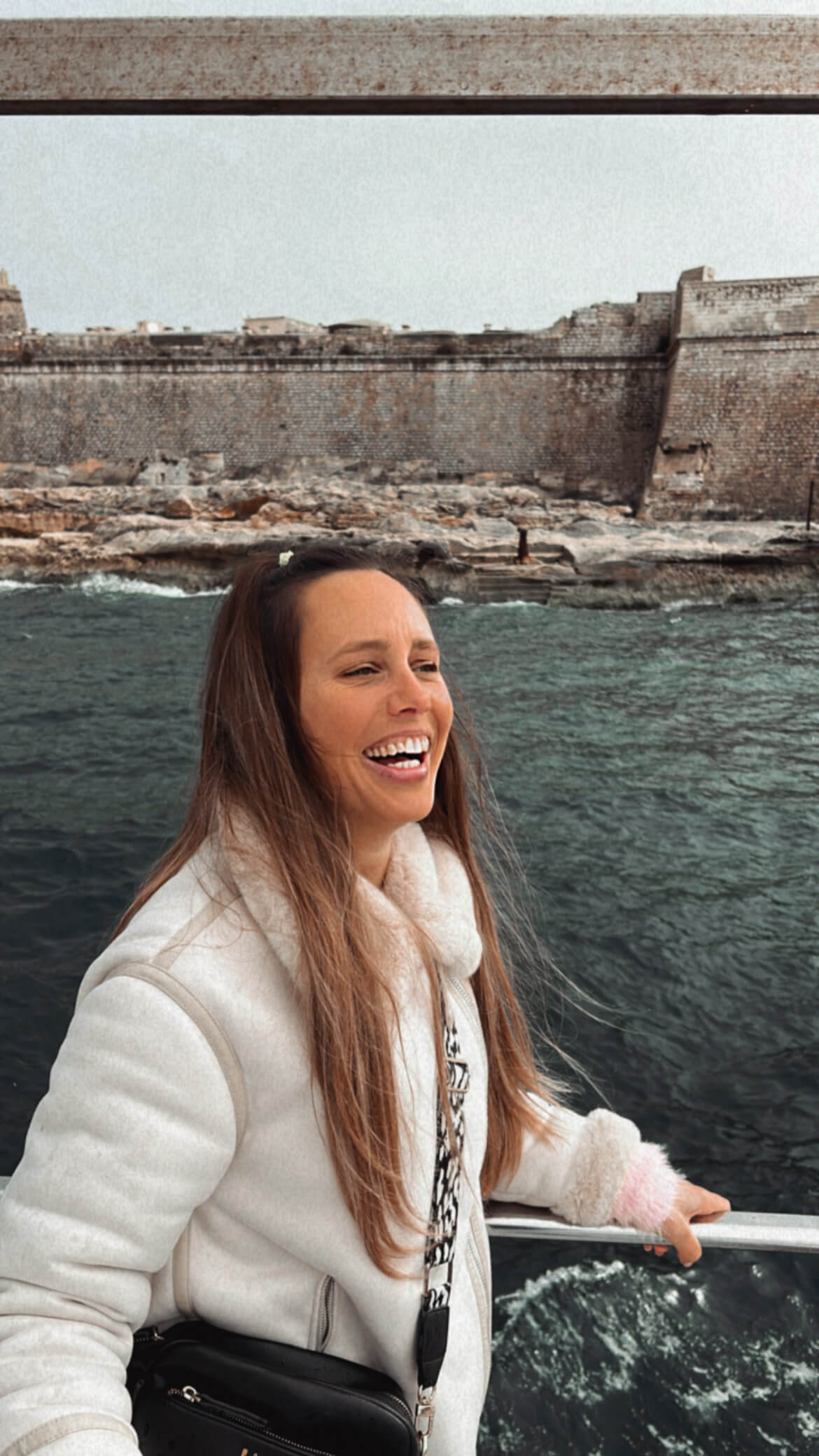
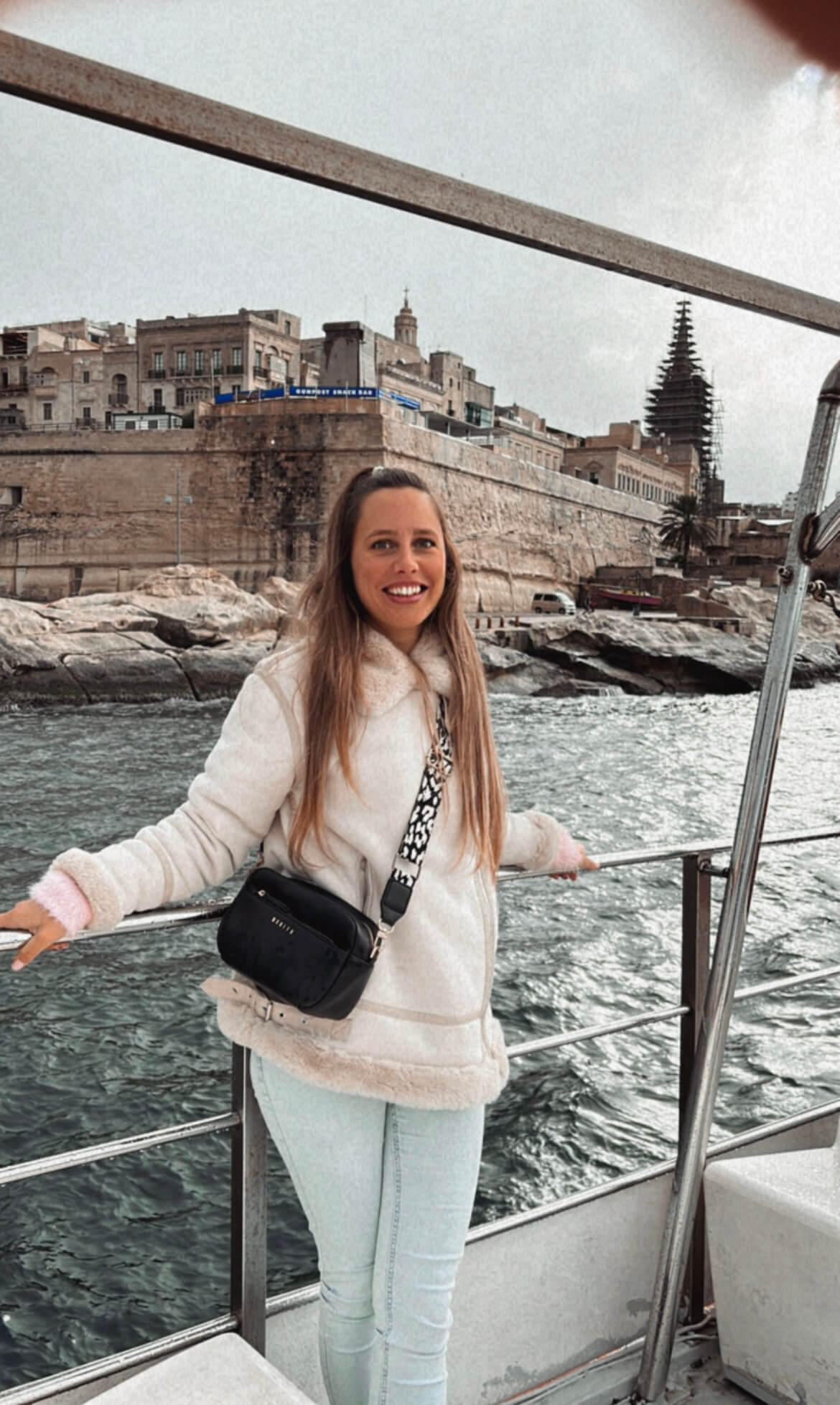
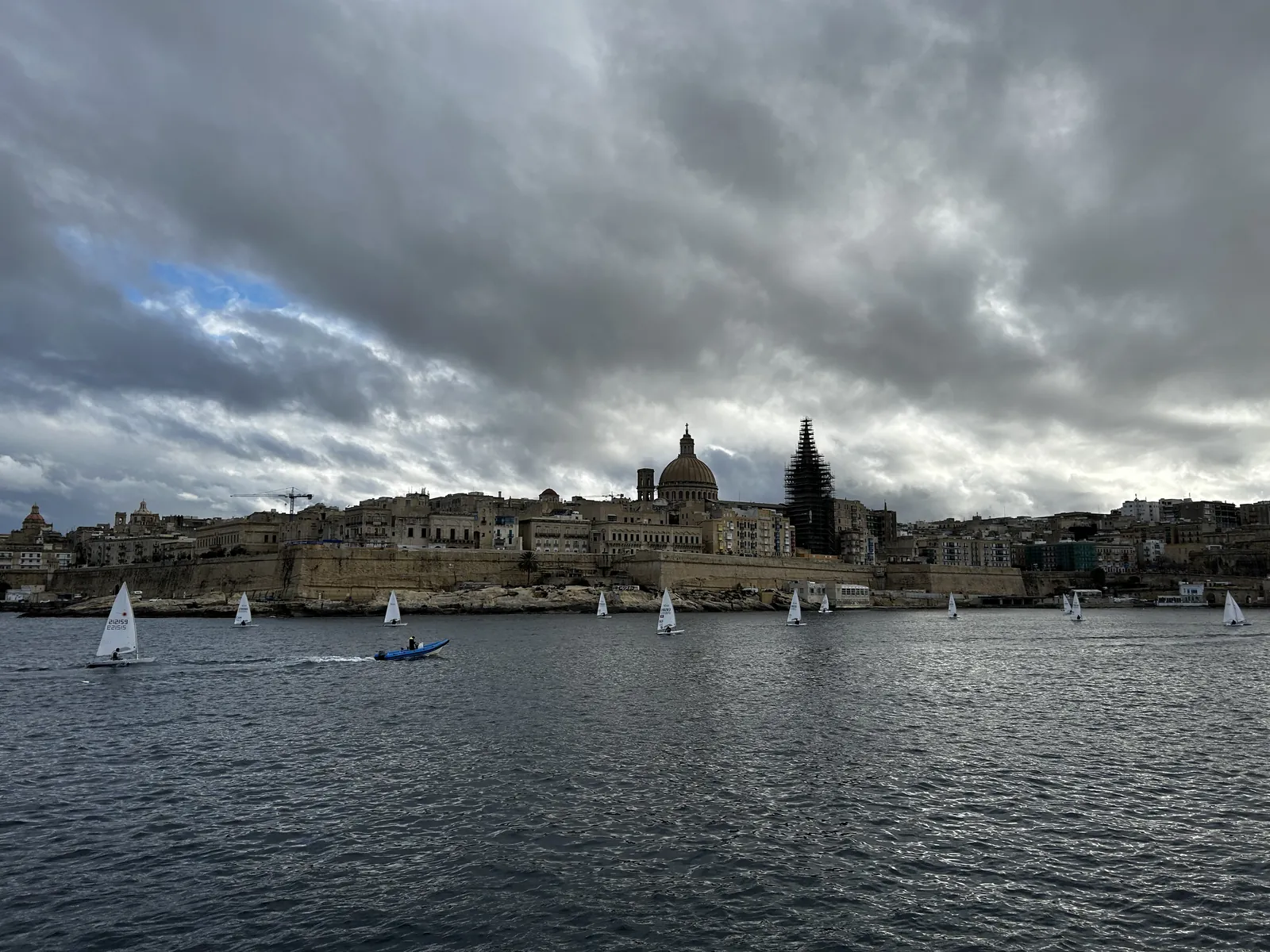
Morning. Start the way I love to arrive: by boat. The ferry from Sliema’s Strand crosses Marsamxett Harbour and gives you the postcard view of Valletta’s walls, the Carmelite dome and the spire of St Paul’s rising straight out of the water. Adult tickets cost €3 single or €5 return during the day, and €3.50 / €5.20 after 19:30 (checked November 2026), on Valletta Ferry Services. In winter there’s a departure about every 15 minutes on weekdays.
Walk up to St John’s Co-Cathedral for opening time. Behind its plain façade is one of the most lavish Baroque interiors in Europe, and Caravaggio’s Beheading of Saint John the Baptist. Tickets are €15 for adults (€12 seniors and students, under-12s free with an adult); it’s open Monday to Saturday 9:00–16:45, last entry 16:00, and closed on Sundays and public holidays (checked November 2026) – official info. Bring a scarf to cover your shoulders, and leave stilettos at the hotel – narrow heels aren’t allowed.
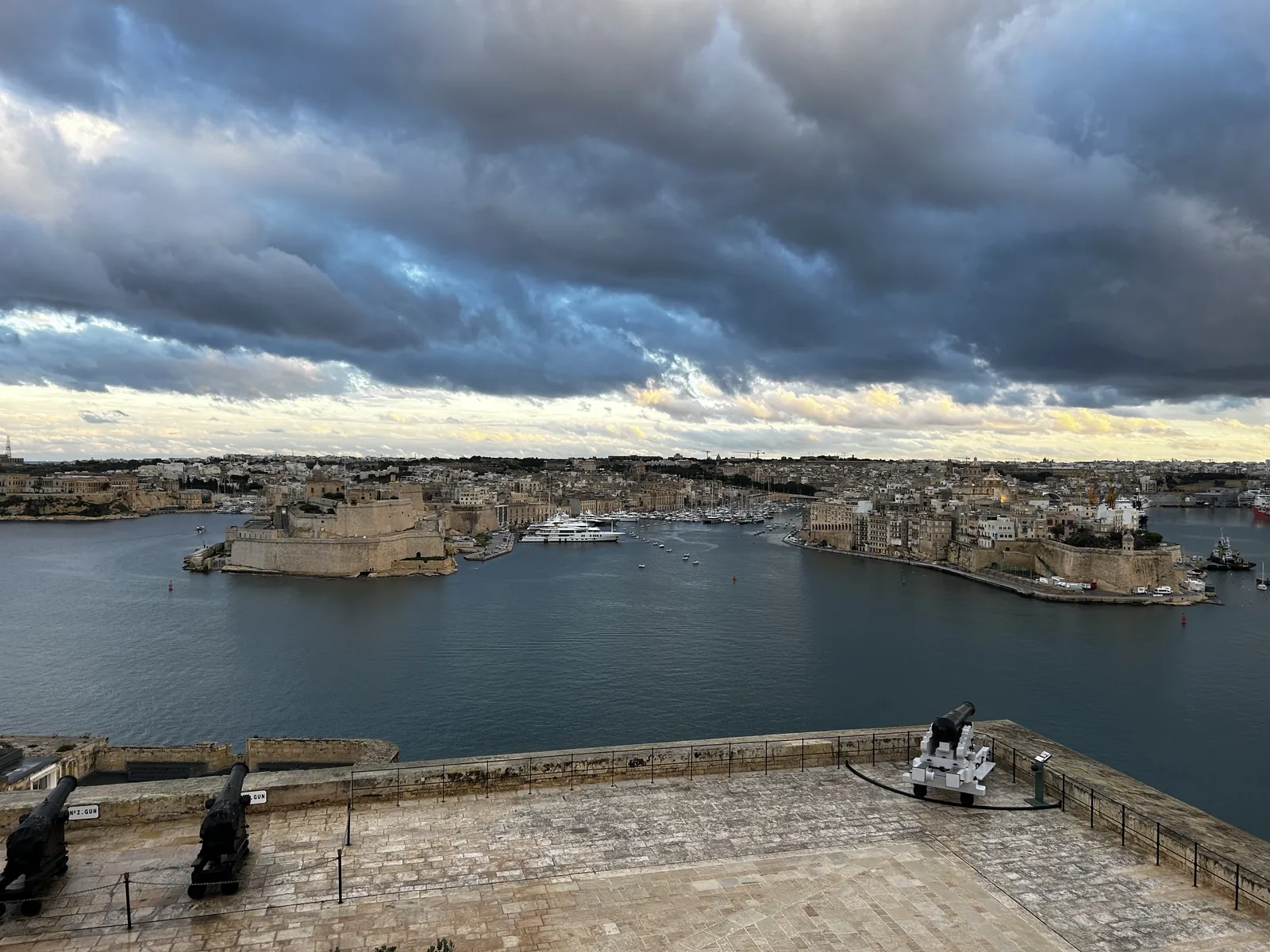
Midday. At 12:00 the cannons of the Saluting Battery fire below the Upper Barrakka Gardens – and again at 16:00. Watching from the gardens is free; to stand on the battery itself it’s €3 for adults (checked November 2026) (Saluting Battery). Get there 15 minutes early – it’s popular every single day.

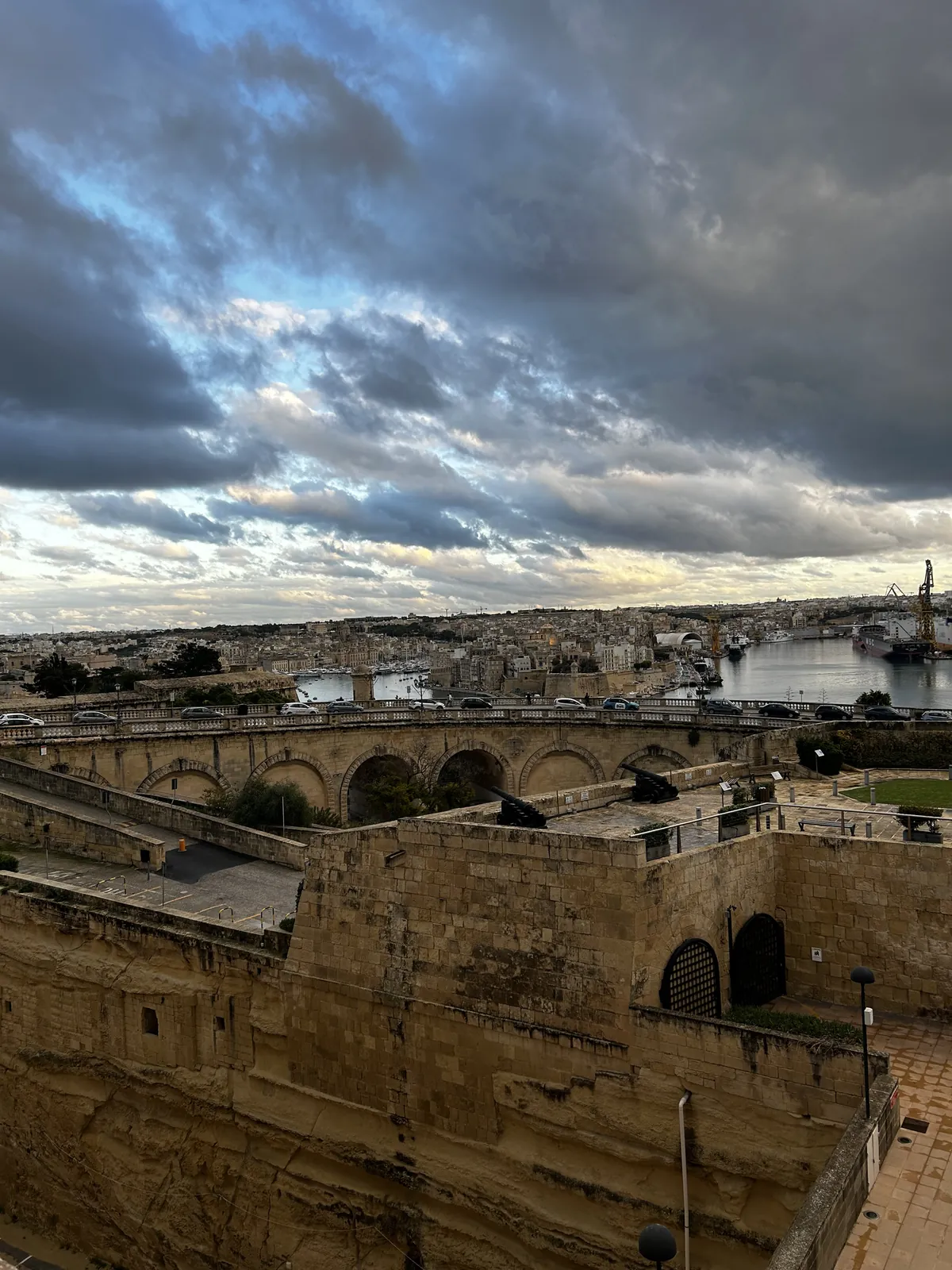
Afternoon. After lunch, stroll down Republic Street and Merchants Street to the Grand Master’s Palace (adults €12 (checked November 2026), Heritage Malta). Note that state rooms sometimes close for official functions and the Throne Room is closed until further notice, so check the notices before you go. Then lose yourself in the side streets with their coloured wooden balconies, walk the bastions towards Fort St Elmo and finish at the Lower Barrakka Gardens for a quieter harbour view.
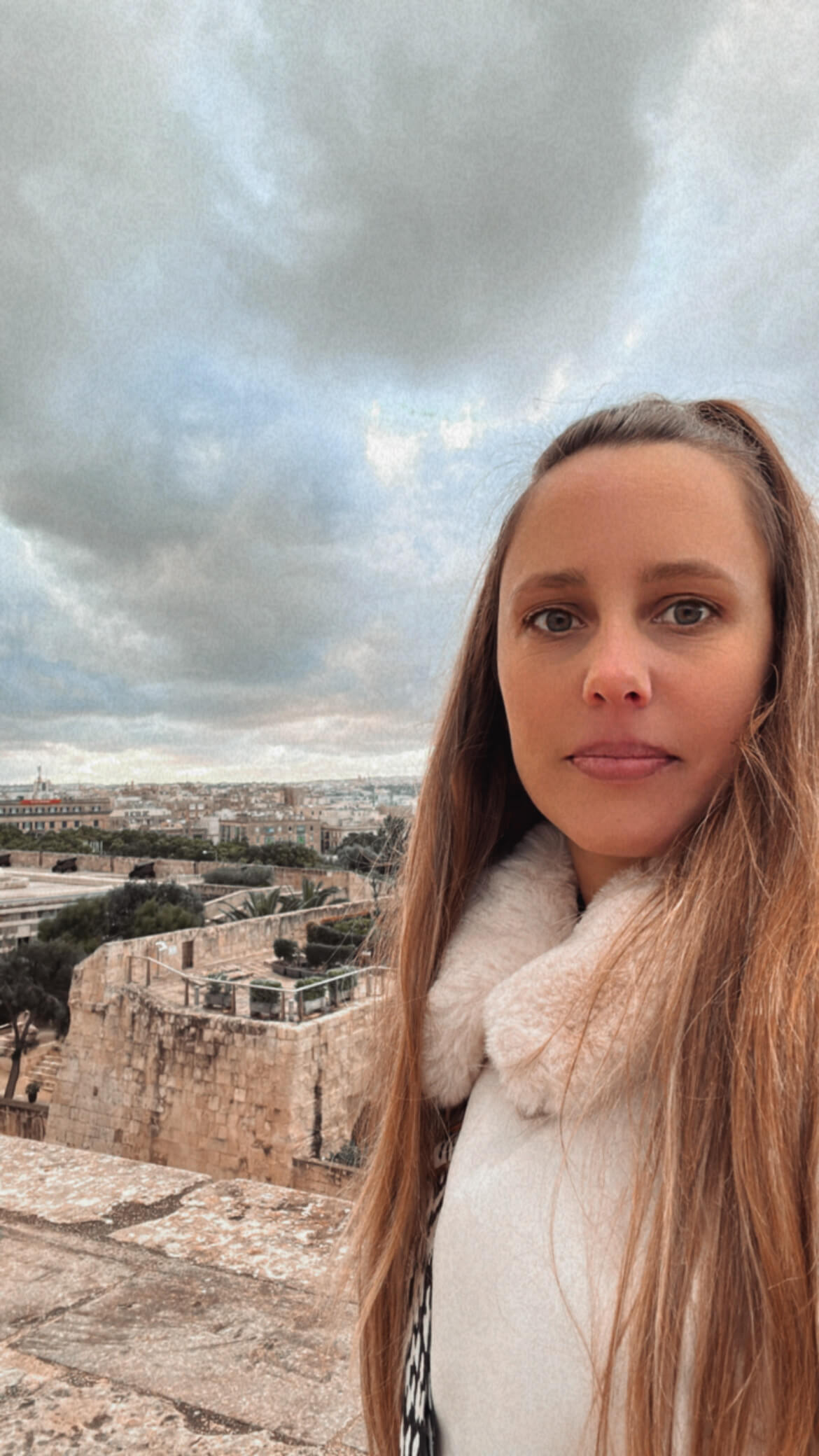
Evening. Valletta empties after the day-trippers leave – that’s when it’s at its most beautiful. Have dinner in the city, then take the ferry or a Bolt back to Sliema.
Day 2: The Three Cities, a harbour cruise & the Hypogeum
Morning. Take the Valletta Ferry Services boat across the Grand Harbour to Cospicua – it’s a short hop with the same €3 / €5 fares (checked November 2026). Walk to Birgu (Vittoriosa), the Knights’ first home on Malta, and climb Fort St Angelo (adults €10 (checked November 2026), Heritage Malta) for views straight back at Valletta.
Then wander through the narrow lanes of Birgu to Senglea and the Gardjola Gardens with their famous stone watchtower carved with an eye and an ear. It’s free, and one of my favourite views of the harbour. Lunch on the Birgu waterfront next to the yachts.
Afternoon – option A: the Hypogeum. The Ħal Saflieni Hypogeum in Paola, a short taxi ride from the Three Cities, is an underground prehistoric burial complex cut into the rock on three levels. Only about ten people are allowed in at a time, so tickets (€35 for adults (checked November 2026)) often sell out weeks ahead – book on heritagemalta.mt as soon as your dates are fixed. Your Hypogeum ticket gives you 50% off the nearby Tarxien temples if you buy that ticket at the door. Children under six aren’t admitted.
Afternoon – option B: a harbour cruise. If you didn’t get Hypogeum tickets, see the fortifications from the water instead. Classic harbour cruises leave from Sliema’s Strand and loop around both harbours – and if you buy an Explore Flex bus card, a harbour cruise can be bundled in (Malta Public Transport). For something more traditional, hire a dgħajsa – the colourful wooden water taxi – from the Birgu waterfront back to Valletta.


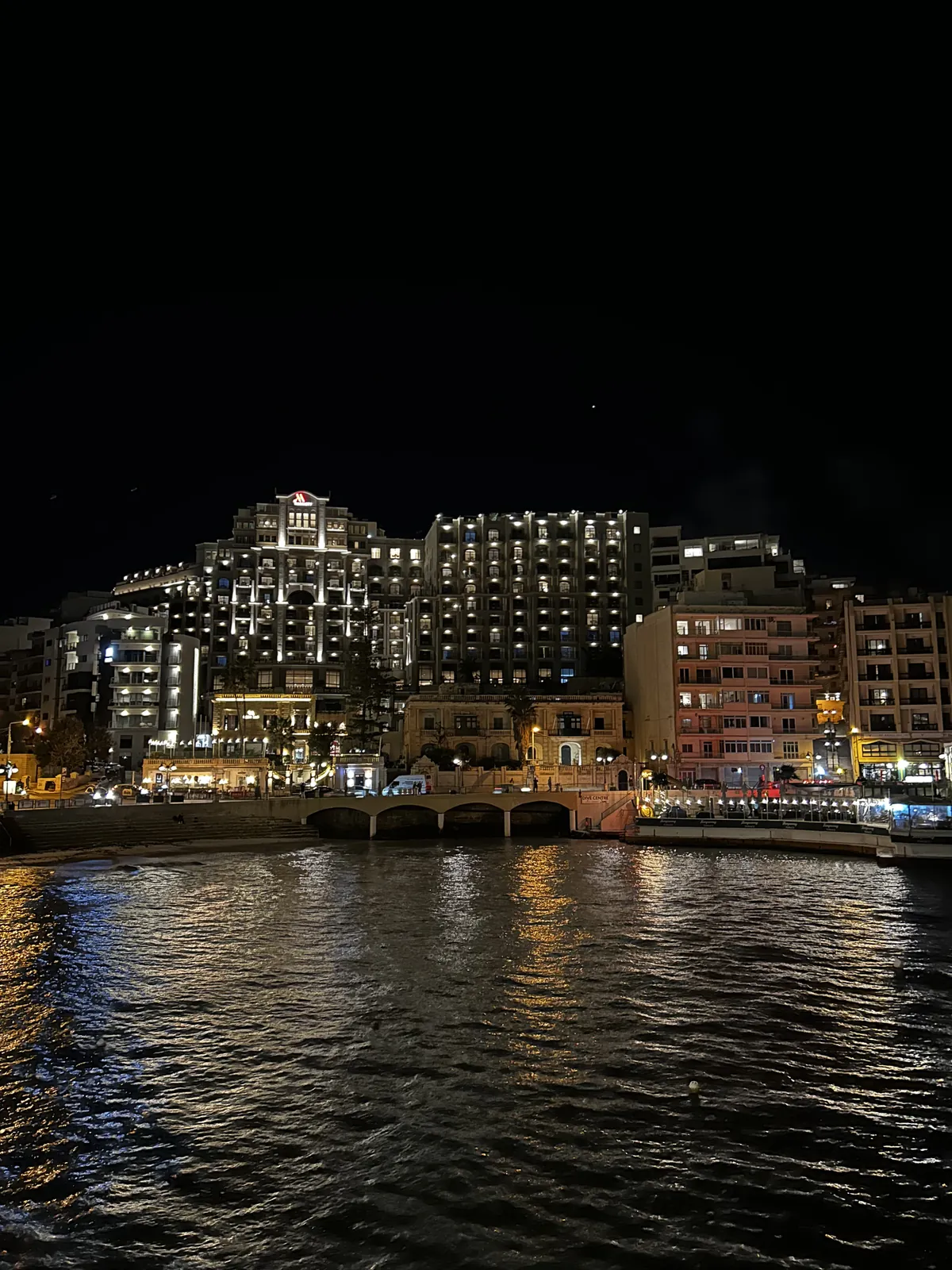
Evening. Back in St Julian’s, walk around Spinola Bay and Balluta Bay when the lights come on – it’s a completely different, buzzy side of Malta.

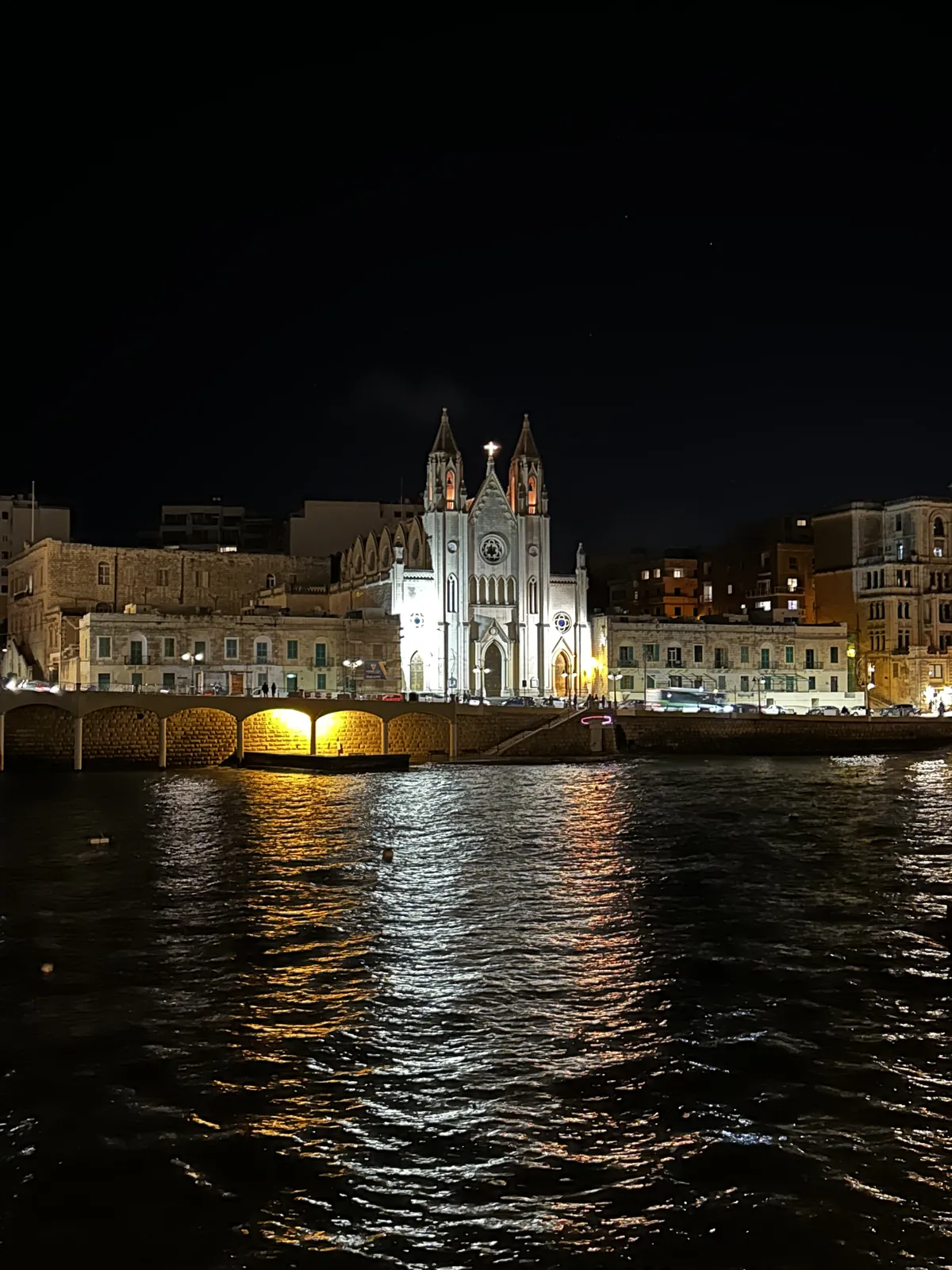
Day 3: The south – Marsaxlokk, Blue Grotto & the temples
Morning. Head to Marsaxlokk, the fishing village with Malta’s most photographed harbour. The colourful luzzu boats, painted blue, yellow, red and green with the “Eye of Osiris” on the bow, are the reason you come. The Sunday fish market is the famous one, but it’s extremely crowded – if you can, come on another morning, when you can actually see the boats.
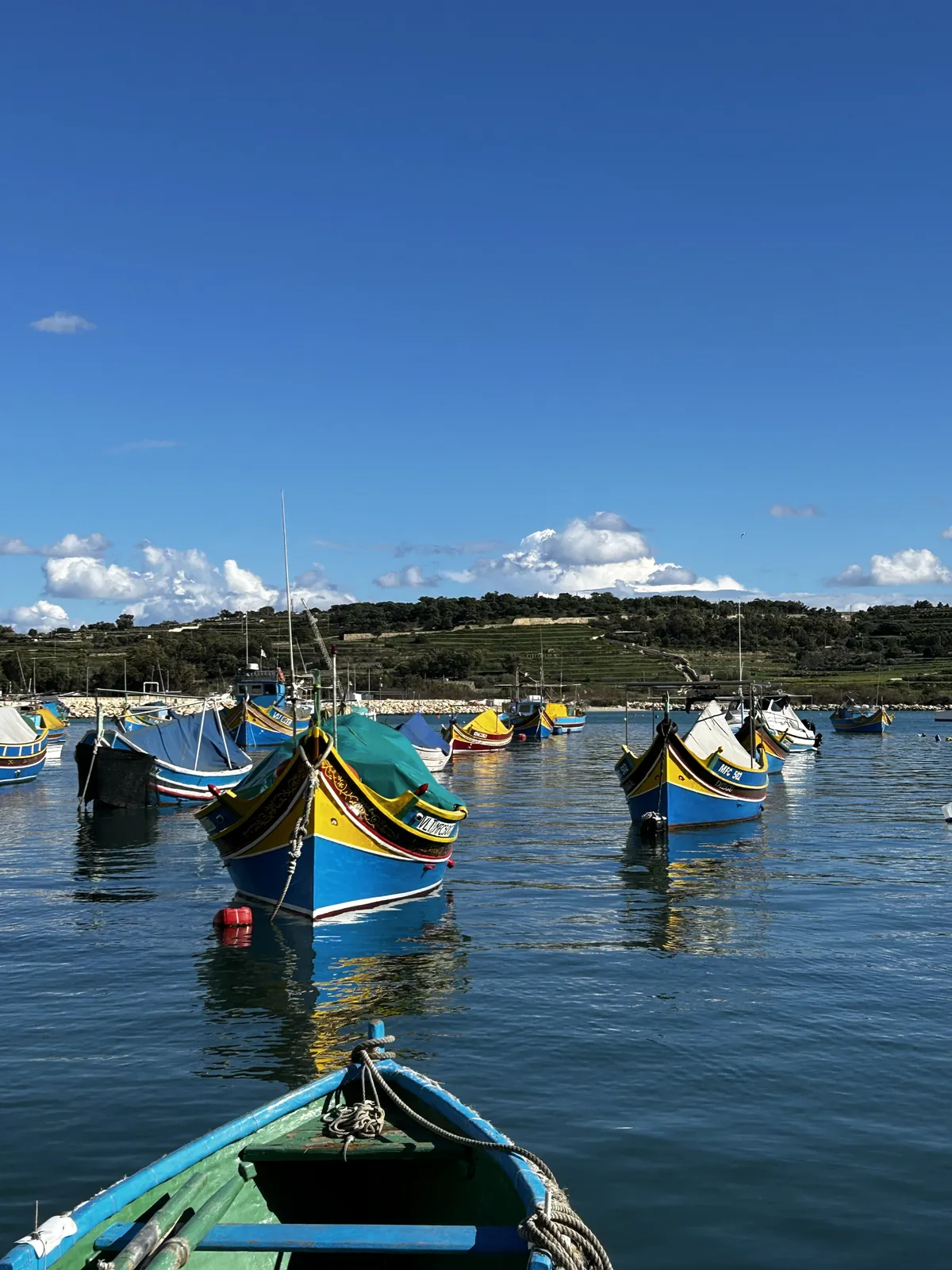
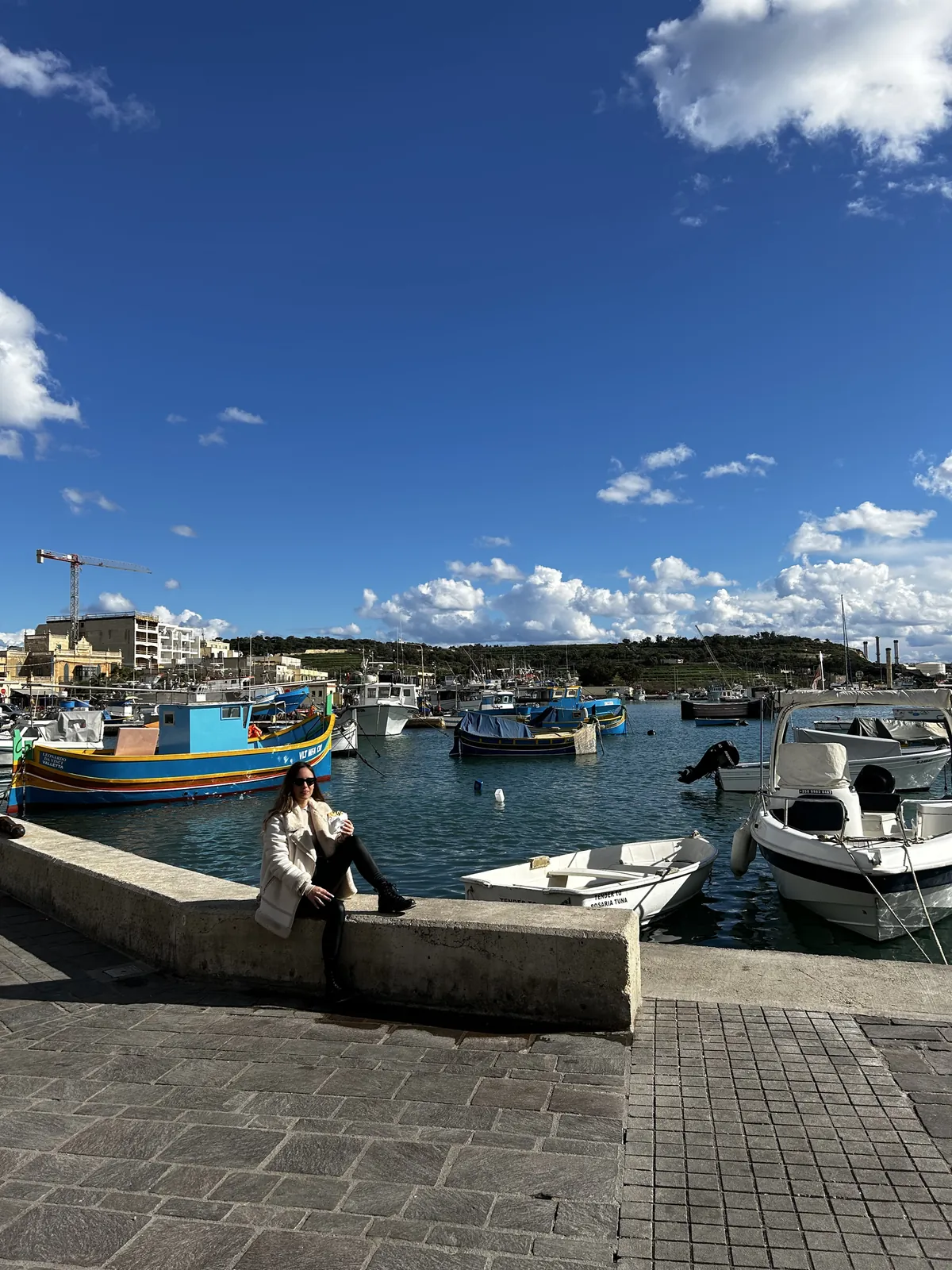
From Marsaxlokk it’s a short taxi ride to St Peter’s Pool, a natural rock pool on the Delimara peninsula with flat limestone ledges for sunbathing and deep, clear water for jumping in. There are no facilities and no shade, so bring water, and shoes for the rocks. In summer, go before 10:00 – it fills up quickly.
Afternoon. Continue west to the temples of Ħaġar Qim and Mnajdra, built more than 5,000 years ago on a cliff top above the sea. Tickets are €10 for adults (checked November 2026) (Heritage Malta); allow 90 minutes to three hours, including the short walk down to Mnajdra. The bus stop is three minutes away on foot.
Just down the road is Wied iż-Żurrieq, where small boats leave for the Blue Grotto sea caves. The trip takes around 20–30 minutes; boats only run when the sea is calm, and the water glows brightest in the morning light. If boats aren’t running, the viewpoint on the road above the grotto still gives you the classic photo. Prices are paid at the kiosk – check on the day.

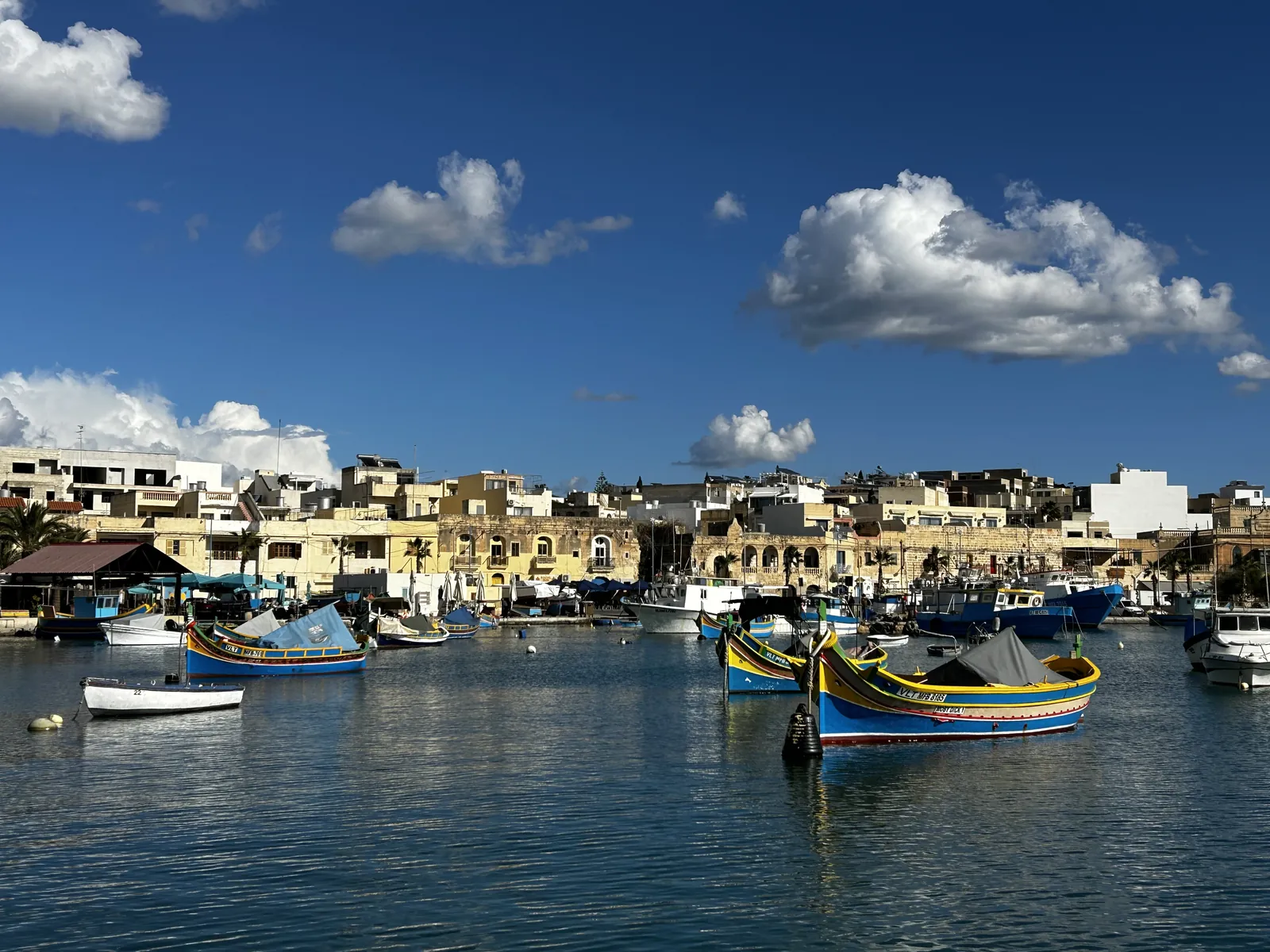
Evening. Stay for a seafood dinner in Marsaxlokk if you came by car or Bolt – or head back to your base. Travellers often warn that the touristy waterfront restaurants are hit-and-miss, so check recent reviews and ask what the catch of the day costs before ordering it by weight.
Day 4: Mdina, Rabat & the Dingli Cliffs
Morning. Mdina, the “Silent City”, sits on a hill in the centre of the island. Arrive early, before the tour groups, and walk through the Main Gate into lanes so narrow and quiet you can hear your own footsteps. Climb to Bastion Square for a view over half of Malta. People live here, so keep your voice down.
Lunch. Walk next door to Rabat for pastizzi – flaky pastry filled with ricotta or mushy peas. Is-Serkin (also known as Crystal Palace), near Mdina’s gate, is the place everyone recommends, and it costs almost nothing. Then go underground in St Paul’s Catacombs, a network of Roman-era tombs (adults €6 (checked November 2026), Heritage Malta).
Afternoon & sunset. Drive or take a Bolt to the Dingli Cliffs, Malta’s highest point, where the land drops straight into the sea. Walk along the cliff path past the small Magdalene Chapel and stay for sunset over the open Mediterranean – there’s nothing between you and the horizon except the tiny island of Filfla.
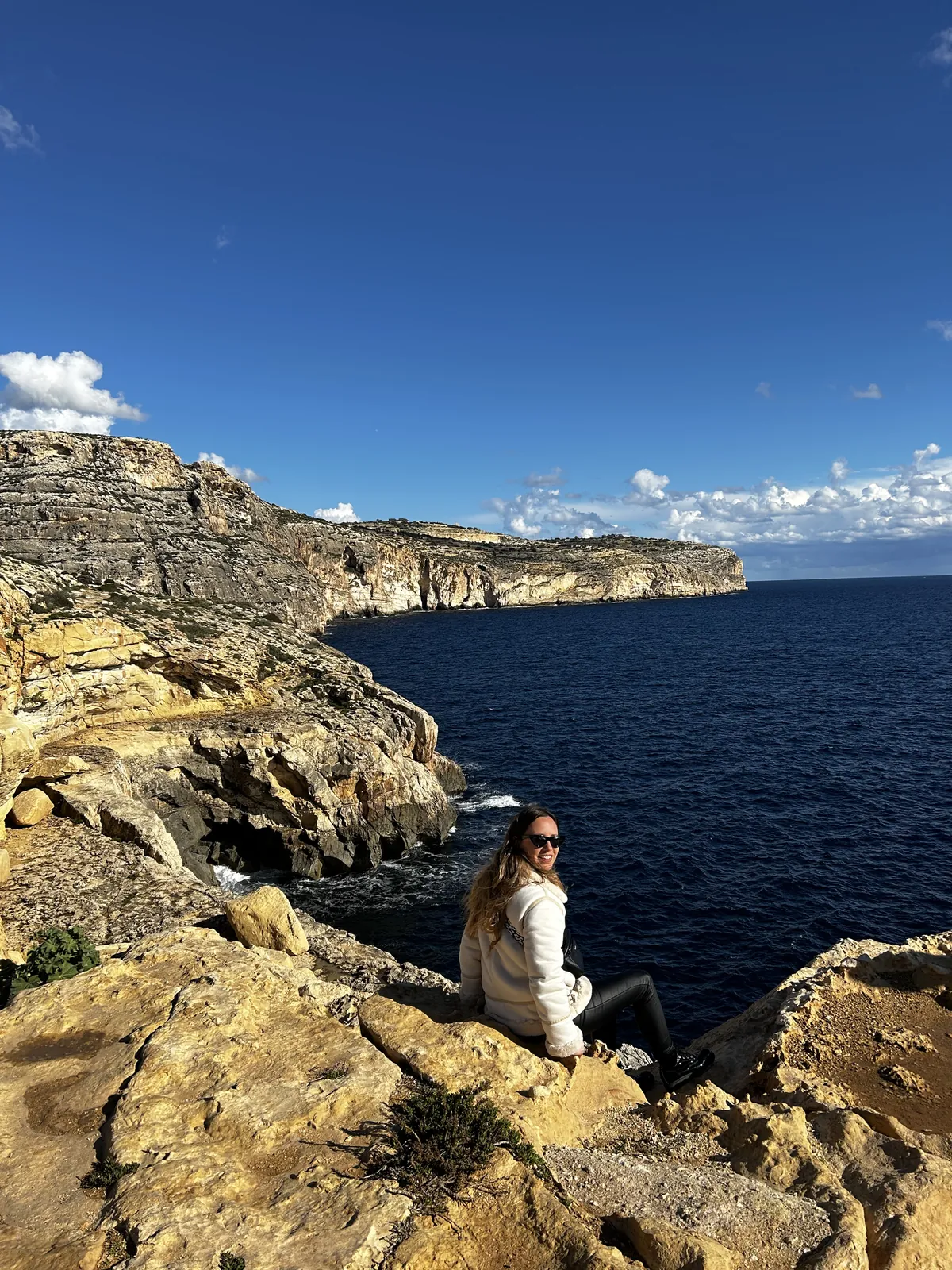

Evening. Have dinner in Mdina or Rabat, or head back to your base. Mdina lit up at night is magical and almost empty.
Hop-on hop-off bus: how we saw the whole island
On one of my trips we booked a hop-on hop-off bus tour through GetYourGuide and used it to see the whole island – and honestly, for Days 3 and 4 it’s a great alternative to piecing together public buses. You sit on an open-top deck with audio commentary, get off wherever you like and get back on a later bus.
The best-known operator, City Sightseeing Malta, runs a North (Blue) line and a South (Red) line, both starting from Valletta. Between them they stop at places like San Anton Gardens, Mdina, Ta’ Qali Crafts Village, Mosta, the Three Cities, Marsaxlokk and the Blue Grotto (the Blue Grotto stop runs April–October). The operator lists over 30 stops, commentary in nine languages, and €20 for a one-day or €37 for a two-day ticket on its website (checked November 2026) – prices on resellers vary, so compare. Malta Public Transport also sells an Explore Flex bundle that combines 4 or 7 days of unlimited buses with a hop-on hop-off tour for €41 / €51 (checked November 2026) (official fares).
| Hop-on hop-off | Public bus | |
|---|---|---|
| Price | Higher (one- or two-day ticket) | €2 winter / €2.50 summer per 2-hour ticket, or a 7-day card |
| Comfort | Guaranteed seat, open top, commentary | Can be packed in summer; full buses sometimes skip stops |
| Route | Fixed loop of the big sights | Goes almost everywhere, including beaches and St Peter’s Pool |
| Best for | A first overview, Mdina + south in one go, families | Independent travellers on a budget with time to spare |
- One line per day. Doing both lines in a single day means a lot of sitting – I’d do the South line on Day 3 and the North line (with Mdina) on Day 4, or buy the two-day ticket.
- Start early from Valletta and check the time of the last bus on each line, so you don’t get stranded at a far stop.
- Check which company your ticket is for when booking through GetYourGuide or other platforms – there is more than one hop-on hop-off operator in Malta, and stops differ.
- Bring a hat and sunscreen for the open top deck, and a light layer in winter – it’s windy up there.

Day 5: Northern beaches, then the ferry to Gozo
Morning. Check out and head north. With luggage, this is the one day I’d use a Bolt or a rental car rather than the bus. Choose your beach:
- Mellieħa Bay (Għadira) – Malta’s longest sandy beach, shallow and calm, ideal with kids.
- Golden Bay – sandy, with facilities and water sports; busy in summer.
- Għajn Tuffieħa (Riviera Bay) – next to Golden Bay but wilder, reached by a long staircase; go early, the morning is its best moment.
Lunch & Popeye Village. On the way to the ferry, stop at the viewpoint above Anchor Bay for a free view of Popeye Village, the film set from the 1980 movie. If you have children, it’s worth going in: tickets are €15 for adults until 3 January 2027, €16 from 4 January to 30 April 2027, €20 in May and October, and €27 in the summer high season, when water inflatables and sunbeds are included (checked November 2026) (popeyemalta.com).
Afternoon. Drive or take a Bolt to Ċirkewwa at the northern tip and board the Gozo Channel ferry to Mġarr. The crossing takes about 25 minutes and ferries run daily, around the clock. Here’s the trick: you don’t pay on the way to Gozo – tickets are bought and validated on the return. A foot passenger pays €4.65, a car and driver €15.70 (checked November 2026) (Gozo Channel fares).
Evening. Check in, then go for a sunset drink in Xlendi or Marsalforn. Gozo is noticeably quieter, greener and slower than Malta – you’ll feel it on the first evening.
Day 6: Gozo in depth
Morning. Start in Victoria (Rabat), Gozo’s little capital, and climb up to the Ċittadella. The fortress walls are open 24/7 and free, and the views reach across the whole island. A €5 combo ticket (checked November 2026) covers the visitors’ centre plus the Nature Museum, the Old Prisons and the Gran Castello Historic House; the Cathedral needs a separate ticket (Ċittadella Visitors’ Centre).
Then drive to Xagħra for the Ġgantija temples, among the oldest free-standing structures in the world. The €10 adult ticket (checked November 2026) also covers the Ta’ Kola Windmill (Heritage Malta). Note: Ġgantija is closed all day on 26 November 2026.
Afternoon. Swim at Ramla Bay – red-gold sand in a green valley, the prettiest beach on Gozo. On the way back, stop at the Xwejni salt pans near Marsalforn, a chequerboard of rock-cut pools where sea salt is still harvested in summer, and peek into Wied il-Għasri, a narrow gorge with a tiny pebble beach at the end.
Sunset. Finish at Dwejra on the west coast: the Inland Sea, a lagoon connected to the open sea through a tunnel in the cliff (small boats go through it when the sea is calm), Fungus Rock and the dramatic coastline where the Azure Window stood until it collapsed in 2017. Dinner in Xlendi or Victoria.

Day 7: Comino’s Blue Lagoon (or a dive), then back to Malta
Morning. Take the earliest boat you can to Comino. Boats leave from Mġarr on Gozo and from Ċirkewwa and Marfa on Malta; the official Comino Ferries crossing from Malta takes about 20 minutes and costs €15 return for adults, €7 for children (checked November 2026).
Since 2025, the Blue Lagoon has a free online booking system to limit crowds: you choose one of three daily time slots (08:00–13:00, 13:30–17:30 or 18:00–22:00), get a QR code and exchange it for a wristband on arrival. A maximum of 4,000 people are allowed at once, and access without a booking can be fined (Malta Tourism Authority). Comino Ferries says its ticket already includes Blue Lagoon landing, so check with your boat operator whether you need to book the slot yourself.
Swim in the turquoise water, then walk 20–30 minutes across the island to the quiet sand of Santa Marija Bay or up to the 17th-century St Mary’s Tower. There’s almost no shade on Comino, so bring water, a hat and reef-safe sunscreen. Kiosks at the lagoon sell drinks and snacks in summer.
Prefer to go under water? Malta and Gozo are among Europe’s best diving destinations – wrecks, caves and reefs in water that’s clear far into autumn. Use this morning for a try dive or a guided dive with an established Gozo centre instead (see the tours section below), or combine both with a boat trip that circles Comino’s sea caves.
Afternoon. Return to Gozo, collect your bags and take the ferry back to Ċirkewwa (remember: this is when you pay). From Ċirkewwa, allow about an hour by car to the airport or Sliema – longer at rush hour. Spend your last night near the airport or back in Sliema, or catch an evening flight if you’ve left yourself a generous buffer.
Best tours, boat trips & experiences for a week in Malta
| Experience | Who runs it | What you get | Time |
|---|---|---|---|
| Sliema–Valletta & Three Cities ferries | Valletta Ferry Services | Scheduled catamaran ferries across both harbours; €3 single / €5 return by day | A few minutes per crossing |
| Hop-on hop-off bus | City Sightseeing Malta (or via GetYourGuide) | North and South lines from Valletta, audio commentary, 30+ stops | 1–2 days |
| Comino & Blue Lagoon ferry | Comino Ferries | Return crossing from Marfa or Ċirkewwa, Blue Lagoon landing included; private charters also available | ~20 min each way |
| Gozo & Comino boat trips | Xlendi Pleasure Cruises | Family-run since 1988; trips from Malta and from Gozo around Comino and the Blue Lagoon | Half or full day |
| Diving in Gozo | Calypso Diving Centre, Gozo Aqua Sports | Shore and boat dives, courses for beginners; Calypso has been running since 1985, Gozo Aqua Sports is a PADI 5-Star centre with its own boat to Comino | Half day |
| Diving in Malta | Maltaqua | Try dives, PADI courses and guided dives on the main island | Half day |
| Hypogeum & heritage sites | Heritage Malta | Official tickets for the Hypogeum, temples, forts and catacombs – the only safe place to buy them online | 1–3 h per site |
Other options travellers love: quad and tuk-tuk tours on Gozo (good if you don’t want to drive), street-food walking tours in Valletta, sunset catamaran cruises from Sliema or Buġibba, and a full-day “Round Malta” cruise. Book boat trips with free cancellation – the wind decides everything at sea.
Getting around Malta for 7 days
Buses
The Malta Public Transport network covers almost every town on Malta and Gozo. A single ticket bought on board (cash or contactless) costs €2 in winter (18 October 2026 – 12 June 2027) and €2.50 in summer, and is valid for two hours including transfers. Night routes and tallinja Direct routes cost €3 (checked November 2026).
| Bus ticket | Price | Good for |
|---|---|---|
| Single (2 hours) | €2 winter / €2.50 summer | Occasional rides |
| 12 Single Day Journeys card | €19 | Groups – the card can be shared |
| Explore Adult – 7 days | €25 | A week of unlimited day and night buses (sales offices only) |
| Explore Flex – 4 / 7 days | €21 / €27 | Unlimited buses incl. Airport Direct |
| Explore Flex + Gozo Highspeed return | €36 / €42 | This itinerary if you don’t drive |
| Explore Flex + hop-on hop-off | €41 / €51 | Sightseeing days 3–4 |
Download the tallinja app for live times. Buses are cheap but slow and can be packed in summer – full buses sometimes don’t stop – so avoid rush hour and leave buffer time for ferries. Always validate your card: the fine is €50.
Ferries
- Sliema ↔ Valletta and Valletta ↔ Three Cities: €3 single / €5 return by day, €3.50 / €5.20 after 19:30 (schedule).
- Ċirkewwa ↔ Mġarr (Gozo Channel): about 25 minutes, daily around the clock; €4.65 per foot passenger, €15.70 car + driver, paid on the way back from Gozo (fares).
- Valletta ↔ Mġarr fast ferry (Gozo Highspeed): passengers only, €7.50 one way; no car needed.
- Comino: Comino Ferries from Marfa and Ċirkewwa, €15 adult return; boats also run from Mġarr on Gozo.
Bolt, Uber, eCabs and taxis
Ride-hailing apps are the traveller’s secret weapon in Malta. Bolt and Uber are usually far cheaper than the white taxis at ranks, and cars arrive within minutes in most places. They’re perfect for St Peter’s Pool, Dingli and the luggage transfer on Day 5. Download them before you land.
Car hire
Malta drives on the left, roads are narrow and traffic around the harbour is heavy, and parking in Sliema and Valletta is a headache. On this route I’d skip a car for Days 1–4 and rent one only for Days 5–7 (or just for Gozo). If you do drive, book a small car and look for hotels with parking.
How much does a week in Malta cost?
Here are the main costs on this itinerary per adult, from official sites (checked November 2026):
| Item | Price |
|---|---|
| Explore Adult 7-day bus card | €25 |
| Sliema–Valletta ferry (return, day) | €5 |
| St John’s Co-Cathedral | €15 |
| Grand Master’s Palace | €12 |
| Saluting Battery | €3 (free view from the gardens) |
| Fort St Angelo | €10 |
| Ħal Saflieni Hypogeum | €35 (last-minute €50) |
| Ħaġar Qim & Mnajdra | €10 |
| St Paul’s Catacombs | €6 |
| Gozo Channel ferry (foot passenger) | €4.65 |
| Ċittadella combo ticket | €5 |
| Ġgantija + Ta’ Kola Windmill | €10 |
| Comino Ferries return | €15 |
| Eco-contribution | €1.50 per night (max €22.50) |
Add up the sights above and a week of buses and ferries and you’re at roughly €155 per adult, plus the eco-contribution, before accommodation, food and optional extras like a dive or a hop-on hop-off ticket. For a rough daily budget including where you sleep and eat, these are the ranges from my Malta guide:
| Travel style | Per person per day | What you get |
|---|---|---|
| Budget | €60–80 | Hostel or guesthouse, pastizzi and ftira, buses |
| Mid-range | €120–170 | 3–4★ hotel, restaurant dinners, a boat trip or museum |
| Comfort | €250+ | Boutique palazzo hotel, private boat trips, fine dining |
Prices peak in July and August. Gozo and the Three Cities are often cheaper than Sliema and St Julian’s.
What to eat during your week in Malta
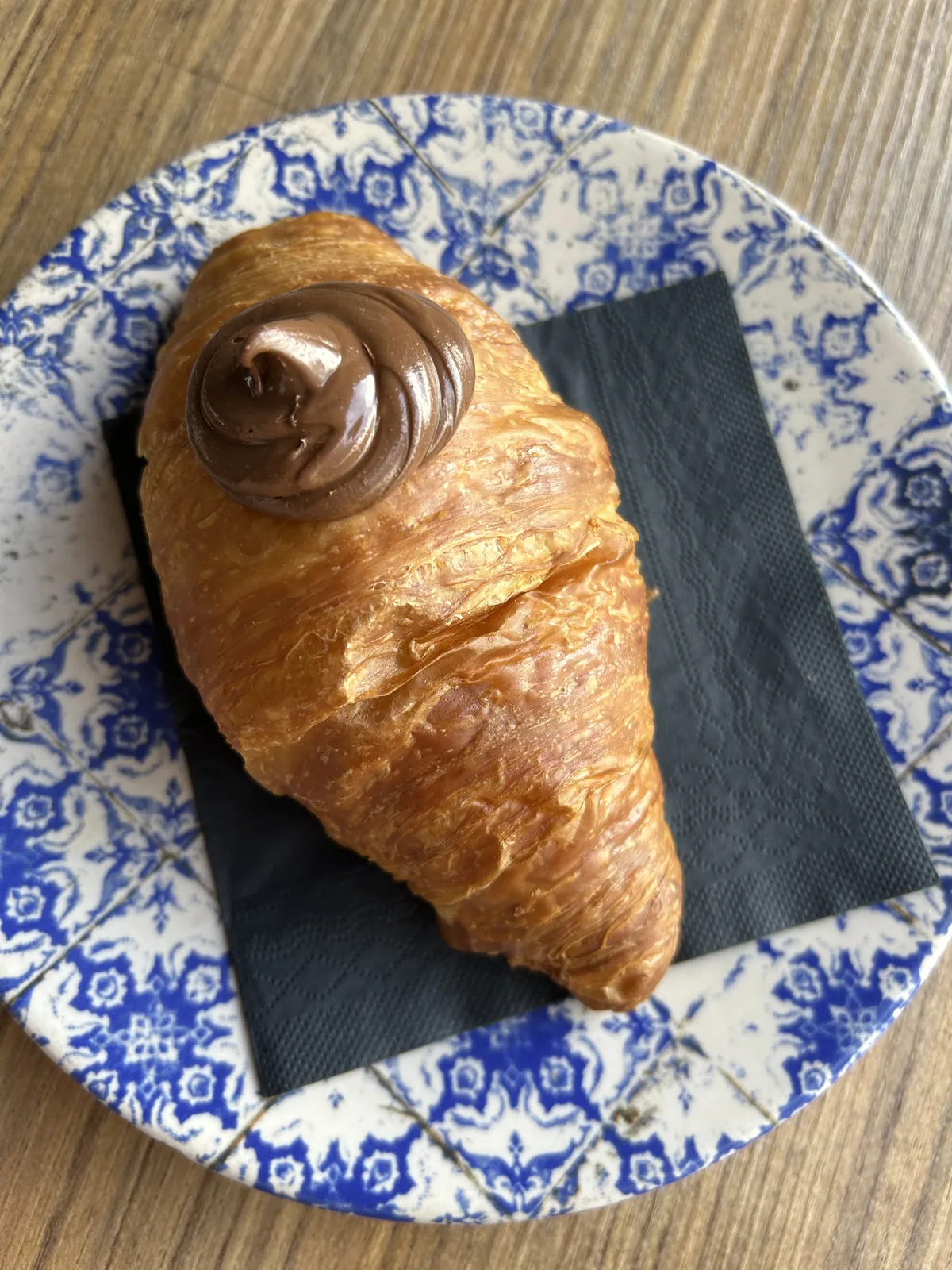
Maltese food mixes Sicilian, North African and British influences. Over seven days, try to tick off: pastizzi (Rabat, Day 4), ftira with tuna, capers and olives (Gozo is famous for it), stuffat tal-fenek (rabbit stew), fresh fish in Marsaxlokk, ġbejniet (small Gozitan sheep’s cheeses), imqaret (fried date pastries) and a bottle of Kinnie or Cisk.


Best time for a week in Malta
| Season | Weather & sea | For this itinerary |
|---|---|---|
| Spring (Mar–May) | Mild and green, 18–25 °C; sea warms from late May | Great for sightseeing and Gozo walks; Comino swim is chilly until May |
| Summer (Jun–Aug) | Hot (often 30 °C+), dry, busy | Beaches and diving at their best; start every day early and book Blue Lagoon slots and Hypogeum ahead |
| Autumn (Sep–Nov) | Warm sea, softer heat, fewer people | My favourite for this route – swimming and sightseeing in balance |
| Winter (Dec–Feb) | Around 15 °C, some rain and wind | Cheap and quiet; boats to the Blue Grotto and Comino may not run, so keep inland swaps ready |
My favourite months are May–June and September–October. Check the dates of village festas (June–September) – a summer evening with fireworks and brass bands is something special.
What to pack, money, safety & scams
What to pack
- A UK-style adapter – Malta uses Type G three-pin plugs.
- Water shoes for rocky swimming spots like St Peter’s Pool and Comino.
- A scarf or light layer to cover shoulders in churches (St John’s requires it).
- Comfortable flat shoes – Valletta has a lot of steps, and St John’s doesn’t allow narrow heels.
- A hat, sunscreen and a refillable bottle; there’s little shade on Comino, Dingli and the temples.
- A warm, windproof jacket from November to March – boat decks and the bastions get windy.
Money & cards
Malta uses the euro and cards are accepted almost everywhere, including contactless on buses. Carry a little cash for pastizzi shops, village bars, kiosks and Blue Grotto boats. Tipping isn’t compulsory; 5–10% in restaurants is appreciated if service isn’t included.
Safety & scams to avoid
- Fake ticket websites: Heritage Malta has warned about a fraudulent site selling non-existent tickets. Buy Hypogeum and museum tickets only on heritagemalta.mt or at the sites.
- Taxi prices: agree the fare before getting into a white taxi, or use Bolt/Uber with a fixed price in the app.
- Fish “by weight”: in touristy waterfront restaurants, ask for the price of the whole fish before it’s cooked.
- Blue Lagoon extras: sunbed and umbrella prices can be steep – bring a towel and arrive early instead.
- Sea safety: respect red flags, don’t cliff-jump into unknown water, and never swim near boat lanes at Comino.
- Night out: Paceville is lively but rowdy late at night – watch your drinks and belongings.
Insider tips & tricks for 7 days in Malta
- Arrive in Valletta by boat at least once. The ferry from Sliema costs a few euros and the view of the walls is better than any viewpoint.
- Book the Hypogeum the day you book flights. If it’s sold out, the last-minute tickets at Fort St Elmo (sold the day before, until noon) are your back-up.
- Check the cruise schedule. Valletta can be very crowded when big ships are in – visit early or late on those days, and do the Three Cities instead.
- Skip Marsaxlokk on Sunday morning unless the market is the point – a weekday morning is calmer and better for photos.
- You pay for the Gozo Channel ferry only on the way back – just walk on at Ċirkewwa.
- Go to the Blue Lagoon early, then walk away from it. By late morning the lagoon is packed; Santa Marija Bay on the other side of Comino is calm and sandy.
- Malta isn’t really a sandy-beach destination. Most swimming is from rocks – the sandy bays are Golden Bay, Għajn Tuffieħa, Mellieħa and Ramla on Gozo.
- Use Bolt for awkward spots. St Peter’s Pool, Dingli and Popeye Village are slow by bus but quick and affordable by app.
- Don’t base yourself in Paceville if you want sleep – Sliema or Balluta Bay give you the same convenience with quieter nights.
- Watch the noon gun from below. The Upper Barrakka Gardens view is free; arrive 15 minutes early either way.
- Pastizzi are messy – eat them outside, and don’t wear black.
- Keep a flexible sea day. Blue Grotto boats and Comino trips are cancelled in strong wind; swap with Mdina or Gozo’s inland sights.


How to adapt this 7-day itinerary
- With kids: swap the Hypogeum (no under-6s) for a harbour cruise, give Popeye Village a full afternoon, and choose Mellieħa Bay and Ramla for swimming.
- For divers: replace Day 3 with a dive day around Malta’s wrecks and use Day 7 for Gozo or Comino dives.
- Without a car: stay in Valletta, use the Explore Flex card with the Gozo Highspeed return, and base yourself in Victoria or Mġarr on Gozo.
- Party week: base in St Julian’s, but still do Days 1–4 – the mornings are quiet anyway.
- Fewer days? My 5-day Malta itinerary keeps Gozo and Comino; 3 days covers the main island’s highlights.
- More days? The 10-day Malta itinerary gives you time to slow down and see more.

More Malta guides
- Malta travel guide – regions, entry rules, eco-contribution, food and festas.
- 3 days in Malta – the main island’s highlights in a long weekend.
- 4 days in Malta – one extra day for a short break.
- 5 days in Malta – Malta, Gozo and Comino at a relaxed pace.
- 10 days in Malta – the slow version of this trip.
- Combining Malta with Sicily? See my one-day guides to Siracusa and Catania in the Italy travel guide.

Hotel, tourist board or travel brand in Malta?
I create honest, practical one-day itineraries read by travellers planning their next trip – plus photos, drone shots and Instagram stories from the road. I’m open to collaborations with hotels, apartments, restaurants, wineries, tour operators and destinations across Malta: sponsored itineraries, destination features, press trips and social media campaigns.
Work with me Get in touch7 days in Malta: FAQ
Is 7 days in Malta too long?
No. A week is ideal: four days cover Valletta, the Three Cities, the south and Mdina, and the remaining three let you enjoy Gozo and Comino without rushing. Many visitors who come for three days wish they had stayed longer.
Should I stay in Valletta or Sliema for a week in Malta?
Sliema and St Julian’s offer more hotels, restaurants and nightlife at better prices, with a ferry to Valletta. Valletta is quieter and more atmospheric in the evening but has fewer budget rooms. Either works; add two nights on Gozo.
Do I need to stay overnight on Gozo?
You can visit Gozo on a day trip, but two nights let you see the Citadel, Ġgantija, Ramla Bay and Dwejra calmly and reach Comino early in the morning before the crowds.
How much does the Gozo ferry cost?
The Gozo Channel ferry from Ċirkewwa to Mġarr costs €4.65 per foot passenger and €15.70 for a car and driver (checked November 2026). You only pay on the return trip from Gozo.
Do I need to book the Blue Lagoon on Comino?
Since 2025, visitors to the Blue Lagoon must pre-book a free time slot online (08:00–13:00, 13:30–17:30 or 18:00–22:00) and get a wristband on arrival. Some ferry operators, such as Comino Ferries, include landing access in the ticket, so check with your boat.
How far in advance should I book the Hypogeum?
As early as possible – often several weeks ahead, because only about ten people are allowed in at a time. Adult tickets cost €35. Last-minute tickets for €50 are sold the day before at Fort St Elmo and the Gozo Museum shop until noon.
Do I need a car for 7 days in Malta?
Not for the main island: buses, ferries and Bolt or Uber cover everything. A car is most useful on Gozo and for the transfer day to the north. Remember that Malta drives on the left.
How much is a weekly bus pass in Malta?
The Explore Adult 7-day card costs €25 and the Explore Flex 7-day card €27, both with unlimited bus travel (checked November 2026). Single tickets cost €2 in winter and €2.50 in summer.
Is the hop-on hop-off bus in Malta worth it?
It is a comfortable way to see Mdina, the Three Cities, Marsaxlokk and the Blue Grotto area in one or two days, with commentary and a guaranteed seat. Public buses are cheaper and go to more places, but are slower and can be crowded in summer.
What is the best month for a week in Malta?
May, June, September and October are best: warm sea, long days and fewer crowds than July and August.

Miki Kokica
Travel blogger behind One Day Itinerary. I test every route myself and write honest, practical guides so you can make the most of a single day anywhere.
Work with me Instagram










