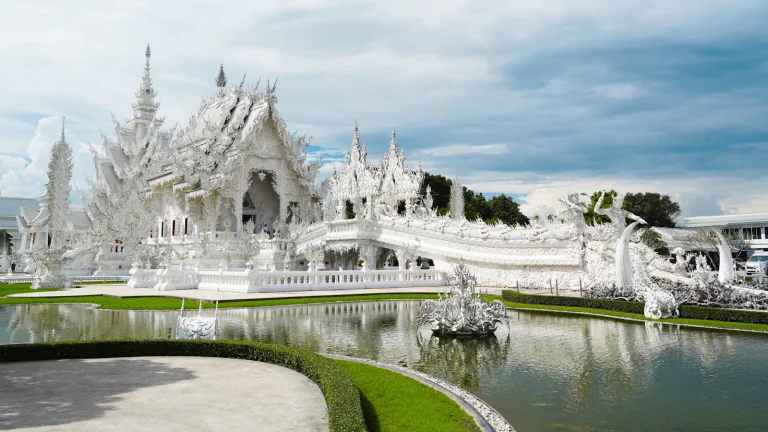
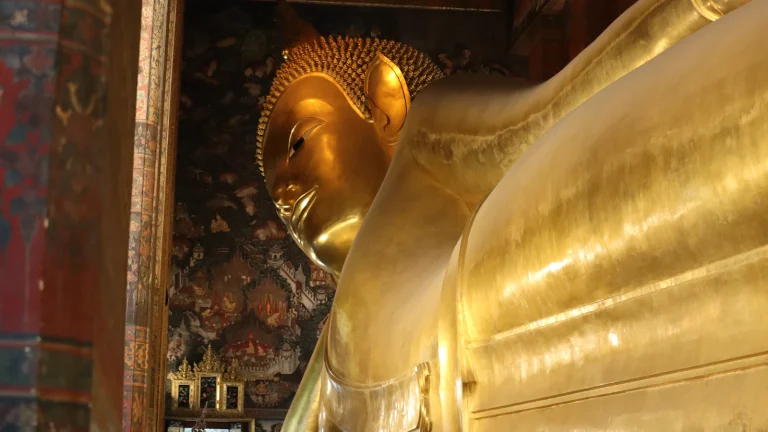
Phuket isn’t just beaches and beach clubs. Between the resort towns you’ll find a 45-metre marble Buddha watching over the island, a temple where locals set off firecrackers to give thanks, a golden Buddha half buried in the ground and colourful Chinese shrines in the Old Town. This guide to the Phuket temples focuses on the two big ones, the Big Buddha and Wat Chalong, and then covers the other temples worth a detour, with opening hours, the dress code and how to get there in 2027.
Good news first: after a long closure, the Big Buddha is open to visitors again. Both main sites are free, they’re only about 10 minutes apart, and you can easily combine them in a half day.
Phuket temples at a glance
| Temple | Area | Why go | Entry |
|---|---|---|---|
| Big Buddha | Nakkerd Hill, Chalong/Kata | 45 m marble Buddha, island views | Free (donations) |
| Wat Chalong | Chalong | Phuket’s most important temple, 60 m relic chedi | Free |
| Wat Phra Thong | Thalang (north) | Golden Buddha half buried in the ground | Free |
| Wat Sri Sunthon | Thalang (north) | Golden reclining Buddha on the roof | Free |
| Wat Mongkol Nimit | Phuket Old Town | Elegant town temple from the 1880s | Free |
| Jui Tui and Serene Light shrines | Phuket Old Town | Chinese shrines, Vegetarian Festival | Free |
| Wat Suwan Khiri Khet | Karon | Pretty local temple behind the beach | Free |
1. Big Buddha Phuket: the white marble giant
The Big Buddha (Phra Phutta Ming Mongkol Eknakiri) sits on top of Nakkerd Hill, between Chalong and Kata, at around 400 m above sea level. The seated statue is 45 m tall and about 25 m wide, built of reinforced concrete and covered in white Burmese marble that shines in the sun. You can see it from much of southern Phuket.
Next to it is a smaller golden Buddha, and the terraces around the base give one of the best views on the island: Chalong Bay with its boats on one side, and Kata, Kata Noi and the Andaman Sea on the other. On a clear day, you can make out the islands of Phang Nga Bay.
Open again after the closure
The site closed after a deadly rain-triggered landslide in Kata in August 2024, and it only reopened fully on 3 March 2026. It’s now managed by Wat Kittisangharam (Wat Kata) under a list of conditions set by the Forestry Department. The visitor area is smaller than before, and some parts are still being developed.
- Hours: Daily, 9 am–6 pm, last entry around 5:30 pm.
- Entry: Free at the time of writing, with donations welcome. The temple has said it is reviewing management costs, so a fee could be introduced. Check before you go.
- Getting there: The access road branches off Chao Fa West Road and is signposted from Chalong Circle. It’s paved, steep and winding, about 15 minutes from the turn-off to the top.
- Time needed: 45–60 minutes at the top.
- Tip: Go in the late afternoon for softer light and cooler air. Ride slowly on the way down, the curves are tight.
2. Wat Chalong: Phuket’s most important temple
Wat Chalong’s official name is Wat Chaithararam, and it’s the largest and most visited of Phuket’s temples. Locals come here to pray, make offerings and ask for good luck, so it feels alive rather than touristy.
The temple is linked to two revered monks, Luang Pho Chaem and Luang Pho Chuang, who helped treat the wounded with herbal medicine during the 1876 rebellion of Chinese tin miners. Their gilded statues are in the main hall, and you’ll see people covering them with small squares of gold leaf.
- Grand Pagoda: The 60 m Phra Mahathat Chedi was built between 1991 and 2001 and holds a fragment of bone believed to be from the Buddha. Climb inside through three levels of Buddha images and murals to a terrace with views over the grounds.
- Firecrackers: Don’t jump when you hear loud bangs. People set off firecrackers in a brick kiln-like structure to give thanks when a wish has come true.
- Hours: Roughly 7 am–5 pm. You can walk the grounds outside these times.
- Entry: Free. Donations are welcome.
- Tip: Go in the morning, before the tour vans, and combine it with the Big Buddha about 10 minutes away.
3. Wat Phra Thong: the half-buried golden Buddha
In Thalang, in the north of the island, Wat Phra Thong is known for a golden Buddha image that only shows its head and shoulders above the floor. Local legend says the statue rose out of the ground on its own, and that attempts to dig it out were met with misfortune, so it was left where it is and a chapel was built around it. The temple also has a small museum about tin mining and Chinese customs in Phuket.
- Entry: Free.
- Getting there: About 20 minutes from Phuket Airport, an easy stop on the way to or from your flight.
4. Wat Sri Sunthon: the Buddha on the roof
Also in Thalang, near the Heroines Monument on the road to the airport, Wat Sri Sunthon has a 29 m golden reclining Buddha lying on top of its main building. You can see it from the road, but it’s worth stopping to walk around the statues of mythical creatures in the grounds. It’s free and takes 20 minutes.
5. Phuket Old Town temples and Chinese shrines
Phuket Town has a strong Hokkien Chinese heritage from its tin-mining past, and you’ll feel it in the temples.
- Wat Mongkol Nimit: An elegant temple in the Old Town, founded in 1880, with a gilded ordination hall, a large chedi and a big banyan tree. It’s a peaceful break between the shophouse streets.
- Jui Tui Shrine: A Taoist shrine near the market and the main centre of the famous Phuket Vegetarian Festival, held in the ninth lunar month (usually around September or October). During the festival, processions and ceremonies take over the Old Town.
- Shrine of the Serene Light (Saeng Tham): A small, beautiful shrine hidden at the end of a narrow alley off Phang Nga Road, with colourful painted walls and ceilings.
- Wat Khao Rang: A local hilltop temple near Khao Rang viewpoint. Combine it with sunset at the viewpoint above town.
6. Wat Suwan Khiri Khet (Karon Temple)
Just behind Karon Beach, this small, attractive temple is where locals from the west coast come to pray. It often hosts a market and fairs, so it’s a nice evening stop if you’re staying in Karon or Kata.
Half-day Phuket temple route
- 8:30 Wat Chalong, including the Grand Pagoda
- 10:00 Big Buddha (opens at 9)
- 11:30 Lunch in Chalong or Kata
- Afternoon Phuket Old Town: Wat Mongkol Nimit, the Shrine of the Serene Light and Jui Tui Shrine, then sunset at Khao Rang
If you’re flying in or out, add Wat Phra Thong and Wat Sri Sunthon on the way to or from the airport.
How to get to the Phuket temples
- Scooter or car: The most flexible option. Driving times outside rush hour from the Big Buddha: Chalong Circle about 15 minutes, Kata and Karon about 20 minutes, Phuket Town about 30 minutes, Patong about 40 minutes.
- Grab or Bolt: Easy in Phuket, though prices can be higher than in other Thai cities. Ask your driver to wait at the Big Buddha, as finding a ride down can take time.
- Taxi or tuk-tuk for a half day: Many drivers offer a fixed price for a Big Buddha, Wat Chalong and viewpoint tour. Agree the price first.
- Organised island tour: Most Phuket city tours include both main temples, plus Karon viewpoint and the Old Town.
Dress code and temple etiquette in Phuket
- Cover shoulders and knees. No sleeveless tops or shorts above the knee. Free sarongs are usually available at the Big Buddha entrance.
- Bring a light shirt or scarf if you’re coming from the beach. Swimwear is never OK in a temple.
- Take off your shoes and hat before entering halls and shrines.
- Don’t touch Buddha statues or monks, and never point your feet at a Buddha image.
- Women should not hand objects directly to monks.
- Keep your voice low, especially where people are praying.
Best time to visit in 2027
Phuket’s dry season, from about November to April, has the clearest views from the Big Buddha. During the rainy season (roughly May to October), visit in the morning when showers are less likely, and be careful on the hill road. If you’re in Phuket during the Vegetarian Festival, the Old Town shrines are an incredible, intense experience, but very crowded and loud.
Where to stay near the Big Buddha and Wat Chalong
Kata and Karon are the closest beach areas to the Big Buddha, while Phuket Old Town is better if you love food and heritage.
| Area | Hotel | Why |
|---|---|---|
| Kata | Kata Rocks | Luxury. White sky villas with private pools and sea views. |
| Kata Noi | Katathani Phuket Beach Resort | Upper mid-range. Right on quiet Kata Noi Beach, great for families. |
| Phuket Old Town | Casa Blanca Boutique Hotel | Mid-range. Sino-Portuguese style, walk to shrines and cafés. |
| Patong | Lub d Phuket Patong | Budget. Modern hostel with private rooms, close to the beach. |
More Phuket and Thailand guides
Balance temple time with the sea: my guide to the best beaches in Phuket covers Kata, Nai Harn, Freedom Beach and more. If you’re hopping over to Krabi, don’t miss the climb up the Tiger Cave Temple. For the rest of the country, see the best temples in Thailand, scuba diving in Thailand and my Thailand travel guide.
Phuket temples FAQ
Is the Big Buddha in Phuket open?
Yes. It reopened on 3 March 2026 after the landslide closure, and it’s open daily from 9 am to 6 pm, with last entry around 5:30 pm.
How much does it cost to visit the Big Buddha Phuket?
Entry has been free since the reopening, with donations welcome. A fee could be introduced, so check before you go.
Is Wat Chalong free?
Yes, Wat Chalong is free to visit. It’s open roughly from 7 am to 5 pm, and donations are welcome.
What should I wear to the Phuket temples?
Cover your shoulders and knees. No beachwear, sleeveless tops or short shorts. Sarongs are often available at the entrance of the Big Buddha.
How far is the Big Buddha from Wat Chalong?
About 10–15 minutes by car or scooter, which makes them easy to combine in one morning.
Why are there firecrackers at Wat Chalong?
Locals set them off in a special brick structure to give thanks when their wishes or prayers have been answered. They’re loud but harmless.

Written by
Miki Kokica
Travel blogger behind One Day Itinerary. I test every route myself and share honest, practical guides so you can plan better trips in less time.
Work with me Instagram