Hi, I’m Miki! Nairobi was the start and the end of our Kenya trip in February 2025, and I loved how much you can pack into a few days here: giraffes eating from your hand, colourful markets where everyone haggles, the craziest painted buses in the world, a long but unforgettable day trip to see Kilimanjaro, and one of the best nights out of my life.
This is my 4-day Nairobi itinerary – three days in and around the city plus one day trip to Amboseli National Park, built from what we actually did and the timings that work with Nairobi traffic. If you only have one day, read my Nairobi travel guide; if you have less or more time, there are 3-day, 7-day and 10-day versions too.
Day 1 – Markets, matatus and the city centre
Day 2 – Wildlife in Karen: Nairobi National Park, Sheldrick elephant orphanage, Giraffe Centre
Day 3 – Day trip to Amboseli for elephants and Kilimanjaro (or Lake Nakuru & Lake Naivasha)
Day 4 – Kibera with a local guide, then a farewell dinner and a night out in Westlands
Is 4 days in Nairobi enough?
Yes – four days is a really good amount of time for Nairobi. Two days cover the city’s highlights if you group them by area, and the extra days give you a full day trip to see big wildlife and Kilimanjaro, plus a slower day for Kibera and the nightlife.
What makes this plan different from my 3-day Nairobi itinerary is the day trip. Amboseli is about four hours from Nairobi each way, so it needs a whole day on its own – but it gave us one of the most memorable days of our whole trip. If you want the Masai Mara as well, you need more time: look at my 7-day plan.
Day 1: Markets, matatus and the city
We landed in Kenya in the afternoon and took it easy. If you land early, use day one to get a feel for the city: markets, street life and your first Kenyan lunch.
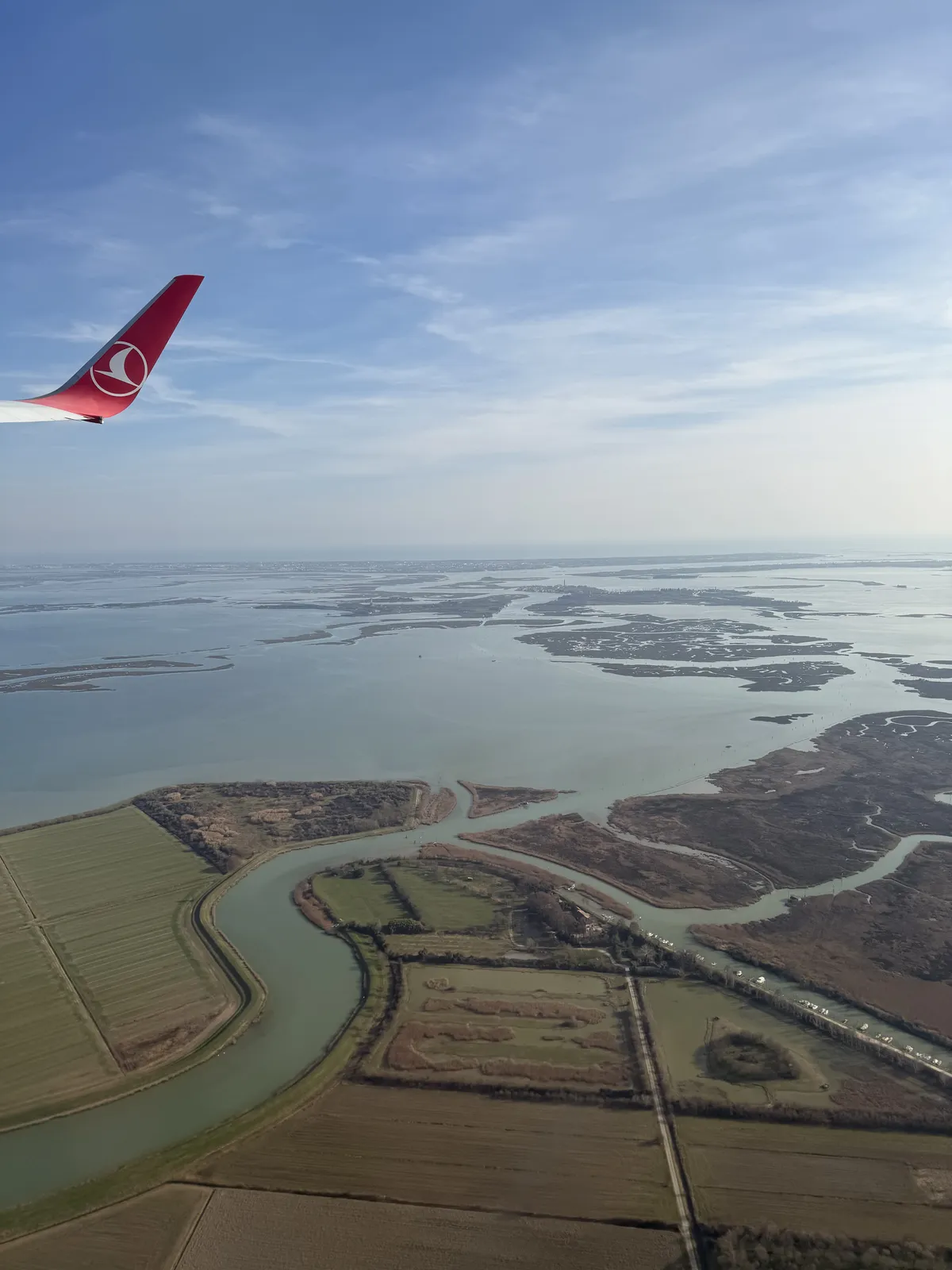
Morning: a curio market (and your first haggling lesson)
Nairobi’s markets are loud, colourful and full of life – wooden carvings, beaded jewellery, paintings, Maasai blankets, shoes, clothes and sacks of beans in every colour. You can, and should, bargain almost everywhere: the first price for a tourist is usually much higher than the real one. A classic tip from travel forums is to start at around 10% of the first price and aim to settle at about 30%.

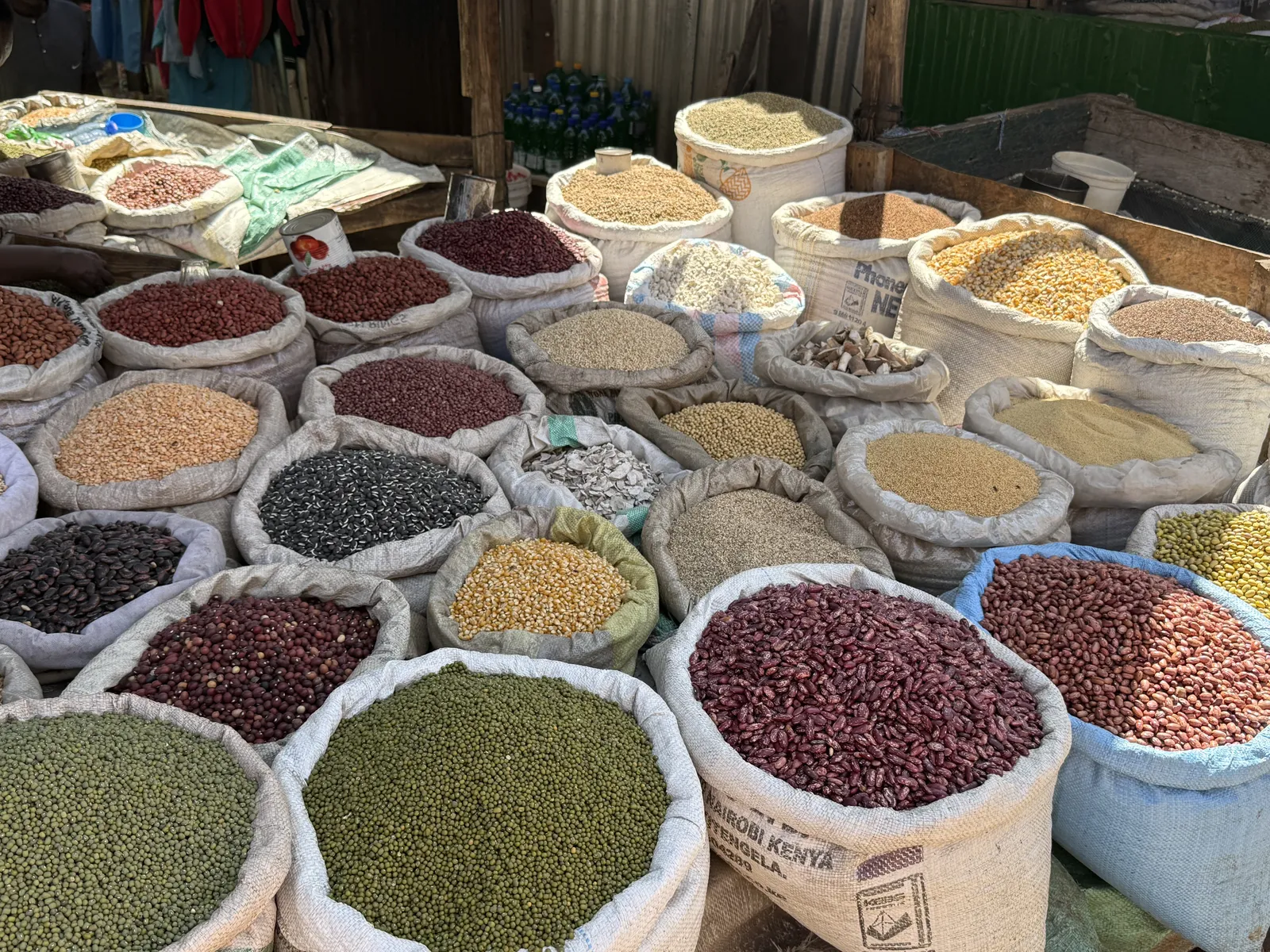
- Carry small notes – many stalls can’t break 1,000-shilling notes.
- The Maasai Market moves – it pops up in different places on different days of the week, so ask your hotel where it is on the day you’re free.
Lunch in town
We had a quick lunch in town – nothing fancy, but after the market it was exactly what we needed.

Afternoon: street life and the painted matatus
Even a short drive through Nairobi is an experience. Street vendors carry whole shops on their heads and shoulders, and the matatus – private minibuses and buses – are painted with graffiti, football stars and rappers, and blast music so loud you hear them before you see them. For a great photo, just stand by a busy road for a minute.
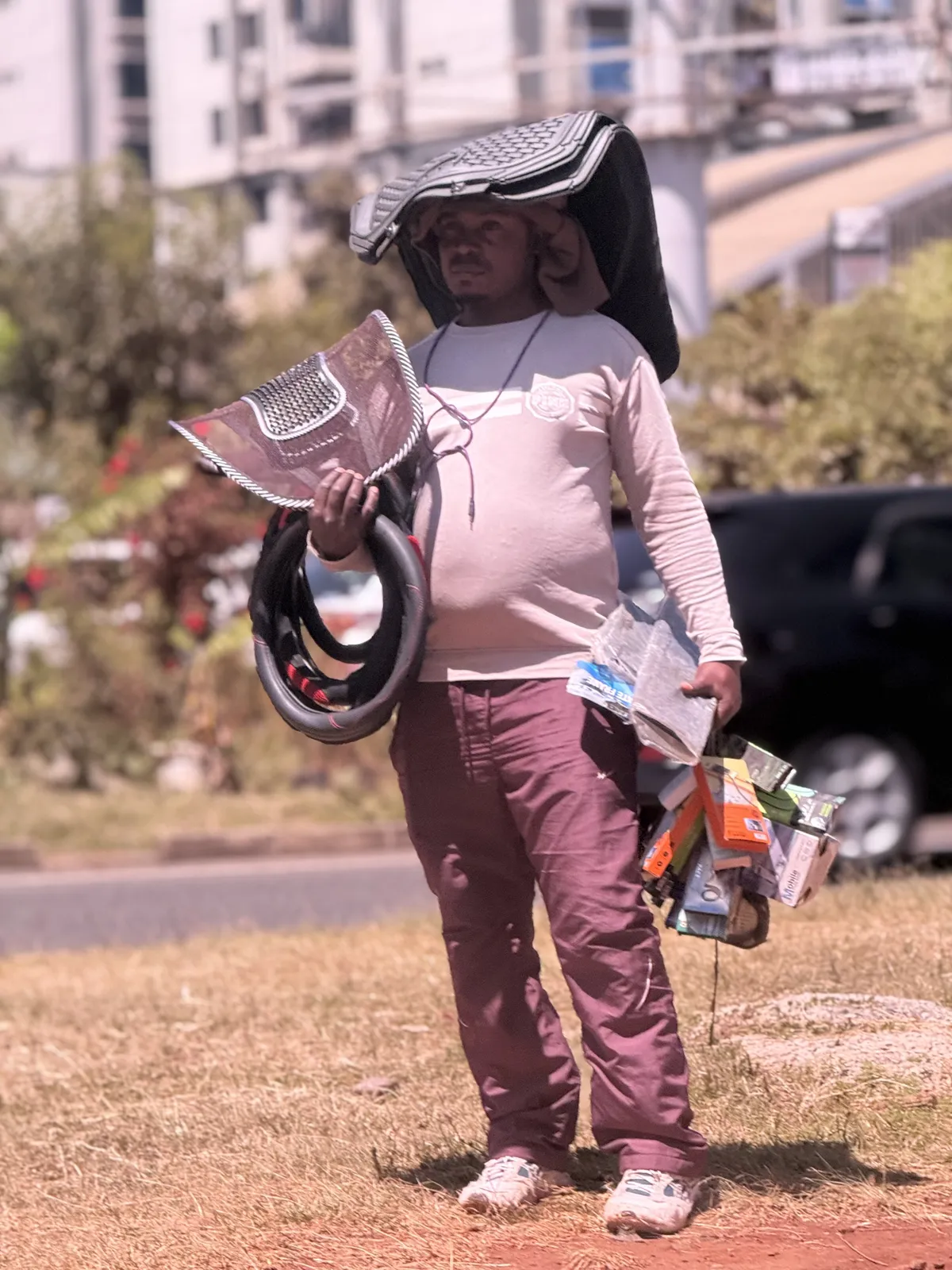
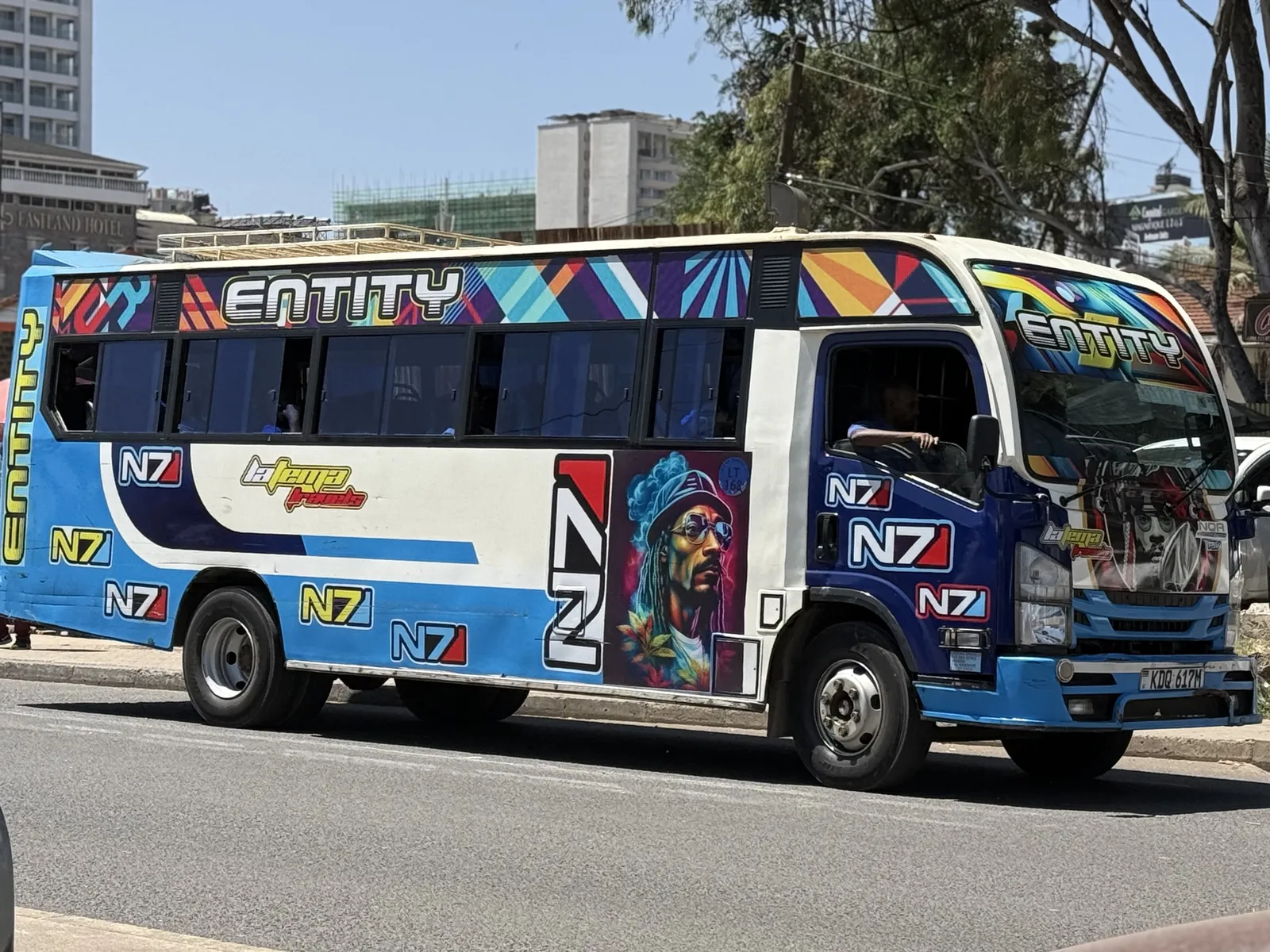
In the evening, have dinner close to your hotel and go to bed early – tomorrow starts at sunrise.
Day 2: Wildlife day in Karen and Lang’ata
Day 2 stays in the south-west of the city, where the national park, the elephant orphanage and the Giraffe Centre are close to each other – crossing Nairobi in rush hour can easily eat an hour or two.
| Time | Stop | Good to know |
|---|---|---|
| 06:30 | Game drive in Nairobi National Park | Animals are most active early; the only national park on the edge of a capital city. |
| 10:30 | Arrive at the Sheldrick elephant orphanage | The public visit runs 11:00–12:00 only and won’t wait for latecomers. |
| 12:30 | Lunch in Karen | Leafy suburb with garden cafés and restaurants. |
| 14:00 | Giraffe Centre | Open 9:00–17:00; feed Rothschild’s giraffes from a raised platform. |
| 15:30 | Karen Blixen Museum (optional) | The farmhouse of the author of Out of Africa, with views of the Ngong Hills. |
06:30 – Nairobi National Park
Just a few kilometres from the city centre, this park has lions, buffalo, zebras, giraffes and one of Kenya’s most important rhino sanctuaries – with skyscrapers on the horizon. Go early, when the animals are most active. Since October 2025 the Kenya Wildlife Service charges non-resident adults US$80 a day (children US$40), and fees are paid online through eCitizen, so have a card ready.
11:00 – Sheldrick Wildlife Trust elephant orphanage
The Sheldrick Wildlife Trust rescues orphaned elephants and rhinos and raises them until they can go back to the wild. During the one-hour public visit you watch the keepers bottle-feed the babies and play with them in the mud. The important practical bits from the Trust’s own website:
- The public visit is from 11:00 to 12:00 every day except 25 December – arrive by 10:30.
- Entry is a donation of US$20 per adult (12+) and US$5 per child, paid in cash on arrival.
- Visits are by advance booking only – no same-day bookings, and you can book up to three months ahead directly with the Trust (they don’t accept bookings through Viator, GetYourGuide or Tripadvisor).
- The Trust notes that Kenya Wildlife Service park entry fees are required separately and are paid online through eCitizen.
14:00 – The Giraffe Centre
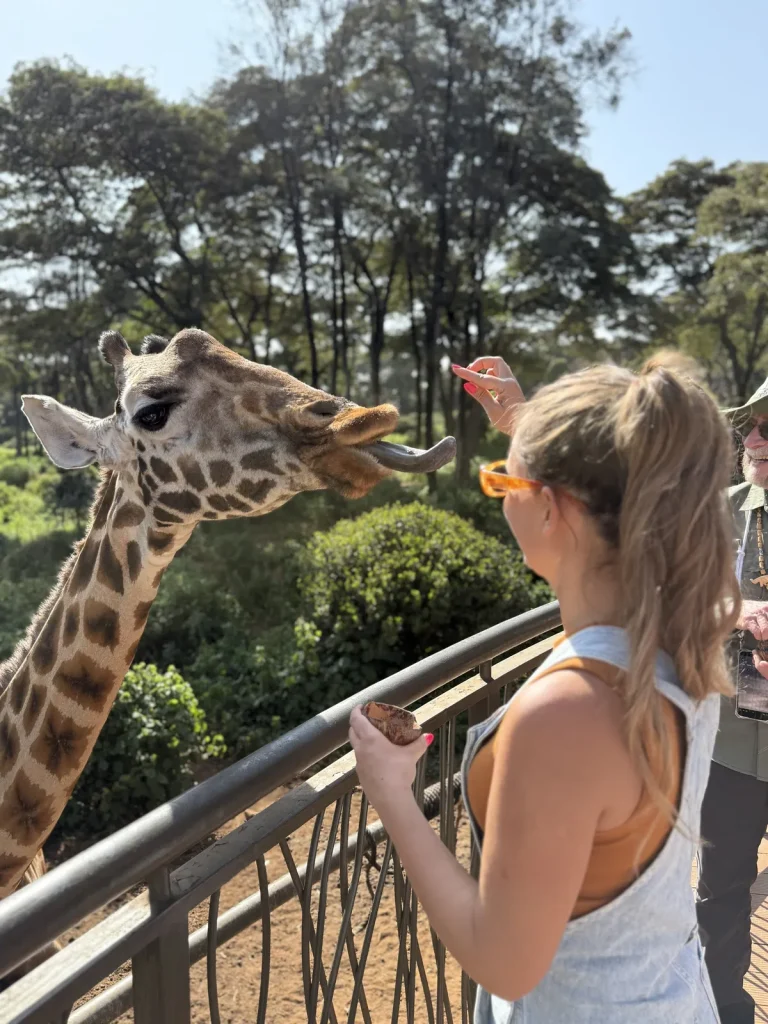
This was one of the most fun moments of our trip! At the Giraffe Centre in Lang’ata you feed endangered Rothschild’s giraffes at eye level from a raised platform, and they gently take the pellets from your hand with their long tongues. We came here on our last day in Nairobi, and I would go back tomorrow.


- Open every day from 9:00 to 17:00, including weekends and public holidays.
- Non-resident adults pay KSh 1,500, children (3–12) KSh 750, under-3s go free.
- No cash – the centre only takes M-Pesa, Visa or Mastercard.
- It’s on Nyumbi Road off Duma Road in Lang’ata, about 15 km from the city centre.
If you still have energy, the Karen Blixen Museum is close by; otherwise head back and sleep early – tomorrow’s pickup is at 5:00.
Day 3: Day trip to Amboseli and Kilimanjaro
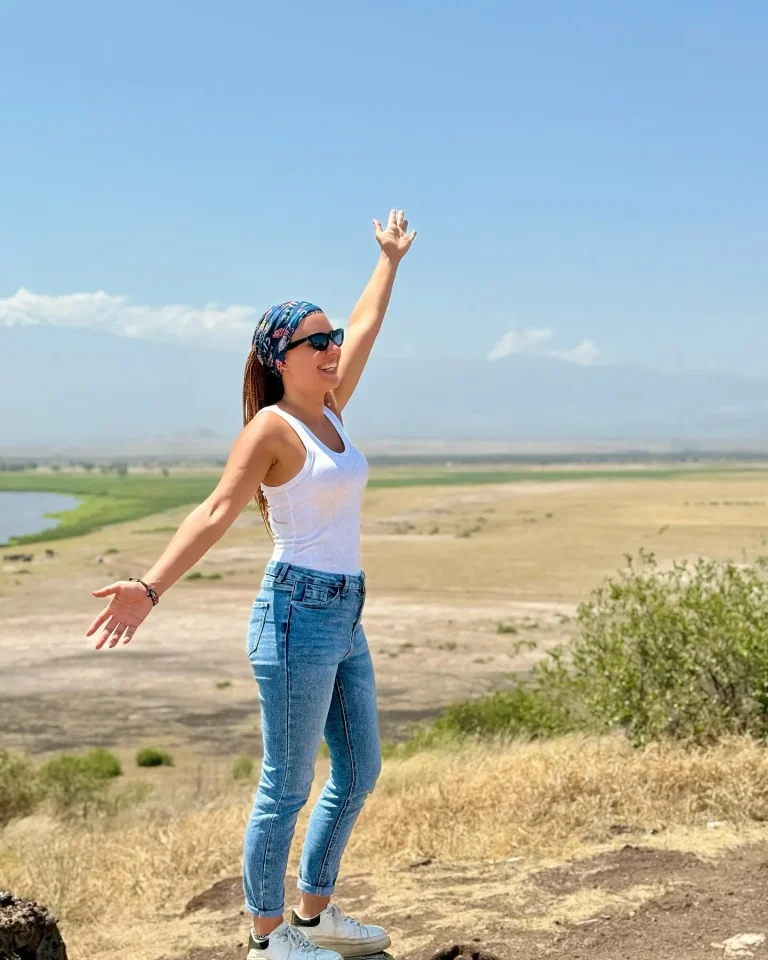
This is the day that turns a city break into a real Kenya trip. While we were staying in Nairobi, we booked a one-day tour to Amboseli National Park – the park of giant elephants and the classic view of Mount Kilimanjaro. We had to get up really, really early and spent a big part of the day in the car… but it was absolutely worth it. On the way we even saw Kilimanjaro rising above the plains! The full story, with every animal you can see, is in my Amboseli day trip guide.
| Time | What happens |
|---|---|
| 05:00 | Pickup at your hotel – still dark, bring a jacket and a snack. |
| 05:00–07:30 | Drive south-east on the Nairobi–Mombasa highway; sunrise on the way. |
| 07:30–08:00 | Coffee and toilet stop in Emali. |
| 08:00–09:30 | Quieter road to the park gate – watch for Kilimanjaro on the horizon. |
| 09:30–13:00 | Morning game drive: elephant herds, swamps, buffalo, zebras, giraffes, Observation Hill. |
| 13:00–14:00 | Lunch – picnic or at a lodge, depending on the tour. |
| 14:00–15:30 | Short afternoon game drive on the way out. |
| 15:30–20:00 | Drive back to Nairobi – expect traffic at the end. |
- Park fee: KWS charges non-resident adults US$90 a day for Amboseli (children US$45). Always check whether it’s included in your tour price – many cheaper offers add it on top.
- Go early for Kilimanjaro – clouds usually build around the summit by mid-morning; late afternoon is your second chance.
- Card or M-Pesa – the parks don’t take cash, so it’s easiest when the tour company handles the payment.
Alternative: Lake Nakuru and Lake Naivasha
If you’d rather spend less time in the car, or you want rhinos and flamingos, do what we did on another day: Lake Nakuru and Lake Naivasha in the Rift Valley, a few hours north-west of Nairobi. Morning game drive in Lake Nakuru National Park (rhinos, Rothschild’s giraffes, flamingos, Makalia Falls), lunch in Naivasha and a one-hour boat ride among the hippos on Lake Naivasha – we paid €20 each for the boat. Lake Nakuru now costs non-resident adults US$90 a day. Everything is in my Lake Nakuru & Lake Naivasha guide.


Day 4: Kibera with a local guide and a farewell night
Morning: sleep in, then shopping
After the long day trip, sleep in. Still need souvenirs? Find today’s Maasai Market – you’re a better haggler on day four than on day one.
Afternoon: Kibera
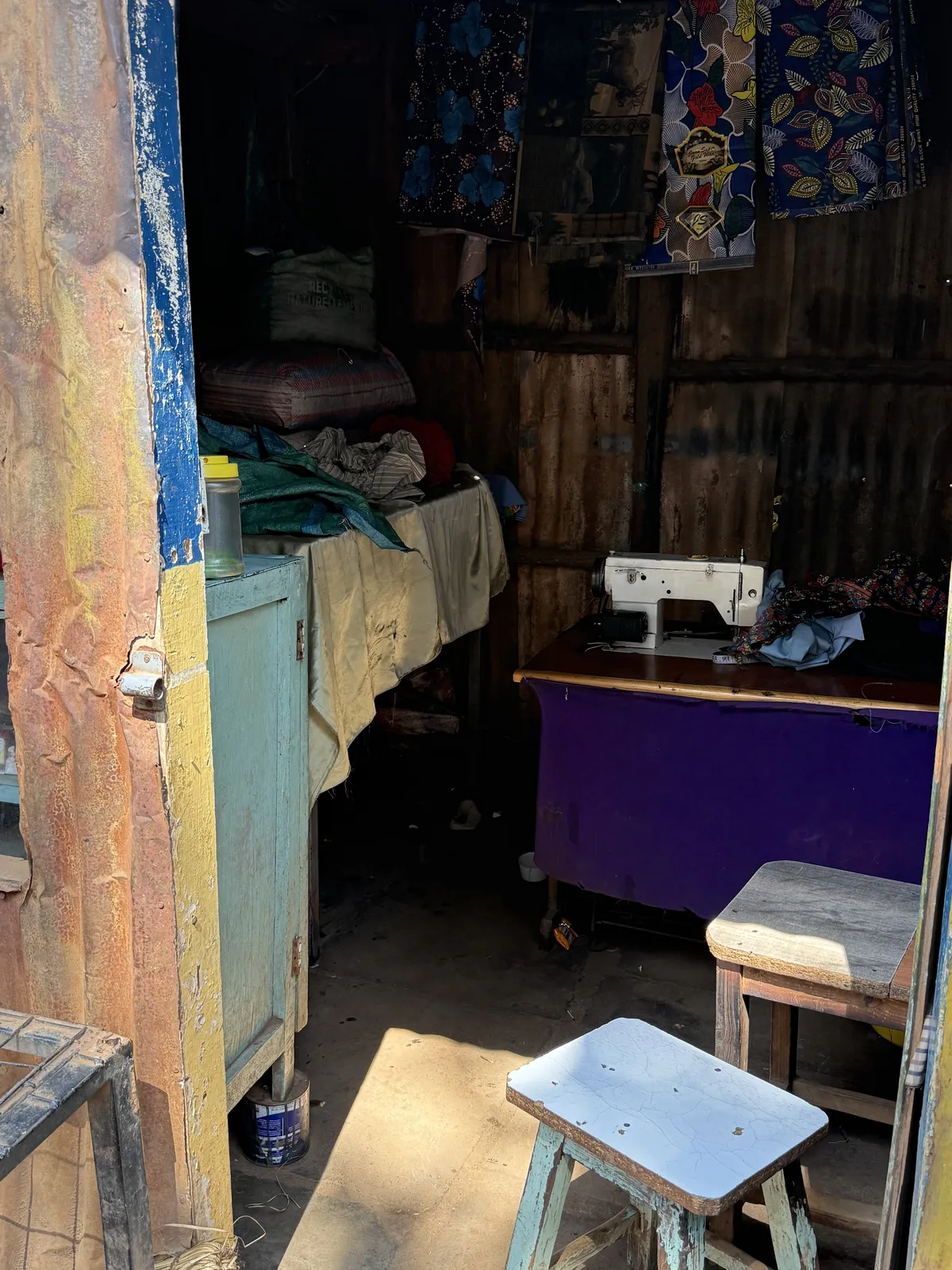
Kibera, in the south-west of Nairobi, is the biggest informal settlement in Kenya. I wanted to see how people really live in Nairobi, beyond the hotels and safari lodges, so we spent an afternoon there with a local guide. It was one of the most emotional and eye-opening days of my life, and the most beautiful moment of our whole trip happened here, in a small school with the children. Read my honest Kibera guide before you go.

Evening: ćevapi and the best night out of the trip
Here’s something I never expected: in the centre of Nairobi there’s a restaurant run by a man from the Balkans! On our last evening we went there for ćevapi, chatted with him in our own language – a little piece of home in the middle of Africa – and then continued to a night out. And the nightlife was amazing, maybe even more of a party than at home. The atmosphere is relaxed, people dance and have fun, and the clubs were good.

- Westlands is Nairobi’s main nightlife area, with clubs, bars, rooftops and restaurants close together.
- Always use Uber or Bolt at night, even for short distances, and go out in a group.
How much do 4 days in Nairobi cost? Entry fees
Official entry prices for the main sights in this itinerary, checked November 2026. Hotels, food and transport depend on your style, so I’ve left them out rather than guess.
| Sight | Non-resident adult | Child | How to pay |
|---|---|---|---|
| Nairobi National Park (KWS) | US$80 per day | US$40 | Online via eCitizen (card) |
| Sheldrick elephant orphanage | US$20 donation | US$5 (under 12) | Cash on arrival, booking required |
| Giraffe Centre | KSh 1,500 | KSh 750 (3–12) | M-Pesa, Visa or Mastercard only |
| Amboseli National Park (KWS) | US$90 per day | US$45 | Card / M-Pesa, often via your tour |
| Lake Nakuru National Park (KWS) | US$90 per day | US$45 | Card / M-Pesa, often via your tour |
A KWS daily fee is valid for up to 24 hours. Fees can change, so check before you travel.
Where to stay in Nairobi for 4 days
- Westlands – the best base for restaurants and nightlife, and easy for safari and day-trip pickups. Good if you want to go out.
- Karen and Lang’ata – green and quiet, right next to the Giraffe Centre, the elephant orphanage and the national park. Good for a relaxed stay, but further from the nightlife.
Whatever you choose, ask your day-trip company whether they pick up from your area – most tours collect you from your hotel.
Getting around Nairobi
- Traffic is heavy – plan one area per half-day and avoid crossing the city at rush hour.
- Use Uber or Bolt instead of walking long distances, especially after dark – compare both apps, prices can differ.
- Buy a Safaricom SIM at the airport – it has the best coverage, and M-Pesa makes paying easy.
Safety tips for Nairobi
- Keep your phone out of sight in the street and in traffic jams (close the car windows).
- Don’t walk around at night – take a car even for short distances.
- Ignore “sad stories” and unsolicited offers from strangers near tourist sites – a polite “no, asante” and walking on works best.
- Never pay a stranger in the street for a “cheap safari” – one of the most common scams is a tour paid in advance where no vehicle arrives.
My tips for 4 days in Nairobi
- Book the elephant orphanage before you fly – no same-day bookings.
- Put the day trip in the middle of your stay, so a delayed flight doesn’t cost you Amboseli.
- Have both cash and a card – the orphanage wants cash, the Giraffe Centre and national parks don’t take it.
- Sleep early before the day trip – the 5:00 pickup comes fast.
Have more time? Longer Kenya itineraries
With a week you can add the Masai Mara to Nairobi – see my 7-day itinerary. With ten days, you can do the city, a safari and the coast: my 10-day itinerary has the plan. For a shorter stay, my 3 days in Nairobi keeps you in the city. For entry rules, budgets and the best time to go, read my Kenya travel guide.
4 days in Nairobi – FAQ
Is 4 days in Nairobi too much?
No. Two days cover the city highlights, and the other two let you add a full day trip to Amboseli or Lake Nakuru and Lake Naivasha, plus a slower day for Kibera and the nightlife.
What is the best day trip from Nairobi?
For elephants and views of Kilimanjaro, Amboseli National Park, about four hours each way. For rhinos, flamingos and a hippo boat ride with less driving, Lake Nakuru and Lake Naivasha in the Rift Valley.
How much is the Amboseli entry fee?
The Kenya Wildlife Service charges non-resident adults US$90 per day and children US$45 (fees in effect since October 2025). Check whether your tour includes it.
Do I need to book the Sheldrick elephant orphanage?
Yes. Visits are by advance booking only, directly with the Trust, with no same-day bookings. The public visit runs from 11:00 to 12:00, and the US$20 adult donation is paid in cash on arrival.
Can I pay cash at the Giraffe Centre?
No. The Giraffe Centre only accepts M-Pesa, Visa or Mastercard. Non-resident adults pay KSh 1,500 and children KSh 750.
Is it safe to visit Kibera?
Only with a local guide. Walking in alone is really dangerous, because it is easy to get lost and become a target for theft. Go with a guide who lives there or works with a community project.

Miki Kokica
Travel blogger behind One Day Itinerary. I test every route myself and write honest, practical guides so you can make the most of a single day anywhere.
Work with me Instagram