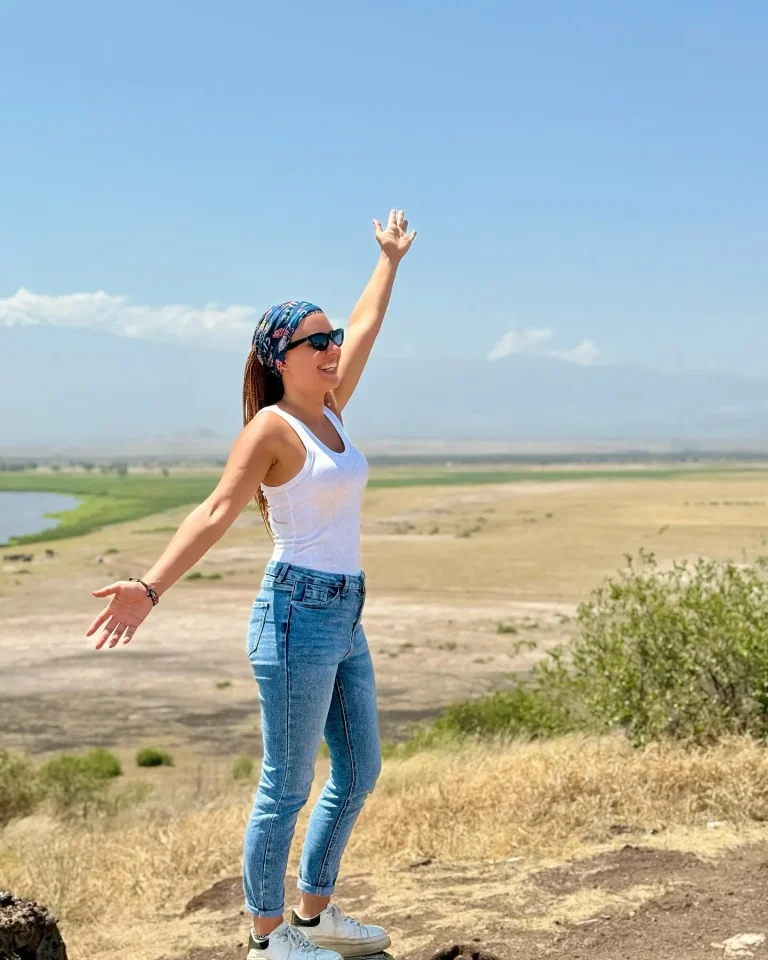
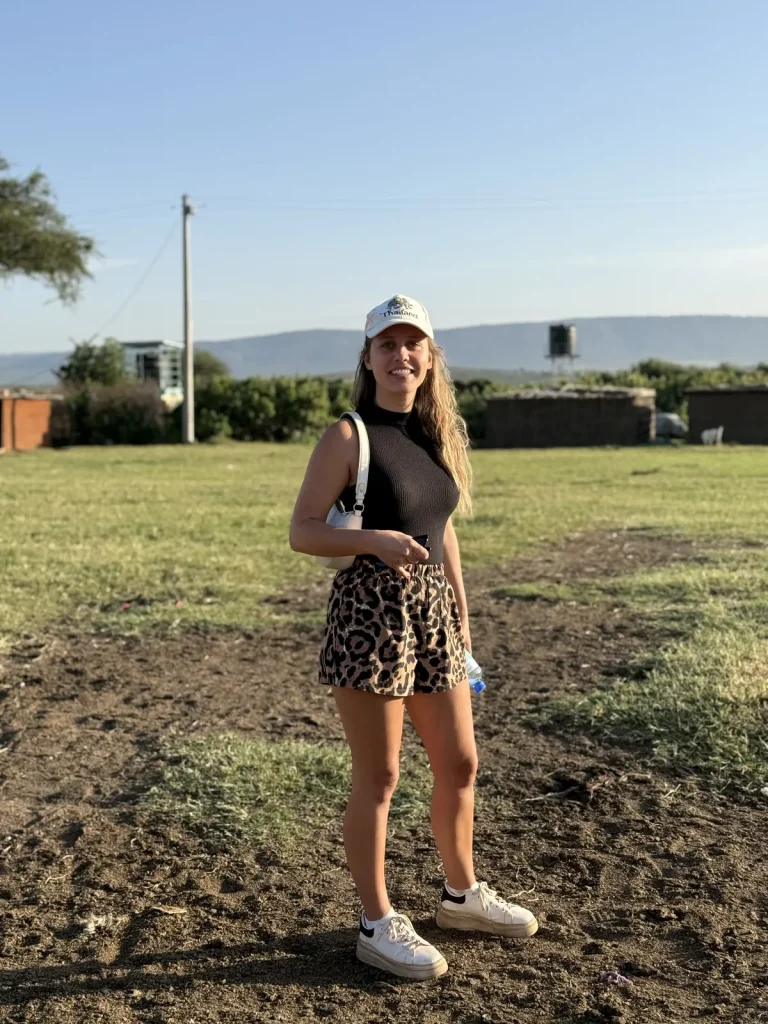
Hi, I’m Miki! Seven days is the sweet spot for a first trip to Kenya: enough time to get to know Nairobi, do a proper safari in the Masai Mara, meet the Maasai, see rhinos and flamingos at Lake Nakuru and float past hippos on Lake Naivasha – without spending the whole week in the car. This is the route we actually travelled in February 2025, starting and finishing in Nairobi, with the safari booked through a local agency in the city.
Below you’ll find the day-by-day plan, how we booked our safari (and haggled), what the parks cost in 2026, when to go, what to pack and the tips I wish I’d known before. Short on time? Start with my one-day Nairobi guide. Have longer? See my 3-day, 4-day and 10-day plans.
Day 1 – arrive in Nairobi · Day 2 – markets, city life and Kibera · Days 3–5 – Masai Mara safari and a Maasai village · Day 6 – Lake Nakuru & Lake Naivasha · Day 7 – Giraffe Centre, a farewell dinner and (if you can) a night out in Nairobi.
Your 7-day Kenya itinerary in one table
| Day | Where | Highlights | Night |
|---|---|---|---|
| 1 | Nairobi | Arrive, SIM card, rest | Nairobi |
| 2 | Nairobi | Curio market, matatus, lunch in town, Kibera with a local guide | Nairobi |
| 3 | Masai Mara | Drive (about 5–6 h), afternoon game drive | Tented camp |
| 4 | Masai Mara | Full day in the reserve, picnic on the plains, border marker | Tented camp |
| 5 | Masai Mara → Nairobi | Morning game drive, Maasai village, drive back | Nairobi |
| 6 | Lake Nakuru & Lake Naivasha | Rhinos, Rothschild’s giraffes, flamingos, hippo boat ride | Nairobi (or at the lake) |
| 7 | Nairobi | Giraffe Centre, Sheldrick (if booked), farewell dinner | Fly home |
This is the order I would follow again. You can easily swap days 6 and 7, or sleep at Lake Naivasha on day 6 if you fly home late on day 7.
Day 1: Arrive in Nairobi
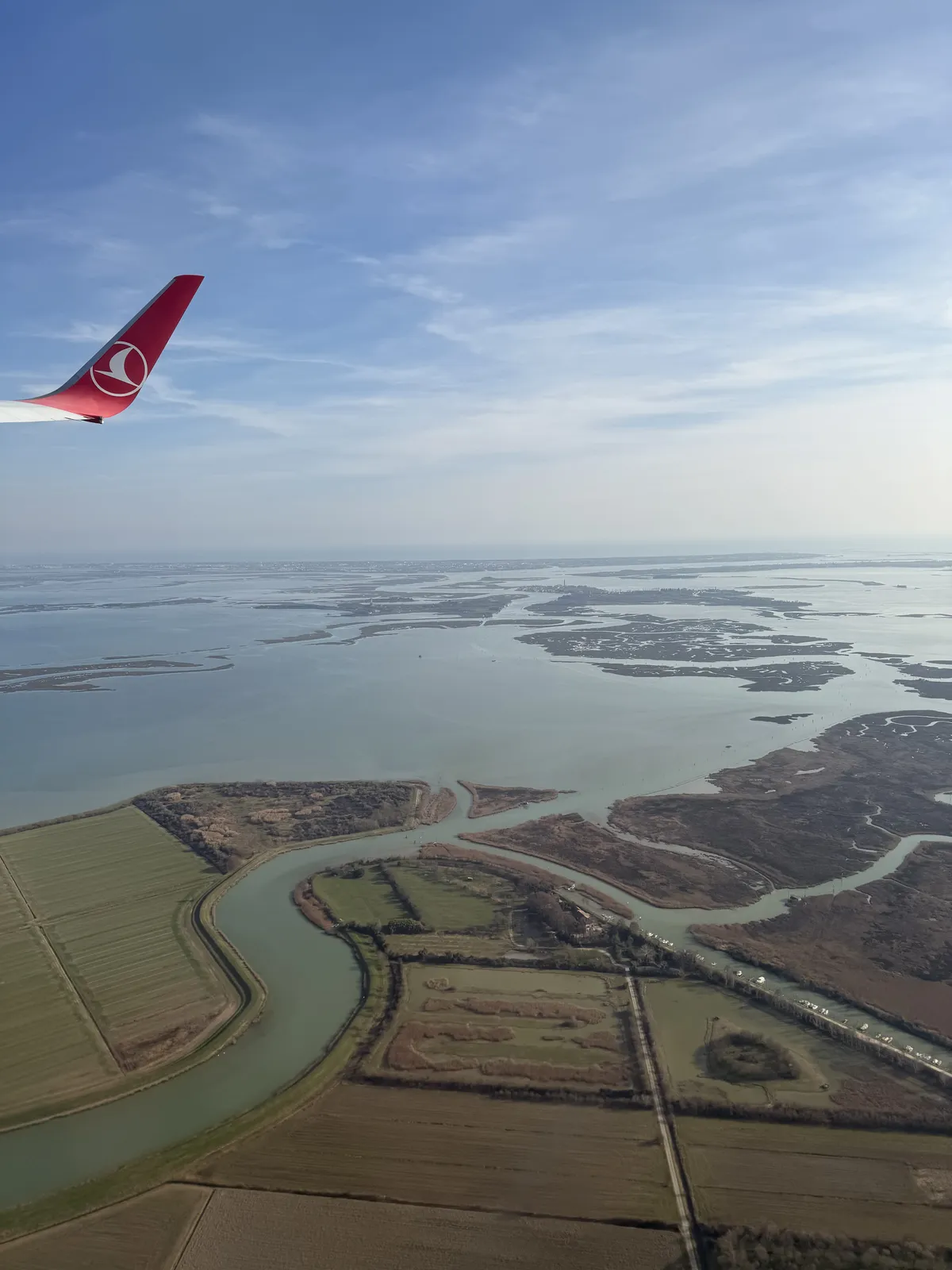
We landed in Kenya in the afternoon and simply checked in – and I’d recommend the same. After a long flight, Nairobi traffic is not something you want to tackle on the first evening. Use the time for the boring but important things:
- Buy a Safaricom SIM at the airport – it has the best coverage, and M-Pesa makes paying easy.
- Make sure you have a working card: most national parks no longer take cash, and fees are paid online through eCitizen.
- Get some small notes in shillings for markets and tips – many stalls can’t change big notes.
- Install Uber and Bolt and compare prices – you’ll use them a lot.
Day 2: Nairobi markets, matatus and Kibera
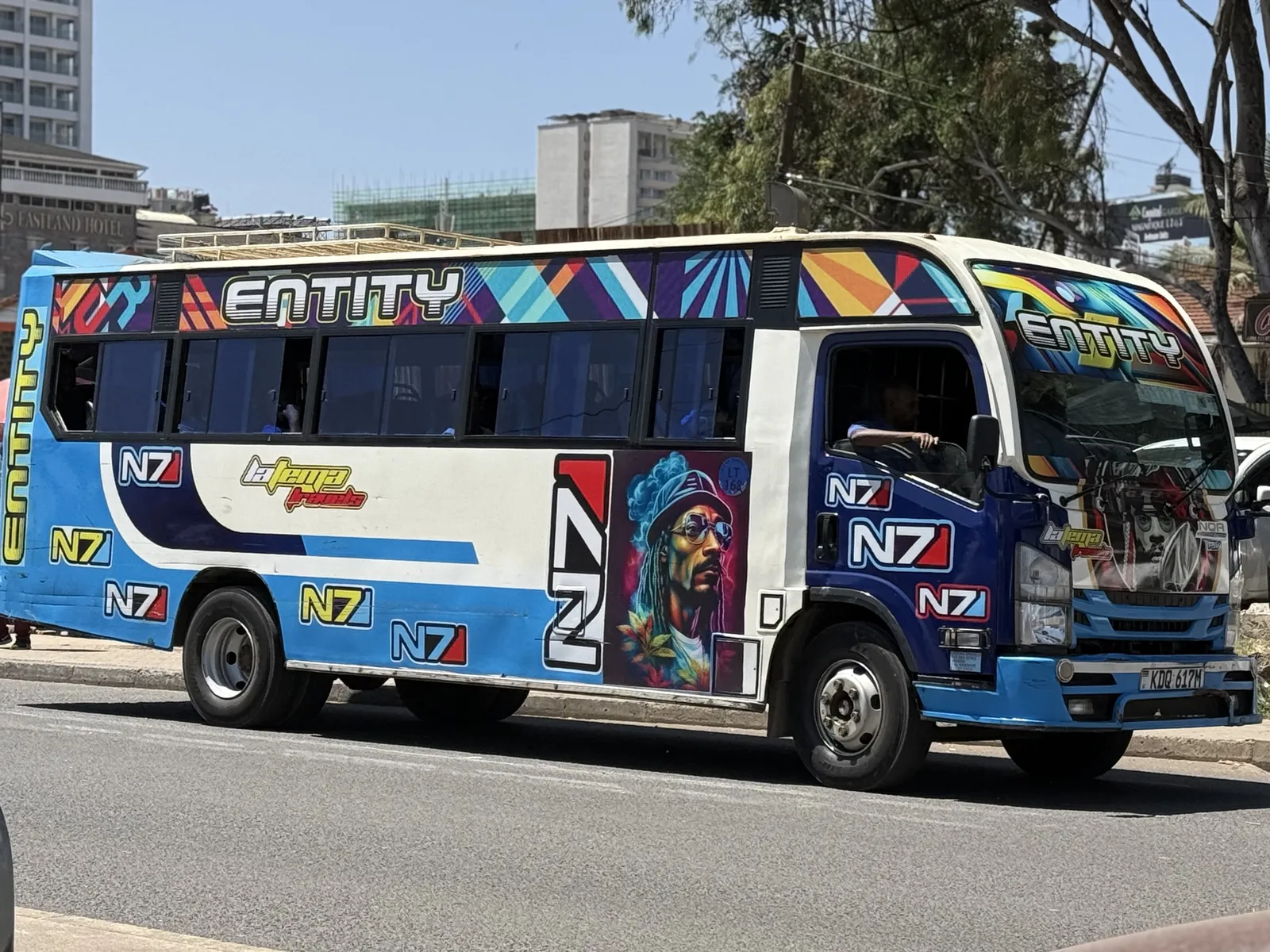
Our first full day was pure city life. In the morning we went to a curio market – wooden carvings, beaded jewellery, paintings, Maasai blankets – and then walked past roadside stalls selling everything from shoes to sacks of beans in every colour. You can (and should) haggle almost everywhere in Nairobi: the first price for a tourist is usually far higher than the real one. Start low, smile, take your time and be ready to walk away politely.

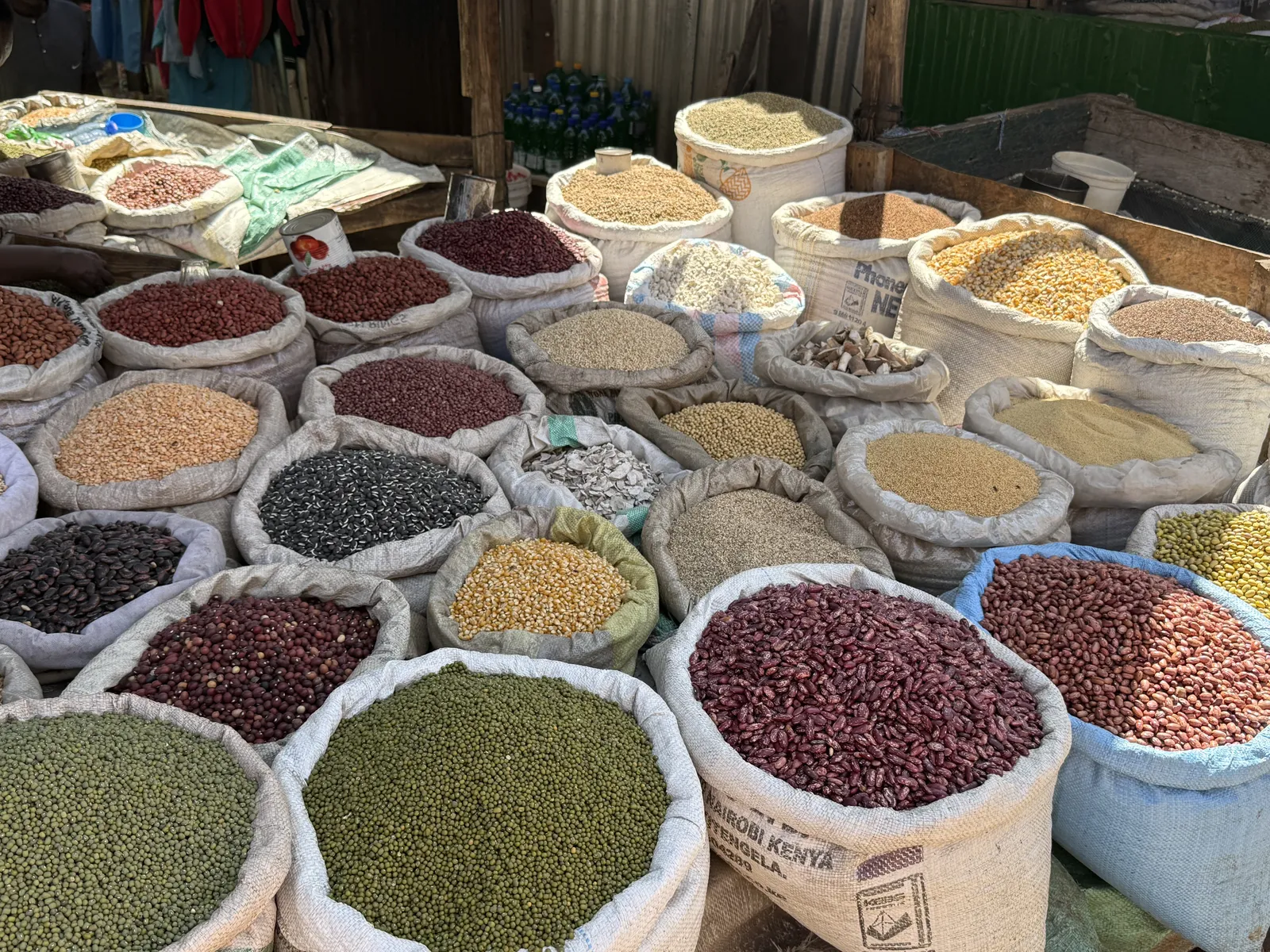
Even a short drive is an experience. Street vendors carry whole shops on their heads, and the matatus – private minibuses – are painted with football stars and rappers and play music so loud you hear them before you see them.
After a quick lunch in town we spent the afternoon in Kibera, one of Africa’s largest informal settlements. It was one of the most moving days of the whole trip – but please, never go without a local guide. I wrote everything about it in my Kibera guide.
How we booked our safari in Nairobi (and haggled)
We didn’t book the safari from home. We booked it in Nairobi through a local agency, Axis Africa Safaris – a Nairobi company founded in 2016 – and it was cheaper and more flexible than the big international sites. And yes, you can haggle here too: ask for a price, compare a few offers and negotiate, especially if you are a group.
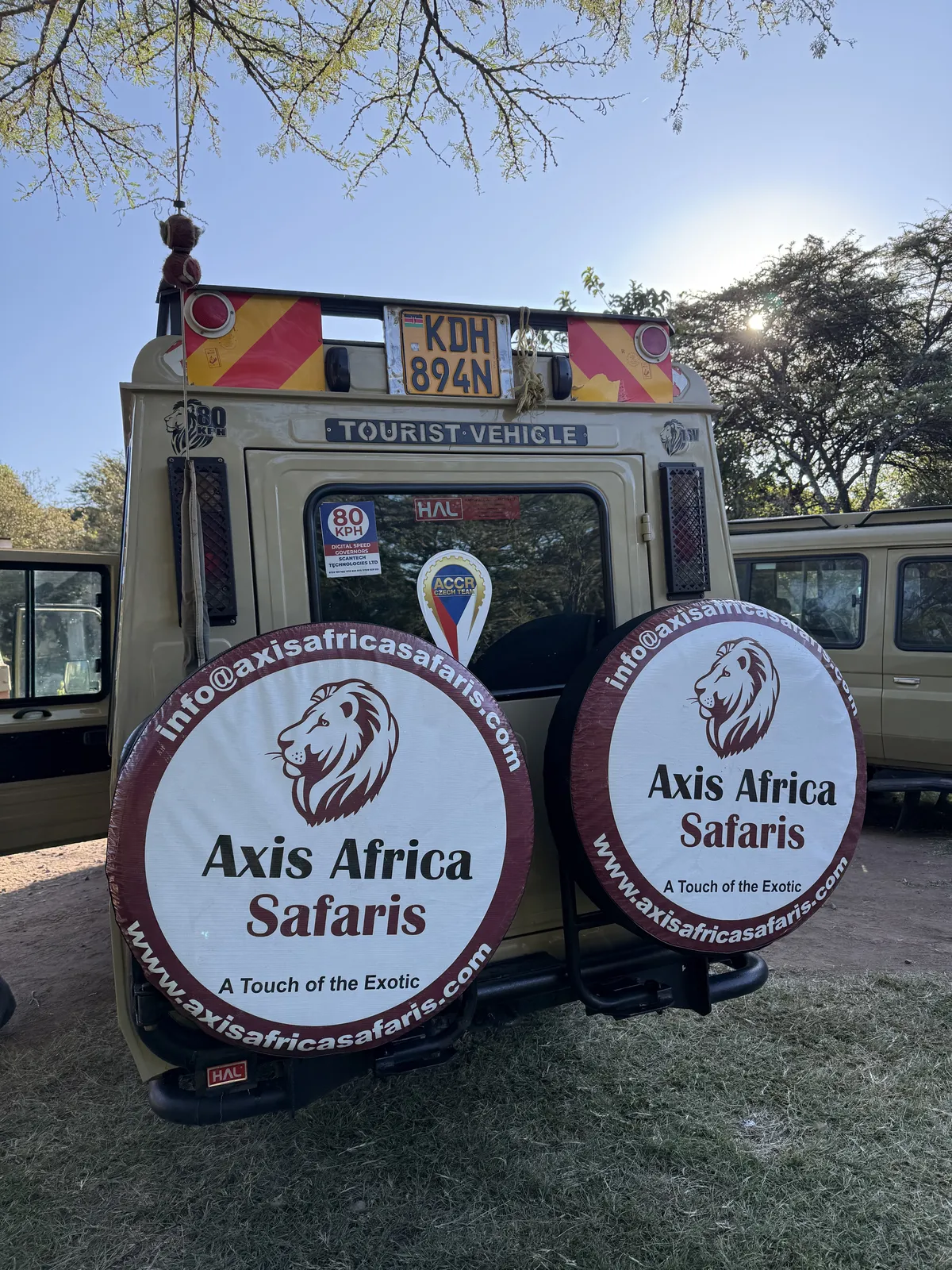
Before you pay anyone, check these things:
- Reviews and membership – look the agency up on SafariBookings and TripAdvisor and check whether it’s a member of KATO (Kenya Association of Tour Operators). A good sign, not a guarantee.
- Exactly what’s included – park fees, transfers, meals, water, the type of vehicle (van or Land Cruiser) and how many people share it. A suspiciously low price often means park fees are missing.
- Real hours in the reserve – some budget “3-day” safaris spend the first and last day driving and only one full day inside. Ask.
- Never pay strangers in the street – one of Nairobi’s most common scams is a cheap safari paid in advance, and on the morning of the trip no vehicle arrives.
Day 3: Drive to the Masai Mara and your first game drive
By road, the drive from Nairobi to the Mara takes about 5–6 hours, and the last part is on bumpy dirt roads. If you’d rather save time, small planes fly from Wilson Airport in about an hour. We drove, checked in to our camp, had lunch and went out on our first game drive in the afternoon, when the animals become active again – and the Mara did not disappoint: elephants, buffalo, a crowned crane, a hyena and lions resting on the rocks.


We slept in tents at a small camp about five minutes from a Maasai village. At night we could hear hyenas and lions around the camp, while a Maasai guard stayed awake to keep the animals away. Honestly? Most of us didn’t sleep much.
Day 4: A full day in the Masai Mara
Leave early with a packed breakfast and spend the whole day in the reserve – this is your best chance for the big cats. On our full day we watched lionesses stalking wildebeest, found a leopard hiding in the tall grass and saw giraffes and lots of elephants.


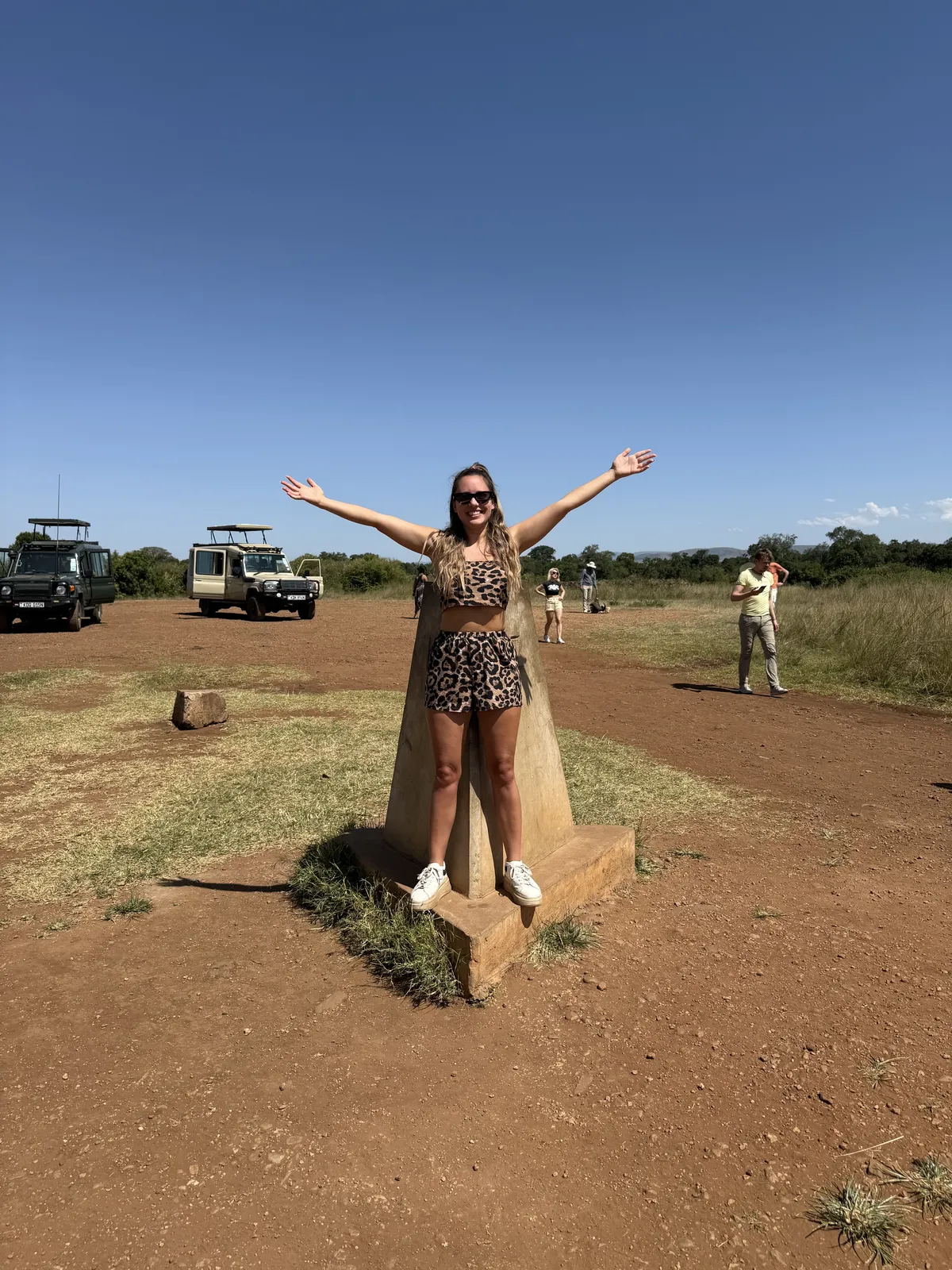
Around midday we stopped for a picnic under an acacia tree, and later drove to the Kenya–Tanzania border marker – on the other side is Tanzania’s Serengeti. If you want a splurge, this is also the day for a hot-air balloon at sunrise; I’ve listed what it costs in my 3-day Masai Mara guide.

Day 5: Morning drive, a Maasai village and back to Nairobi
Do one last early game drive, then visit a Maasai village near the reserve. We were welcomed with songs and the famous jumping dance – the adumu – and then pulled into the circle to dance with them. We walked around the homestead and went inside the small, dark houses built from branches, cow dung and mud.
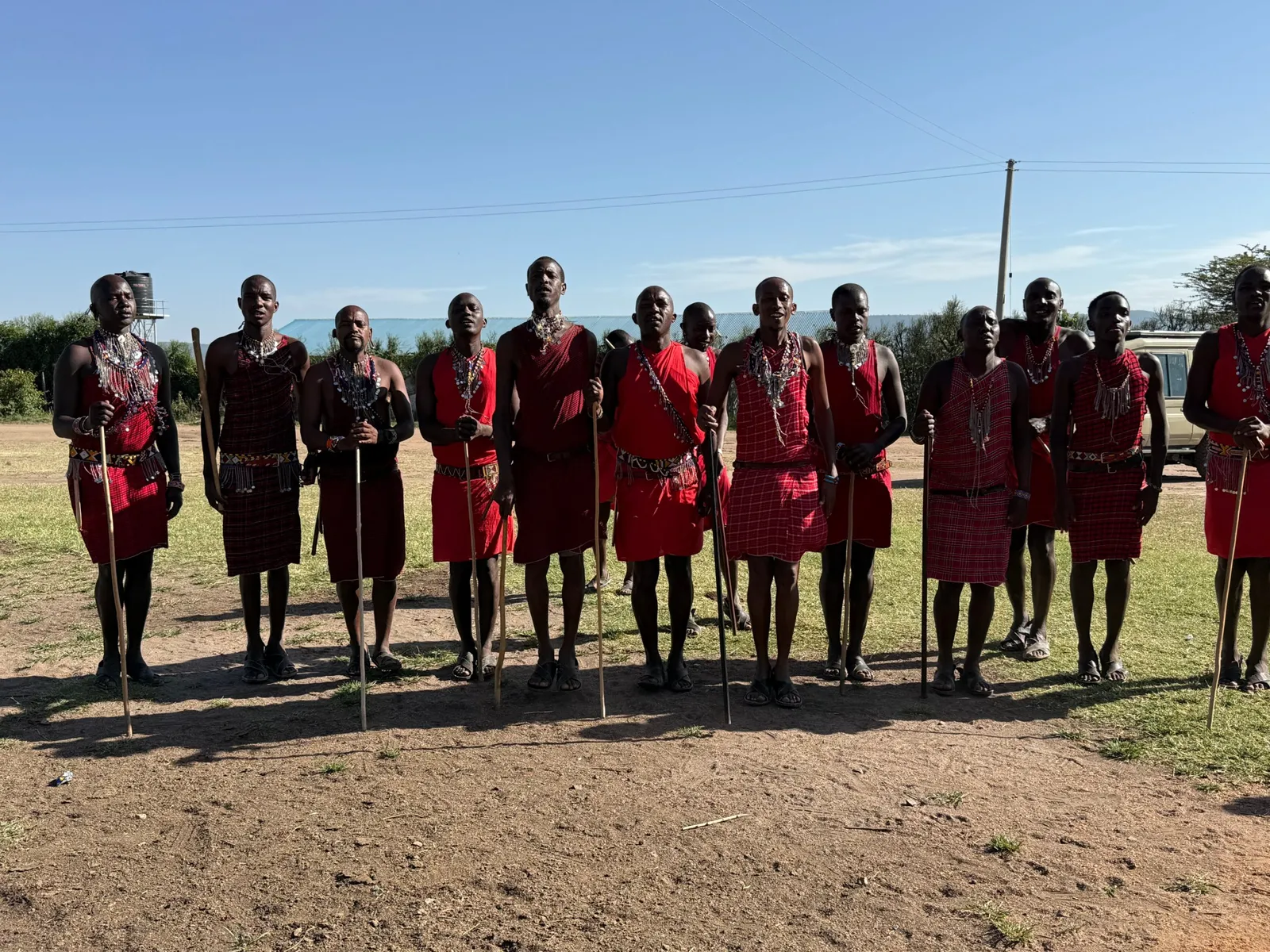
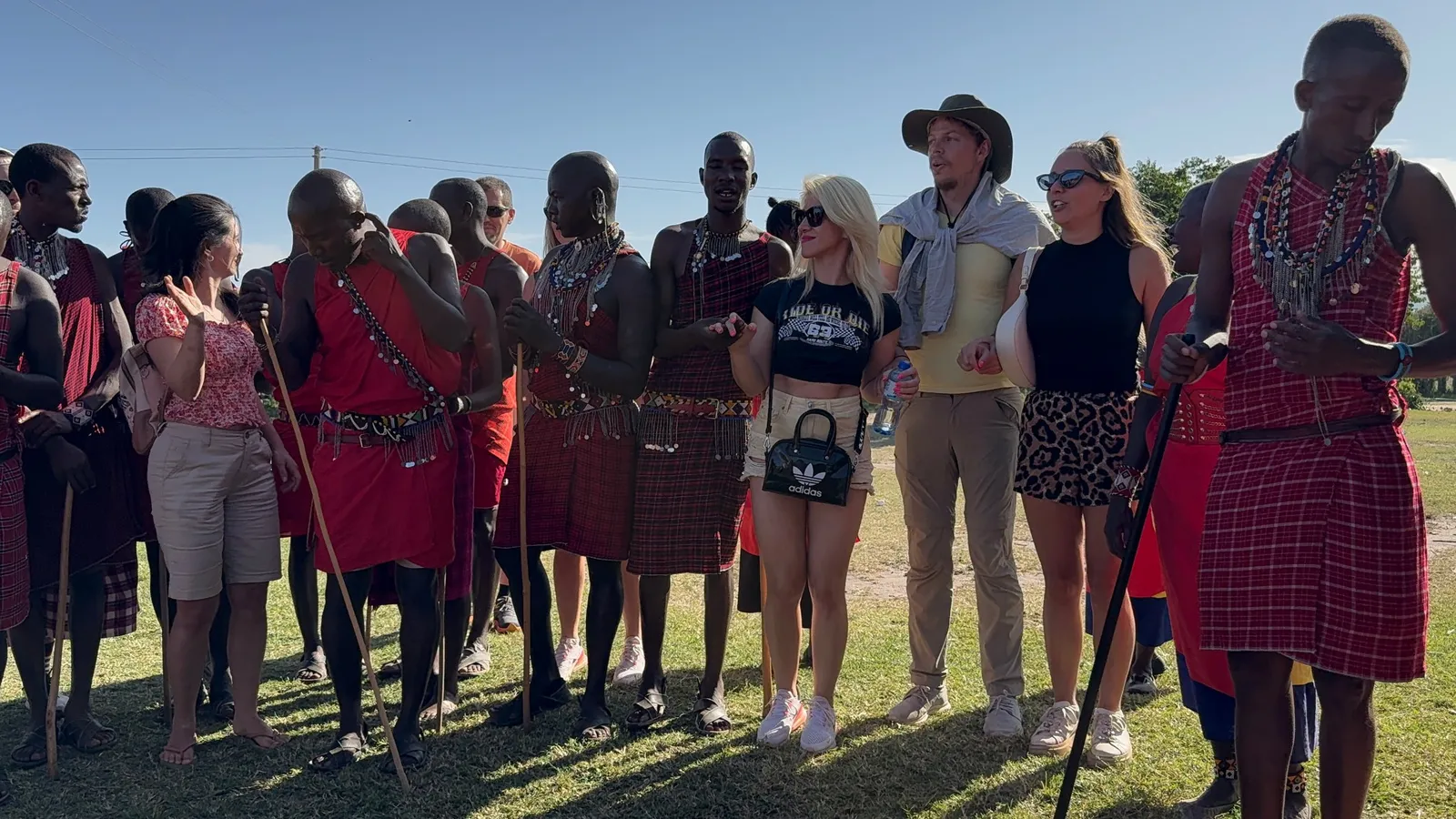
Villages near the Mara charge a visitor fee that goes to the community – agree on the price and what it includes with your guide beforehand, and always ask before taking photos. Everything we learned, including the difficult topics, is in my Maasai village guide.

In the afternoon it’s the long drive back to Nairobi. Plan an easy evening – you’ll be tired and dusty.
Day 6: Lake Nakuru and Lake Naivasha in one day
We left Nairobi early and drove about 160 km (2.5–3 hours) to Lake Nakuru National Park. In under three hours of game driving we saw buffalo, zebras, Makalia Falls, rare Rothschild’s giraffes, white rhinos with a calf – one of my favourite moments of the whole trip – and pink flamingos and pelicans on the shore. We paid by card – the park didn’t accept cash – and one person paid for the whole group to save time.


After lunch in Naivasha town (chicken, potatoes and a Coke for about €4) we rented a small boat for an hour on Lake Naivasha, which cost us €20 per person. The lake is full of hippos – I found it hilarious, everyone else was terrified, and nobody wanted to sit at the front of the boat. What stayed with me most were the young fishermen standing chest-deep in the water among the hippos to feed their families.
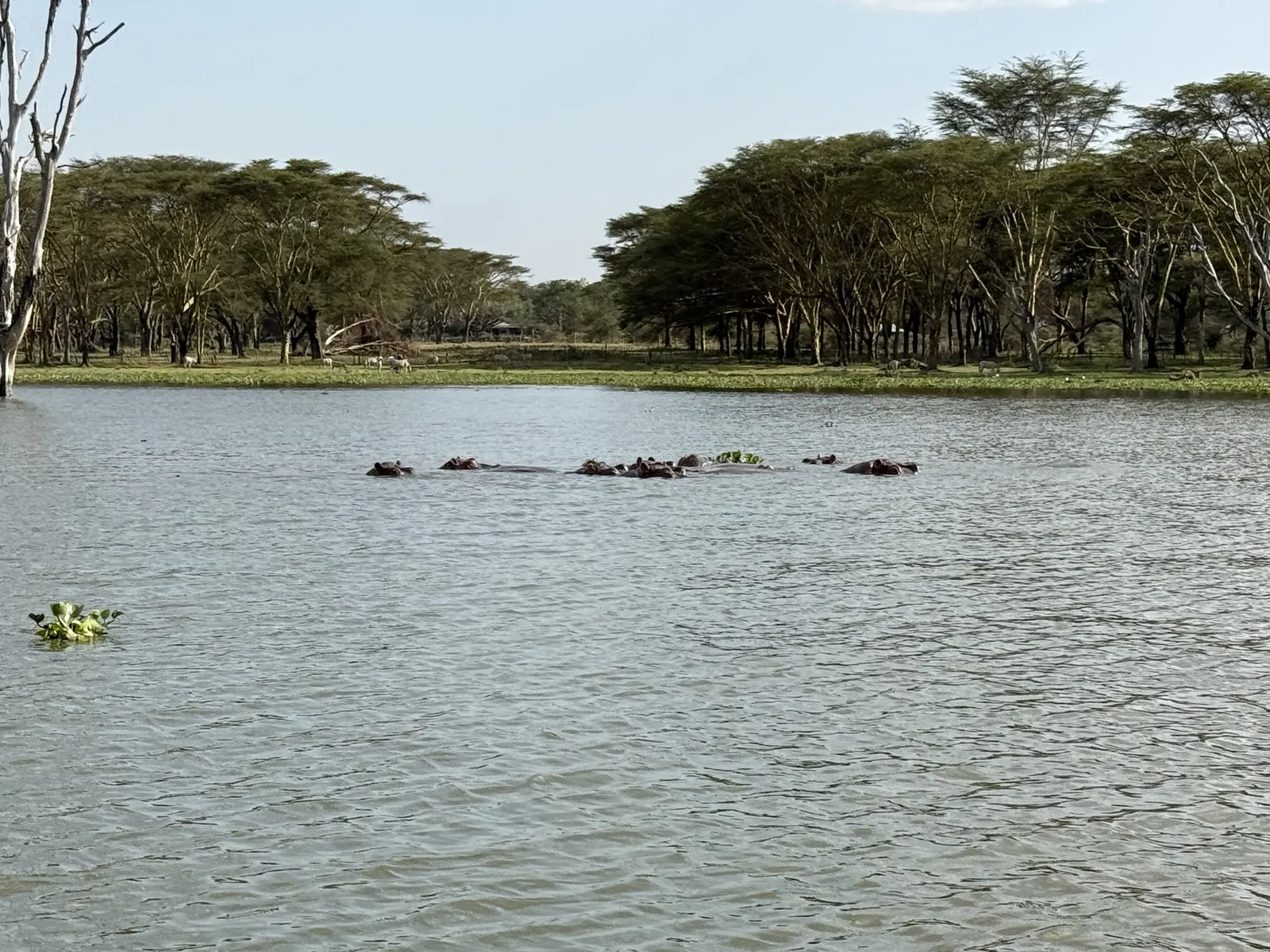

From Naivasha it’s about 2–2.5 hours back to Nairobi, or you can sleep at the lake. My full day, hour by hour, is in my Lake Nakuru & Lake Naivasha guide.
Day 7: Giraffes, ćevapi and a farewell night in Nairobi
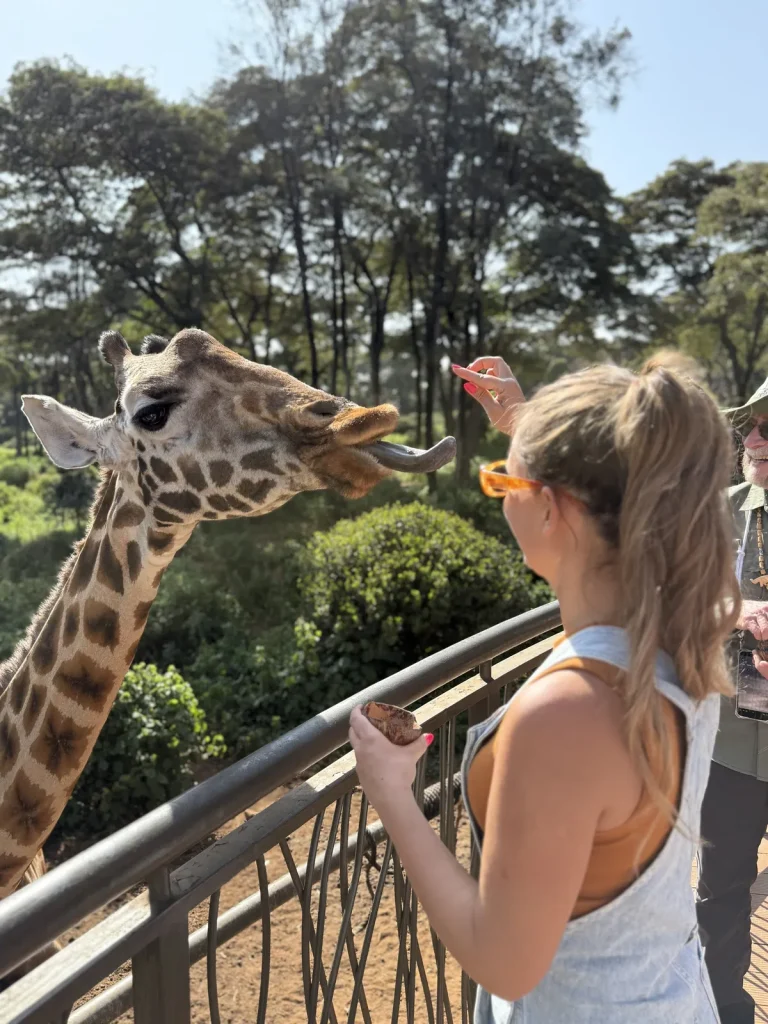
On our last day back in Nairobi we went to the Giraffe Centre in Lang’ata, where you feed endangered Rothschild’s giraffes from a raised platform at eye level. They take the pellets from your hand with their long tongues – so much fun!

If you booked ahead, add the Sheldrick elephant orphanage at 11:00, where keepers bottle-feed baby elephants. In the evening we found something I never expected: a restaurant in central Nairobi run by a man from the Balkans. We had ćevapi, chatted in Croatian and then went on to the best night out of the trip. Nairobi nightlife is relaxed and lively – Westlands is the main area, Thursday is a big night, and always take Uber or Bolt back, even for short distances.
Flying out tonight instead? Keep the afternoon free and leave plenty of time for traffic to the airport.
What the parks and sights cost (2026)
These are the official entrance fees for non-resident adults (checked November 2026). Safari packages usually include park fees, vehicle, guide and meals – compare like with like.
| What | Non-resident adult | Good to know |
|---|---|---|
| Masai Mara National Reserve | US$100 per day (Jan–Jun) · US$200 per day (Jul–Dec) | High-season ticket is valid 12 hours |
| Lake Nakuru National Park | US$90 per day | Child US$45 · KWS fee since 1 Oct 2025 |
| Nairobi National Park | US$80 per day | Child US$40 · pay online through eCitizen |
| Hell’s Gate (optional, near Naivasha) | US$50 per day | Child US$25 |
| Giraffe Centre | KSh 1,500 | Child KSh 750 · M-Pesa, Visa or Mastercard only · 9:00–17:00 |
| Sheldrick elephant orphanage | US$20 | Child US$5 · cash on arrival · book by email, no same-day visits · KWS park fee extra |
| Lake Naivasha boat (what we paid) | €20 per person | One hour, February 2025 |
Best time for a week in Kenya
Wildlife is good all year, but the seasons change the trip:
- July–October – the Great Migration is usually in the Mara, with river crossings most often in August and September. Peak season and the highest Mara fees.
- January–March – quieter, greener and cheaper. We went in February and still saw lions, a leopard, rhinos and lots of elephants.
- April–May – the long rains: muddy roads, some camps close, lower prices.
- November–December – short rains, lush landscapes, quieter parks.
What to pack for 7 days in Kenya
- Neutral-coloured layers – safari mornings are cold and middays hot.
- A warm jacket for early game drives.
- Binoculars, a camera with zoom and a power bank (the safari van is your office).
- Sunscreen, a hat, sunglasses and insect repellent.
- Closed shoes for the Maasai village and Kibera.
- A soft bag if you fly to the Mara – small planes have strict luggage limits.
My tips for a week in Kenya
- Entry: most visitors need an eTA – apply only on the official portal before you fly and check the current fee there. More in my Kenya travel guide.
- Cards, not cash, for parks. Kenyan national parks are paid by card or online through eCitizen – have a working card with you.
- One area per half-day in Nairobi. Traffic is heavy, so plan your sights by neighbourhood.
- Don’t walk at night – take a car even for short distances, and keep your phone out of sight in traffic jams.
- Ignore unsolicited offers near tourist sites – a polite “no, asante” works best.
- Football is the best icebreaker. All over Kenya people know Luka Modrić – we even saw people wearing his jersey!
- Tip your driver-guide and camp staff – ask your agency what’s usual.
More days? Pick your plan
- 1 day in Nairobi – my big Nairobi guide with a perfect one-day plan.
- 3 days in Nairobi
- 4 days in Nairobi
- 10 days in Kenya
7 days in Kenya FAQ
Is 7 days enough for Kenya?
Seven days is enough for a first trip: a day or two in Nairobi, a 3-day Masai Mara safari with a Maasai village visit, and a day at Lake Nakuru and Lake Naivasha. For more parks or the beach, plan 10 days or more.
What is the best 7-day Kenya itinerary?
For a first visit: arrive in Nairobi, spend a day in the city, do three days in the Masai Mara with a Maasai village, add a day at Lake Nakuru and Lake Naivasha, and finish with the Giraffe Centre in Nairobi.
Should I book my safari in Nairobi or from home?
Both work. We booked with Axis Africa Safaris, a local agency in Nairobi, and it was cheaper and more flexible. Check reviews and KATO membership, ask exactly what is included and never pay strangers in the street.
How much is the Masai Mara entry fee?
For non-resident adults the reserve charges US$100 per day from January to June and US$200 per day from July to December (checked November 2026). Most safari packages include the fee.
How much are Lake Nakuru and Nairobi National Park?
Since 1 October 2025 KWS charges non-resident adults US$90 per day for Lake Nakuru and US$80 per day for Nairobi National Park. Pay by card or online through eCitizen.
Can I see the Big Five in 7 days?
There is a good chance. We saw lions, a leopard, buffalo and many elephants in the Masai Mara and white rhinos at Lake Nakuru. Sightings are never guaranteed, so spend at least one full day in the Mara.
When is the best time for a week in Kenya?
July to October for the Great Migration, but the Mara fee is double then. January to March is quieter, greener and cheaper – we went in February.

Miki Kokica
Travel blogger behind One Day Itinerary. I test every route myself and write honest, practical guides so you can make the most of a single day anywhere.
Work with me Instagram