Hi, I’m Miki! Spain is the country I keep coming back to, usually for its cities, tapas and sunshine. But green, wet Spain is just as impressive, and the best waterfalls in Spain are a reason to plan a whole trip: a horsetail fall at the end of a Pyrenean canyon, a river that drops straight into the Atlantic, a park of cascades around a medieval monastery and a 200-plus-metre leap in the Basque Country.
To be honest with you: my trips to Spain so far have been city trips (Barcelona, Seville and Málaga), and I haven’t hiked to these waterfalls myself yet. So this is my researched shortlist. Prices, opening times and trail lengths come from the national park, tourist boards and the sites’ own pages, which I read in November 2026. Where sources disagree, I tell you.
Waterfalls in Spain at a glance
| Waterfall | Region | Height | How to get there | Entry fee | Swimming? | Best time |
|---|---|---|---|---|---|---|
| Cola de Caballo | Ordesa, Huesca (Aragon) | not officially given | Bus from Torla + 17.5 km return hike | Bus €6 return (2025) | No – banned | Spring, autumn |
| Monasterio de Piedra | Nuévalos, Zaragoza | 50–90 m (sources differ) | Car to Nuévalos | €19.70 | No | All year |
| Salto del Nervión | Álava/Burgos border | 220–300 m (sources differ) | Car to Fuente Santiago + 2 km walk | No fee found | No | After rain, winter–spring |
| Gujuli | Álava, Basque Country | about 100 m | Car, Orduña–Murgia road | No fee found | No | After heavy rain |
| Ézaro | Costa da Morte, Galicia | almost 40 m | Car to O Ézaro | Free | No | Rainy days; summer night lighting |
| Fervenza do Toxa | Silleda, Galicia | 60 m in total | Car, then about 1 km path | No fee found | No | All year (check weather) |
| Pozo de los Humos | Arribes del Duero, Salamanca | about 50 m | 7 km walk from Masueco | No fee found | No | Autumn–spring |
| Nacimiento del Río Mundo | Riópar, Albacete | almost 80 m | Car from Riópar | Check before you go | No | October–May |
| Sant Miquel del Fai | Barcelona province | three levels | Car, booked parking | Free, booking required | No | April–May |
| Río Chíllar | Nerja, Málaga | small falls and pools | Walk from Nerja, 16 km return | Free (check rules) | Pool at Vado de los Patos | Late spring, early autumn |
| Cascadas del Huesna | Sierra Norte de Sevilla | small cascades | Car to San Nicolás del Puerto | No fee found | Not stated | Spring |
| Barranco de los Cernícalos | Gran Canaria | small cascades | About 3 km trail | No fee found | Not stated | All year |
Fees per adult, checked November 2026. “No fee found” means none of the pages I read mentions one. Heights for Spanish waterfalls vary a lot between sources, so I give ranges.
1. Cola de Caballo, Ordesa National Park
This is the classic waterfall hike of the Spanish Pyrenees. From the Pradera de Ordesa meadow, the trail follows the Arazas river up the Ordesa Valley, past the Arripas and Estrecho waterfalls and the stepped Gradas de Soaso, to the Cola de Caballo (“horse’s tail”), a fan-shaped fall at the head of the valley, like the one in the photo at the top of this guide.
- How to get there: the gateway village is Torla. At Easter and in summer, the Pradera car park is closed to private cars, so you park at the Torla visitor centre and take the shuttle bus, which runs every 15–20 minutes. In 2025 it cost €6 return (€4 single), free for under-10s, and ran from 6:00 in July and August; buses stop when 1,800 people are in the valley (checked November 2026). The 2026 timetable is published by the Aragon government, so check before you go.
- The walk: about 17.5 km return, around 3 hours up and less coming down, according to Spain’s official tourism site, which rates it easy, with no technical sections. A traveller blog measured 9.4 km each way with about 350 m of climbing. The route is part of the GR-11.
- Swimming: no. Bathing in the waterfalls and rivers of the national park is prohibited and can be fined.
- Best time: spring for snowmelt and autumn for colours. Summer is the busiest and the falls can be lower; one komoot user found only a trickle in late November.
- Tip: camping and bivouacking are banned in the Ordesa sector (except at the Góriz refuge campsite), so this is a day hike. Start early and carry water and snacks: don’t count on the bar at the trailhead being open.
Want some adrenaline nearby? My guide to ziplines in Spain includes a zipline in the Pyrenees near Ordesa.
2. Monasterio de Piedra, Zaragoza
If you want waterfalls without a mountain hike, this is the place. Around a 13th-century Cistercian monastery near Nuévalos lies a historic garden park full of cascades and grottoes. The star is another Cola de Caballo, with a large natural cave behind it. Spain’s tourism site gives it 90 m, while other guides say 50 m. Smaller falls like Trinidad, Caprichosa and Iris are along the paths.
- How to get there: by car to Nuévalos in the province of Zaragoza; the monastery is partly a hotel, so you can also stay overnight.
- The walk: easy paths around the park; allow about 3 hours, or a half day with the monastery.
- Fee: €19.70 adults, €14 for children aged 4–11 and over-65s, including the park and a tour of the monastery (checked November 2026). Prices and opening hours are on the official Monasterio de Piedra site.
- Hours: the park opens at 9:00, with last entry at 16:30 (16:00 between 10 November 2026 and 6 January 2027).
- Best time: open all year.
3. Salto del Nervión: Spain’s tallest waterfall
On the border of Álava and Burgos, the young Nervión river leaps into the Delika canyon. Heights vary wildly by source: about 220 m (idealista), 270 m (Spain’s tourism site) or almost 300 m (Castilla y León tourism). Either way, it’s the tallest waterfall in Spain and a jaw-dropper when it’s flowing.
- How to get there: by car to the Monte Santiago natural monument near Berberana (Burgos).
- The walk: the PR-BU 42 path from Fuente Santiago to the viewpoint is just 2 km one way on a forest track through beech woods, rated low difficulty, with only 17 m of climbing.
- Best time: this is the catch: the waterfall depends on rain and snowmelt and can stop completely in dry periods. Go in late winter, spring or a rainy autumn, ideally a day or two after heavy rain. In summer you may find a dry cliff.
4. Gujuli waterfall, Basque Country
Not far from the Nervión, in the Gorbeia area of Álava, the Gujuli (Goiuri) waterfall drops about 100 m down a limestone cliff next to the village of the same name, about 30 km north-west of Vitoria-Gasteiz.
- How to get there: by car on the road between Orduña and Murgia; an easily reached viewpoint gives you a clear view of the fall.
- Best time: after heavy rain. The flow practically stops in summer.
- Tip: combine it with the Salto del Nervión on the same rainy-season day.
5. Ézaro waterfall, Galicia: the river that falls into the sea
On the Costa da Morte, the Xallas river ends its journey by sliding down a granite ramp of almost 40 m straight into the Atlantic at O Ézaro, below Monte Pindo. The local tourist board says no other river in Europe with a similar flow meets the sea like this.
- How to get there: by car; there’s a car park for visitors in O Ézaro. A very steep road climbs to the Mirador do Ézaro viewpoint for views over the river mouth and Monte Pindo.
- Water: a dam upstream controls the flow. The full waterfall happens only on some days of heavy rain, when the dam’s spillway opens; the rest of the year it runs at the legally required minimum flow, sometimes raised at certain hours.
- Night lighting: in summer 2025, the waterfall was lit up for free on set evenings from July to September, 22:30–00:30. Dates change every year, so check before you go.
- Swimming: no; this is a viewing waterfall.
6. Fervenza do Toxa, Galicia
Inland in Pontevedra province, near Silleda, the Toxa river drops more than 30 m in one go, with a total height of about 60 m, in a forested valley protected as a Natura 2000 site. It’s a little over half an hour by road from Santiago de Compostela.
- How to get there: park a few minutes’ walk away and follow the path of about 1 km to the base; the Mirador da Fervenza do Toxa is a short detour for a panoramic view.
- Longer walk: the PR-G18 trail starts at the Romanesque monastery of San Lourenzo de Carboeiro, about 6 km away, roughly 1.5 hours one way.
- Best time: any season, but check the forecast: bad weather can make the paths dangerous.
7. Pozo de los Humos, Salamanca
In the Arribes del Duero natural park on the Portuguese border, the river Uces falls about 50 m, throwing up a cloud of spray that gives the “well of smoke” its name.
- How to get there: by car to Masueco or Pereña de la Ribera; there are short routes from both villages.
- The walk: the Castilla y León tourism route from Masueco is 7 km, about 1.5 hours on foot with 220 m of climbing.
- Best time: spring, autumn and winter, when there’s plenty of water.
8. Nacimiento del Río Mundo, Albacete
Near Riópar, the river Mundo is born in spectacular style: it bursts out of a cave in a rock face and falls almost 80 m in a series of cascades. After heavy rain, the cave sometimes produces the famous reventón, a sudden surge of water that locals wait for all year.
- How to get there: by car from Riópar; from the car park, an easy marked path leads to footbridges below the falls.
- Status in 2026: the access road was damaged and closed for emergency works. In July 2026 the regional government was aiming to reopen around 20 July at 60% of normal capacity, with conditions still to be announced. I couldn’t confirm the current rules, so check before you go.
- Best time: October to May, according to Spain’s tourism site.
9. Sant Miquel del Fai, near Barcelona
About 50 km from Barcelona, the 11th-century monastery of Sant Miquel del Fai clings to a cliff where the river Tenes falls in three levels. It’s run by Barcelona’s provincial parks service, with a signposted route around the site.
- Fee and booking: entry is free, but you must book a ticket in advance (maximum 200 visitors), and drivers also need to book parking and show a QR code (checked November 2026). Book on the official parks page.
- Hours (2026): daily 10:00–16:30 (last entry 16:00), weekends from May to August until 18:00. It closes for winter maintenance (16 December to 15 March for the 2026 season) and can close at high fire risk or in storms.
- Best time: April and May, when the river is fuller.
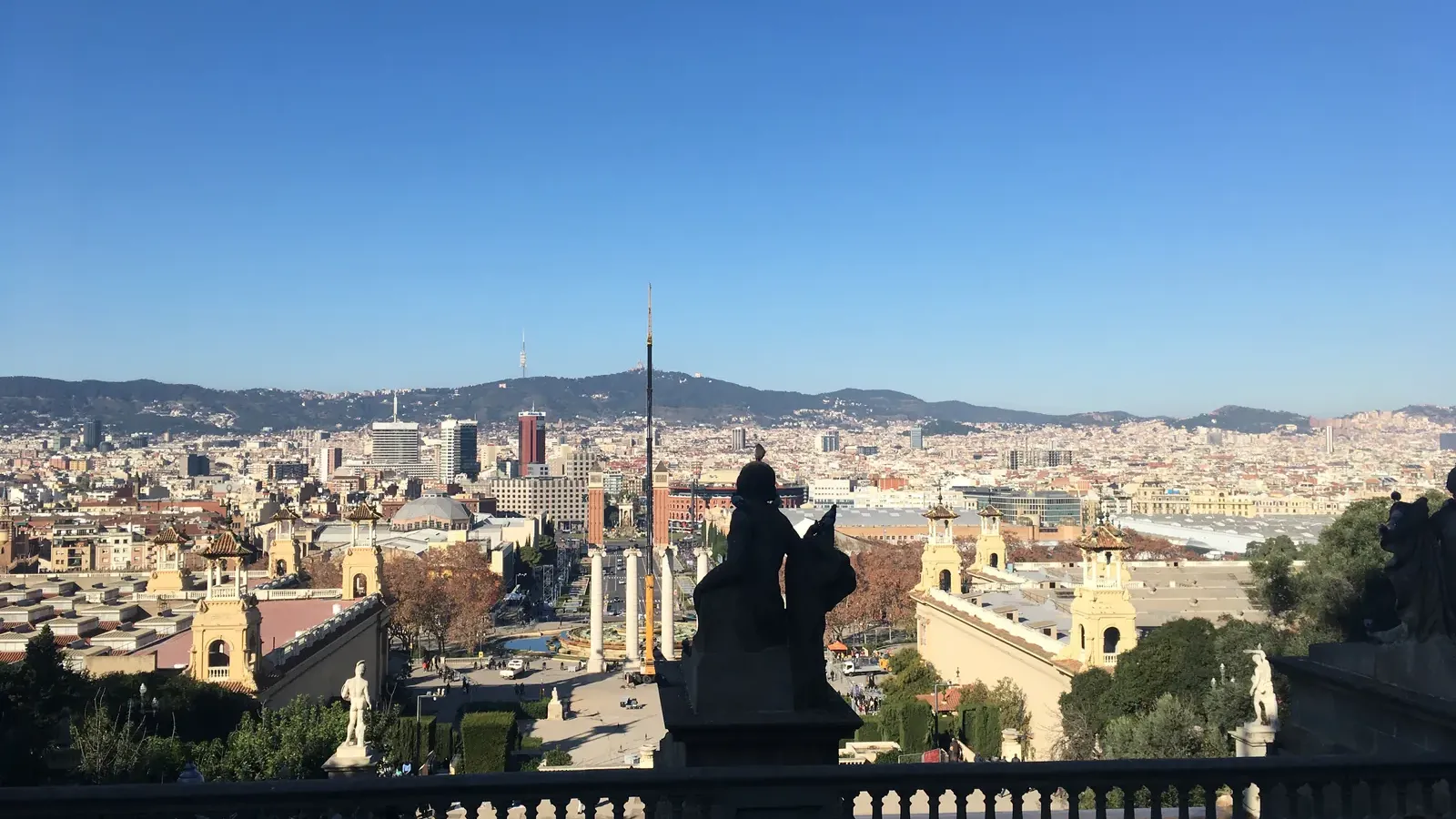
Spending a few days in the city? Start with my Barcelona one-day itinerary.
10. Río Chíllar, Nerja (Málaga)
This one is more of an adventure than a viewpoint: from Nerja on the Costa del Sol you walk up the river Chíllar, mostly in the riverbed itself, through narrow gorges called the Cahorros, to a small waterfall and clear pool at the Vado de los Patos.
- How to get there: start in Nerja; the main car park is on Calle Mirto. Don’t park on the road to the river, as you can be fined.
- The walk: 16 km return, about 6.5 hours, rated moderate, with 410 m of climbing. The water is often ankle-deep, the rocks are slippery, and progress is slower than on a normal trail. Wear sturdy shoes you don’t mind getting wet.
- Rules: access was closed one summer because of fire risk, and in 2024 the Andalusian government was considering paid, capped entry in the summer months. I couldn’t confirm the current rules, so check before you go.
- Safety: emergency services struggle to reach the gorge, and high water can make the route unsafe.
Nerja is an easy add-on to my Málaga one-day guide.
11. Cascadas del Huesna, Sierra Norte de Sevilla
If you’re in Seville in spring, escape the heat in the hills of the Sierra Norte. Near the source of the river Huesna (Huéznar), small waterfalls and calm pools sit under elms, willows and alders, protected as a Natural Monument since 2001. Otters live in the river.
- How to get there: by car to San Nicolás del Puerto, then about 2 km on the road towards Cazalla de la Sierra, where you’ll find the Martinete, Nacimiento del Río Huesna and Isla Margarita picnic areas.
- The walk: easy paths along the river; a nice stretch starts at Isla Margarita.
- Swimming: none of the official pages I read says whether bathing is allowed, so check local signs.
Pair it with my Seville one-day itinerary.
12. Barranco de los Cernícalos, Gran Canaria
Waterfalls in the Canary Islands? Yes! In the east of Gran Canaria, the green Barranco de los Cernícalos in the Los Marteles nature reserve has water all year round, with several small waterfalls dropping over rocks into pools.
- The walk: the easiest, most accessible route is about 3 km, according to the Gran Canaria tourist board.
- Tip: it’s a protected reserve: stay on the path and take your rubbish home.
How to plan a waterfall road trip in Spain
Spain is big, so plan waterfalls by region rather than trying to see them all:
- Aragon and the Pyrenees (3–4 days): Monasterio de Piedra on the way from Madrid or Barcelona, then Torla for Ordesa.
- Basque Country and Burgos (2 days): Salto del Nervión and Gujuli, both near Vitoria-Gasteiz; go after rain.
- Galicia (2–3 days): Toxa from Santiago de Compostela, then the Costa da Morte for Ézaro.
- Andalusia: Río Chíllar from Málaga or Nerja, the Huesna from Seville.
- From Barcelona: Sant Miquel del Fai as a half-day trip.
For trains, the best time to visit and costs, see my Spain travel guide.
Best season for waterfalls in Spain
Most Spanish waterfalls are fed by rain and snowmelt, so late winter to spring is the high season: the Nervión and Gujuli can dry up completely in summer, and the Ordesa waterfalls are strongest during the snowmelt. Autumn is lovely after the first rains (idealista calls it the time to see Spain’s tallest falls) and brings colours to Ordesa. Summer is good for river walks like Río Chíllar and for Ézaro’s night lighting, but it’s also when fire-risk closures and crowds happen.
What to pack
- Hiking shoes with good grip, plus water shoes or old trainers for Río Chíllar
- Plenty of water, snacks, a hat and sunscreen for Ordesa
- A rain jacket in Galicia and the Basque Country
- Your bookings on your phone: Sant Miquel del Fai entry and parking QR codes
Safety tips: slippery rocks and flash floods
- Never swim where it’s banned: in Ordesa National Park, bathing is prohibited
- Wet limestone and granite are very slippery; stay behind railings at cliff-top viewpoints like Nervión
- River walks like Río Chíllar can become dangerous after rain; check the forecast and the river level before you go
- In summer, check fire-risk closures: Río Chíllar has closed for fire risk, and Sant Miquel del Fai can close at high fire risk
- Tell someone your route and start early on long hikes
My insider tips
- Chase rain: the best day for Nervión, Gujuli or Ézaro is the day after a storm
- In Ordesa, take one of the first buses from Torla; summer weekends are the busiest
- Book Sant Miquel del Fai as soon as you know your date: capacity is only 200 people
- At Monasterio de Piedra, allow at least three hours and check the last-entry time
- Check closures before any long drive: Río Mundo and Río Chíllar have both had access changes recently
More waterfall guides: waterfalls in Portugal, Italy, Croatia and Austria.
Spain waterfalls FAQ
What is the tallest waterfall in Spain?
The Salto del Nervión on the Álava–Burgos border. Sources give between about 220 m and almost 300 m. It only flows after rain and can be dry in summer.
What is the most famous waterfall in Spain?
The Cola de Caballo in Ordesa National Park is the classic Pyrenees waterfall hike, and the Cola de Caballo at Monasterio de Piedra is the most visited waterfall park.
How much does Monasterio de Piedra cost?
€19.70 for adults and €14 for children aged 4–11 and over-65s, including the park and a monastery tour (checked November 2026).
Can you drive to the Cola de Caballo in Ordesa?
No. You can drive to the Pradera de Ordesa outside peak periods, but at Easter and in summer you must take the shuttle bus from Torla (€6 return in 2025), and the waterfall itself is about 8–9 km on foot from the Pradera.
Can you swim in waterfalls in Spain?
In some places, like the pool at Río Chíllar, but bathing is banned in Ordesa National Park and most famous waterfalls are viewing-only. Always follow local signs.
Is there a waterfall near Barcelona?
Yes, Sant Miquel del Fai, about 50 km away. Entry is free but you must book a ticket, and parking, in advance.
When is the best time to see waterfalls in Spain?
Late winter to spring, and autumn after rain. Many Spanish waterfalls are low or dry in summer.
Featured photo: Cola de Caballo, Ordesa, by Bouke ten Cate, via Wikimedia Commons (CC BY 4.0), cropped to 16:9.

Hotel, tourist board or travel brand in Spain?
I create honest, practical one-day itineraries read by travellers planning their next trip – plus photos, drone shots and Instagram stories from the road. I’m open to collaborations with hotels, apartments, restaurants, wineries, tour operators and destinations across Spain: sponsored itineraries, destination features, press trips and social media campaigns.
Work with me Get in touch
Written by
Miki Kokica
Travel blogger behind One Day Itinerary. I test every route myself and share honest, practical guides so you can plan better trips in less time.
Work with me Instagram