I’ve travelled all over Croatia, and the waterfalls are still the thing I recommend most to friends who visit. Most people know the two big national parks, Plitvice and Krka, but the waterfalls in Croatia go much further: a village built on top of cascades, a river with 93 waterfalls an hour from Zagreb, swimming holes in the middle of Istria and a 50 m drop in the Cetina canyon above the Makarska Riviera.
Below are the ten I think are worth planning a day around: how to get there, the walk, the cost and whether you can swim. Ticket prices come from the official park price lists, checked in November 2026. Some of the smaller falls dry up in summer, so I’ve flagged that too.
Waterfalls in Croatia at a glance
| Waterfall | Region | Height | How to get there | Entry fee* | Swimming? | Best time |
|---|---|---|---|---|---|---|
| Skradinski buk (Krka) | Šibenik area, Dalmatia | 45.7 m over 17 steps | Boat from Skradin or park bus from Lozovac | €7–40 | No (banned since 2021) | Apr–Jun, Sep–Oct |
| Roški slap (Krka) | Near Drniš, Dalmatia | 22.5 m | Car via Drniš or Laškovica; park boat trip | €7–20 | Only in marked areas | Spring, early summer |
| Veliki slap (Plitvice) | Lika | 78 m | Car or bus to Entrance 1 | €10–40 | No | Late spring, early summer |
| Rastoke | Slunj, Karlovac County | Low cascades | Car or bus on the Zagreb–Plitvice road | €5 | Ask locally | Spring, autumn |
| Mrežnica river | Duga Resa, Karlovac County | 93 small falls | Car about 1 h from Zagreb, or train to Belavići | None listed | Yes, at river beaches | Summer |
| Zarećki krov | Pazin, central Istria | Several metres | Car from Pazin towards Zarečje | None listed | Yes, deep pool | Spring, early summer |
| Sopot | Floričići near Pićan, Istria | About 25 m | Car to Floričići, short steep path | None listed | Check before you go | After rain; dry in summer |
| Gubavica | Zadvarje, Cetina canyon | About 50 m | Car from Split or Makarska, viewpoint in Zadvarje | None listed | No (viewpoint only) | Spring, rainy season |
| Krčić (Topoljski buk) | Near Knin | 22 m | Car, 3.5 km northeast of Knin | Check before you go | No | After rain or snowmelt |
| Štrbački buk (Bosnia) | Una National Park, BiH border | 24.5 m | Car via Bihać | 8–20 KM | Check before you go | Spring, summer |
*Adult day-ticket range from low to high season, from the official price lists (checked November 2026). Krka prices are from the park’s 2027 list, Plitvice prices from its 2026 pages.
1. Skradinski buk, Krka National Park
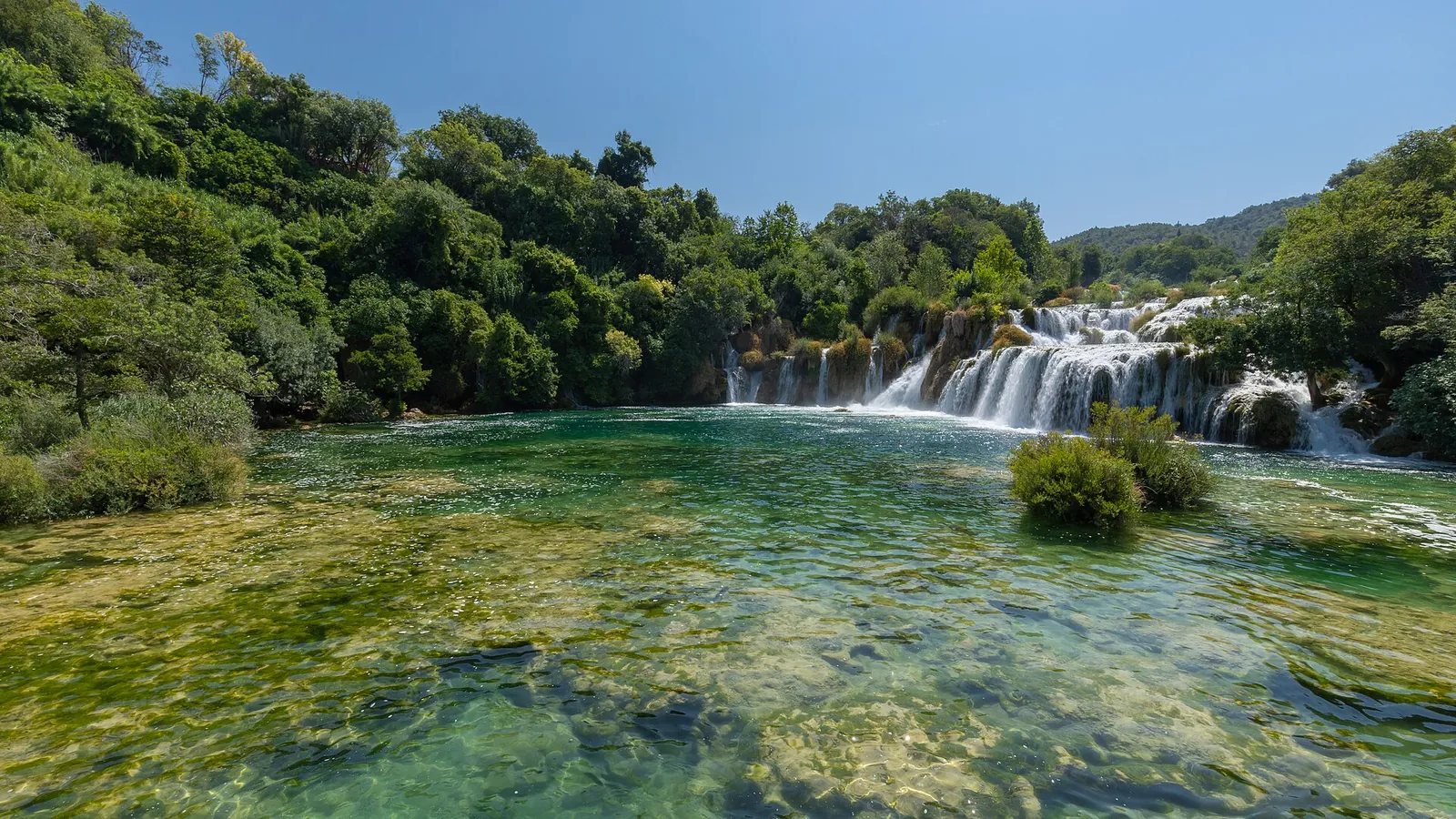
This is the postcard waterfall of Croatia and, for me, still one of the most beautiful places in the country. Skradinski buk is the seventh and last travertine barrier on the Krka river: 17 steps with a total drop of 45.7 m, spread over about 800 m and between 200 and 400 m wide. Wooden boardwalks take you right over the cascades.
- How to get there: from April to October the boat from Skradin and the park bus from the Lozovac entrance are included in your ticket. Buses run from Split to Skradin in about 1 h 15 min to 1 h 30 min, and from Zadar in about an hour. Šibenik has frequent local buses to Skradin and Lozovac. If you drive, Lozovac has a large car park.
- The walk: the official trail around the falls is 1,900 m and brings you back to where you started. It’s easy, with some stairs. From Lozovac there’s an extra 875 m path down, and from the Skradin bridge it’s 3,400 m on foot.
- Fee: adults €40 from June to September (€30 after 15:00), €20 in April, May and October and €7 from November to March; children 7–18 pay €4–15 and under-7s go free (checked November 2026).
- Swimming: no. The park banned swimming from 1 January 2021, so the famous photos of people swimming under the falls are history.
- Best time: spring for the strongest flow, or September and October for fewer people. In summer, come for opening time or use the cheaper afternoon ticket.
Skradinski buk works as a half-day trip from Šibenik, Zadar or Trogir. It’s also on the route in my 7-day Croatia itinerary. Tickets and boat times are on the official Krka National Park website.
2. Roški slap, the quieter side of Krka
Roški slap is Krka’s second big waterfall and the place to go if you want Krka without the crowds: a 22.5 m main fall and a long chain of small cascades that locals call the Necklaces (Ogrlice). A row of watermills stands on the left bank; several have been restored, and three restaurants there are still run by the millers’ families. For a view from above, climb the 517 wooden steps to the Oziđana pećina cave.
- How to get there: by car from Drniš or Laškovica (via the Šibenik–Pakovo Selo or Šibenik–Skradin road). In summer you park in Laškovica or Bogatići Miljevački, and a park bus to the falls is included in your ticket from June to September. You can also come by excursion boat from Skradinski buk.
- The walk: a 1,360 m circular educational trail over the Necklaces, plus the stairs to the cave if you have the legs for it.
- Fee: adults €20 from June to September, €12 in April, May and October and €7 in winter (checked November 2026). The 4-hour boat trip from Skradinski buk via Visovac island to Roški slap costs an extra €20.
- Swimming: the park says swimming is permitted only in marked areas, so ask at the entrance before you get in.
3. Veliki slap and the Plitvice Lakes
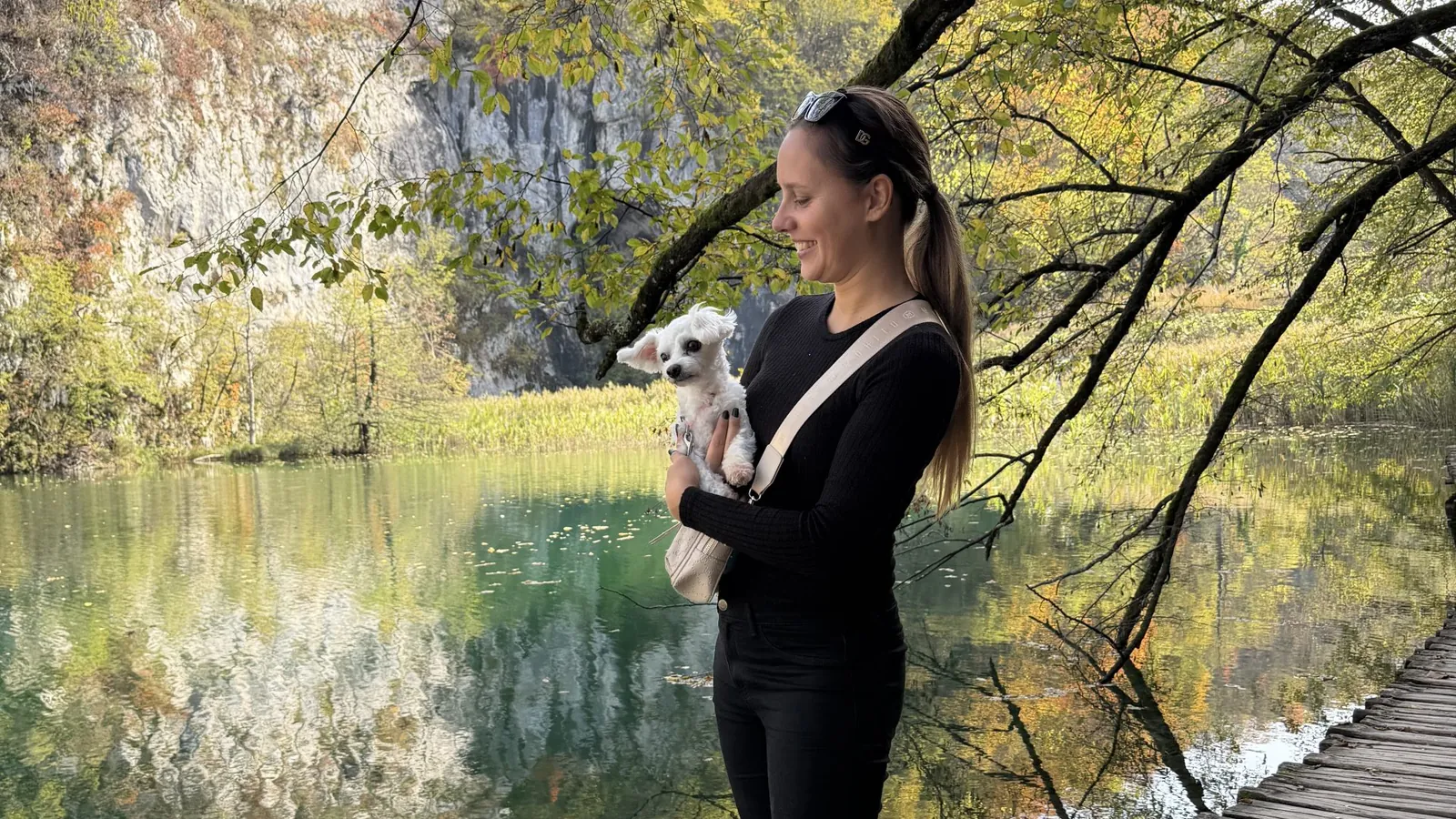
Plitvice is the place everyone asks me about, and it deserves the hype. Lakes are linked by waterfalls and boardwalks, and at the end of the Lower Lakes, near Entrance 1, the Plitvica stream drops 78 m in a single fall. That’s Veliki slap, the Great Waterfall and the tallest in Croatia. The water is that unreal blue-green, and in autumn the forest around it turns gold.
- How to get there: buses from Zagreb take about 2 h 20 min and from Zadar about 2 hours, stopping at both entrances. From Split it’s 3.5–5.5 hours, so stay a night rather than doing a day trip. For Veliki slap, start at Entrance 1.
- The walk: the short loop around the Lower Lakes and Veliki slap is about 3.5 km; the longer route that also covers the Upper Lakes is about 8 km, with the park’s electric boats and panoramic vehicles linking the sections.
- Fee (2026): adults €40 from June to September before 16:00 (15:00 in September) and €25 after that; €10 from November to March; children 7–18 €4–15; under-7s free (checked November 2026). For April, May and October the park’s price list shows €23, but check before you go.
- Opening hours: in summer ticket sales run 7:00–17:00; in winter 8:00–13:00, and the Upper Lakes usually stay closed until early April.
- Swimming: strictly no. The park also bans drones and walking off the marked paths, and dogs must be on a lead.
- Tip: the park strongly recommends buying tickets online for a time slot, and tickets at the entrance are only sold while they last.
Plitvice is a full day. It fits perfectly into my 4 days in Croatia route (Zagreb, Plitvice and Zadar) and my 2-week Croatia itinerary. Tickets are sold on the official Plitvice Lakes website.
4. Rastoke waterfalls in Slunj
Rastoke is a little village in Slunj built right where the Slunjčica river pours into the Korana. The water runs between, under and around old houses and watermills, so you get dozens of small cascades instead of one big drop. It’s the easiest waterfall stop on the drive from Zagreb to the lakes.
- How to get there: Slunj is on the main road from Zagreb and Karlovac to Plitvice, so most people stop for an hour or two on the way. Many Zagreb day tours combine the two.
- The walk: short and easy; the promenade is open every day, all year. Travellers on TripAdvisor say one to two hours is plenty.
- Fee: €5 for the paid area with the new bridge (Novi most) and the Korana canyon (checked November 2026). Tickets are sold online or at on-site kiosks that take cards only. Parking right in Rastoke (zone 1) is €2 per hour, 8:00–18:00.
- Swimming: the Karlovac County guide lists Rastoke as a river beach on the Korana, so ask locally where you can get in.
- Tip: reviewers say it’s poorly signposted, so put “Rastoke” in your navigation rather than just “Slunj”.
5. Mrežnica river waterfalls
This is where people from Zagreb and Karlovac go to swim in summer. The Mrežnica is 63 km long and has 93 waterfalls along its course: small falls, natural pools and grassy banks rather than one big drop. It flows through Generalski Stol and Duga Resa before joining the Korana just south of Karlovac.
- How to get there: the Duga Resa town beach and Otok Ljubavi (Island of Love) are about an hour’s drive from Zagreb. Without a car, the train to Belavići takes about 90 minutes from Zagreb.
- Where to swim: Zvečaj near Duga Resa (waterfalls and natural pools), the Duga Resa town beach, Otok Ljubavi and Keići near Generalski Stol are all listed by the county tourist board.
- Fee: no entry fee is listed for the public river beaches; you pay only for canoe, SUP or rafting rental.
- Best time: July and August, when the water is warm enough.
6. Zarećki krov near Pazin, Istria
Zarećki krov (the “roof at Zarečje”) is a wide limestone ledge on the Pazinčica river, a few kilometres from Pazin. The waterfall itself is only several metres high, but it drops into a natural pool up to 10 m deep, which makes it one of the best swimming holes in inland Istria. Climbers use the overhanging rock too.
- How to get there: drive from Pazin towards Zarečje and follow the signs to the Zarečki krov car park, then walk a short path along the water.
- Fee: the tourist board lists no entry fee.
- Swimming: yes; the pool is popular in summer, and some people dive from the cliffs. Check the depth yourself before you jump.
- Best time: spring and early summer. The tourist board warns that in a dry summer the waterfall can dry up.
7. Sopot waterfall in central Istria
Sopot is Istria’s prettiest waterfall when it’s running: about 25 m of water falling into a small turquoise lake in a green gorge, about 450 m from the village of Floričići near Pićan.
- How to get there: from the Pazin–Labin road, turn at Zajci and follow the signs for Jakomići and Švići to Floričići. You can drive to the village, then walk down.
- The walk: short but steep at the end; two ropes help on the descent to the lake, so wear proper shoes. Hiking trails 701 and 702 continue towards Gračišće and Pićan.
- Fee: the tourist board lists no entry fee.
- Swimming: some blogs say yes, the tourist board doesn’t say, so check before you go.
- Best time: spring, autumn or after a few rainy days. In the dry summer months there is no water and no waterfall.
8. Gubavica waterfall in the Cetina canyon
Velika Gubavica is the wild one: a fall of about 50 m (sources give 48–50 m) in the deep Cetina canyon next to Zadvarje, inland from the coast between Split and Makarska. You see it from a viewpoint in the village, looking down into the gorge.
- How to get there: about an hour from Split. Drive southeast on the motorway, leave at the Šestanovac exit and follow the signs to Zadvarje. You can also reach it from Makarska.
- The walk: the viewpoint is a few minutes from the road. Getting to the bottom of the canyon isn’t a marked trail, so go with a local canyoning or rafting guide.
- Fee: none listed for the viewpoint.
- Best time: spring and the rainy season, when there’s enough water in the canyon.
- Tip: the Cetina is also home to the Omiš zipline; see my best ziplines in Croatia if you want to fly over the canyon instead.
9. Krčić waterfall at the source of the Krka
Just 3.5 km northeast of Knin, the Krčić stream drops 22 m over Topoljski buk (also called the Krčić waterfall) into the cave where the Krka river begins. It’s a short drive from the town.
- How to get there: by car from Knin. The park’s page on the source doesn’t give visitor directions, so check the route before you go.
- Fee: the national park doesn’t list a ticket for it; check before you go.
- Best time: after rain or snowmelt. In summer the Krčić dries up and the waterfall disappears, while in heavy rain it turns into a fast, torrential river, so don’t stand in the stream bed.
10. Across the border: Štrbački buk on the Una
If you’re near Plitvice, it’s worth knowing that one of the most impressive waterfalls in the region is just across the border in Bosnia and Herzegovina. Štrbački buk in Una National Park is 24.5 m high, the highest waterfall in the park, and the Una river is famously green. Adult tickets cost 8–20 KM depending on the season (checked November 2026). Bring your passport for the border crossing.
The nearest base is Bihać, and I cover Štrbački buk, Martin Brod and Kravice in my guide to the best waterfalls in Bosnia.
How to plan a waterfall road trip in Croatia
Croatia’s waterfalls fall into a few easy clusters, so you can see most of them without backtracking:
- Zagreb to Plitvice (2 days): Mrežnica near Duga Resa → Rastoke in Slunj → overnight near Plitvice → the lakes and Veliki slap first thing in the morning. Add Štrbački buk across the border if you have a spare afternoon.
- Plitvice to the coast (1–2 days): drive south to Knin for Krčić → Roški slap → Skradinski buk, then sleep in Skradin or Šibenik.
- Istria (half a day): Zarećki krov near Pazin in the morning, then Sopot near Floričići, both short drives from Pazin.
- Split and Makarska (half a day): the Gubavica viewpoint in Zadvarje, combined with a rafting or zipline trip on the Cetina.
If you’d rather follow a full plan, my 10 days in Croatia road trip goes from Istria to Dubrovnik, and the 3-day Croatia itinerary has a shorter route. All my city guides are on the Croatia travel guide page.
Best time to see waterfalls in Croatia
Croatian waterfalls are fed by rain and snowmelt, not glaciers, so spring (April to early June) is the best time to see them at full power. The big national parks have water all year, but Plitvice’s Upper Lakes are usually closed in winter and only reopen in early April. The small falls are much more seasonal: Sopot, Krčić and sometimes Zarećki krov can be completely dry in July and August, while Gubavica is at its best in the rainy season.
Summer is best for swimming at Mrežnica and Zarećki krov, but it’s also when Plitvice and Krka are busiest and priciest. September and October are my favourite compromise: warm days, autumn colours, fewer people and, at Krka, cheaper tickets from October.
What to pack
- Shoes with good grip; boardwalks and travertine are slippery when wet
- Swimwear and a quick-dry towel for Mrežnica and Zarećki krov
- Water and snacks for the smaller falls like Sopot and Krčić
- A bank card, since some ticket kiosks (like Rastoke) don’t take cash
- Your passport if you’re crossing into Bosnia for Štrbački buk
Safety at Croatian waterfalls
- Stay on the marked paths; at Plitvice walking off them is against the park rules
- Don’t swim where it’s banned: all of Plitvice and Skradinski buk at Krka
- Check the depth before you jump at Zarećki krov, and never dive into an unknown pool
- Take it slowly on the rope section at Sopot, especially after rain
- Don’t wait in dry stream beds like the Krčić after heavy rain; they can flood fast
Insider tips from travellers
- At Plitvice, arrive at opening time, do the Lower Lakes and Veliki slap first, then the Upper Lakes in the afternoon when the morning groups have moved on (a tip that comes up again and again on travel forums).
- If you don’t mind a shorter visit, the afternoon tickets are much cheaper: €25 instead of €40 at Plitvice after 16:00 in peak summer, €30 instead of €40 at Krka after 15:00.
- At Rastoke, have a card ready for the ticket gates; parking can be paid in coins or by SMS, but SMS needs a Croatian SIM.
Heading further? See my guides to the best waterfalls in Bosnia, the waterfalls of Serbia and the best waterfalls in Italy.
Croatia waterfalls FAQ
What is the most famous waterfall in Croatia?
Skradinski buk in Krka National Park and Veliki slap in Plitvice Lakes National Park are the best known. Veliki slap is the tallest, at 78 m, and Skradinski buk is a chain of 17 travertine steps with a total drop of 45.7 m.
Can you swim at waterfalls in Croatia?
Not at the most famous ones. Swimming is banned everywhere in Plitvice Lakes National Park, and Krka banned it at Skradinski buk from 2021. Good alternatives are the Mrežnica river near Duga Resa and the Zarećki krov pool near Pazin.
Is Krka or Plitvice better for waterfalls?
Plitvice has the tallest waterfall and a whole chain of lakes, but it needs a full day. Krka is closer to Split, Šibenik and Zadar and Skradinski buk can be done in half a day. If you have time, do both.
How much does it cost to visit Plitvice and Krka?
In peak summer, adult tickets are €40 at both parks, with cheaper afternoon tickets (€25 at Plitvice after 16:00, €30 at Krka after 15:00). In winter both drop to about €7–10. Prices were checked in November 2026.
When is the best time to see waterfalls in Croatia?
Spring, from April to early June, when rain and snowmelt give the strongest flow. Smaller falls like Sopot and Krčić can be dry in July and August.
Are there waterfalls near Split?
Yes. Skradinski buk at Krka is about 1 h 15 min to 1 h 30 min from Split by bus, and the Gubavica waterfall in the Cetina canyon at Zadvarje is about an hour's drive.
Are there waterfalls near Zagreb?
Yes. The Mrežnica river, with 93 small waterfalls, is about an hour from Zagreb, and Rastoke in Slunj is on the way to Plitvice, which is about 2 h 20 min from Zagreb by bus.

Written by
Miki Kokica
Travel blogger behind One Day Itinerary. I test every route myself and share honest, practical guides so you can plan better trips in less time.
Work with me Instagram